
The Practilite 602 has lit my wedding films for three years. The Aputure 60x matches or beats nearly every feature of it, includes the case and the Bowens adapter, and costs less than half as much.
Continue reading
The Practilite 602 has lit my wedding films for three years. The Aputure 60x matches or beats nearly every feature of it, includes the case and the Bowens adapter, and costs less than half as much.
Continue reading
Zhiyun sent me the Crane 2S and I filmed two weddings and an elopement with it. The improvements over the Crane 2 are real, but they are not the two improvements I actually wanted, and that is what makes this gimbal a hard sell.
Continue reading
Filmmakers kept asking Sony for the a7S III in a real cinema body, with mounting points, XLRs and built-in NDs. The FX6 is that camera. Here is what it adds, what it is missing, and who should actually buy it over the a7S III.
Continue reading
This is the Sony 24mm GM lens, and I’m reviewing it from the perspective of a filmmaker. A lot of people are switching to Sony after the release of the a7S III, possibly you as well, which means you’re probably about to invest in some native Sony glass. And while I’ve seen plenty of reviews of this lens for photography, I haven’t seen many for filmmaking. So here’s that.
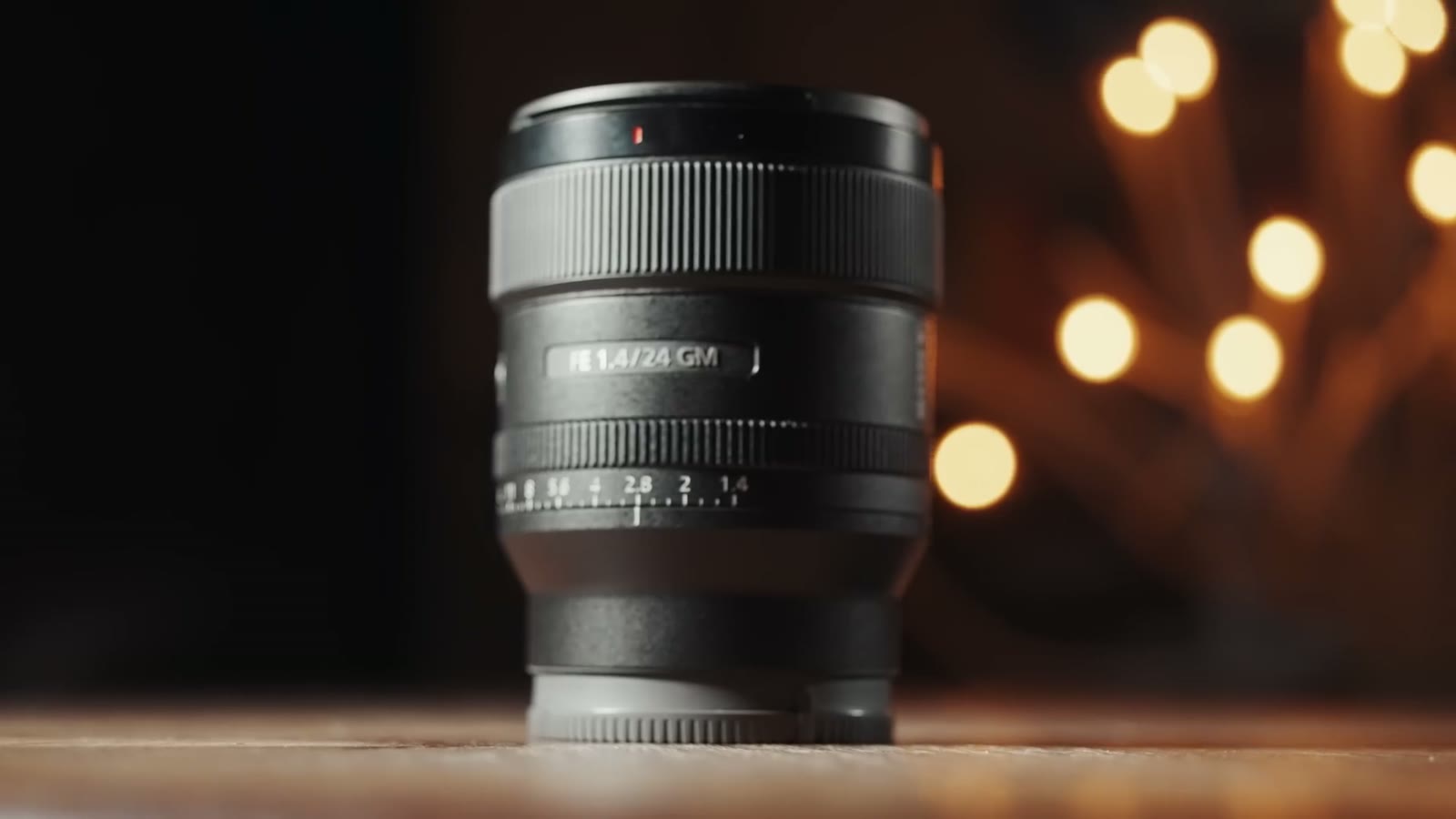
I’m also comparing it to the two other very popular 24mm lenses, the Sigma and the Canon, and telling you why the Sony is my favorite 24mm available today.
Since I’m going to be making claims about all three: I own all three. I’ve had the Canon 24 for nine years and the Sigma 24 for five, and I’ve used all of them extensively. Nobody sent me anything.
24mm is the sweet spot for a wide angle lens, which probably explains why basically every manufacturer makes one.
It’s very wide, but not so wide that you get fisheye distortion. Image quality holds up. And in my opinion it’s the perfect width for a gimbal. Most 24mm lenses also come in at f/1.4, and normally a low f-stop means a lot of heavy glass, but 24mm lenses stay relatively small and light compared to other wide focal lengths. That small size means they still take filters, including ND filters, which I’d call necessary if you’re a filmmaker.
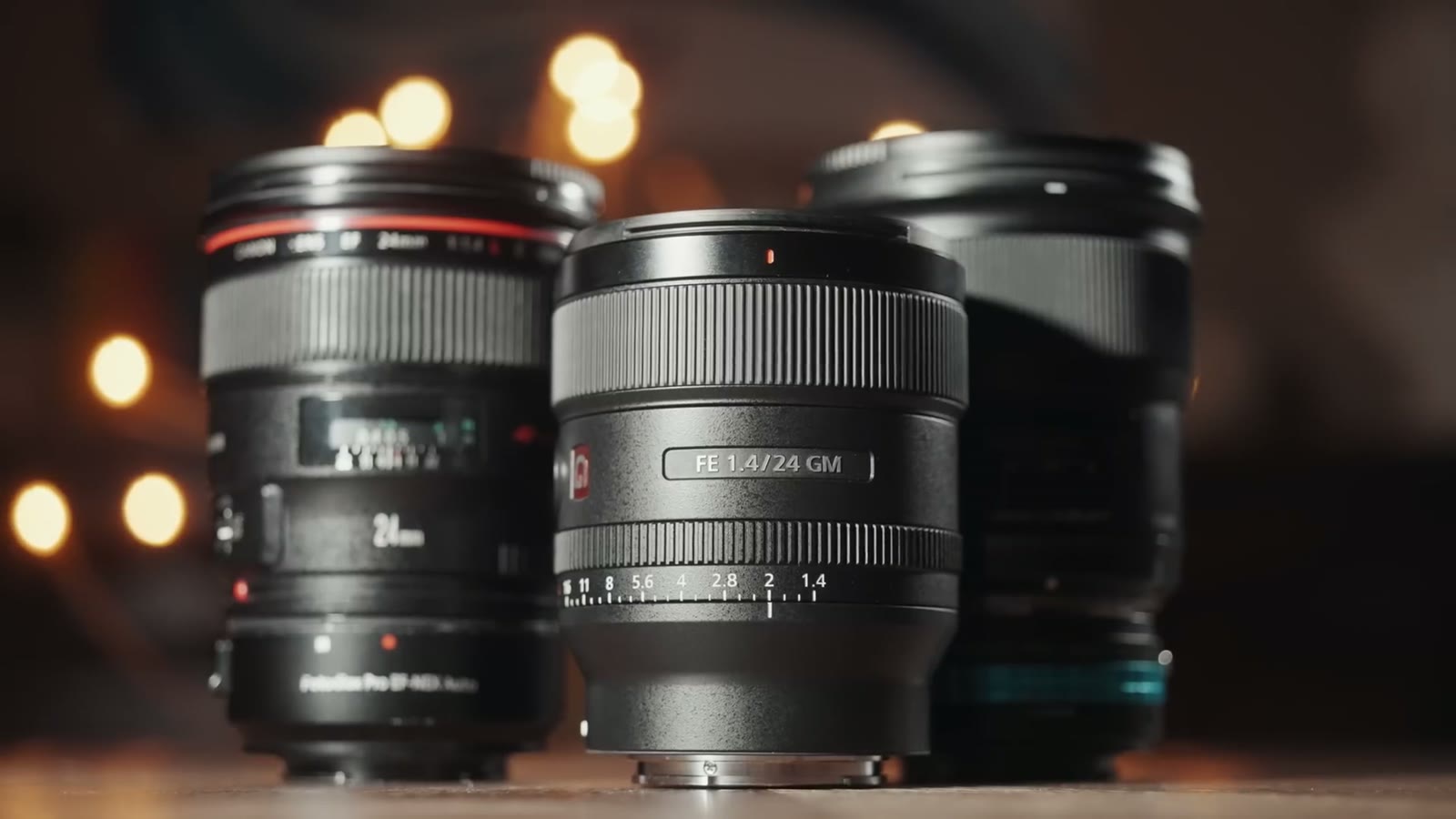
Here they are together. The Canon is small and compact, the Sigma is small too, and then there’s the Sony, which is on another level entirely. I was genuinely shocked the first time I saw it.
One thing to keep in mind on this comparison: these have different mounts. The Canon is EF, my Sigma is the Nikon mount version, and the Sony is E-mount. Put an E-mount adapter on the Canon or the Sigma to use them on a Sony body and they both get noticeably longer.
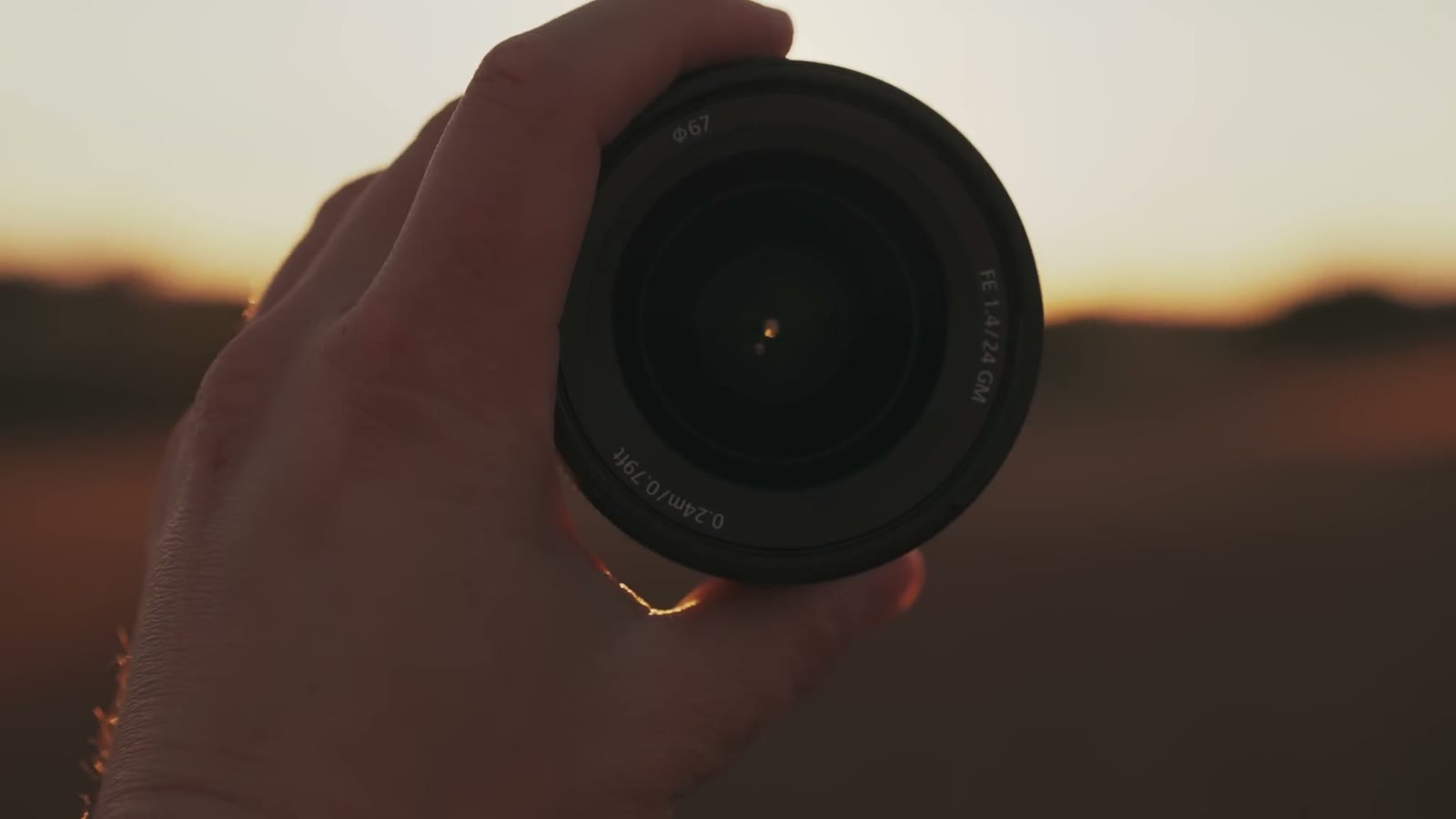
That difference is not academic. Whenever I’m filming a wedding day, which is an all day event where I’m on my feet for eight hours or more, having a small light lens on the camera makes a real difference to how wrecked I am by the end of the night.
You’re thinking there has to be a catch. It’s so light, is the build quality bad, is it all plastic? As far as I can tell it’s weather sealed and built to a very similar standard to the Canon and the Sigma. All three have a plastic housing with metal and glass internals. Sony has clearly just done the engineering work to make it smaller without giving anything up.
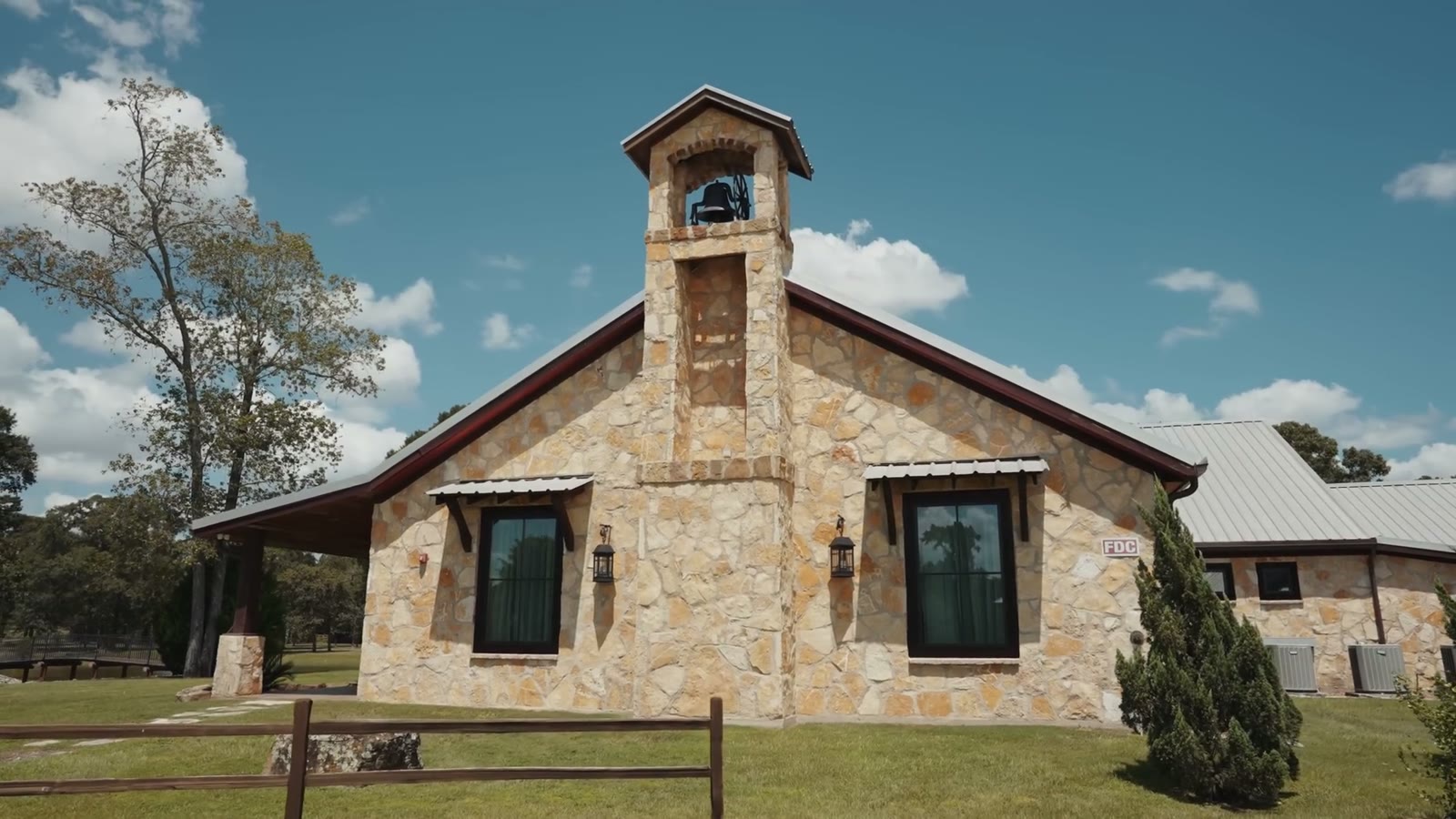
“Matt, there’s no way this lens is sharp, it’s tiny, I bet it vignettes a ton and at f/1.4 it’s super blurry, right?” I’m sorry to say you’re wrong on all of it, because Sony did some kind of witchcraft here. It’s very sharp even wide open at f/1.4, and there’s very little vignetting.
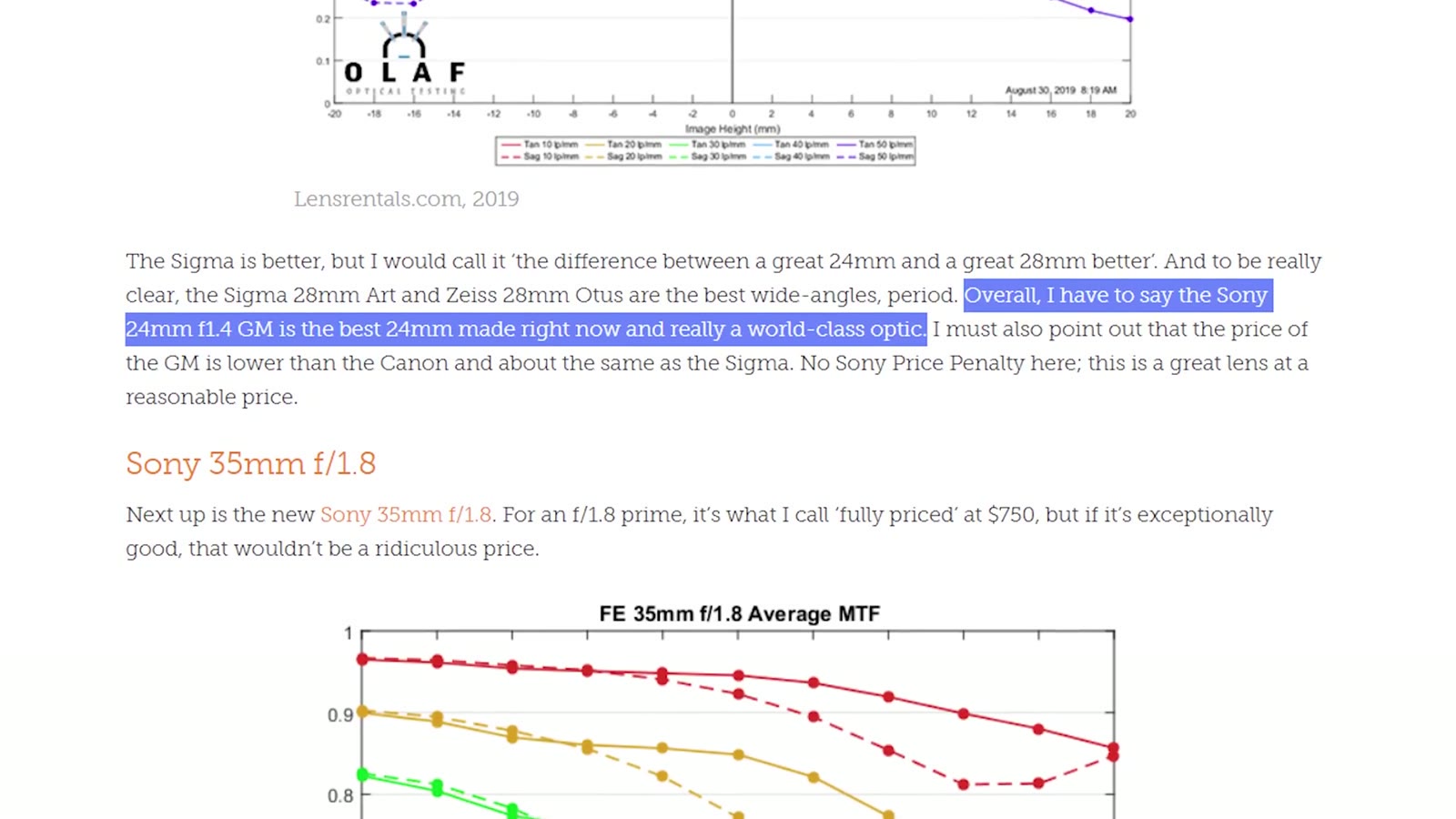
I haven’t run scientific MTF tests, so if you want the numbers, read the Lensrentals deep dive on this lens. Their conclusion was that it’s “the best 24mm made right now” and a world-class optic. That’s high praise from people who look at lenses all day and rent them out for a living.
In my own real world testing across a bunch of scenarios, I agree with them.
To be fair to the competition, I have no complaints about the image quality of the Canon or the Sigma either. Most 24mm lenses give you great image quality and those two are no exception. If you told me to go film a video with any one of these three, I’d say great, easy, they’re all strong performers.
Here’s the biggest reason I’d still take the Sony.
If you’ve watched my stuff before you know I’m a big manual focus guy, and I’ve made a whole video about using manual focus lenses on a gimbal. But the a7S III changed that a little, because its autofocus is a massive upgrade over the a7S II, and paired with this lens it’s a fantastic combination.
This lens has the newer direct drive SSM motors, which means it focuses very fast, and that matters on an f/1.4 lens with a lot of glass that has to move quickly.
But the part I care about more is that it’s virtually silent while it does it. If you’ve ever had audio ruined by the sound of a lens focusing, you know. I’ve had that happen recording with Canon cameras on EF glass. Most EF lenses aren’t loud exactly, but they’re loud enough to get picked up by the on-camera mic I sometimes use for ambience. With this lens I’m confident I can leave autofocus on and never think about it.
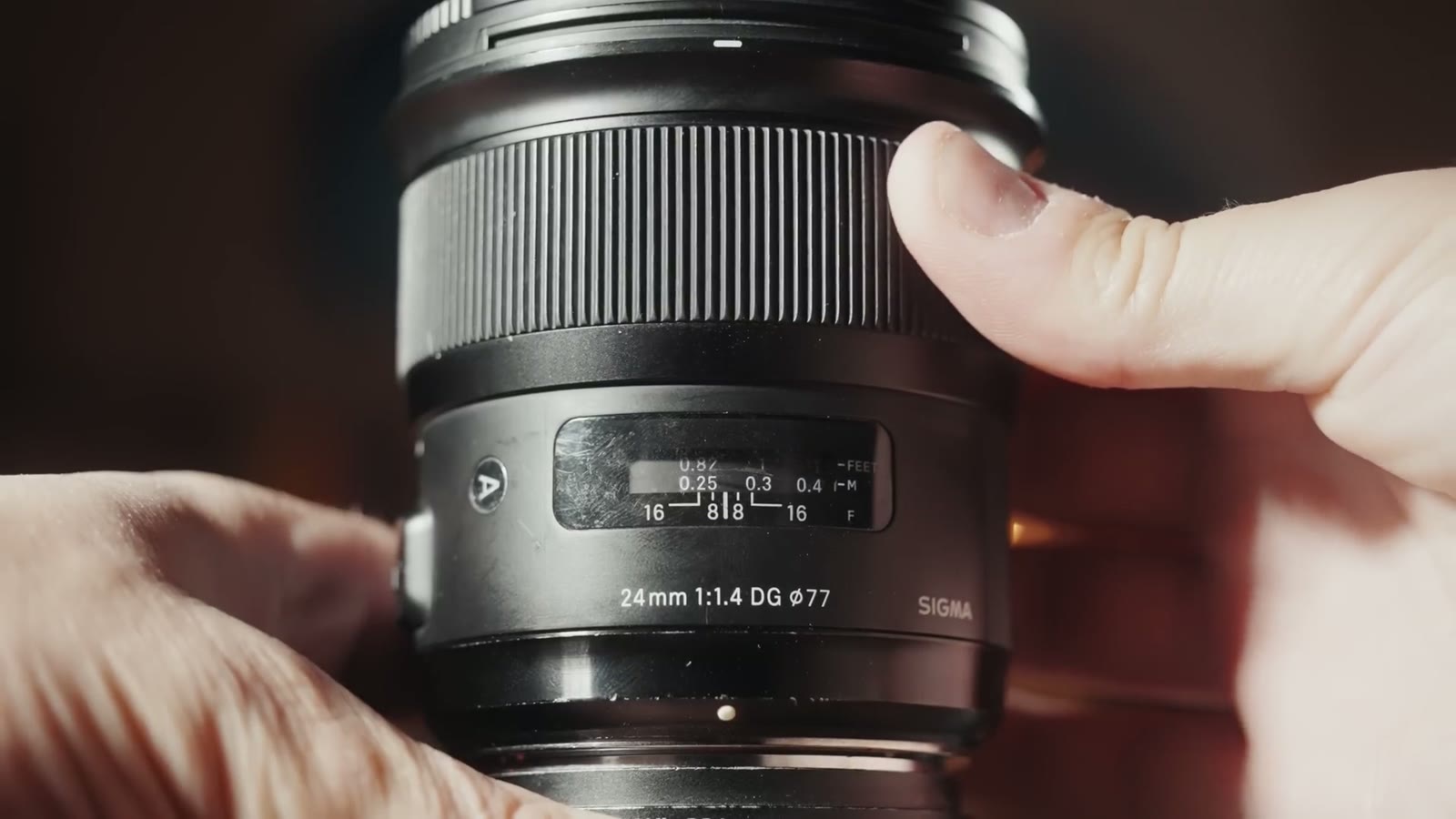
Even with autofocus this good there are times you want to guarantee a shot, so you switch to manual. Or you’re on an older body like the a7S II where the autofocus is mediocre and manual is genuinely the better option, which is what I did for years with the Sigma and the Sony.
Some of you just cringed, because Sony has not historically been known for good manual focus. Sony lenses are all focus by wire. On the Canon or the Sigma, turning the focus ring is a direct physical connection to the focusing element. On a focus by wire lens, turning the ring sends an electronic signal to a motor that then moves the element.
Two things have made that miserable in the past:
The 24mm GM is a massive improvement on both. There’s no focus ramping, and while it is still focus by wire, there’s no lag I can detect between turning the ring and the lens responding. For all practical purposes it manual focuses as well as the Sigma and the Canon. If you’re a manual focus junkie like me, you’ll be happy with it.
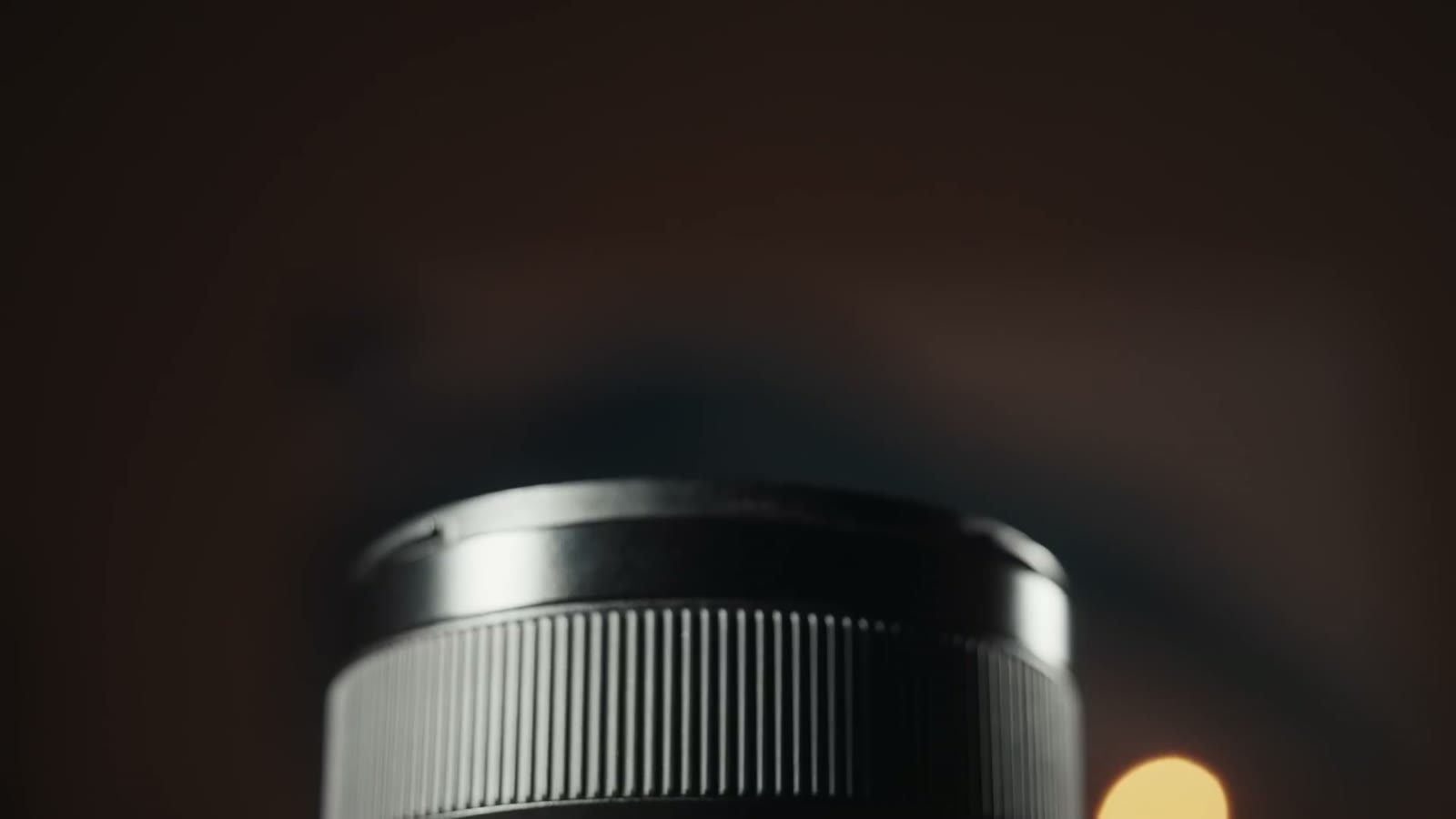
You’ve seen this on plenty of older lenses. My Zeiss Contax glass from 1975 has it. But Sony is the only company I know of putting it on new photography lenses: a manual aperture ring on the lens itself.
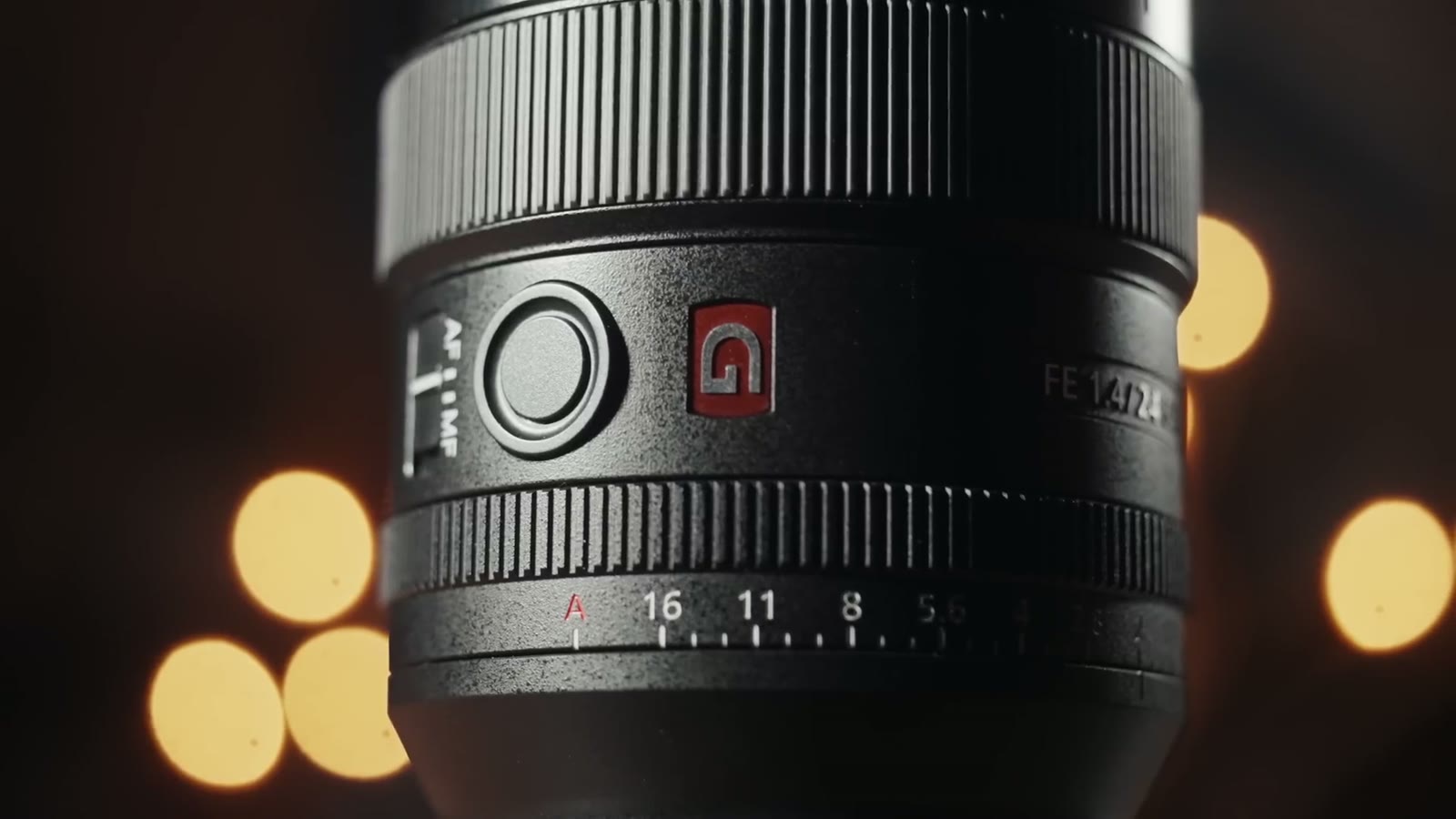
Set the ring to A and you control aperture from the camera dials like normal. Rotate off A and you have full manual control right there on the lens.
Which sounds like more work, until you look at the other side of the lens and find a switch marked Click.
If you want to go deeper, I’ve also got ULTIMATE Gimbal Lens – Sony 16-25 F2.8 G Review For Wedding Filmmakers.

By default it’s on, and the aperture ring clicks into each stop as you turn it. Flip it off and the ring rotates completely smoothly, which is smoother than if I dipped this lens in beard oil.
Here’s why a clickless aperture matters. Have you ever been rolling on an important take and realized the shot was a bit overexposed? On a normal photography lens, adjusting aperture clicks and jumps abruptly to the next stop, and there goes your take. On this one you can change exposure mid-shot completely smoothly and nobody watching will ever notice you did it.
Cinema lenses have had clickless apertures basically forever, and there are companies that will de-click a photography lens for you, but it usually costs real money. I love that Sony just shipped it as a switch.
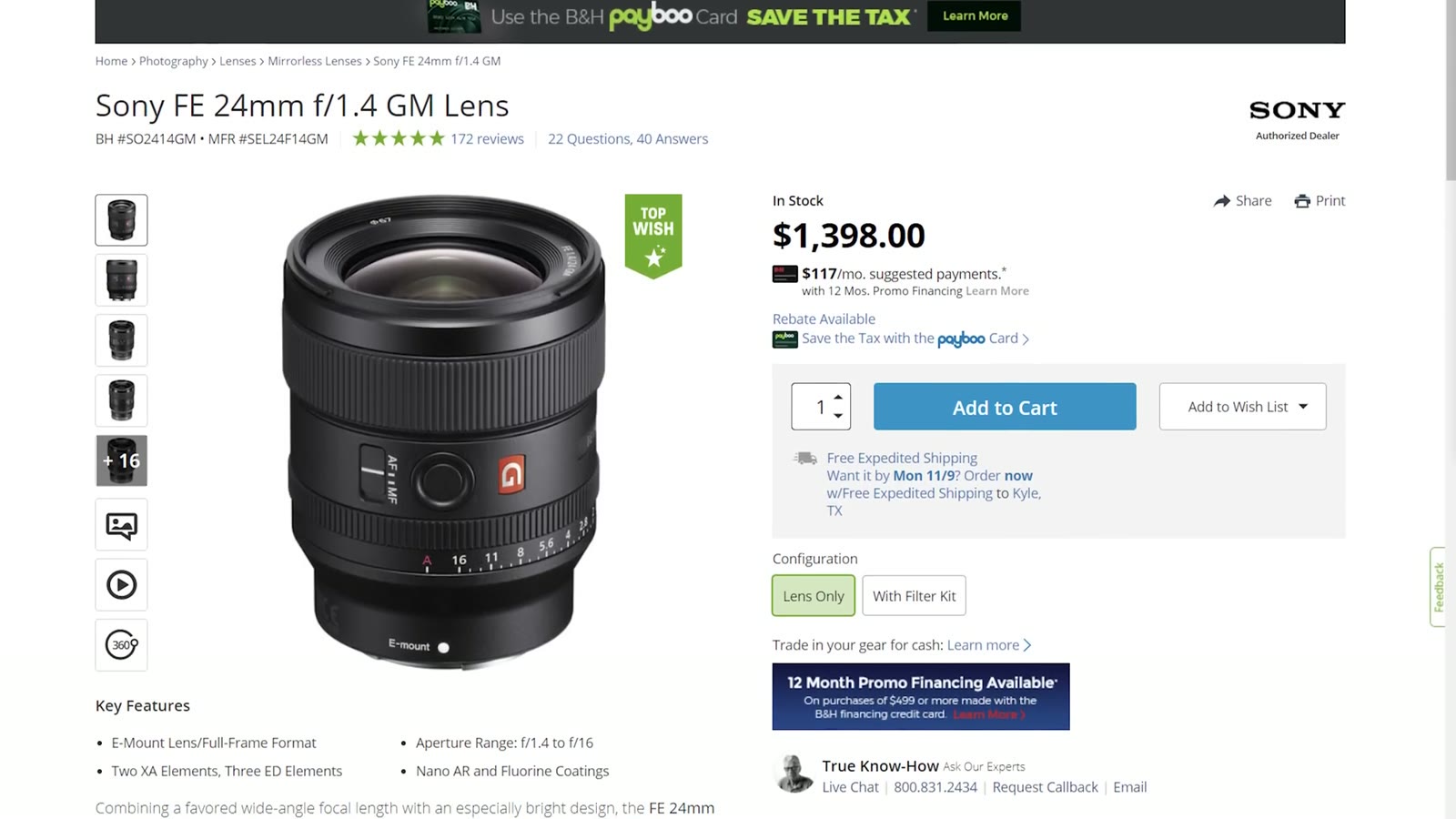
It retails for $1,398, which is definitely not cheap, but for what you get in a package this small I think it’s fairly priced, especially set against how much more expensive other Sony GM glass is.
You really have two options.
On image quality alone, the Sigma. I’ve used it for years and I still love it. At $850 it’s quite a bargain, and if you’re on a budget I’d recommend it in a heartbeat.
For me, the Sony. I wanted the guaranteed best autofocus I could get, which meant going native. And when you put 1.6 pounds next to under a pound, that’s a stark difference when you’re carrying a camera around all day at a wedding.
This was the first lens review I ever made. If it was useful and you want more of them, leave a comment on the video and tell me.
The camera this is paired with: my Sony a7S III review for wedding filmmakers. And here’s my whole Sony filmmaking kit. Everything is graded with my LUTs.
If you’re a wedding filmmaker and you want to book more couples, my free guide to booking more wedding film clients walks through practical steps you can take in your business right now. My courses are here, and the discussion happens in my Facebook group.
This review is from December 2020, so the prices above are what these lenses cost then and all three have moved since. The a7S III was brand new at the time, which is why so much of this is framed around switching to Sony.
I’m required to state that I’m part of affiliate programs for Amazon, B&H, Soundstripe, Artlist, Musicbed, and Adobe, and that some of the links above are affiliate links.

A full review of the Sony a7S III from the perspective of someone who films weddings with it: the build, the new menus, the autofocus, the low light, the dual gain ISO quirk nobody warns you about, the bit rates, and whether it was worth the five year wait.
Continue reading
I bought an R5 with my own money and tested it the way a wedding actually gets filmed: long ceremony takes and hours of intermittent B-roll. It overheats inside the first hour, and it does not recover.
Continue reading