
Welcome to Northern California, to a town whose name I could not pronounce on the first three tries.
Today I want to walk you through my destination wedding gear. This is the gear I bring to any wedding I have to fly to. If I can drive to it, I’m probably bringing all the gear, there’s no need to stress, but if I’m travelling to a wedding where I need to fly, suddenly there are a lot more logistics I have to figure out, like how much to carry, how much can I fit into my bag, what’s the weight limit, things like that.
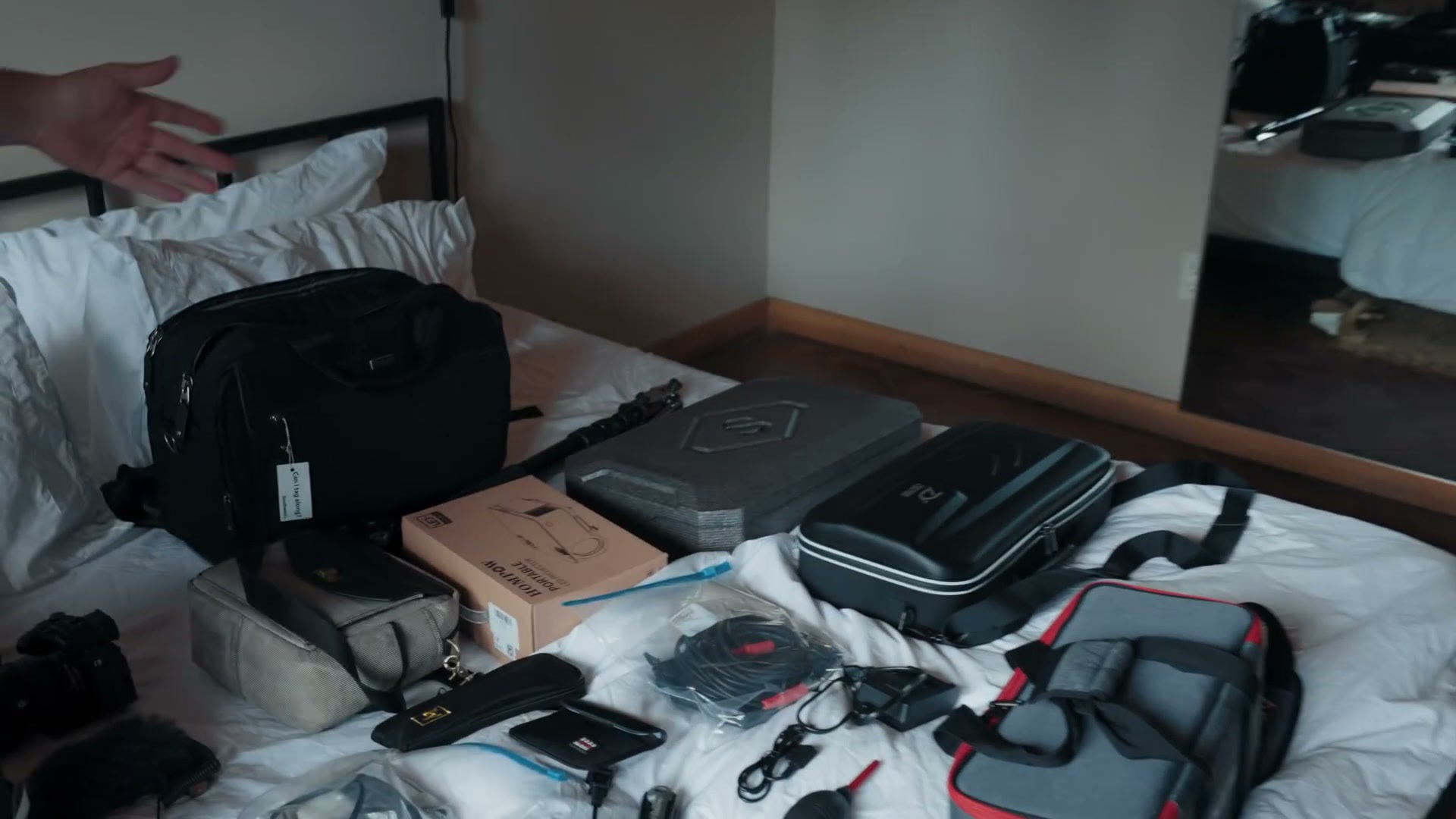
So here’s my relatively compact destination wedding kit. I’m calling it compact. Is this? This feels compact to me, but I’m also not a super minimalist filmmaker either. And one thing up front: none of this is sponsored. This is just stuff that I love and use.
The Most GAMECHANGING Tripods & Light Stands
First off, I want to draw your attention to one of the most game-changing things I ever bought for destination weddings. This is the thing that really separates a normal wedding from a destination wedding for me, and that would be Manfrotto Befree tripods.
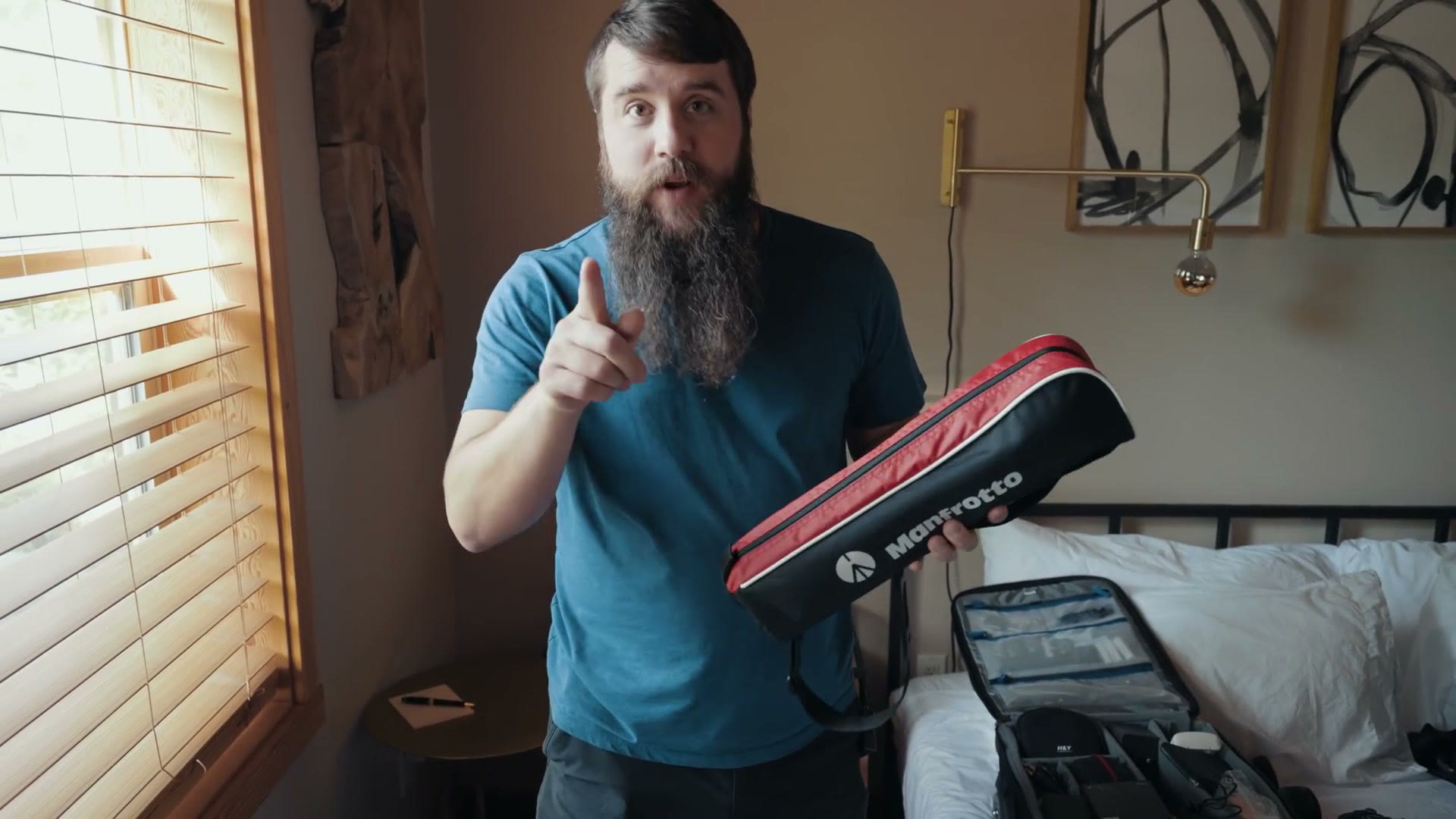
Manfrotto is amazing, because look at this. It’s a whole tripod, but it’s so compact. It’s like this tall, super light, and you can cram two of them into a checked bag very easily. I love this so much. Two of these come along with us to every destination wedding, and then we have our ceremony tripods.
Likewise, I also wanted to go with a more compact light stand, so back to Manfrotto again. These are the 5001B light stands. Super compact, incredibly lightweight, and then they unscrew and you have a full size light stand. Absolutely love it.
Lighting
Before this wedding I asked my second shooter, do we need to bring the big light? Can we just bring some small lights? And she said, “No. Considering how big the reception is gonna be, you want the big light.” Okay. We’ll bring the big light.
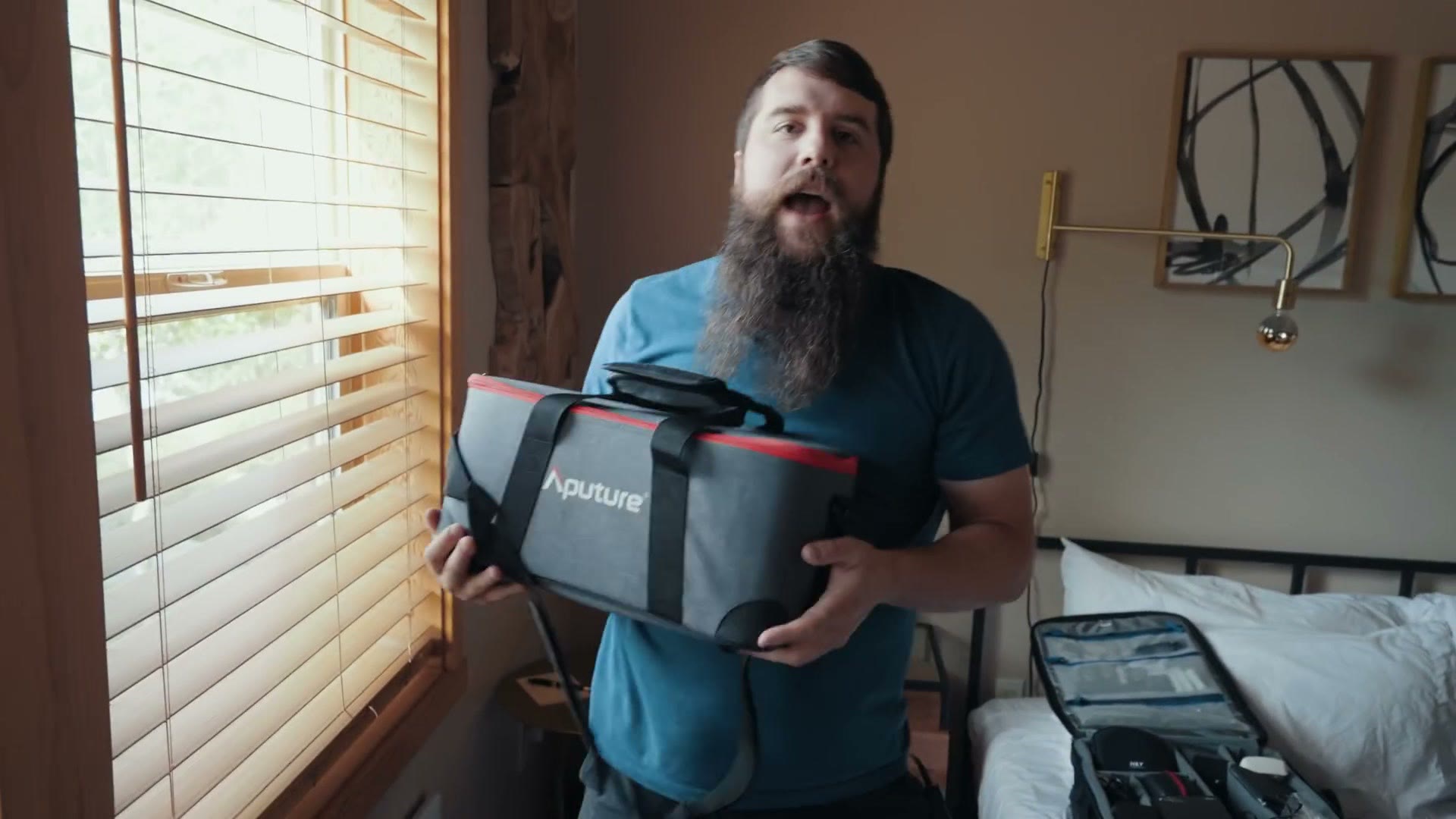
The Aputure 60x. This is the case it comes in, it’s well padded and it doesn’t add a ton of weight, so I figured I’d just bring the whole thing. Toss it in the bag, whole light is ready to go, goes up on the light stand. Those light stands are sturdy enough to handle it, which is great. Put it up on the side of the dance floor and it’s gonna look awesome.
The other light is a little Core SWX TorchLED with a little battery. Pop that on, woo. Absolutely love it, it’s great. Really nice for lighting toasts, or details, or anything like that. Super compact and bi-color too. Big, big fan.
Monopod & WAY TOO MANY Gimbals
We also have one monopod, just a standard Manfrotto. We’ve tried using more compact ones that didn’t have the feet, but the feet are so nice, so we’re still using this one. I’ve had this monopod for a decade now, still going strong.
Now let’s talk gimbals. This is a new one, the Zhiyun Weebill 2, which Zhiyun sent to me, and I said, perfect opportunity, small compact gimbal, we have a destination wedding. Heads up: this link goes to the newer Zhiyun Weebill 2 Pro. The jury is still out on how I feel about it, though, because I haven’t shot a wedding with it yet. That’s going to happen in a couple of days. Update: I did, and the full Weebill 2 review is here, including a warning about the battery.
But if you looked over here, you might have noticed, wait a second. What’s this? And this over here? Is that, is that more gimbals?
Okay. Yes. That’s the Zhiyun Crane 2, and that’s the Crane 2S.
Matt, why did you bring three gimbals with you across the country? This is a do as I say, not as I do moment. I’m a big fan of having backups, and even though I have this new gimbal, I don’t really trust it yet, so I wanted to bring along a gimbal that I knew and trusted. In that case it was the Crane 2, which I’ve used for years and still love. And the third one is because our behind the scenes shooter came along, and I told him he didn’t have to bring his own gimbal, I’d bring him one.
So we have three gimbals. Yeah, I know. It’s completely ridiculous. If you want the long version of how those two Cranes compare, that’s my Crane 2S review.
Cameras
We brought four cameras to this wedding. You’re like, Matt, four cameras, come on, this is a destination wedding, what’s wrong with you?
Three of them are a7S IIIs, one for me, one for my second shooter, one for the behind the scenes shooter. If you want to watch days like this actually play out, every behind the scenes I have made is here. We could probably get by with two, but I would still bring three cameras regardless, just in case one of them breaks. We’re out here in the mountains of California and the nearest Best Buy is several hours away. It would be rough.
So what’s the fourth camera? I’m very excited about this one.
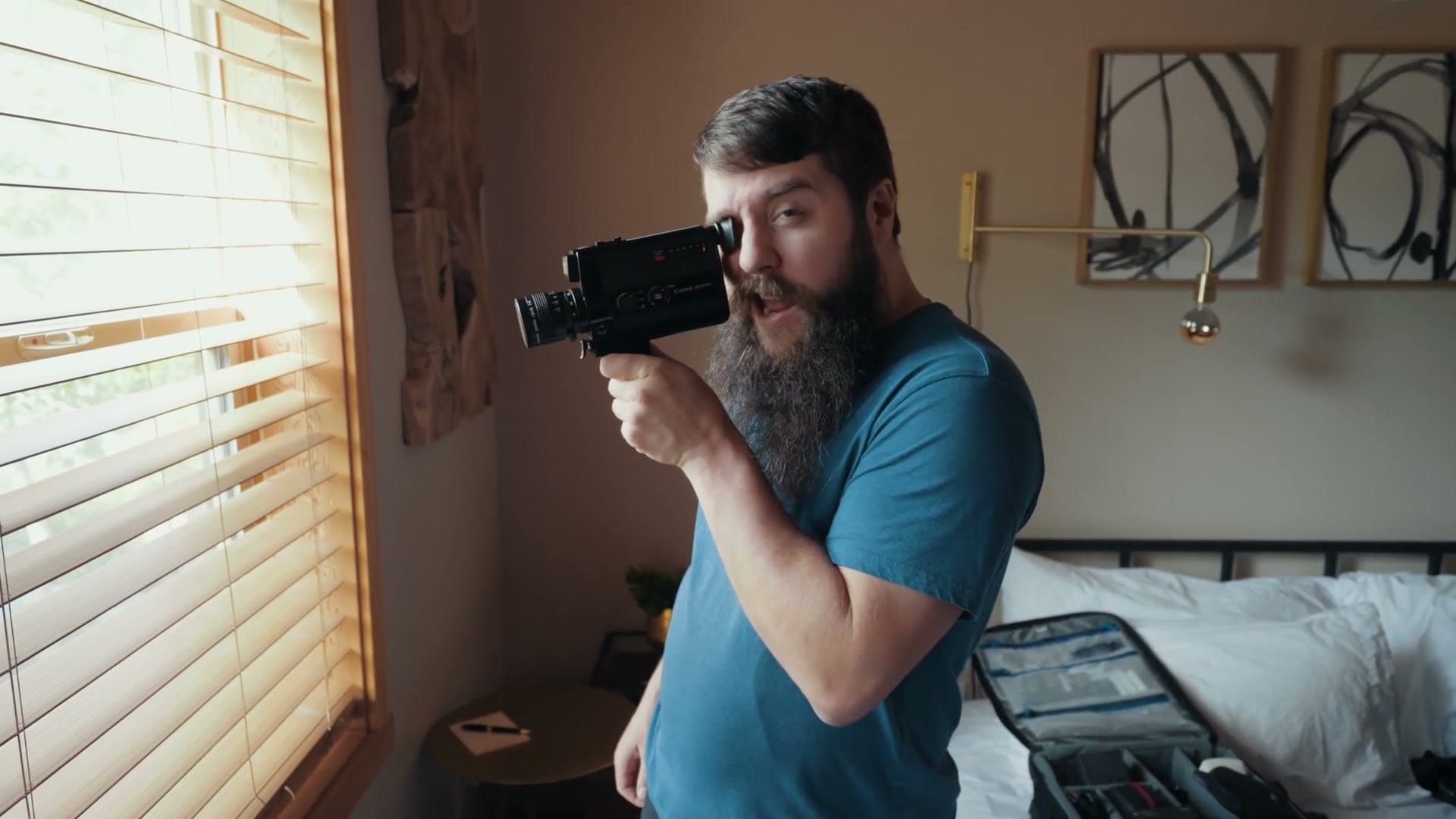
Late last year, with the pandemic, it had been a while since we’d been able to film a wedding, so I bought this little guy. A 514XL Super 8 camera. It’s a fantastic little thing and it’s super point and shoot: you literally put the film in it, look through it, hold down the trigger, and it starts recording. I’ve already shot some test footage, had it processed, and I love how it looks. It’s a little baby, and it’s all retro, and oh my gosh.
I brought along four reels of Super 8 film, which is about 12 minutes of recording time, and we’re gonna be shooting a lot of Super 8 at this wedding. I brought some 50D and some 500T. 50D is for daylight, super bright like this, and 500T is for more indoor and night shots. Super 8 isn’t the best in low light, but 500T is going to be much more helpful, especially since we’re filming some interiors.
A little tip if you’re ever travelling with Super 8 film, or any film for that matter: never send it through the X-ray machine at the airport. I kept it in a separate bag, pulled that bag out of my main bag, and said “hey, this is film, can you hand check it?” They take it over to a little machine, check it for gunpowder or bomb residue or whatever they do, and let you go along.
If you want to get into this, I’ve written up how to shoot Super 8, from cameras to film to processing and scanning, and there’s a free Super 8 guide to go with it.
Drone With Fancy Travel Case
We have the Mavic 2 Pro, and I was very careful when I bought this drone to make sure I got a case that would be good for bringing along on destination weddings. Heads up: this link goes to the newer DJI Air 3S.
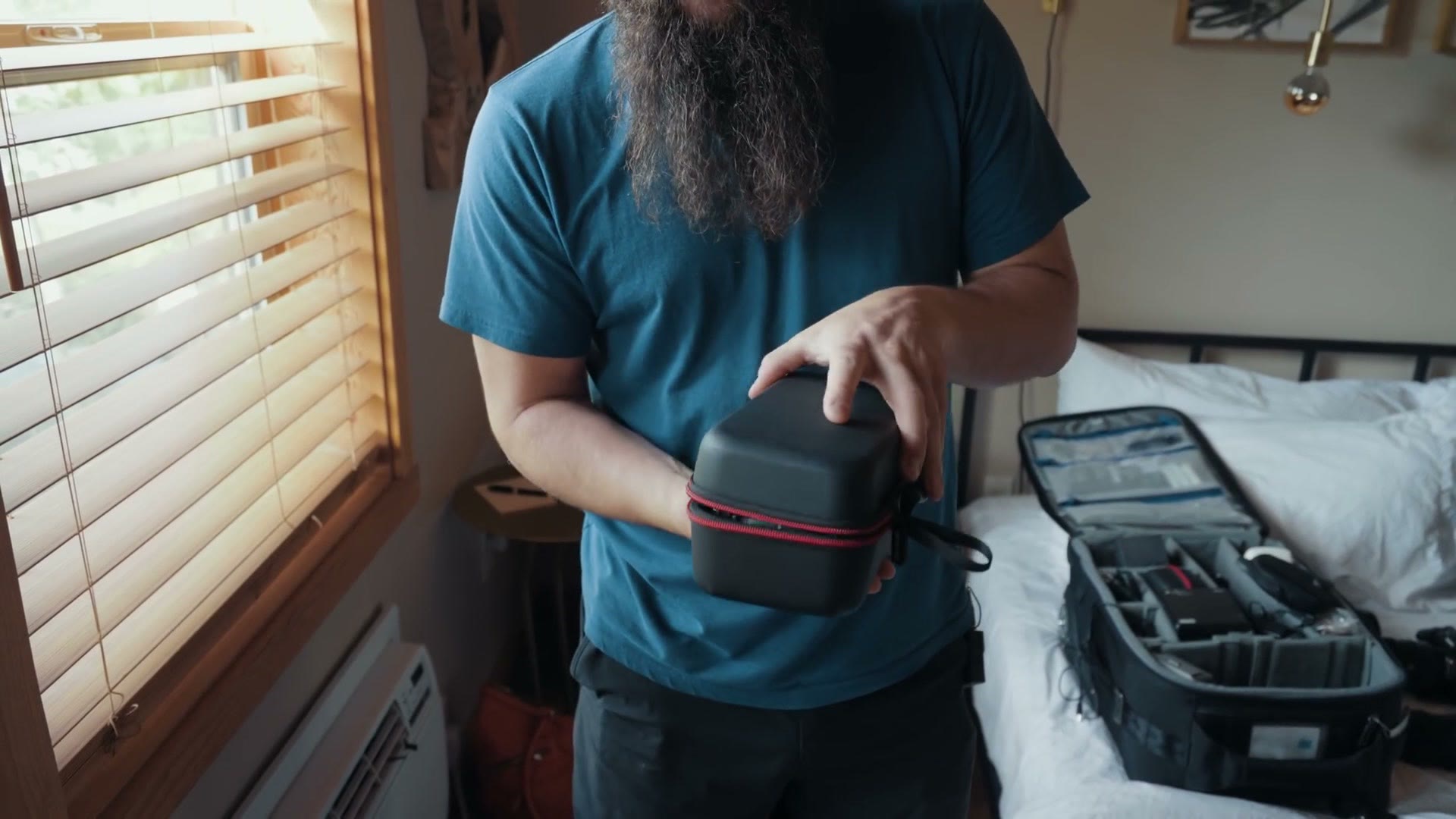
Instead of the standard strap bag it comes with, I wanted something a little more padded, so this is a hard case for the drone, and I have another hard case for the remote. Not bad size-wise, easy to pack into a carry on bag, along with lots and lots of batteries. I brought three of them for this wedding, crammed into various parts of the bag wherever I could find room. And ND filters for the drone. Heads up: you can't buy the PolarPro filters for the Mavic 2 Pro on Amazon, so this link goes to an equivalent, the K&F ND/PL set for the Air 3S.
Lenses (aka I Have A 50mm Addiction)
First of all we brought, even though it’s big and beefy, the Sony 70-200mm f/4. I call it big and beefy, but it’s actually really pretty compact and small for a 70-200, one of the smaller ones you can get. I love the size, I love the weight, I love that it’s still optically stabilized. And honestly, an f/4 with the a7S III is good enough in low light, I’m never hurting. This lens is probably only going to come out for the ceremony, but because it’s a larger 200 person wedding we want to make sure we can get enough throw.
There are more lenses buried underneath all the batteries. There’s a Canon 50mm, which my second shooter loves shooting with, so we brought it along. There’s the Zeiss Contax 85mm f/1.4, which she also loves, and which is great in low light. I love that one for dancing footage, and for rooms that are a little bit tighter, because it’s nice to get a tight shot without it being too tight.
Then there’s her big lens, her favorite, her baby: the Sony 135mm f/1.8 GM. Absolutely gorgeous, beautiful lens. So good. This lens is the reason you’re not going to be seeing the 70-200 much.
Wait, there are more lenses over here. This is my Zeiss Contax 50mm, which is kind of a backup lens I bring along just in case.
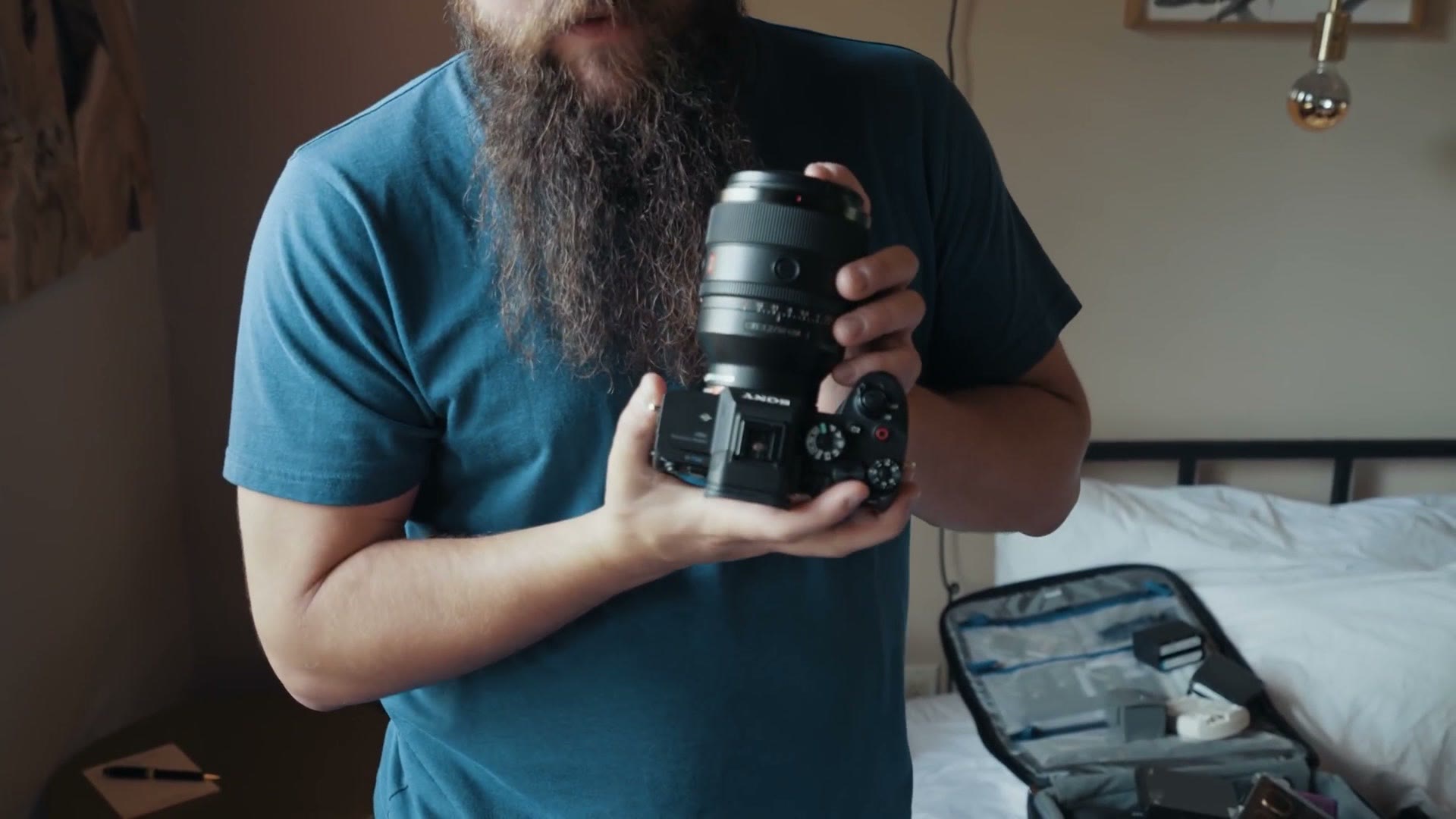
And you’re probably thinking, Matt, why are you bringing along backup lenses? Well, that’s because I’ve got this on my camera right now. I borrowed this from Sony. It’s the Sony 50mm f/1.2 GM. It’s new, it’s beautiful, and I’m very impressed by it. I’ve barely used it so far, but wow. The little bit I’ve filmed with it looks amazing. This is probably what I’m going to be shooting the majority of the wedding on, but in the event that I end up hating it, or it breaks, I have that other 50mm, because I shoot on 50 so much it made sense to bring it along. I’ve since written up a full review of the 50mm f/1.2 GM.
Lastly, of course, my favorite lens ever, the Sony 24mm f/1.4 GM. It’s beautiful, it’s tiny, it’s great in low light, and it’s my go-to gimbal lens. Zero complaints there. If you want the wider version of this whole list, that’s my favorite lenses for wedding filmmaking.
Audio Gear
We also have on-camera microphones, a Shure on-camera mic and a Rode VideoMic Pro Plus. Heads up: this link goes to the newer Rode VideoMic NTG.
Audio is arguably one of the most important parts of any wedding, so let’s cover it properly. First off, the old trusty, still going after a decade, Zoom H4n. Love this thing. Great auto leveling, and I’m going to plug it into the DJ’s soundboard and it’s going to sound great. Heads up: the Zoom H4n has been discontinued, so this link goes to its replacement, the Zoom H4essential.
What am I going to use to plug it in, though?
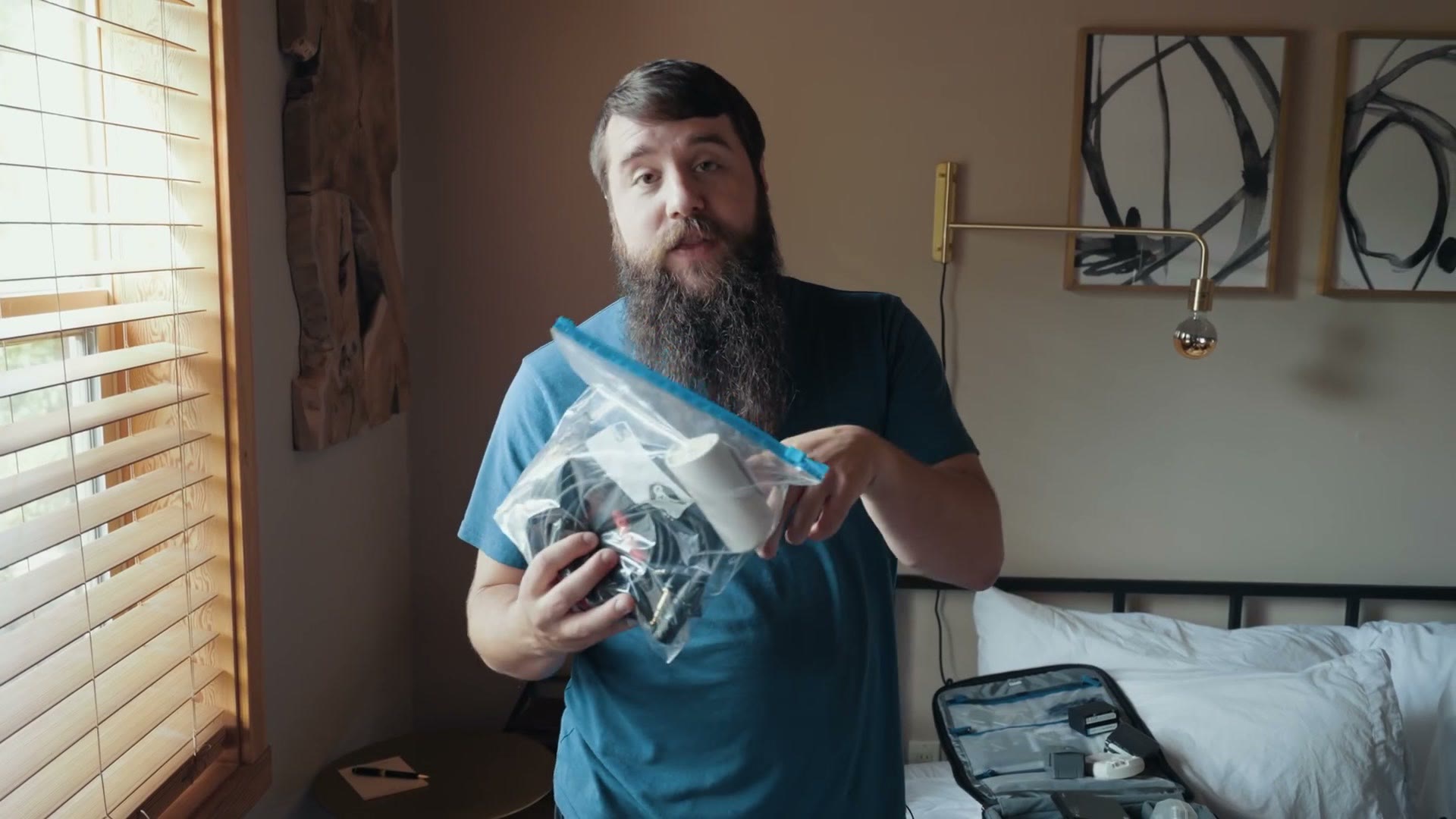
Cables. We have RCA, we have XLR, we have quarter inch, and we’ve got different flavors that mix and match between them, so whatever the DJ has, I should be able to plug into it.
We’ve got a thigh strap for the bride to wear a microphone, and I’ve got stashed in various cubbies four Tascam DR-10Ls. Technically I’m wearing one right now, and I’ll probably be wearing one for the BTS, so that’s three for everybody else: one for the officiant, one for the bride, one for the groom.
Speaking of which, How To Film A Destination Wedding | Behind The Scenes Of A Real Wedding In Colorado! and Sony ZV-E1 Review – For Vlogging, For Wedding Videography… are worth a look too.
And then there’s a case with more recorders in it. This is my little on-microphone recorder that I’ll use for the reception. I take that recorder, use my mic sleeve to put it onto the DJ’s microphone, and record pristine backup audio.
In addition, because this is a three day long wedding extravaganza and they have a lot of things planned, I believe there’s supposed to be an audio system for the rehearsal dinner, but we’re not sure. So in the event that there isn’t one, I brought along a backup microphone and recorder.
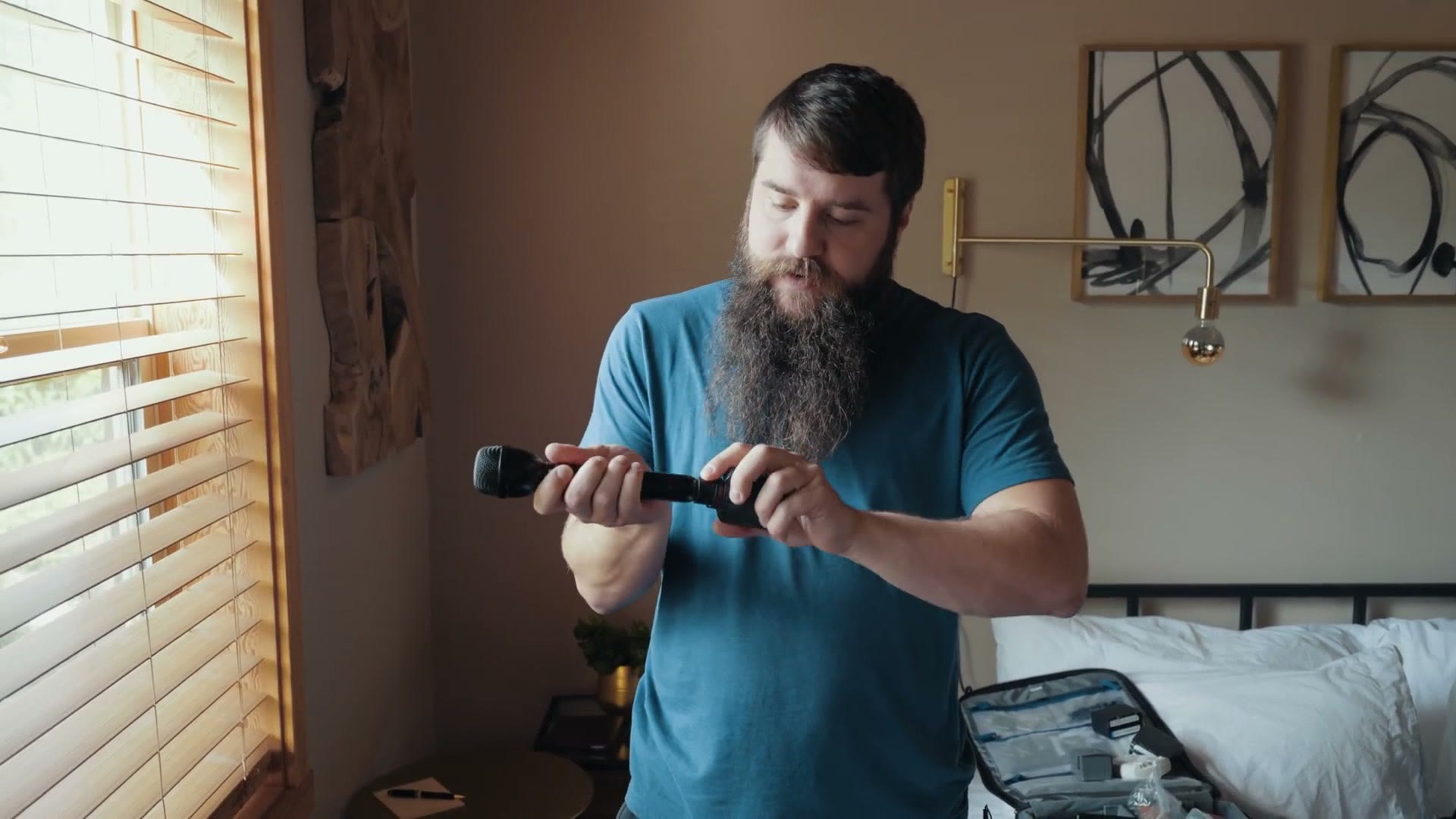
This is the Electro-Voice RE50/B and a Tascam DR-10X. Heads up: the Tascam DR-10X has been discontinued, so this link goes to its replacement, the Zoom H1 XLR. Simply plug it into the bottom of your microphone, ta-da, you now have a standalone, awesome sounding microphone system. Really, really great for toasts, receptions and rehearsal dinners. Love it.
My Favorite Bags For Destination Weddings
These are both Think Tank branded bags, and I absolutely love them. I’ve bought Think Tank for years, they’re just fantastic. And look at this: it looks super nondescript. You don’t want something that screams camera gear.
It’s not a Pelican. I used to travel with a Pelican case, but I found it added a ton of weight with the plastic, and while I liked the extra support, because I was carrying it on I didn’t really need that much safety and protection.
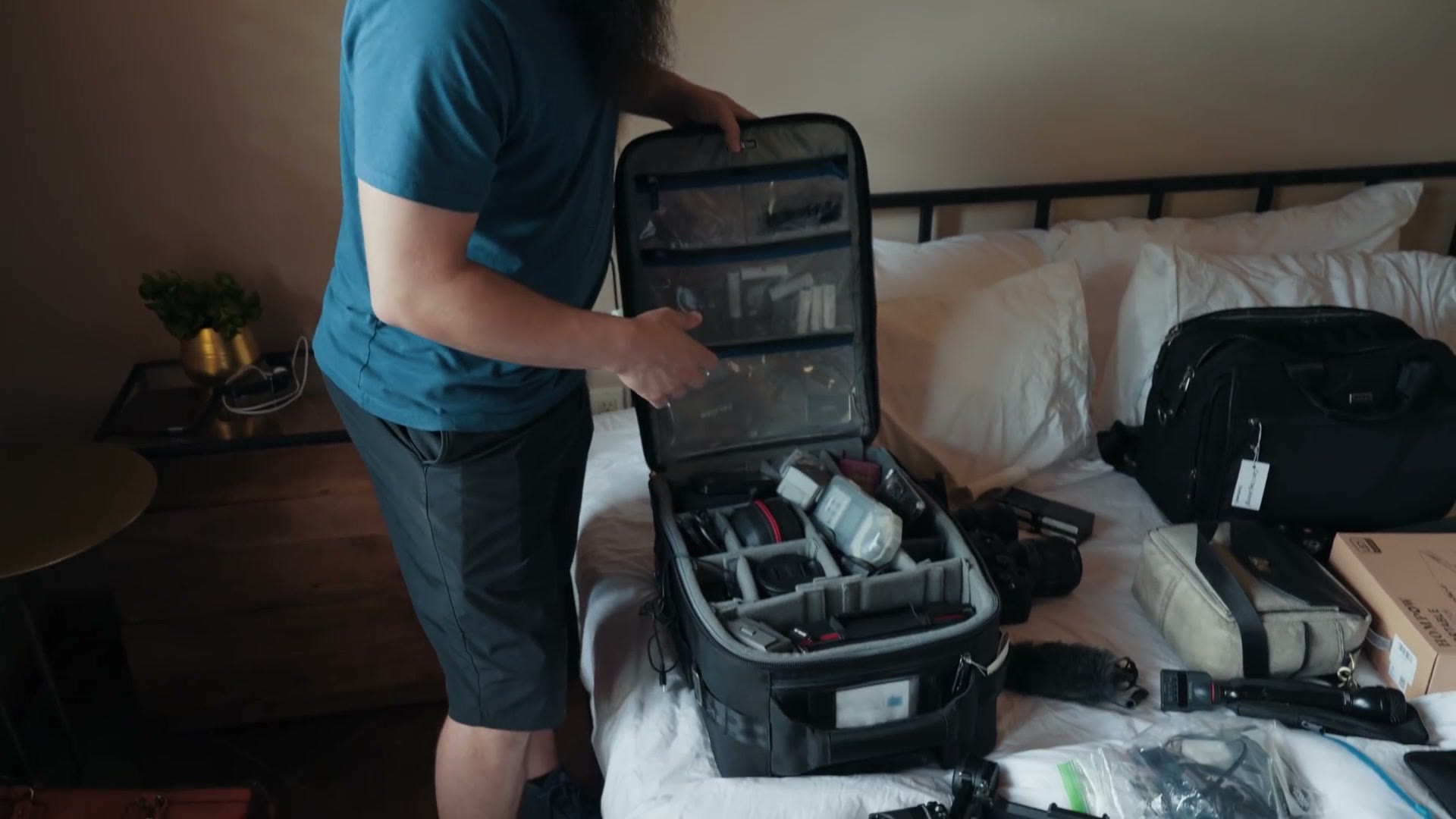
So instead I went with the Think Tank Airport International V3.0, which is made to go in as a carry on on both domestic and international flights. If you’re travelling internationally I absolutely love this case. It looks like a normal piece of luggage, which is what you want.
Likewise, I have the Think Tank Retrospective 60 Classic. Heads up: this link goes to the newer Think Tank Retrospective 30 V2.0. Very nondescript. Is this a laptop case? Is this just somebody’s generic briefcase? Who would want to steal that, right? Just kidding, it’s full of camera gear. It has three slots, you can put a ton of lenses and cameras in it, it expands, and it’s got room for a tablet or a laptop.
And a little bonus for you here: this counts as a personal item. So there’s my carry on bag, and there’s my personal item, and it still fits under the seat of the airplane. You can wedge it under there and nobody has ever complained.
We also have a lens bag for my second shooter. It’s super lightweight, so it’s easy to throw into a checked bag and take along, and it means she can carry the lenses she needs while she’s shooting.
A Projector?!?
You’re probably wondering what this cardboard box over here is.
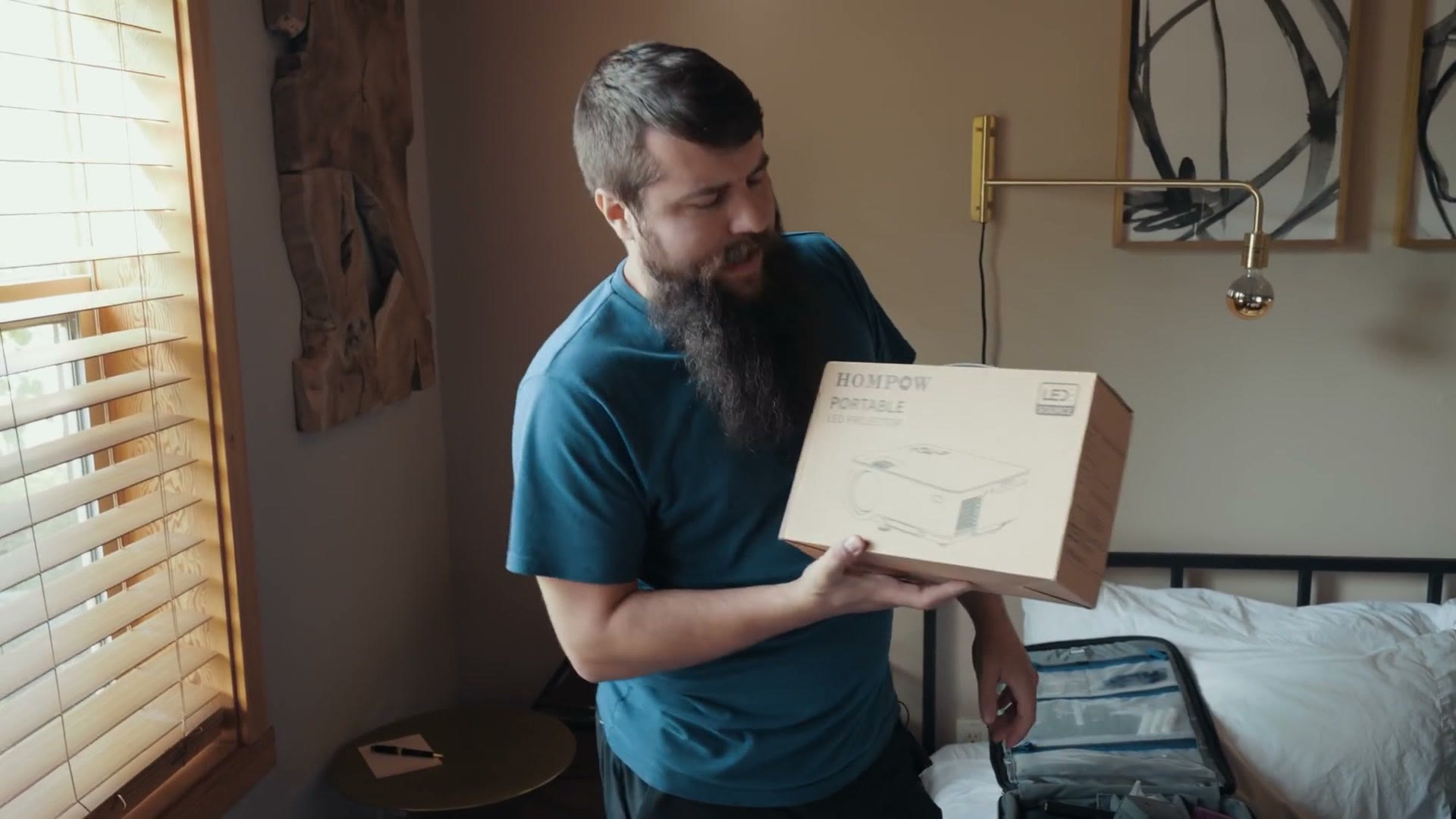
A Hompow portable LED projector. It’s exactly what it looks like: a tiny little LED projector. Like I said, at this wedding we want to do some cool, fun, unique stuff, so just like we bought the Super 8 camera, we also invested in this.
And what’s great is that it was $59. It’s not some mega expensive projector. I think it was regularly 68 and they said you can have it for 59, and I said take my money, this is great. Thank you, Amazon.
The reason it’s here is that we want to take some old footage we have of the couple from when they were dating, project it onto a wall, and have them standing in front of it with it projected onto them. It’s weird, it’s abstract, but I think it’s going to look really, really cool.
Where Is The Prism?
If you’re wondering where the prism is, I opted not to bring it this time.
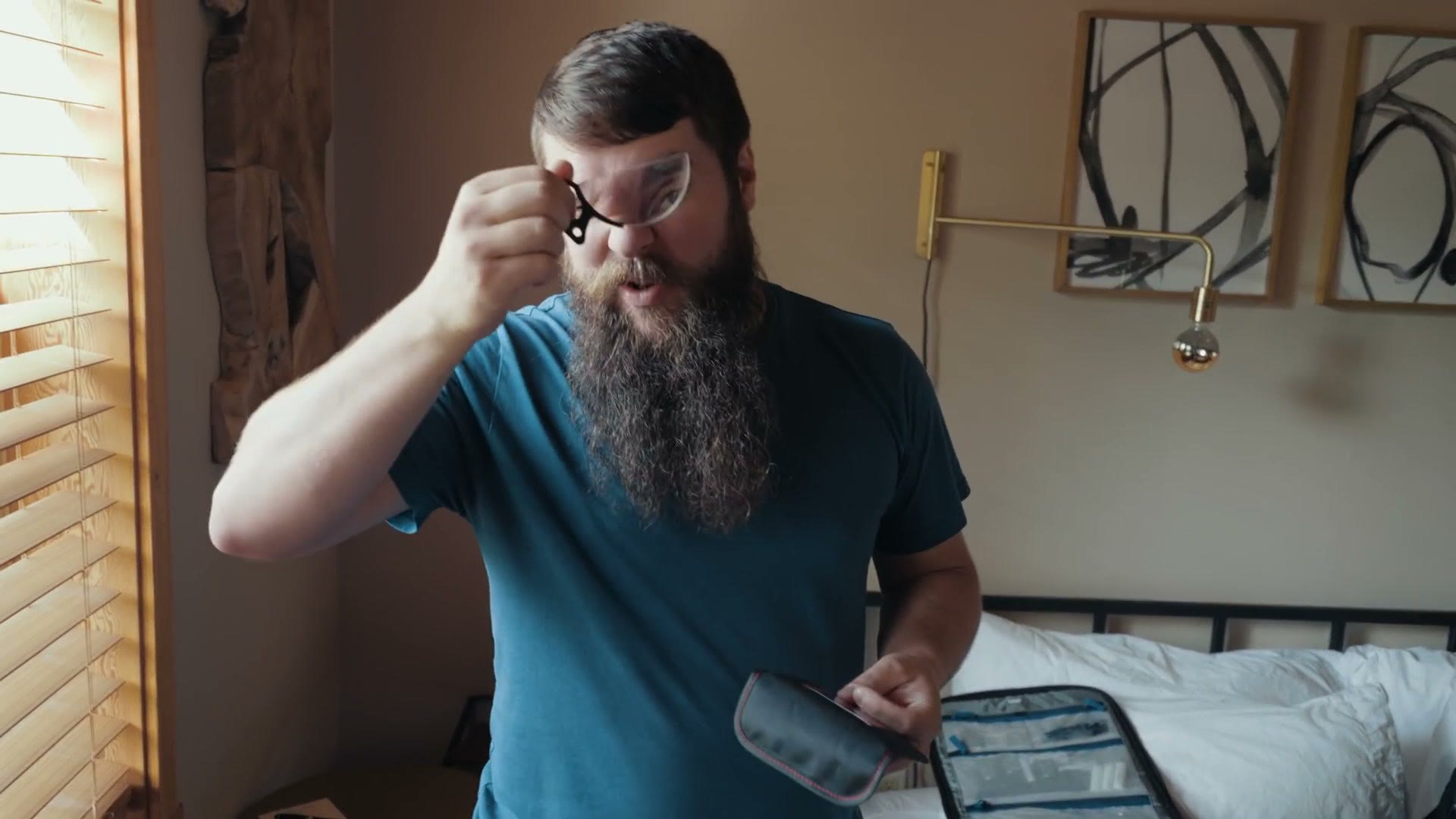
Instead I went with one of these CinePacks split filters. You hold it up and it’s like, whoa, look at that. A little blurry, a little difference there in the shot. It’s nice because you can slip it in a pocket, pull it out, hold it, and film with it. I used it at one other wedding and really liked it, so it came along to this one too. The prism is still great, this one just travels better.
IS THIS MINIMALISM?!
With that, that’s what we brought to the wedding. Tell me in the comments, am I crazy? Is this too much stuff? Is this not enough stuff? Am I insane?
Regardless, I definitely think that if you’re filming destination weddings and you’ve not invested in compact travel tripods, compact travel light stands, and compact cases that look like luggage and not like camera gear, then that’s where to start. If you can do that, you’re doing pretty good.
Everything above lives in two lists so you don’t have to hunt for it: the destination wedding filmmaking gear and the bags and cases. And if you’re earlier on than this and the prices above made you wince, start with my budget wedding filmmaking gear guide for beginners instead.
Also, if you happen to be a wedding filmmaker, which you probably are, because this is literally a gear breakdown about wedding film gear, you probably want to book more couples and film more weddings. I’ve created a free guide that’s gonna walk you through some practical steps you can take right now in your business to do exactly that. It’s a completely free gift to you.