
Sony just announced the a7S III and I feel like it’s Christmas morning. I feel like Rose from Titanic. It’s been 84 years. Okay, it’s been about five years since the a7S II. But my point is, I’m excited, and this camera is finally happening.
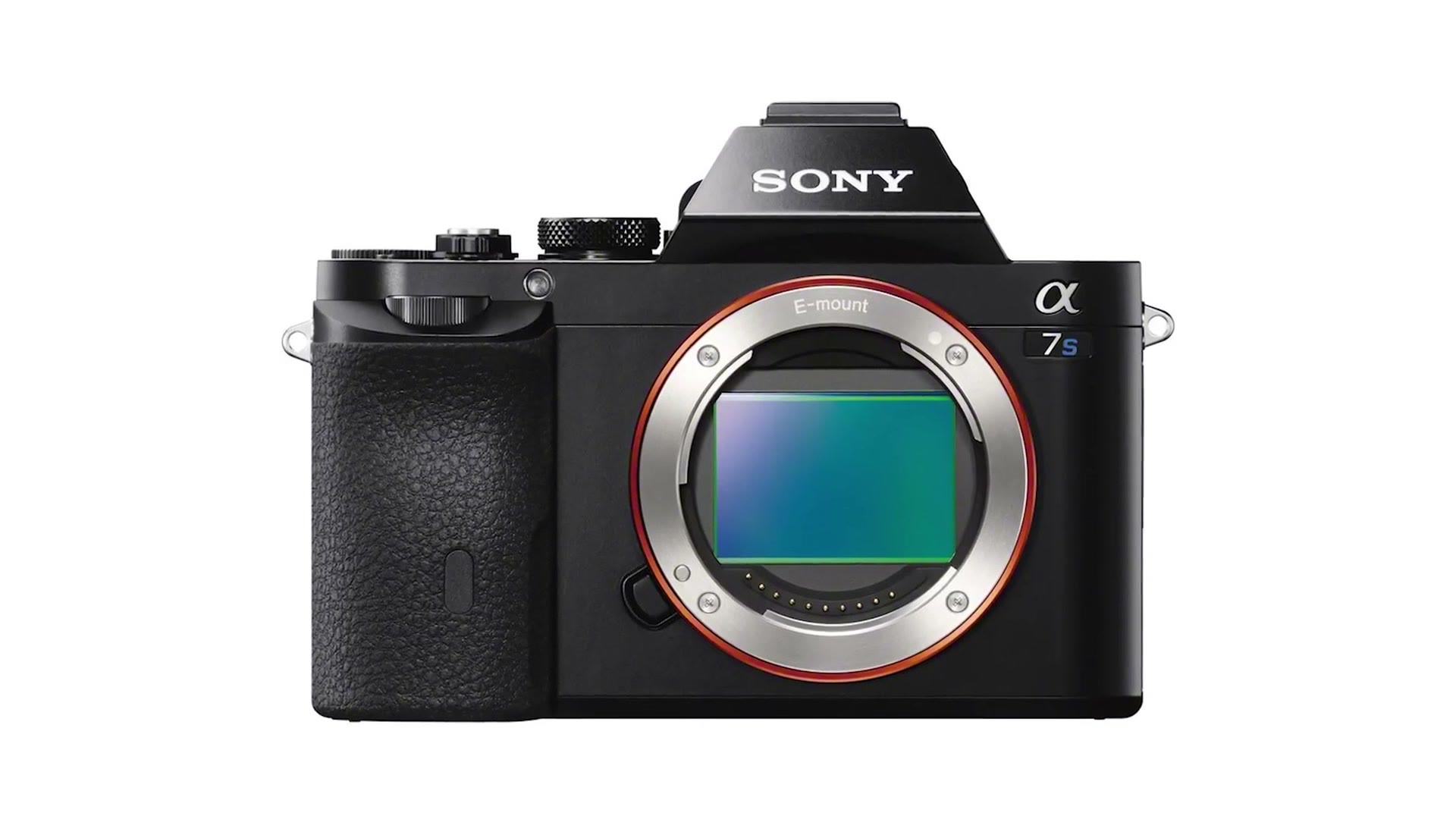
As I’ve said in my past few videos, this is the month of camera insanity. Canon gave us the R5 and R6 shooting 8K and 4K. Blackmagic announced a 12K URSA. Nikon announced the Z5, which has a horrible crop in 4K, so let’s not talk about that camera. And then comes Sony.
I’ll spoil my conclusion right now. Instead of needlessly chasing specs, Sony has been realistic with the a7S III and given filmmakers what they actually need as professionals.
4K, And Then Some
I’ll repeat what I said in my videos about the R5 and the R6 earlier this month. Overwhelmingly, the filmmakers I’ve talked to want a camera that does three simple things, starting with 4K at 60 frames per second in full frame.
Did Sony deliver? Boy, did they. The a7S III does that and goes beyond it to 4K at 120fps, though 120 does come with a 1.1x crop.
You also get a choice at 60fps: S&Q mode, which conforms the clip automatically and drops the audio, or regular video mode, which needs you to slow it down in post but keeps the audio. As somebody who loves audio, I love having that option at higher frame rates.
All of it records in 10-bit 4:2:2, at bit rates up to 600 Mbps in XAVC-I.
Let’s sit with that 600 for a second. Every previous Sony mirrorless camera, the a7S II, a7 III, a6300, a6400, a6500, a6600, a7R III, a7R IV, all of them recorded 4K at a maximum of 100 Mbps. Did it look good? I’m shooting on one right now and have for five years, so yes, but there was room. 600 Mbps is six times higher than any Sony mirrorless before it. We need real world tests, but as somebody who does not particularly enjoy math, I have not been this excited about numbers in a long time.
There’s a second option too: 200 Mbps in H.265 XAVC HS. I’m very interested to see how that quality compares, because it may be a great way to save space and still get a great image.
High Definition Video
Really, Matt? HD? It’s 2020, who is still shooting HD?
A lot of people, actually. Read any comment section and there’s always someone saying 4K isn’t happening. 4K is happening. But my point is that HD on this camera is insane: 1080p at up to 240 frames per second.
For context, Sony released the FS700 in 2012 and its headline feature was 240fps. That camera cost $8,000. Eight years later you get the same thing in a mirrorless body for less than half that.
SD Card Slots
That 600 Mbps bit rate affects which cards you can use. This camera has two UHS-II SD card slots, the most common memory card format, so they should be readily available and reasonably affordable.
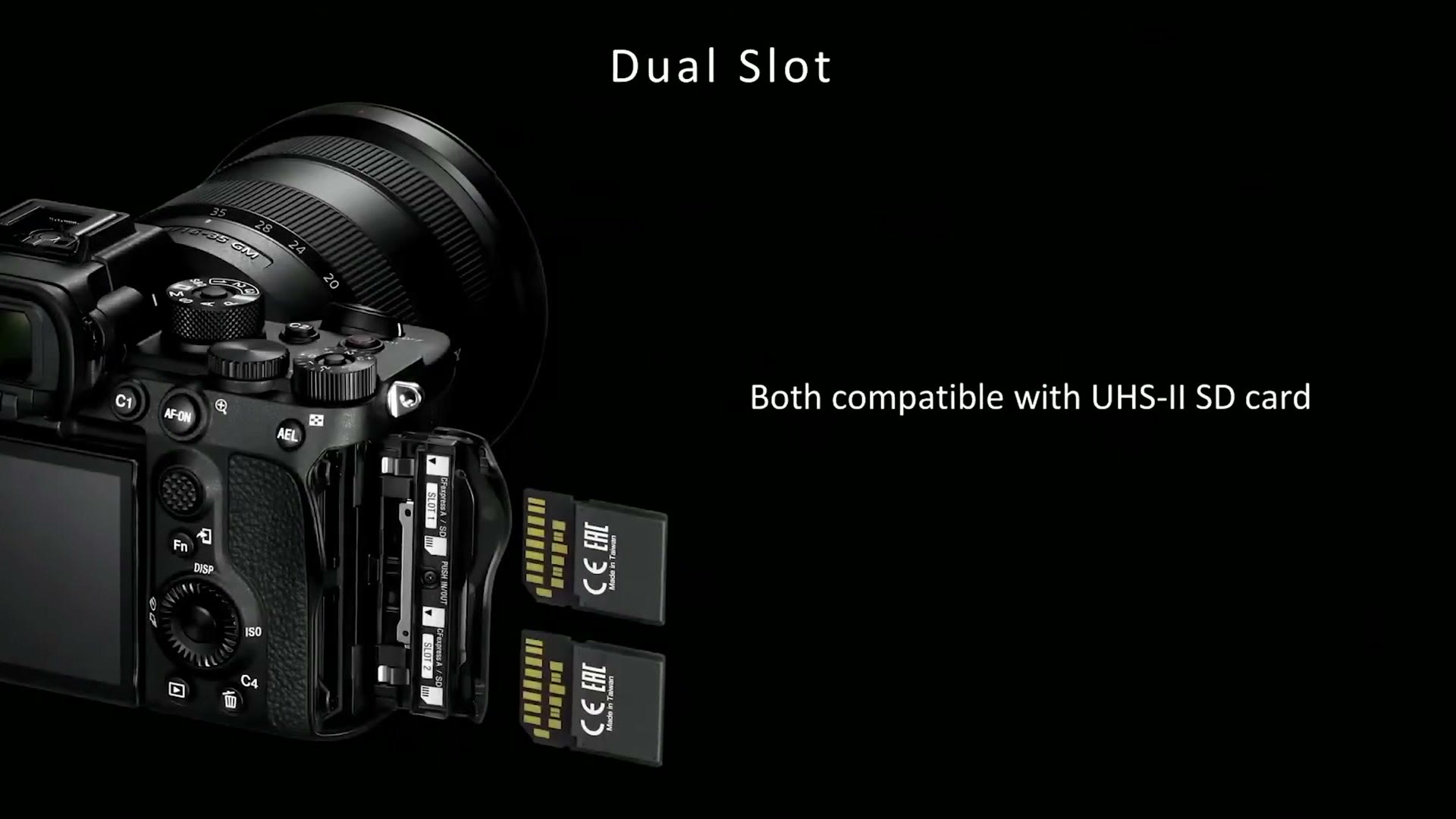
But Sony didn’t stop there. They did something with memory cards I have never seen a manufacturer do. It leaked weeks before the announcement and I was sure it was fake.

Those same slots also take CFexpress Type A.
Memory Cards
CFexpress like the Canon R5? Yes and no. CFexpress is the name of a card format, and just like SD has full size and micro versions that are both called SD, CFexpress comes in Type A, Type B and Type C. Type A is the newest, so new that there aren’t any for sale yet.
They matter for two reasons.
First, capacity. The UHS-II SD cards this camera takes top out at 256GB today. CFexpress goes up to 2TB. Sony announced two Type A cards alongside the camera at 80GB and 160GB, and I would bet nearly any money that other manufacturers will make larger ones soon.
Second, and this is the one that will catch people out: if you want 4K 120fps in ALL-I, you have to use CFexpress. SD is not supported at that resolution and frame rate.
One more thing. Because there are two slots, the a7S III supports dual recording at every frame rate and resolution, including 4K 120. As somebody who films weddings, which are one-take events where you cannot redo the ceremony, I am so happy to see that.
And there’s a bit rate I skipped. This camera also records 16-bit ProRes RAW out of a full sized HDMI port to an external recorder, at up to 60fps, while still recording to both card slots. Talk about backups. I usually avoid raw because of the file sizes, but I love that the option is there.
Low Light
The a7S III tops out at ISO 409,600, which is the same maximum as the a7S II. So what changed? Sony built this one with a back illuminated sensor, which is a fancy way of saying it lets in a lot more light. Same ceiling, much less noise on the way up.
For context, I can comfortably shoot my a7S II up to ISO 32,000 before I need a noise reduction plugin. This should be better than that.
While we’re here: in S-Log3 the minimum ISO is now 640. And Sony says that thanks to the faster sensor readout, rolling shutter is basically non-existent. As somebody who doesn’t film like Cloverfield that has never been a huge issue for me, but if you like your video shaky, good news.
Image Stabilization
My a7S II has IBIS, and while I can’t imagine going back to a camera without it, it’s really only good for holding the camera steady or moving very slowly. Compare that to the Panasonic GH5 and S1H, where you can literally walk and the footage still looks pretty stable.
For video, Sony has added a new Active stabilization mode that takes a 10% crop and offers noticeably better stabilization. Sony says the result is still 4K resolution. I’m skeptical, as I am about all electronic stabilization, but the test footage looks promising. Wait for real world tests.
Autofocus
Panasonic may still beat Sony on stabilization. Autofocus is the one where Sony is far above every manufacturer whose name doesn’t rhyme with revolutionary war weaponry.
One of the biggest weaknesses of the a7S II was its comparatively poor contrast based autofocus. I never trusted it and have always used manual focus. The a7S III may tempt me, with 759 phase detect points and Sony’s eye detect autofocus for video.

It supports autofocus at every frame rate and resolution, and you can now adjust the rack focus speed. Now we just need beard detect.
Touch Screen And Menus
Now the stuff people have wanted since the first a7S.
It’s got a flippy screen. YouTube vloggers and anyone who has ever tried to film themselves may rejoice. And if you’d rather use an external monitor, the rear screen no longer blacks out while recording.
It has a real touchscreen, not like the one on my a6400 that only lets you touch to focus. You can navigate the menus with it.
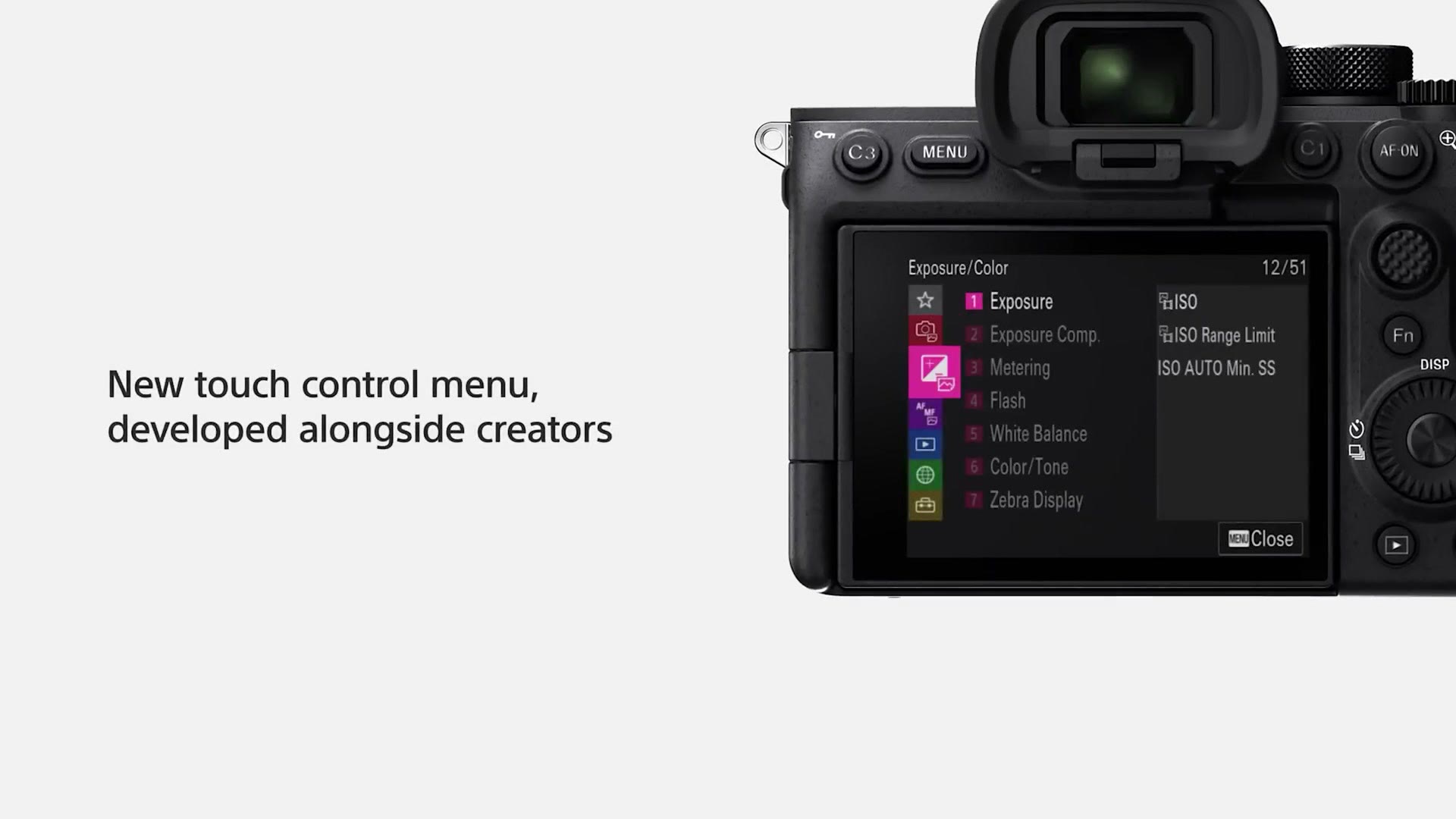
Speaking of which: after many years of genuinely convoluted menus, Sony has reorganized the entire menu system into accessible settings that work with touch. There’s even an option to rename your video clips so they don’t all start with the letter C.
Better Colors
People have always complained that Sony’s out of camera colors look clinical at best and green at worst. Sony says the a7S III has been tuned to the same color science as their FX9 and VENICE cinema cameras, so the colors should look quite good.
There’s no S-Cinetone picture profile, so my wishlist video was not 100% accurate. But even without it I’m hoping these colors land.
Record Button And Power
Remember how the a7S and a7S II had the record button awkwardly on the side? I immediately remapped that to C3. Then with the a7 III Sony put the record button where C3 was. And now that everybody’s muscle memory has locked in, they’ve moved it again. The a7S III has it on top.
On power, it uses Sony’s Z batteries, same as the a7 III, a7R III, a7R IV and a6600, and Sony says to expect about an hour and a half of recording per battery. Wait for real reviews, but I will gladly take that over the barely one hour I get from a7S II batteries. It’ll also charge and run over USB-C, which I love.
Overheating
Sony chose to announce this camera at a very specific time. One could argue the perfect time. A few weeks ago Canon announced the R5 and R6, which are very tempting for a lot of filmmakers, if not for one big thing.
I ended my wishlist video by saying Canon had just made beating themselves easy, and that all Sony had to do was release a camera that doesn’t overheat in an air conditioned room. Bold statement, and it’s looking more real as more overheating tests come out.
Here’s something I’m curious about, so put your tinfoil hat on with me. The early rumors said the a7S III would land at the end of June. Then Sony delayed it a month. My theory at the time was that Canon had just announced their R5 and R6 event for July 9th and Sony didn’t want to be overshadowed by cameras with better paper specs like 8K raw.
New theory. I think Sony knew the R5 and R6 had overheating problems. Wait a month, let Canon announce, let filmmakers work out that overheating is a real issue, then announce the a7S III two days before the R5 starts shipping, with just enough time for people to cancel their pre-orders. I called that a conspiracy theory, but I personally know multiple people who have cancelled an R5 pre-order to order this instead.
Seriously though. I’ve said filmmakers want three things, and in light of all this I need to revise it. Filmmakers want a camera that records 4K 60 in full frame and doesn’t overheat. That last one is arguably the most important, because who cares if your camera can record 8K if it can only do it for 20 minutes in an air conditioned room? That’s not a usable feature. That’s a number on a spec sheet.
Cooling
Sony says the a7S III has a new cooling solution, a graphite alloy heat sink they claim is five times better at dissipating heat than their previous cameras. On that basis they say it will record for at least an hour at 4K 60 without overheating, and that the one hour limit exists because the battery dies, not because the camera gets hot.
Be skeptical of that. All we have right now is Sony’s own testing, conducted at 77°F / 25°C. That is still an air conditioned room, just a slightly warmer one than the 73°F / 23°C Canon used for the R5.
Price
The a7S III is up for pre-order now for a September release at $3,498.
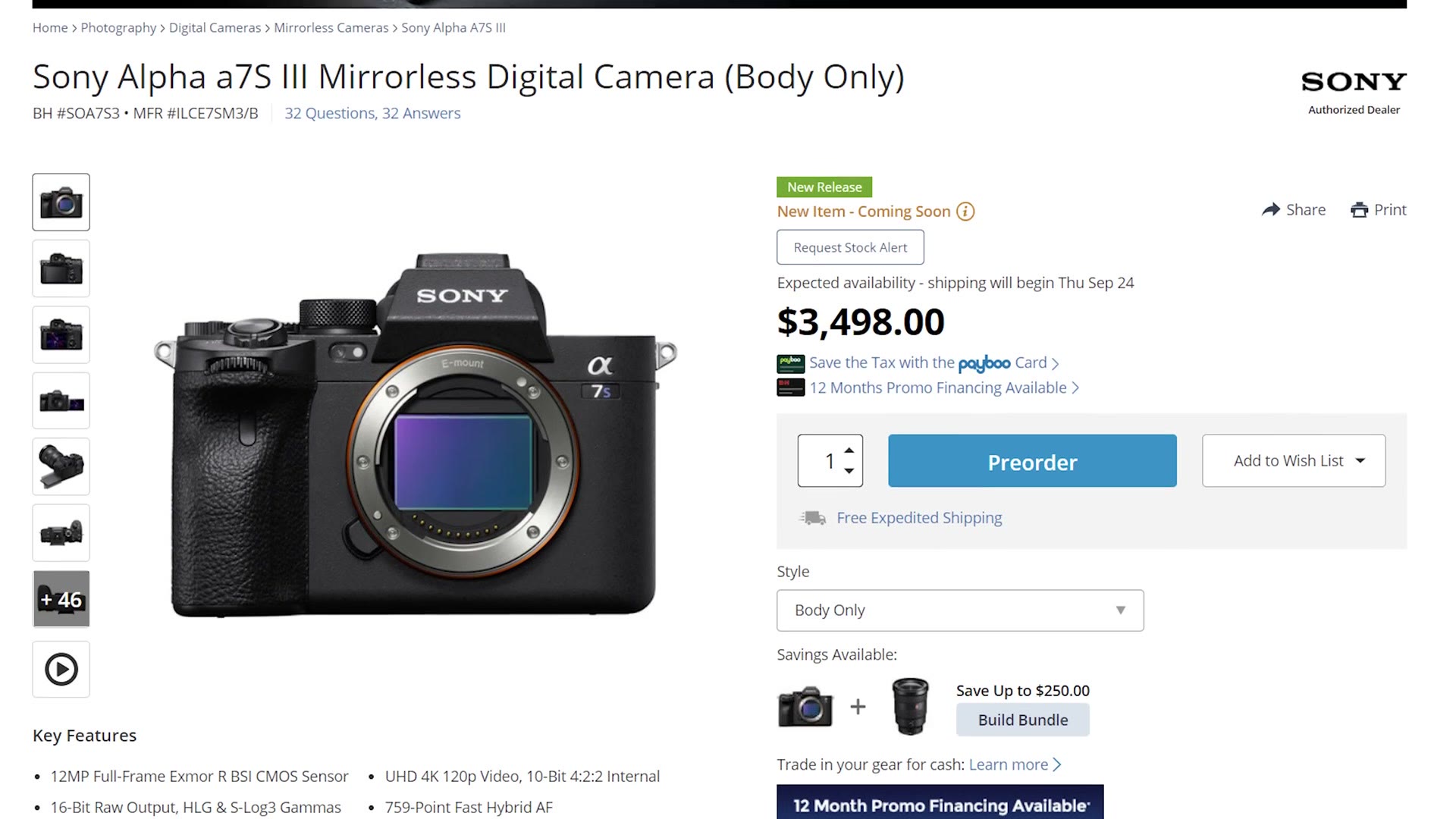
That’s exactly what I thought Sony would charge. Look at the history. The a7S released at $2,500 in 2014. A year later the a7S II came at $3,000. Here we are in 2020 and Sony follows the trend with another $500 increase.
Conclusion
Sony is giving us the camera we need as professional filmmakers to make good work. They aren’t offering ridiculous specs like 8K, and the overheating tests are starting to suggest the R5 may have flown too close to the sun with features like that anyway.
In the present, what professional filmmakers need is 4K, IBIS, good autofocus, dual card recording, good battery life, and reliability without overheating. The a7S III is the first camera I’ve seen, at least on paper, that gives us all of that in full frame without compromise.
Is it worth the price? Let me put it this way: I’ve already put my pre-order in. You can pre-order it at B&H too.
And as I always say when I make a video about a camera, but especially now: wait for real world reviews. Watch as many as you can before you decide. I went on to make several of my own, including a review for wedding filmmakers, an overheating test at a real wedding in the Texas heat, and a memory card guide once the CFexpress Type A cards actually existed. If you want the whole thing in one place, my a7S III Pro Video Guide is here.
Also, if you happen to be a wedding filmmaker like me, you probably want to book more couples and film more weddings. I made a free guide with practical steps you can use right now, and you can download it here.
This was written from the specs on announcement day, July 2020, before anybody had shot with the camera. Everything above is what Sony claimed and what I expected. The reviews linked above are what actually happened.