
After three days filming with the Panasonic SHX1 on the streets of Osaka, here’s my verdict up front: it’s one of the most complete box cameras I’ve ever used, basically an S1II in a cube, with Blackmagic RAW and good autofocus in the same body. The catch is that Blackmagic RAW only records to an external SSD, there are no built-in NDs, and for the way I film, I’d still reach for the S1II more often than not.
Panasonic flew a bunch of us filmmaker YouTubers out to Osaka to show us their new camera. I vlogged the first part of the trip on the Panasonic LUMIX S1II, a camera that is already absolutely stellar, so I was genuinely wondering what the heck they could improve on.
First Look At The Panasonic SHX1, A TRUE Box Camera
Panasonic showed us the brand new Panasonic LUMIX SHX1 at their headquarters in Osaka, and it is a true box camera. It is literally a cube. Honestly, I really like it. It feels like Blackmagic and Panasonic had a baby, and this is what they came up with.
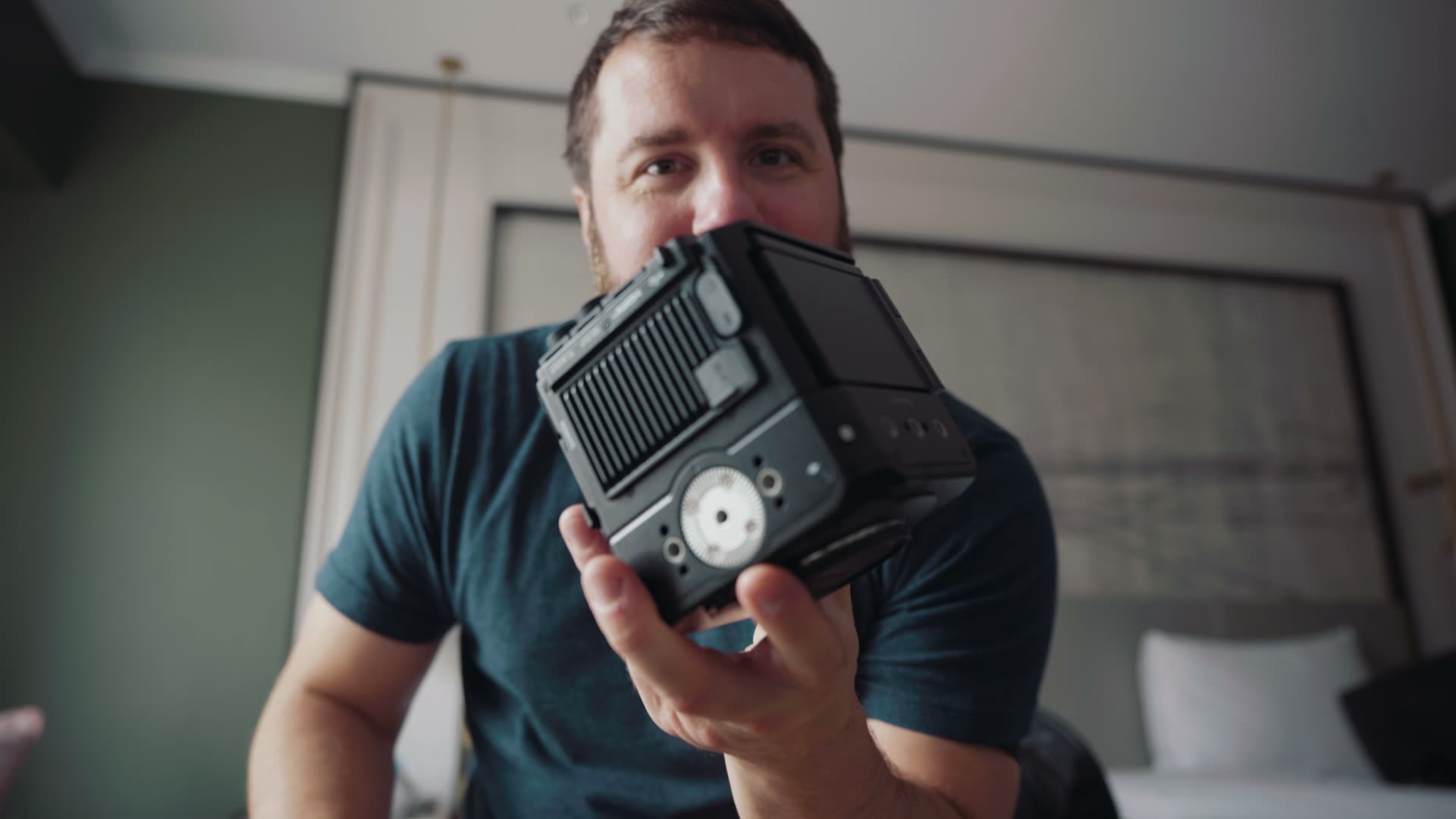
You get a ton of cool features in this camera, not the least of which is Blackmagic RAW recorded to an SSD. As far as I know, this is the first camera not made by Blackmagic that offers that. So very cool!
My STRIPPED-DOWN SHX1 Rig
I’ve been building a rig for what feels like forever, but here’s what I landed on. I love a stripped-down setup, so this is literally lens, box, and hand grip. I’m not using the top handle, because I don’t need any XLR stuff right now.
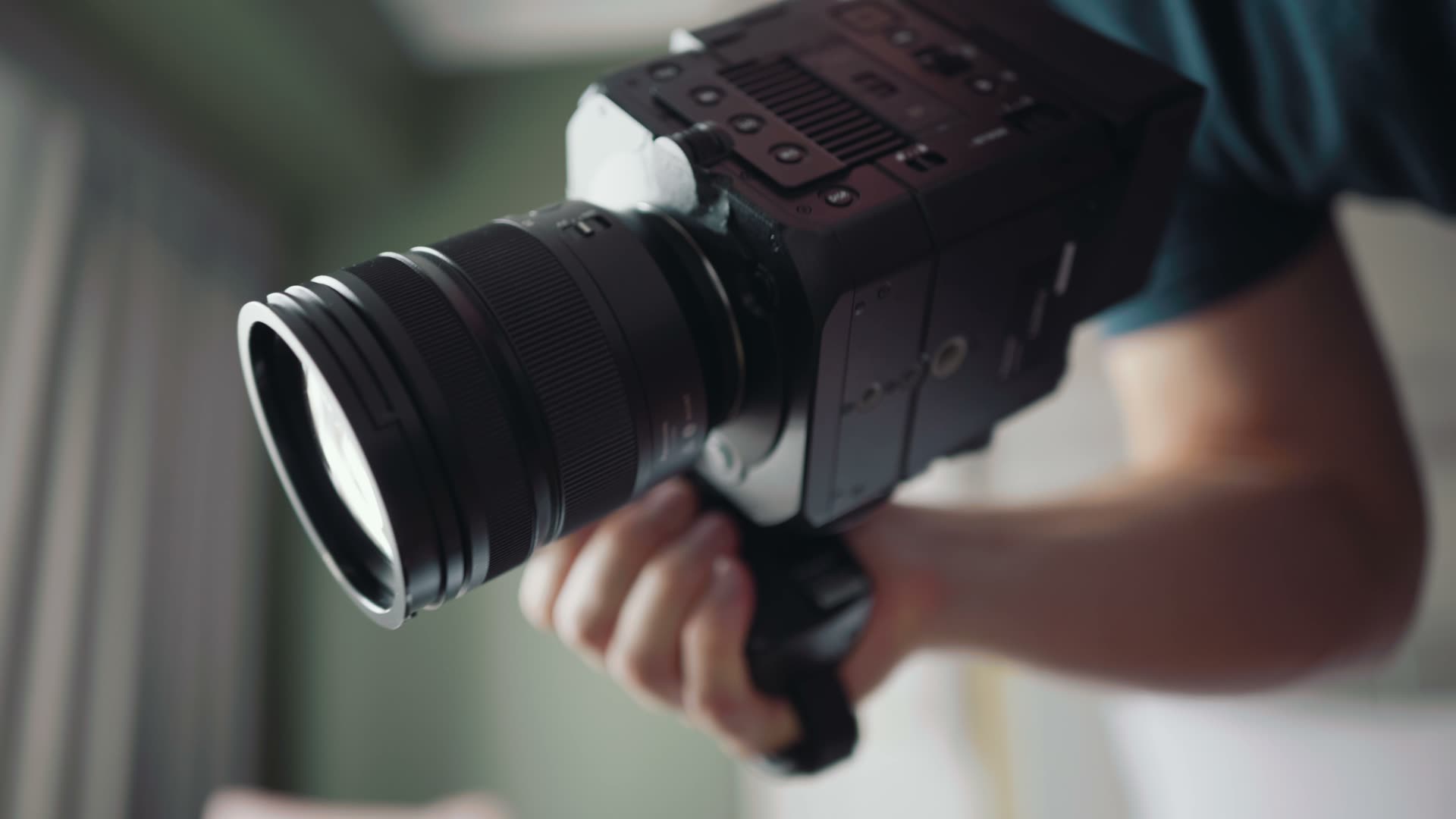
The SSD is mounted on top with the cable running around the side. I didn’t have a locking cable connector yet, but that’s okay. Overall it’s a really compact setup and easy to hold.
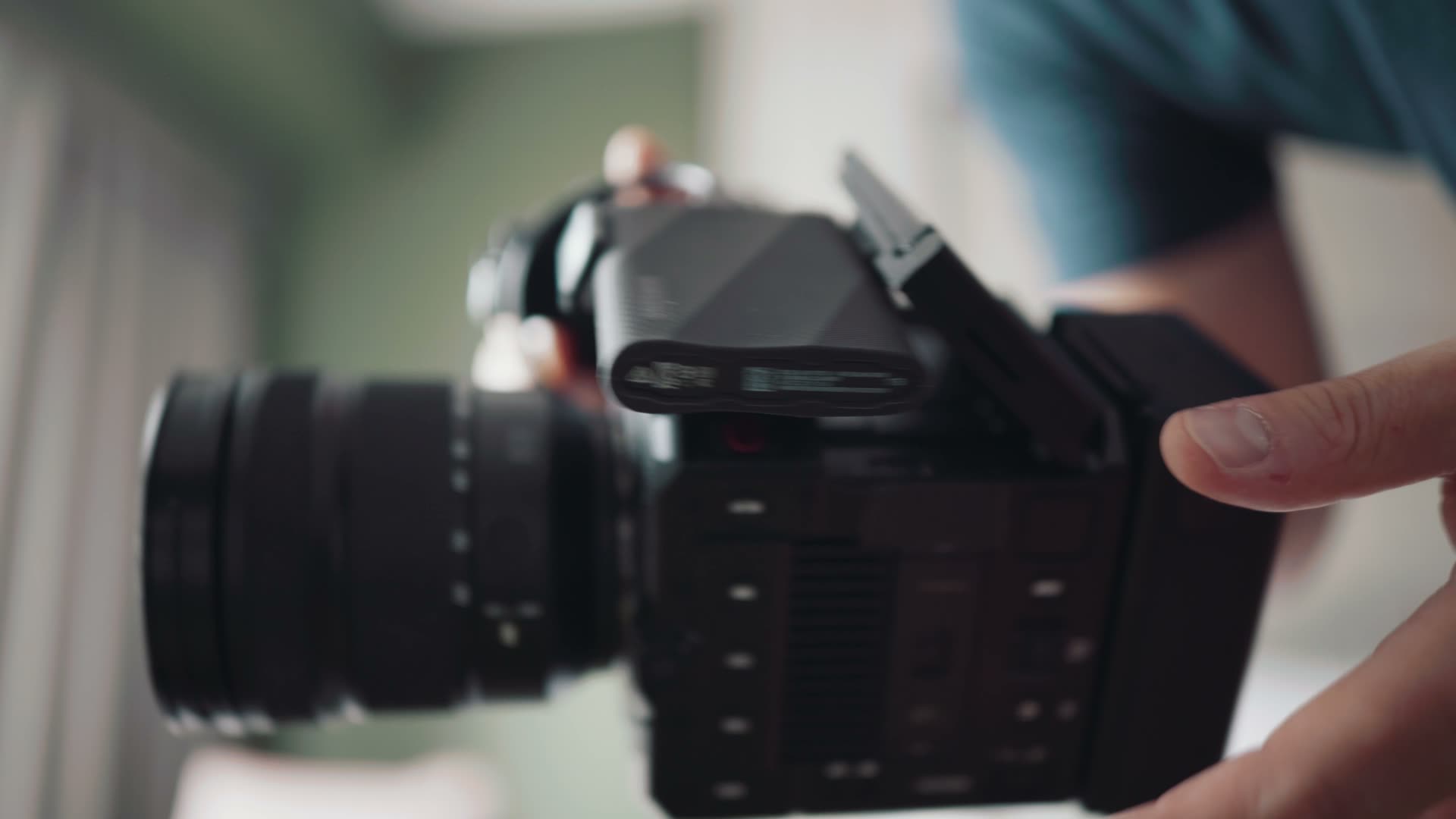
The only con is that the screen doesn’t fold all the way down anymore. It still folds out and still tilts, but with the SSD up there it can’t fold down all the way.
Vlogging With A BOX Camera
Is vlogging with a box camera ridiculous? Maybe! I spent most of the trip wandering Osaka with Jordan from PetaPixel, frantically trying to learn all the new camera settings while also not getting run over by a bicycle. It does have stabilization, which is good, and honestly, the more stressed you are while filming a camera review, the better.
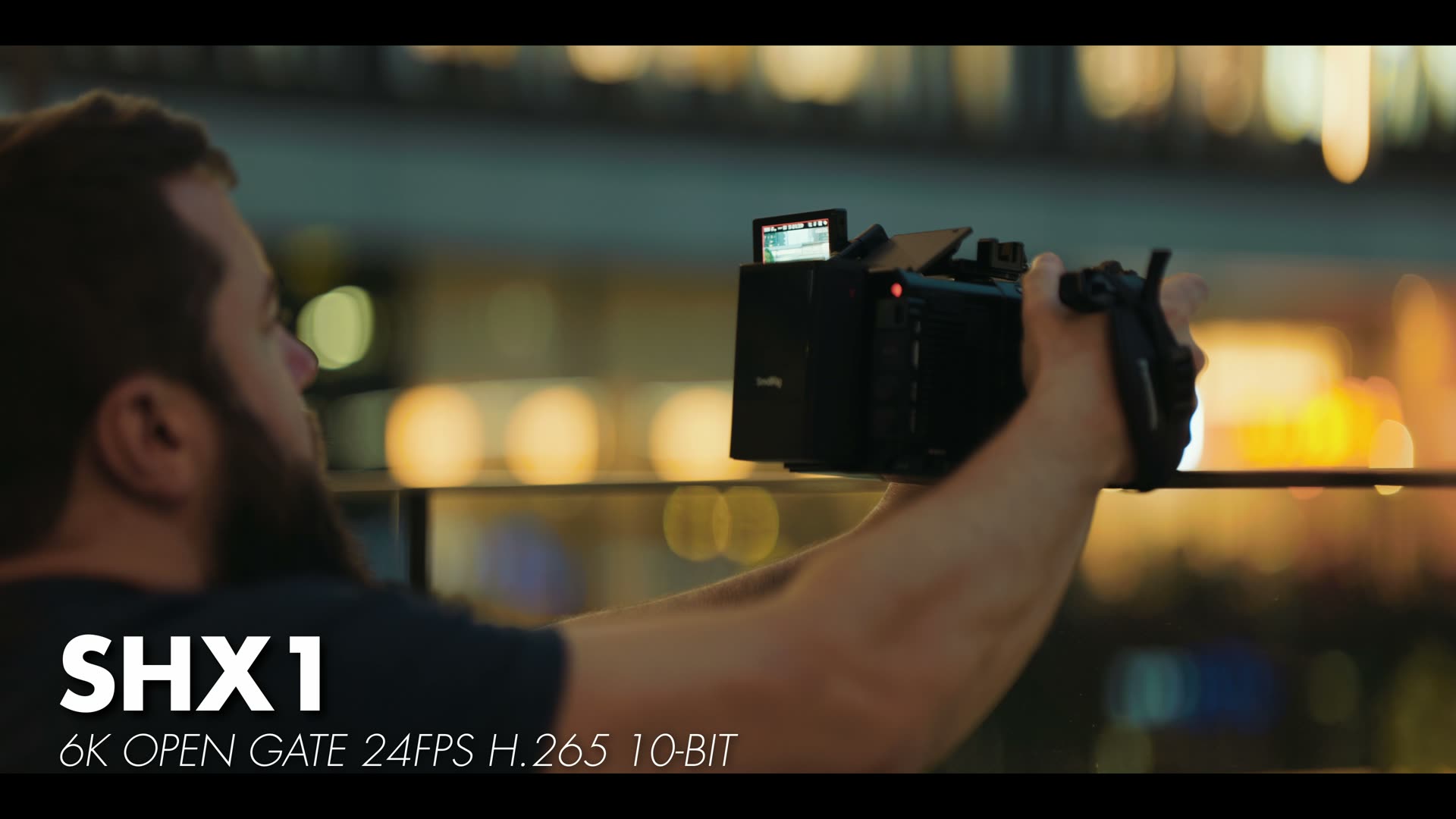
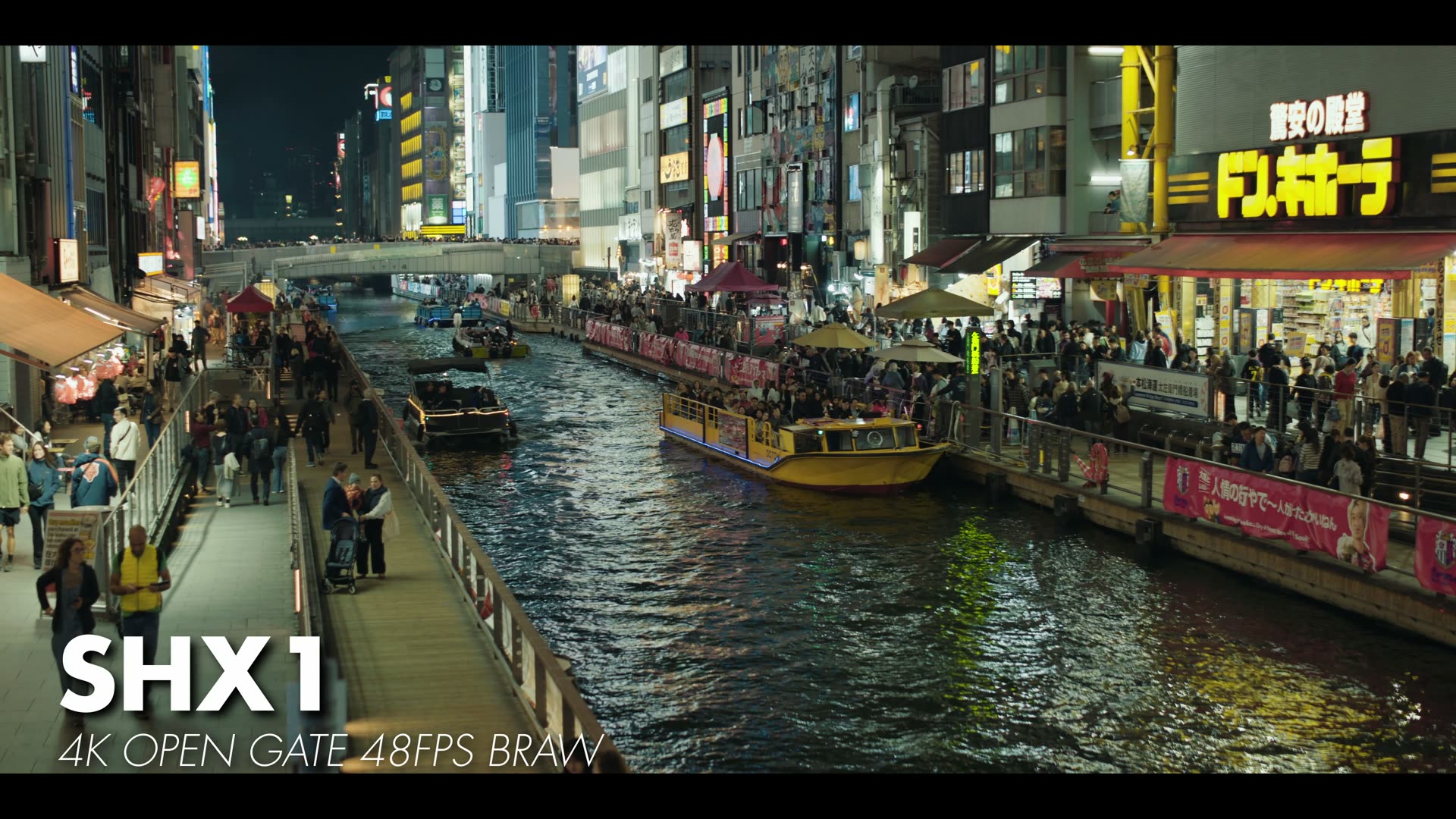
On the first night we took the SHX1 to Dotonbori with anamorphic lenses, a 50mm and a 100mm each. I vlogged with the 50mm T1.8 anamorphic the whole time. It’s very, very close for vlogging, but look at that bokeh! It gives the image a little bit of character and a little bit of anamorphic flair. If you’ve never used one, here’s how anamorphic lenses work. I brought a regular lens too, but I never used it because the anamorphic looked cooler.
One Of The MOST Complete Box Cameras
After a bit more time with it, the SHX1 feels like one of the best and most comprehensively put together box cameras, while still having some of the drawbacks of a box camera.
What I mean by that is it has a large, usable screen, and you don’t always get that on a box camera. I love the Blackmagic Pyxis 6K, but its screen is baked into the side and you can’t tilt it, so you basically have to rig it up with an external monitor (I get into that in my wedding filmmaker’s review of the Blackmagic Pyxis 6K). With the SHX1 you don’t, because I can see myself while I’m filming myself, which is kind of rare.
It also has built-in mics, which isn’t always a guarantee. I do wish it had one XLR input on the body itself without needing the handle, and Jordan agrees. With the grip on, yes, it’s heavier than something like the Sony FX5. But it’s a pretty darn usable camera right out of the box, which means you don’t have to rig it up if you don’t want to. You can’t always say that about a box camera. Good job, Panasonic!
Overall, it really feels like Panasonic took an S1II and put it into the box camera form factor, and I’m not upset about it. There’s a whole subset of filmmakers that are all about a good box camera, and Panasonic said, “Hey, we’re gonna give you a good one.” You’ve got IBIS, you’ve got all the features from the S1II, and I could see myself using it for things like locked-off interviews.
The BIGGEST Con: No Built-In ND
If we’re talking about cons, I think the biggest one is the lack of built-in ND filters. I’ve been telling literally any camera company that will listen to me to put NDs in their cameras. I told Canon, Sony, Panasonic, all of them. And they’re like, “Yeah, we should, but we can’t because of these pesky laws of physics.”
Blackmagic RAW, But ONLY To An SSD
I was so thrilled to hear they were including raw video with this camera, and not just ProRes RAW, but Blackmagic RAW if you use an external SSD. That’s the hang-up. I love the thought of compressed Blackmagic RAW, at up to a 12:1 compression ratio, but having to use the SSD is kind of a pain.
Especially when the competition has the FX5 with internal raw that looks really good, and the Nikon ZR with internal raw that works really well (I put those two head to head in Sony FX5 vs Nikon ZR). Then Panasonic comes in with Blackmagic RAW, a really loved format, but it’s gotta go to the SSD.
It’s not a deal breaker, and I can see people getting used to it. But for me, I’m like, “Man, we’re so close, guys. Give me just a little bit internal.” Even a lower quality raw format internally would help it better compete with the FX5.
BRAW With GOOD Autofocus
Whatever you think about internal raw versus an SSD, consider this: this is a camera that films Blackmagic RAW and has good autofocus. I know Blackmagic has been adding autofocus to their cameras, but I don’t see anybody lighting the world on fire about it. So the option to have good autofocus with BRAW? I think that’s gonna make some people pay attention.
When I first heard it would have Blackmagic RAW, I wondered if it would steal users from Blackmagic cameras. Then I remembered: it’s the L-Mount Alliance, baby! They’re in an alliance, so I guess it’s okay. Friendship in the camera space. Who knew?!
The SSD Takes 10 SECONDS To Start
On my last day I got access to the update I needed to enable Blackmagic RAW decoding from this camera, so I recorded everything to the SSD while getting some street visuals around Osaka. And it looks pretty darn good, I have to say.
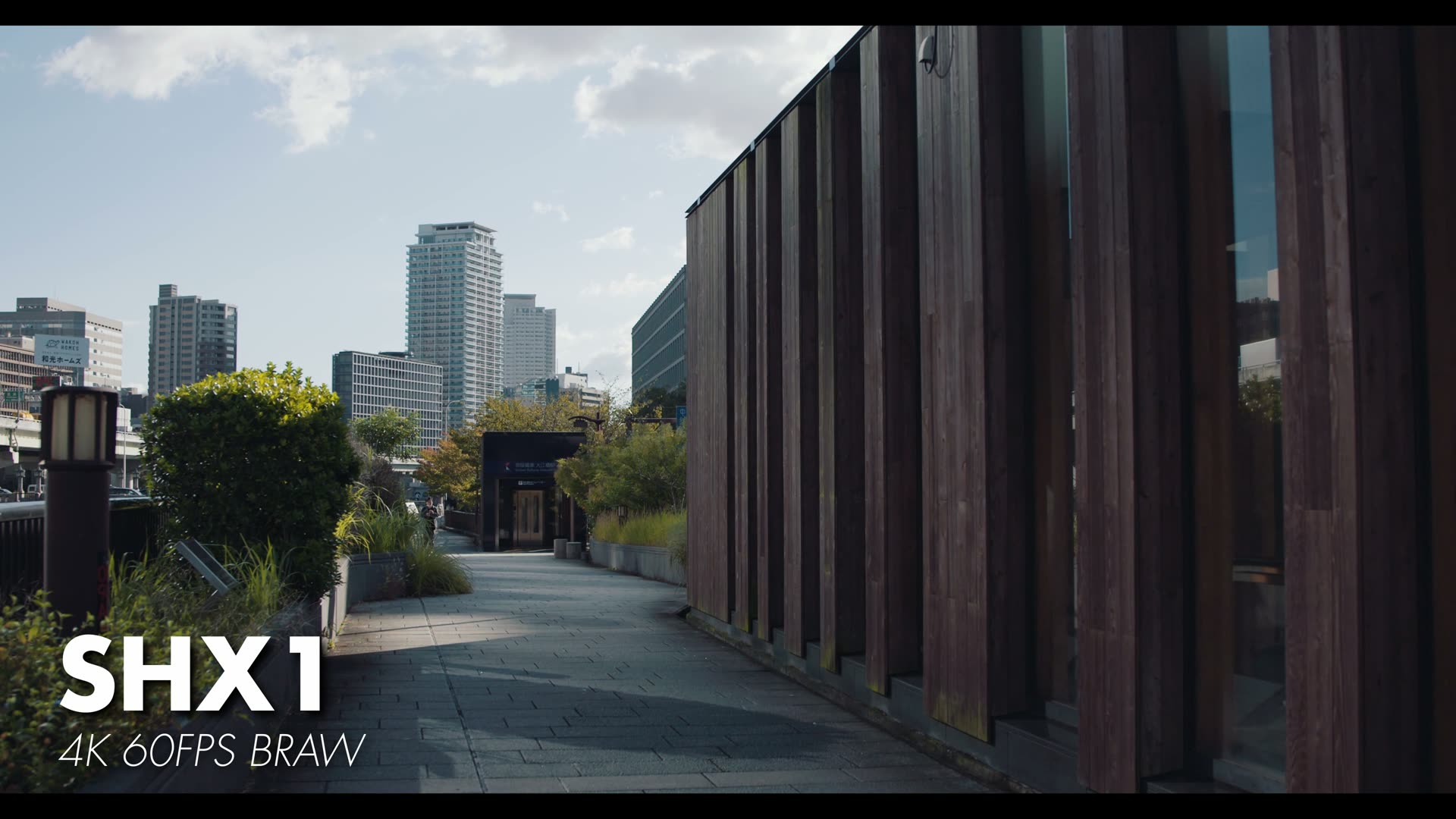
The main thing to keep in mind is that it takes about ten seconds to start up the camera and access the SSD. If you’re filming something bigger, like a wedding, where it needs to be running all the time and you can’t miss a moment, you might want to run it off a giant V-mount battery and never turn the camera off. Or work around it. For me, casually walking around, I’d stop, get a clip, move on, get another one, and it worked really well.
It Feels JUST Like The S1II
After using this camera for a few days, there’s a familiarity that comes with it. It’s not like the FX5, which has a completely different interface than the Sony FX3 even though the exterior looks similar, so you have to learn a whole new menu system. The SHX1 feels just like the S1II interface, so you pick it up really quickly.
Yes, the buttons are in different places, and yes, the interface has some quirks that I think they’ll iron out with firmware updates. But from a usability standpoint it has not been hard to learn at all, and I really appreciate that in what’s more of a true cinema camera than the hybrid S1II.
Why I’d Still Pick The S1II (Hot TAKE)
Here’s a bit of a hot take: if I’m picking a camera to use, I’m probably going with the S1II over the SHX1, mostly because of the way I film. I’m usually filming weddings, where I need a smaller, more compact setup and don’t need a full-size cinema camera. The SHX1 is a very compact cinema camera, but it’s still a cinema camera, and a hybrid like the S1II is pretty darn compact. (If you’re weighing the S1II, here’s my full Panasonic S1II review.)
But if I had a larger production where I needed to rig out a camera, the SHX1 would be so good for it.
32-Bit FLOAT Through The Mic Jack
You also get 32-bit float right through the mic jack, and you don’t have to do anything to get it. It’s very nice. I do wish the internal mics were 32-bit float too, since they’re 24-bit. Will you just do it all, Panasonic? I think we’ll get there eventually.
And one more thing: vlogging a box camera is an arm workout. If you watch closely, I keep switching hands, because it is genuinely tiring. But nobody ran me over and I didn’t hit anything, so I’d call that a win.
Who The SHX1 Is REALLY For
If you’re already in the Panasonic ecosystem, you’re a die-hard, and you want a cinema camera like this, the SHX1 is not a bad choice. For all of my more in-depth thoughts, watch my full SHX1 review.
As for Osaka, it’s been very fun. I’ve only been to Osaka, Kyoto, and Tokyo, but Osaka is winning for me. And once you’ve got your own footage back from a trip like this, my free Edit Videos Like A Pro guide will help you turn it into something you’re proud of.