
Both of these are compact cinema cameras capable of recording RAW video internally, and that is what makes this such an interesting matchup. The Sony costs literally over double the price of the Nikon, but the Nikon records higher resolution video and beats the Sony in several ways. There is also one deciding factor that may make the cheaper camera cost more in the long run.
If you want a deeper dive on either camera on its own, I have full reviews of the Sony FX5 and the Nikon ZR.
Internal RAW Is The Big Enchilada
The feature that sets both of these cameras apart from much of their competition is internal RAW video recording. This exists because of years of lawsuits and legal battles where RED, the camera company, was suing different companies for using internal RAW, including Nikon. Nikon eventually said, “Hey, how about we just acquire you?” and did exactly that. That not only cleared Nikon to implement RAW video into all of their cameras, it opened the floodgates for every other camera company to add RAW recording without fear of lawsuits. Blackmagic has its own take on internal RAW as well, which I looked at in my review of the Pyxis 6K.
But how the FX5 implements internal RAW is very different from how Nikon handles it. With the ZR, you get a veritable buffet of options. You can record in RED RAW, or Nikon RAW, or ProRes RAW. So many flavors of RAW to choose from. With Sony, you are limited to one RAW codec, X-OCN.
Which may lead you to think Nikon is offering the superior option here. Hold up, because that is actually not true.
Compression Is The Whole Ballgame
The issue is that even with all of that variety on the Nikon, all of those RAW formats have a very minimal level of compression. Compression matters enormously when you are filming RAW, because uncompressed RAW video gives you truly massive file sizes.
Thankfully, RED were the original pioneers of compressed RAW video, and they have fantastic compression levels in their cinema cameras. Small file sizes, an image that still looks fantastic, and all the control of RAW. That is a big part of why RED’s cinema cameras took off in the first place.
So here is the strange part. Even though Nikon now owns RED and all of their compression technology, their engineers decided not to offer any compression options with RED RAW in the camera. Nikon RAW does support a normal compression mode that drops file size by about 50%, but people are not usually buying the ZR for N-RAW. They want to film in RED RAW. And it does not really matter whether you choose RED RAW, Nikon RAW, or ProRes RAW, because the file sizes are massive regardless. We are talking hundreds of gigabytes for an hour of recording.
Memory and storage prices are not getting any cheaper these days, so let me show you what that actually looks like. I put a 1TB CFexpress Type B card in the ZR and set the camera to record 6K at 60 frames per second, which is a very high resolution and frame rate. With that full, freshly formatted card, I get exactly 36 minutes of recording time before the card is full. That is wild.
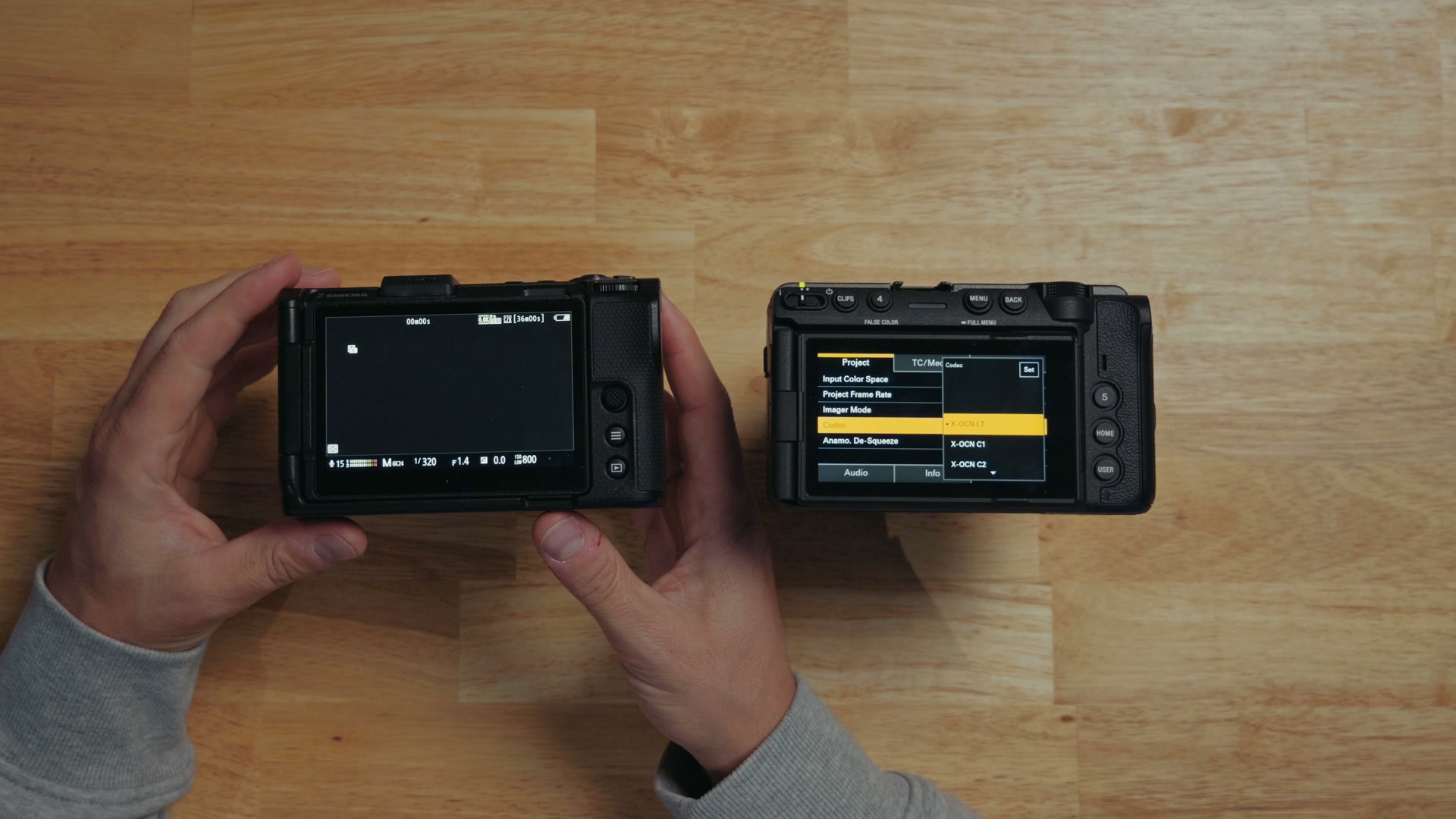
Which brings us to the FX5, offering only that one flavor of RAW. But with X-OCN, unlike Nikon, Sony is offering some truly stellar compression options, including the smallest file sizes Sony has ever offered for RAW recording. X-OCN C1 and X-OCN C2 are so small that you can record them to a V60 SD card. You do not even need CFexpress, which is extremely impressive, and it makes filming RAW a viable option for a lot more filmmakers.
So I ran the same test on the FX5. Highest level of compression, recording 5K 16:9 at 60 frames per second, with a 480GB CFexpress Type A card inside. That card is roughly half the capacity of the one in the Nikon, and physically smaller too. How much recording time?
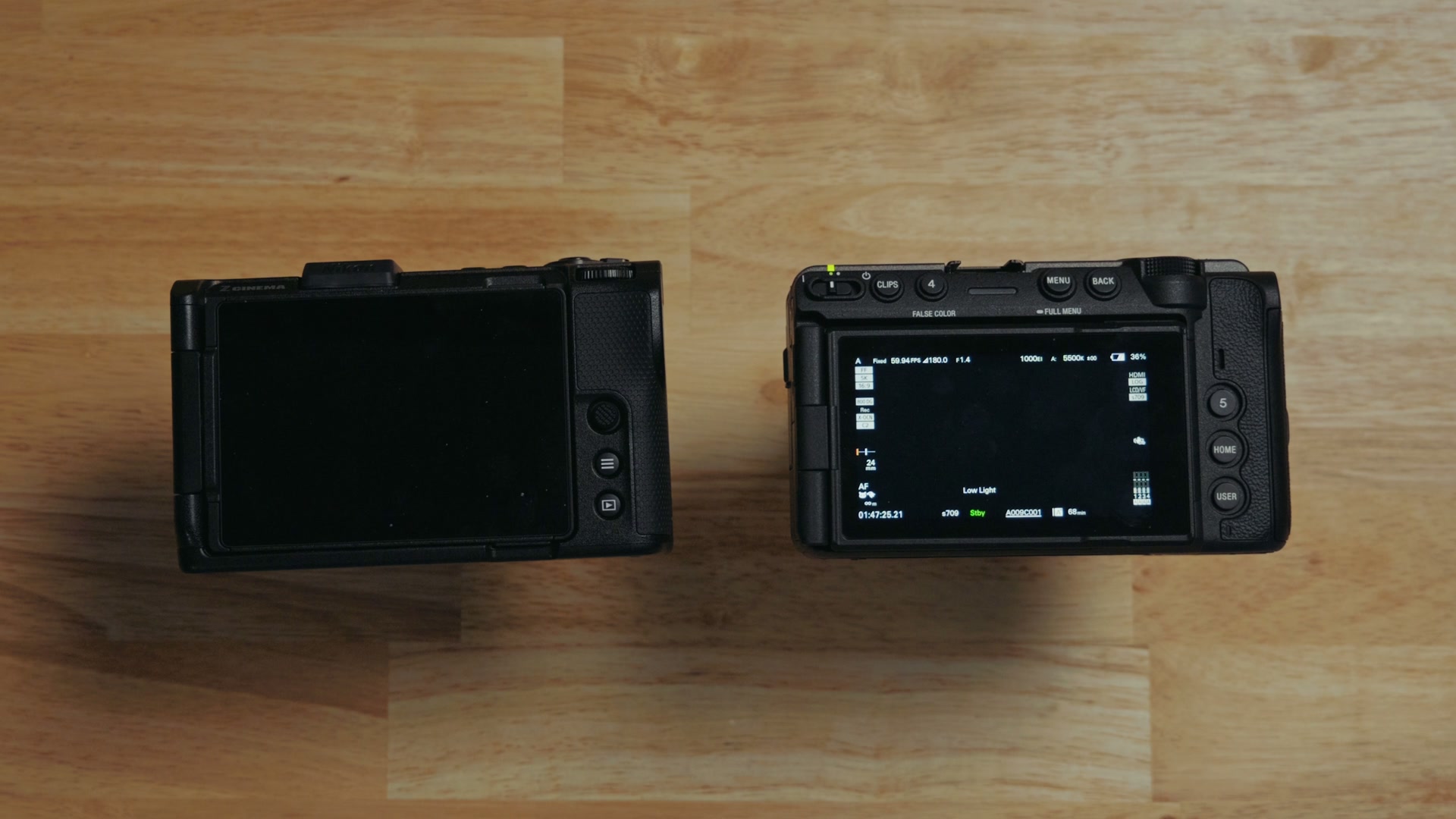
68 minutes, up from 36 minutes on the ZR that was recording to a card twice the size. The FX5 is producing footage roughly four times smaller than the ZR. I should disclaim that the ZR was recording 6K while the FX5 was recording 5K, so keep that in mind, but the gap is still enormous.
16-Bit Versus 12-Bit, And Why It Is Closer Than It Sounds
There is another area of RAW where Sony is significantly ahead, and that is bit depth. We are not going to get super scientific here, but what you need to know is that the ZR records RAW video in 12-bit, which works out to roughly 68 billion colors. That is a lot of colors, and a big upgrade over the roughly 1.07 billion colors you get if you record in 10-bit.
Here is where things get crazy, because Sony’s X-OCN is not 12-bit or 14-bit. It is 16-bit. Four more bits, Matt, okay, calm down. But those four extra bits mean the FX5 is not recording 68 billion colors like the ZR. It is recording over 280 trillion colors. And even at the highest compression C2 format, you are still getting that 16-bit color, which is really impressive.
I do not want to get too far in the weeds, so one important caveat: RED RAW uses logarithmic RAW while Sony uses linear RAW, which actually makes them pretty close in terms of overall RAW quality. It is just that the RED RAW footage has much less compression, which gives you massive file sizes without better quality. All of it together pushes the FX5 well ahead of the ZR on RAW, with smaller and more usable files.
Dynamic Range: Average Versus Exceptional
This is unfortunately another area where the ZR struggles. Even though it is recording 12-bit RAW, its sensor is still not capable of hitting the same level of dynamic range or holding the same amount of highlight and shadow detail as the FX5.
Nikon claims something like 15 stops, but it measures closer to 11 whenever people test it. Sony claims 16 stops and actually hits 14. That sounds like a small gap, but dynamic range doubles exponentially. A three stop difference between 11 and 14 translates to the FX5 capturing eight times more light information in the real world.
You will absolutely notice this on a challenging scene with extremely bright highlights and dark shadows. The FX5 gives you more room to lift shadows without dragging up noise, and to save highlights without clipping, which is a big part of what makes an image look cinematic once you get it into the grade. To be clear, I would not call the dynamic range on the ZR bad. It is more like average dynamic range, while the FX5 is exceptional.
32-Bit Float Audio: Nikon Wins This One Outright
Let’s give Nikon a win, and do not worry, it gets more than one.
32-bit float audio recording has only been added to cameras in the last few years and it is incredibly useful. If you record audio that is too quiet, you can bring the levels up without introducing noise and hiss. If the audio is peaking, you can bring the levels down without them clipping. You can fully recover the track and hear everything.
Both the ZR and the FX5 support 32-bit float, which is wonderful, but Sony makes it significantly more complicated. To record 32-bit float on the FX5 you have to buy a separate standalone XLR handle that attaches to the hot shoe. It does give you XLR inputs, 4 channel audio recording, and a lot more control, but it also costs a lot more money.
Nikon, on the other hand, said “see this 3.5mm microphone jack on the side of the camera? Just plug any mic into there.” Any mic at all will get you 32-bit float audio. No adapter handle required, included in the cost of the camera.
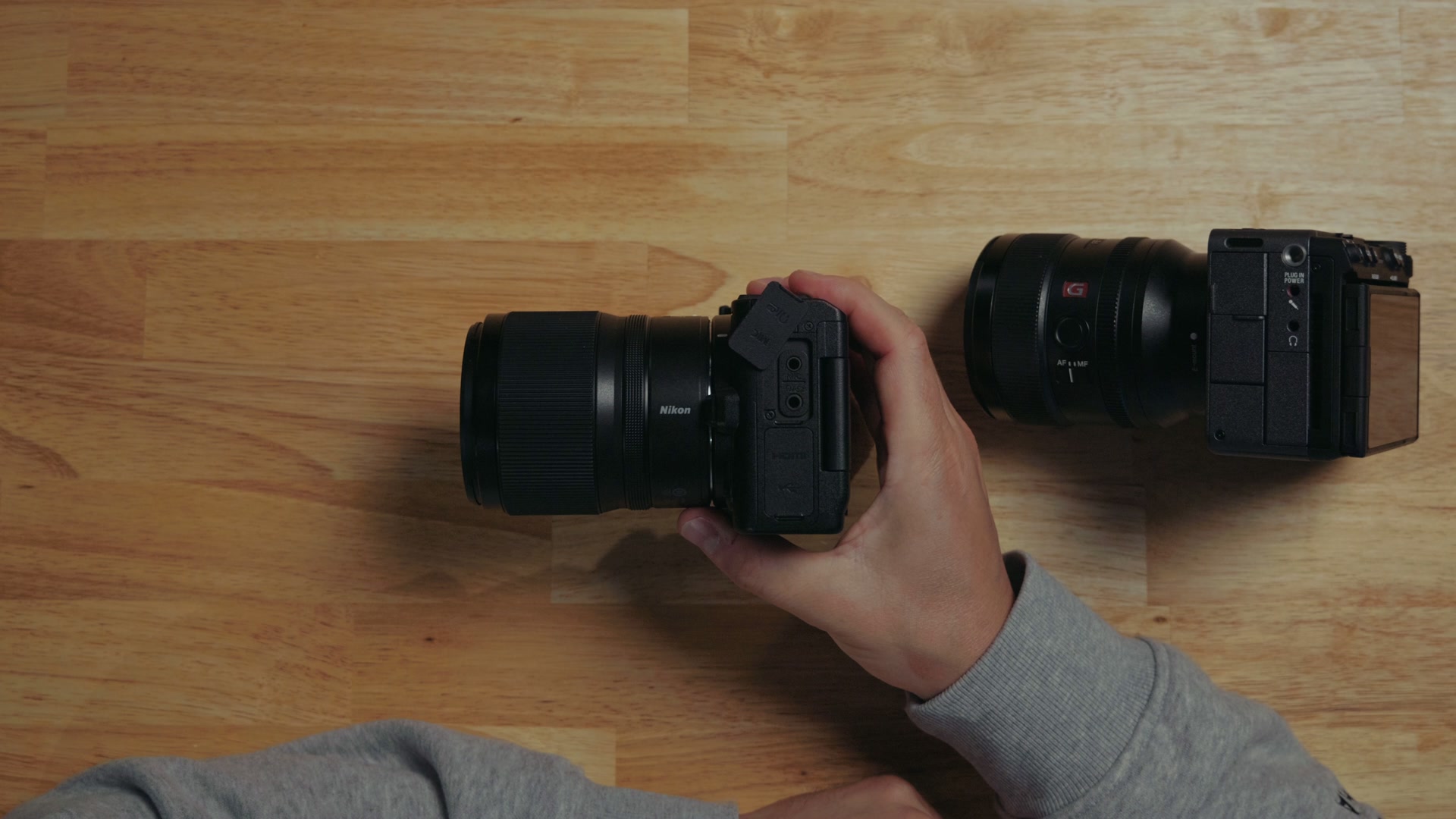
This is something I really wish Sony had offered on the FX5. Nikon wins here hands down, and it further cements the ZR as a great budget cinema camera. It is just so good for the price.
Resolution, Frame Rates, And Open Gate
Another win for Nikon: the ZR records 6K while the FX5 tops out at 5K. You get a ton of reframing flexibility with both of these cameras, but the Nikon simply gives you more pixels to crop into, so it wins there.
Where the FX5 pulls back ahead is high frame rate and open gate. The FX5 can record 4K at 120 frames per second with a very small crop, while the Nikon applies a 1.5x crop if you want 120fps. And the FX5 is the first Sony camera that is not a Venice or a Burano capable of filming in 3:2 open gate. If you want to shoot anamorphic, or just want more room to reframe vertical video while filming horizontally, the FX5 wins.
Low Light
The ZR holds up pretty darn well here, with base ISOs at 800 and 6400. That is definitely not bad. But the FX5 really dominates in low light, just like the FX3 did, because it is the first Sony camera with a triple base ISO. You get 800 and 12,800 like the FX3, plus a third base ISO at 4,000.
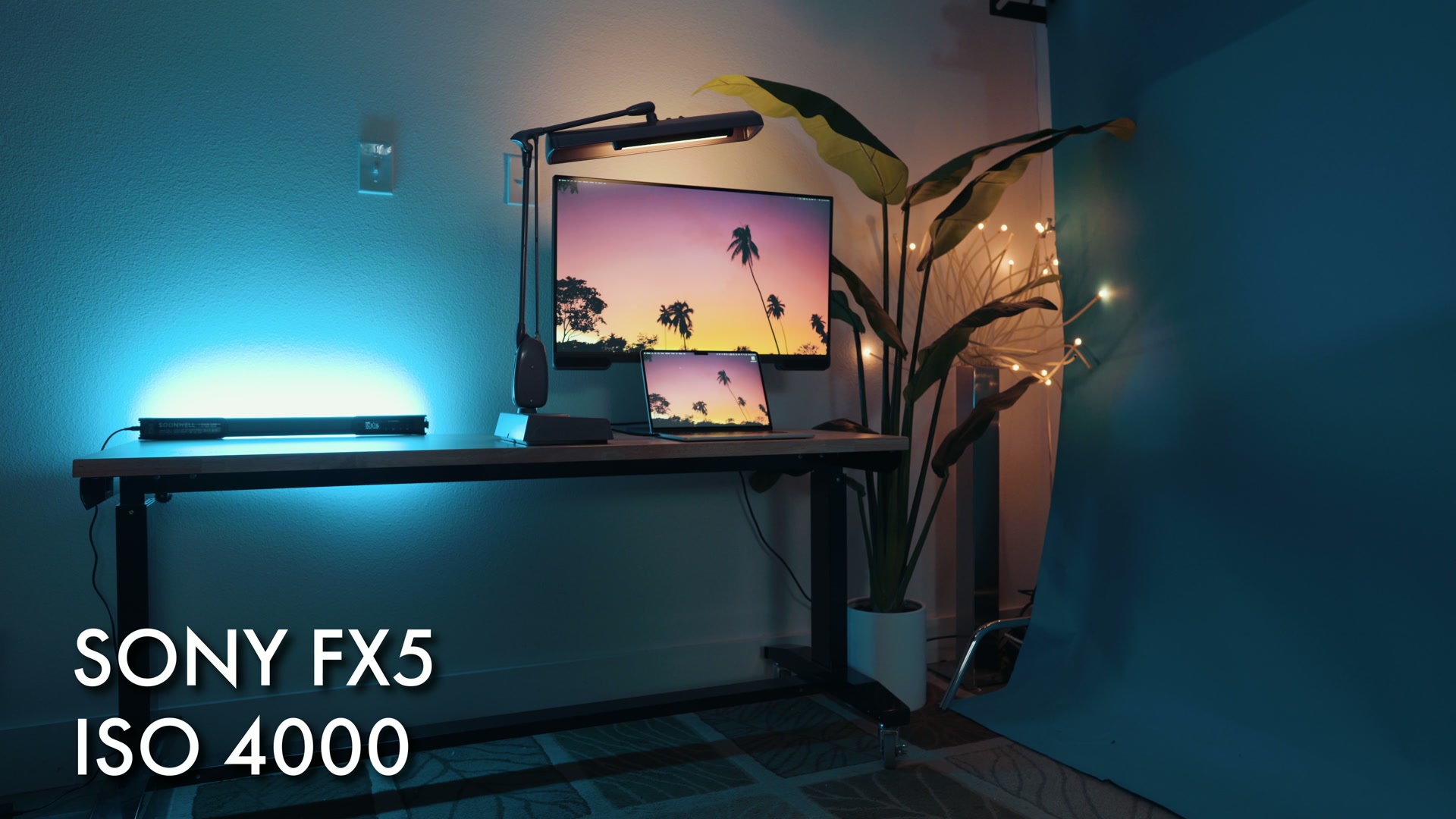
I still think you are going to be very happy with the ZR in low light, but the FX5 is undeniably better in this area.
Overheating: Genuinely A Tie
This is really interesting, because the FX5 has a fan. It has a big slot on the side. It is built not to overheat. Then you look at the Nikon and there is no fan anywhere.
And that is okay, because when I tested the ZR it ran for an extremely long time without overheating, right up until the battery died. Really, really impressive. The FX5 did not overheat either, but it also had a fan doing the work. I would not stress about overheating with either of these cameras.
Lenses
Another area where Sony does not clearly beat Nikon. Both companies have very large libraries of glass, and in an interesting wrinkle, Nikon cameras can adapt Sony E-mount lenses to Z-mount bodies, which makes them more versatile. I have used lenses from both companies, and while I like Sony a bit more, they both offer great options for filmmakers.
Memory Cards And Ergonomics: The ZR At Its Quirkiest
The ZR is such a good camera, but the ergonomics and build are very confusing. The grip is basically non-existent, extremely minimal compared to the robust grip on the FX5. That added thickness on the Sony actually makes it easier to hold, and I really like how the FX5 feels in the hand.
The card situation is stranger still. The FX5 has dual card slots just like the FX3, two CFexpress Type A that also double as SD, and they are very easy to access. You get relay recording, where the camera switches to the second card when the first fills up, and simultaneous recording, where both cards record at once. It feels very professional. If you are filming a wedding, it is a one-take event and you do not want to miss it, so having a backup rolling matters.
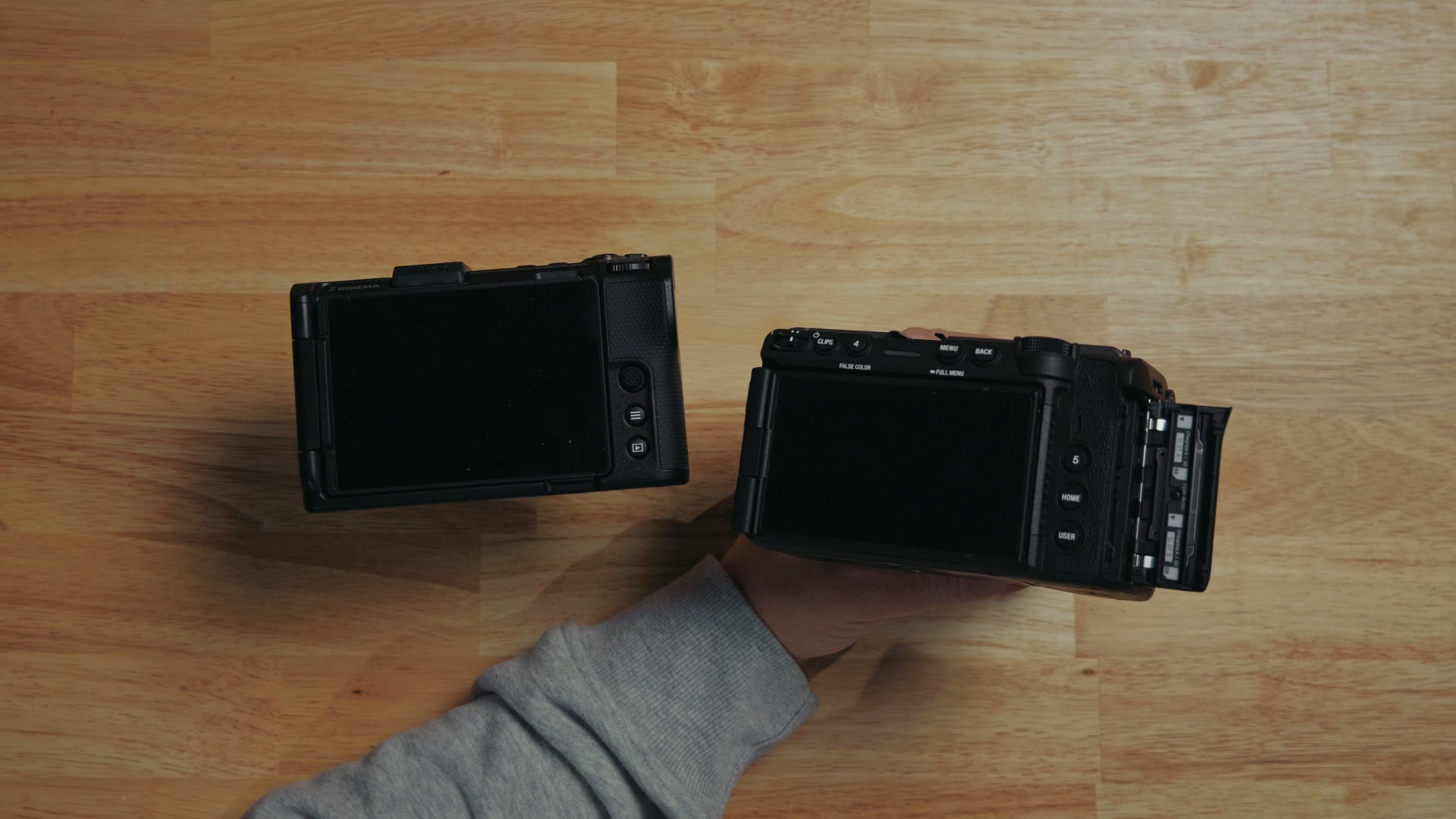
Then you have Nikon, who said sure, we will give you two memory card slots, but they are still going to be stuffed down under the battery door. One of them is CFexpress Type B, like you would expect on a cinema camera. The other is a really strange microSD card slot that you can use for, I guess, taking low quality photos. That is it.
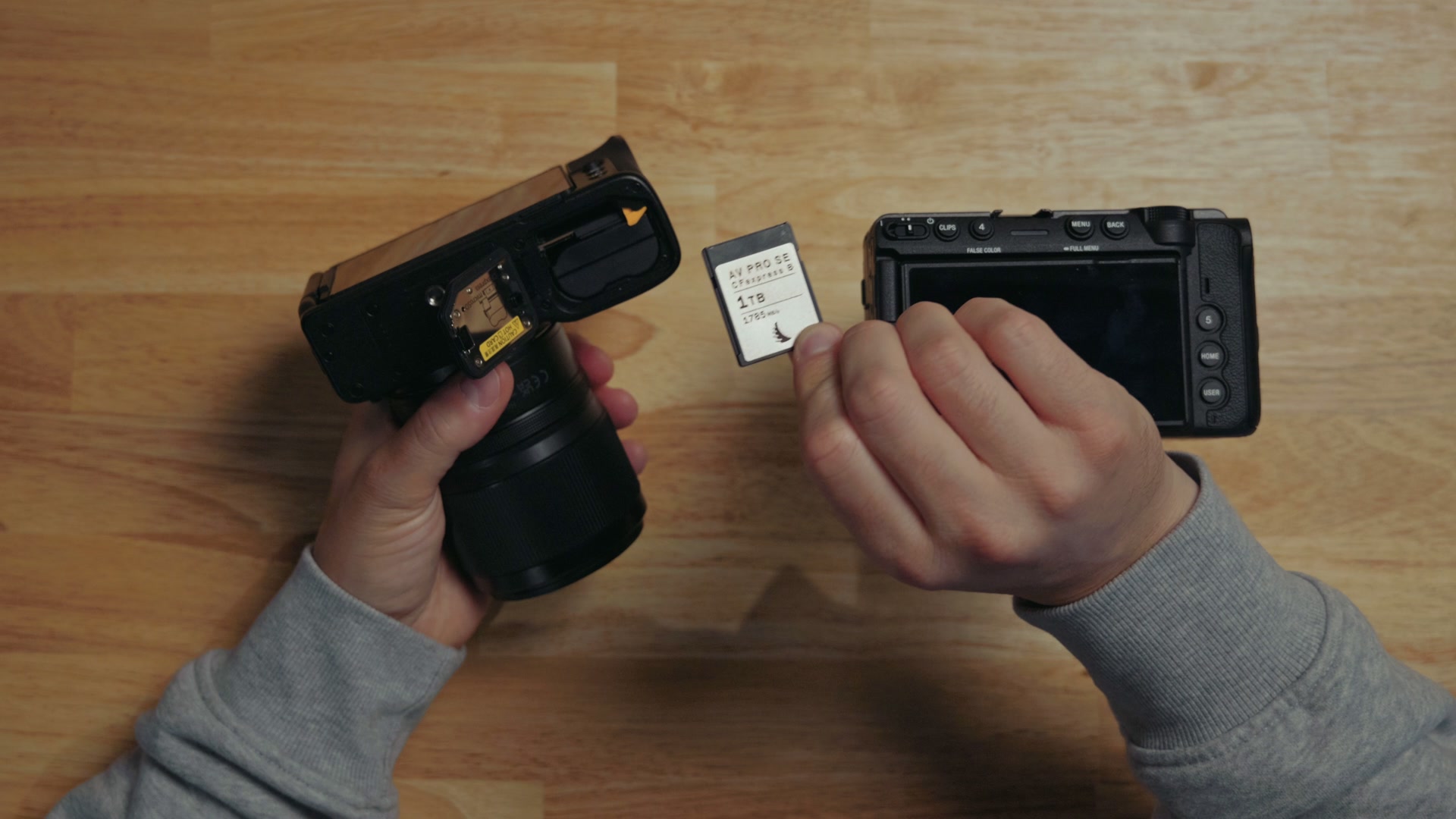
It is such a strange setup, and it effectively makes the ZR a single card slot camera. If you care at all about backups and simultaneous recording, the FX5 makes a lot more sense. If you are not worried about a card corrupting, which is admittedly a low chance, then the ZR still gives you what you need with one usable slot and a weird one sitting next to it. Either way, it is worth knowing how to test the cards you are buying before you trust them with a job.
Photos
Here the ZR pulls significantly ahead, because it still pretends to be a photo camera. There is a photo switch, you press it, you take photos, and you can shoot RAW stills with it even though Nikon is heavily marketing it to filmmakers.
The FX5 looks like a photo camera, still has the buttons, and then, no. There is no photo capability at all. The closest you can get is recording RAW video and pulling stills out of it, which I guess could work. If you want to take photos, the ZR makes a lot more sense.
Ports
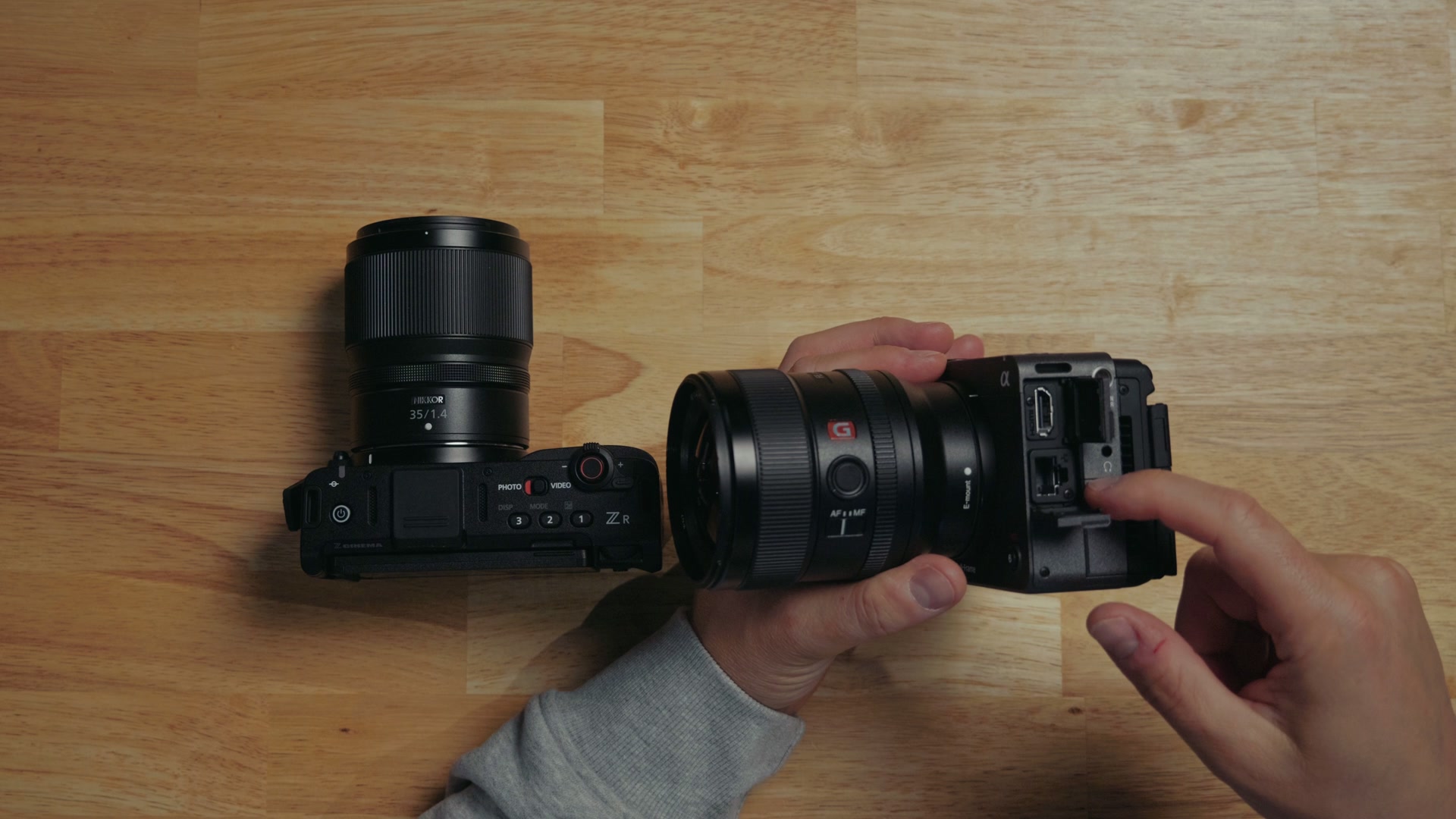
Back to ZR quirks. It does have an HDMI output, and I think people would be very upset if it did not, but it is only a micro HDMI connection, so you are going to need an adapter, and that is kind of a pain.
The FX5 says “you want ports? Yeah, we will give you ports.” Full-size HDMI, you are good to go. You want an ethernet port? Here is ethernet. I guess some people want that, and if you are running a remote camera rig it is genuinely cool. I am still kind of wondering whether Sony could have given us an SDI port. I would not have complained.
Screens: Another Tie
Both of these cameras have very large screens, and it makes me so happy. Nikon pioneered the big screen with the ZR and it is truly massive at four inches. The screen on the ZR is such a dream to use that once I and other filmmakers saw it, we started wanting it on every camera.
So I was pleased when Sony copied Nikon and made the screen bigger on the FX5. It is not as big at three and a half inches, but it is still quite a jump over their previous cameras. If you are coming from a small camera screen, either of these will make a real difference, and you will not want to go back.
I will add one distinction. The ZR screen is larger, but it can only flip out and rotate. It will not do anything else. The FX5 uses the same screen technology Sony introduced with the a7R V, where it can flip out and tilt up and down, which makes it much more versatile. I love this screen type and I am very glad to see it here.
I am still calling it a tie, because both of these screens are really, really great.
Viewfinders And Autofocus
Sony pulls ahead on electronic viewfinders, mostly by default. The ZR does not offer an EVF at all, you just get the giant screen. With the FX5 you can buy an optional, completely detachable EVF that mounts above the hot shoe. Even better, Sony partnered with my friends at Kondor Blue on a viewfinder adapter cable, so you can plug into the connection port on top of the FX5 and mount the EVF somewhere else on your cage or shoulder rig. Default win for Sony.
Autofocus is a tie. Both Nikon and Sony have stellar autofocus and these two perform very similarly. If you need good autofocus, you will be happy with either one.
The Deciding Factor: What Happens When You Do Not Shoot RAW
Here is the last factor, and arguably the one that makes the biggest difference.
We have talked a lot about RAW, but we have not talked about H.264 and H.265 yet. Believe it or not, there are a lot of people who do not want to shoot RAW, and this is what I kept coming back to while comparing these two.
The ZR gives you an absolutely gorgeous RAW image. It looks so good, especially RED RAW. The colors are magic, chef’s kiss. But its non-RAW formats are where it starts to feel significantly more lackluster than the FX5. When you combine the worse dynamic range with less color data from not filming RAW, H.264 and H.265 on this camera are not as easy to work with, and they do not look as good as the equivalent formats on the Sony.
At this point it feels like Sony has basically perfected XAVC HS, XAVC S-I, and XAVC S. They work so well, especially in S-Log3. It is a joy to shoot with the FX5 whether or not you are shooting RAW, and I feel very comfortable telling you that you can film basically any format on it and get a beautiful image.
With the ZR, it feels like Nikon put enormous effort into the RED RAW codec and then kind of threw the non-RAW formats in there as an afterthought. Which means, at least in my opinion, you kind of have to buy a ZR to film RAW, while the FX5 is more versatile. If you are the one who has to live with that footage afterwards, that difference shows up fast, and my Edit Videos Like A Pro guide walks through the workflow side of it.
Price, And The Wrinkle Nobody Factors In
At the time of recording, the ZR costs $2,200, less than half the price of the FX5 at $5,000. And if you want 32-bit float audio, a feature the ZR includes out of the box through the 3.5mm mic jack, you have to spend literally hundreds of dollars more on the XLR handle for the Sony.
So the ZR starts to feel like a no-brainer, right? Price matters most, and it is significantly cheaper. Hold on for a second, because there is one wrinkle: memory cards and storage.
Prices for both just keep climbing. And as we established, if you want to record RAW, which is arguably the biggest reason you are buying a ZR, its file sizes are enormous. Remember, 36 minutes for one terabyte. That means spending a lot of money on CFexpress Type B cards, plus hard drives and SSDs to store all of that RAW footage. Easily hundreds, if not thousands, of dollars over the years, because you are probably going to want at least a half terabyte or one terabyte card and then a pile of drives to hold it all. That is not cheap right now.
With the FX5, you can still use regular SD cards you may already own, and the compressed RAW means you record longer to smaller cards. And do not just think about memory cards, think about hard drives. Smaller files take up less storage in the long run. You may well end up spending more on storage with the ZR than you would with the FX5.
Does that make the FX5 cheaper in the long run? Not necessarily. But it does mean the FX5 does not really cost double what the ZR does once you factor in storage over the long term.
So Which One Should You Buy?
The ZR is still hands down the better deal, and one of the best ways to get into RAW filmmaking with a full-frame camera. I think there are many filmmakers who will be extremely happy with it, and I love having this camera. It is fantastic.
At the same time, I personally think Sony has built a more complete camera package with the FX5: great ergonomics, versatile codecs that are high quality with compact file sizes, and all the other things that put the FX3 at the top, with IBIS, autofocus, and amazing low light. If you can afford the storage and work through the quirks, though, there is still a ton of value in the Nikon.
It feels to me like the ZR is very much a 1.0 version of this camera. I cannot help but feel Nikon could release a ZR Mark II that matches literally all of the FX5’s capabilities for a cheaper price. Fix the ergonomics a little. Drop the photo mode, since people have not been buying this thing for photos. Fix the memory card situation. Fix the micro HDMI. There are just some user experience things they could work on, and if they get those fixed at a similar price, wow, they would dominate the FX5.
Great work, Nikon. Make it happen.