
Sony made a camera that improves every single feature of the FX3 and gave us filmmakers almost everything we ever asked for, plus a few things we didn’t ask for that I’m just as excited about. I have not been this excited about a camera since the a7S III launched back in 2020.
For the sake of ethics, I want you to know this is not paid or sponsored by Sony. They loaned me the camera so I could make the review, and I am genuinely sad that I have to send it back. I will be pre-ordering one, because I have a lot of videos I want to make with it.
The body looks familiar, and that is on purpose
At first glance the FX5 does not look that different from the FX3, and Sony told me that was by design. Filmmakers really like the form factor and size of the FX3, so why change it?
Look closer and the body is slightly larger, especially in thickness, but it is still light in the hand. The weight feels very similar to the FX3.
I also have to admit I was wrong in some of my predictions about this camera. I was sure Sony would put the EVF from the FX2 into the FX5. They did not. There is no built in EVF. That does not mean the screen stayed the same, and it does not mean there is no EVF at all.
The screen is finally the right shape
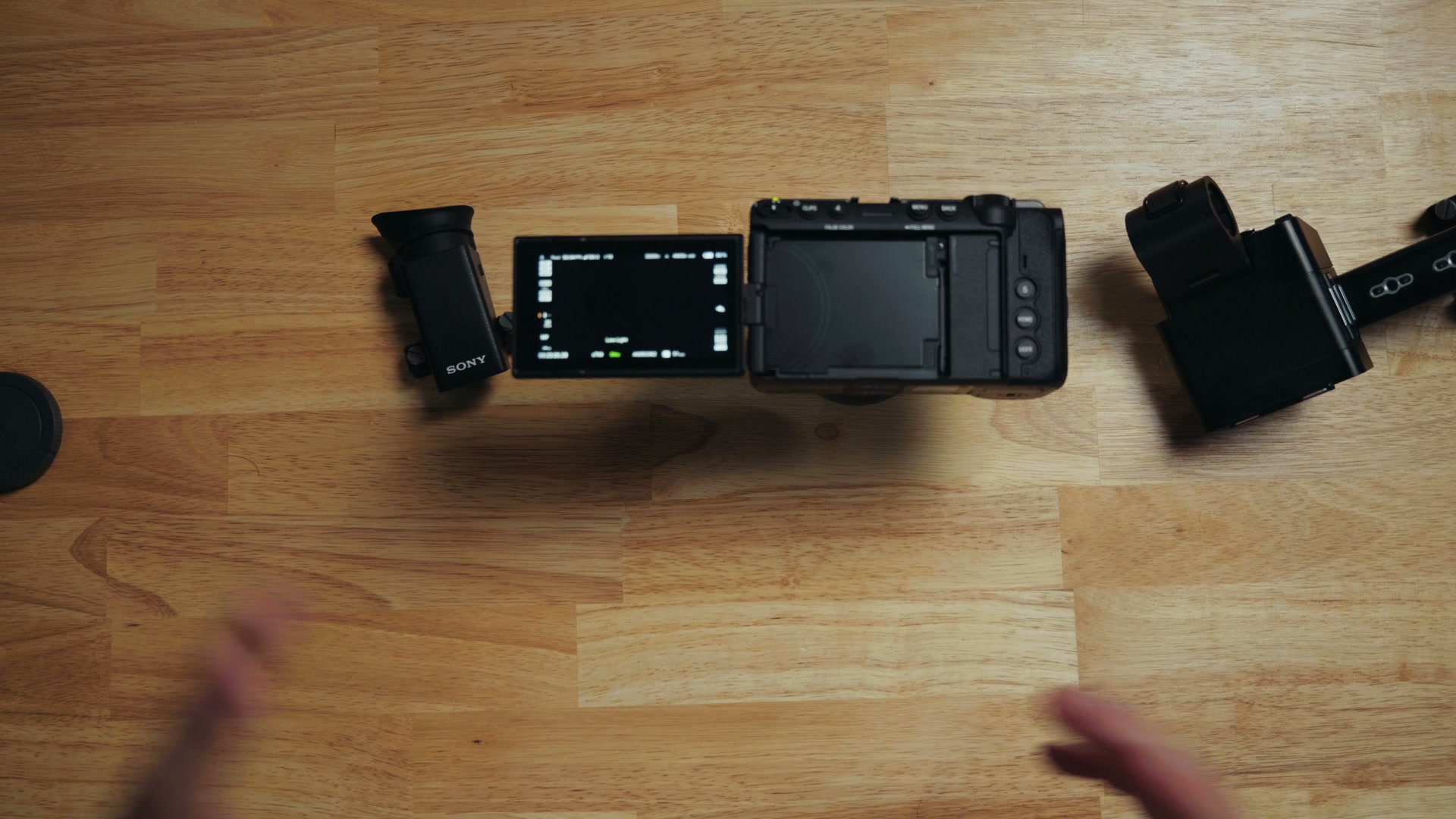
Look at the back of the camera and you see the first big change. The screen is now significantly larger at three and a half inches, and it keeps the fold out and tilting style from the a7S III.
More importantly, it is now 16 by 9. The screen on the FX3 was 4 by 3, so filming in 16 by 9 added black bars to the top and bottom of your preview and turned a three inch screen into something closer to a two inch video preview. It was usable, and I used it for years, but this change was really smart. The preview now fills much more of the screen, which makes it larger to view and a far more immersive filmmaking experience.
There is an EVF, and you bolt it on
Sony heard what everybody had been asking for in the comments for so long and said, fine, forget the FX2 EVF, how about a detachable one? They now make an EVF that bolts onto the top of the camera, onto a port that sits in front of the hot shoe. Remove the cover, stick it down on top, screw it in, done.
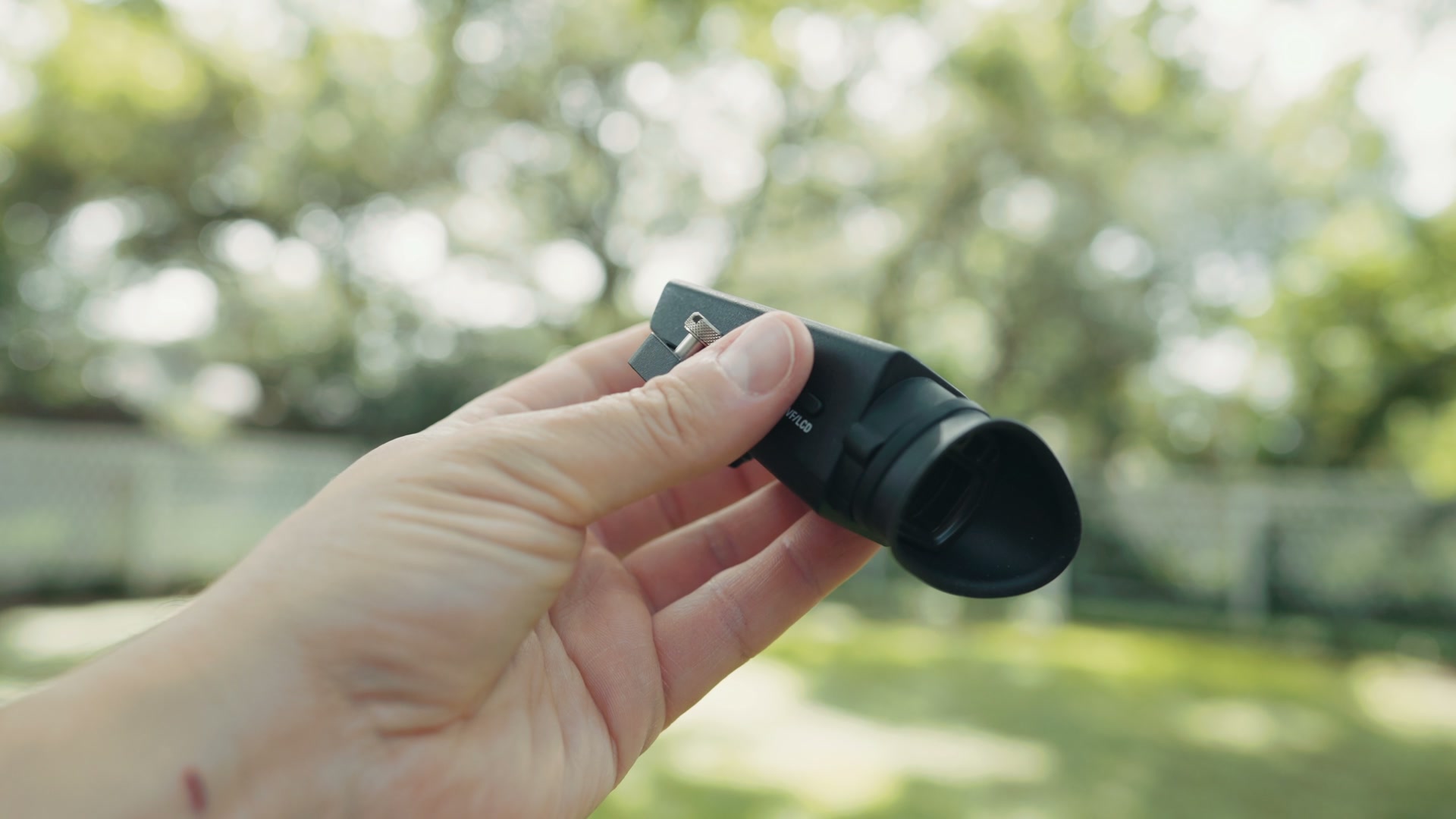
If you want an EVF, you have it. If you don’t, it is sold separately, so you can save the money and skip it. And this EVF really feels built for filmmaking, because it has a 16 by 9 widescreen aspect ratio just like the screen on the back of the camera.
Now, I hear you asking what happens if you want the hot shoe for something else, like an XLR audio handle. That is the one real wrinkle with this setup. The FX5 does have an optional XLR handle, and both the handle and the EVF cover the hot shoe, and both use the same two mounting bolts on top.
Here is an interesting workaround. Sony tells me they are partnering with my friends at Kondor Blue on an external EVF extension cable, which means if you are building out a rig you could mount the EVF to a cage or a shoulder rig and still have it connected and working. It does not have to sit on the hot shoe.
Unfortunately the EVF still has to connect to that proprietary port on top of the FX5, and the XLR handle completely covers that port once you attach it. So I am hoping Kondor Blue rigs up a hot shoe extension or some kind of cutout that lets you run the EVF extension cable with the XLR handle attached. That is one of the very few complaints I have about this camera. I also wonder how many people will actually buy the external EVF and use it, so let me know in the comments if that is you.
The buttons come straight from the Venice
Look at the back again and the buttons are very different. There is a back button, a clips button, and a home button. Pay attention to the right side of the camera, because this is a big change: the control wheel you normally see on the back of a Sony camera is gone. You have lost all of those buttons because the screen is so much larger. What you get instead is a custom button, a home button, and a user button, all pulled from Sony’s ultra high end Venice camera.
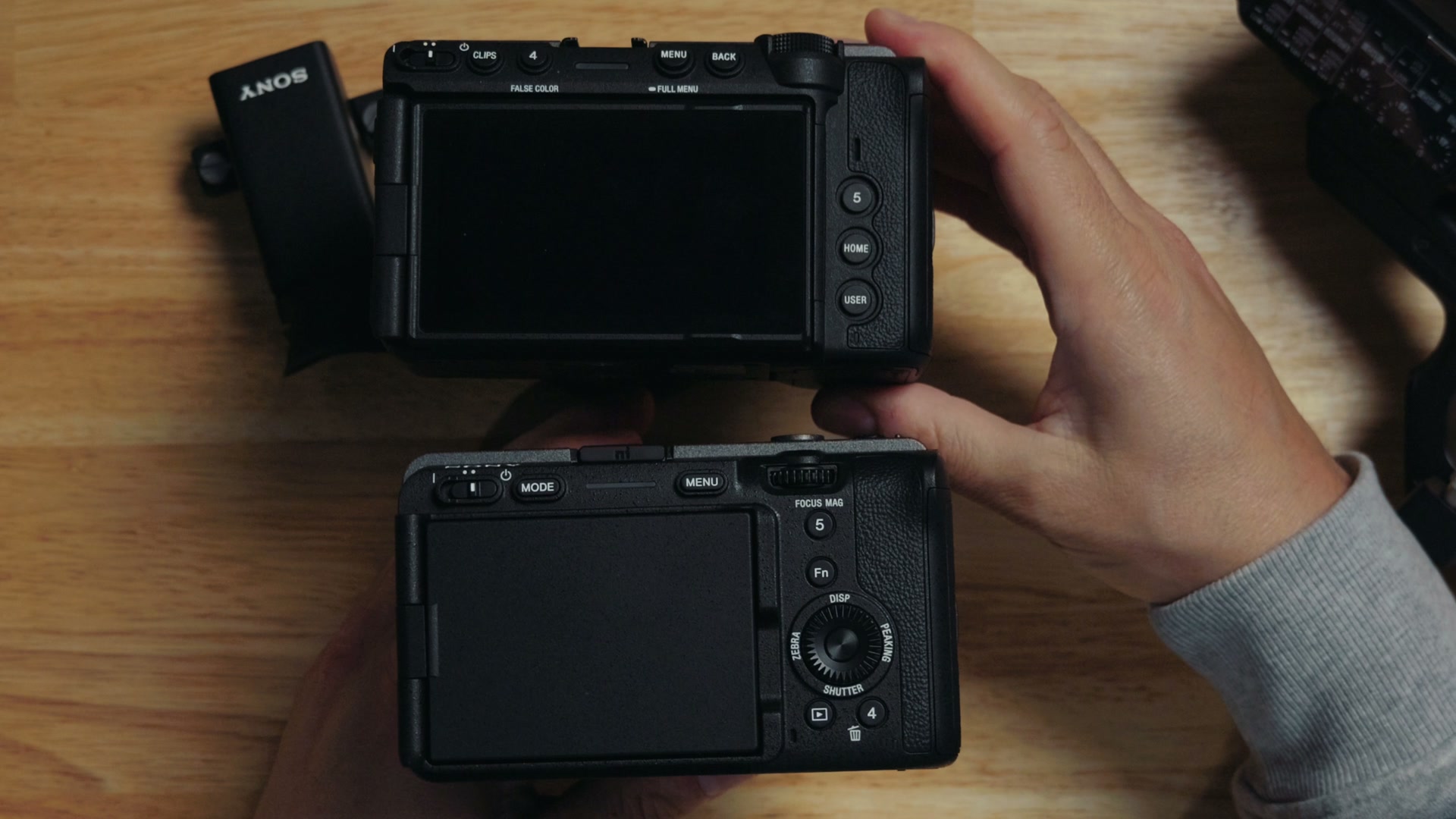
It takes some getting used to. It is also your first indicator that Sony is pulling a lot more DNA from their cinema line and putting it into this camera.
These are cinema menus, not alpha menus
Where the FX3 took a lot of its DNA from Sony’s photo line, like the a7S III, the FX5 takes much more from the Venice and the Burano. That is never more obvious than the moment you turn the camera on, because it does not use the menu system from the alpha line. It uses something that would look far more at home on a Venice. Less colorful, more gray and yellow, more professional.
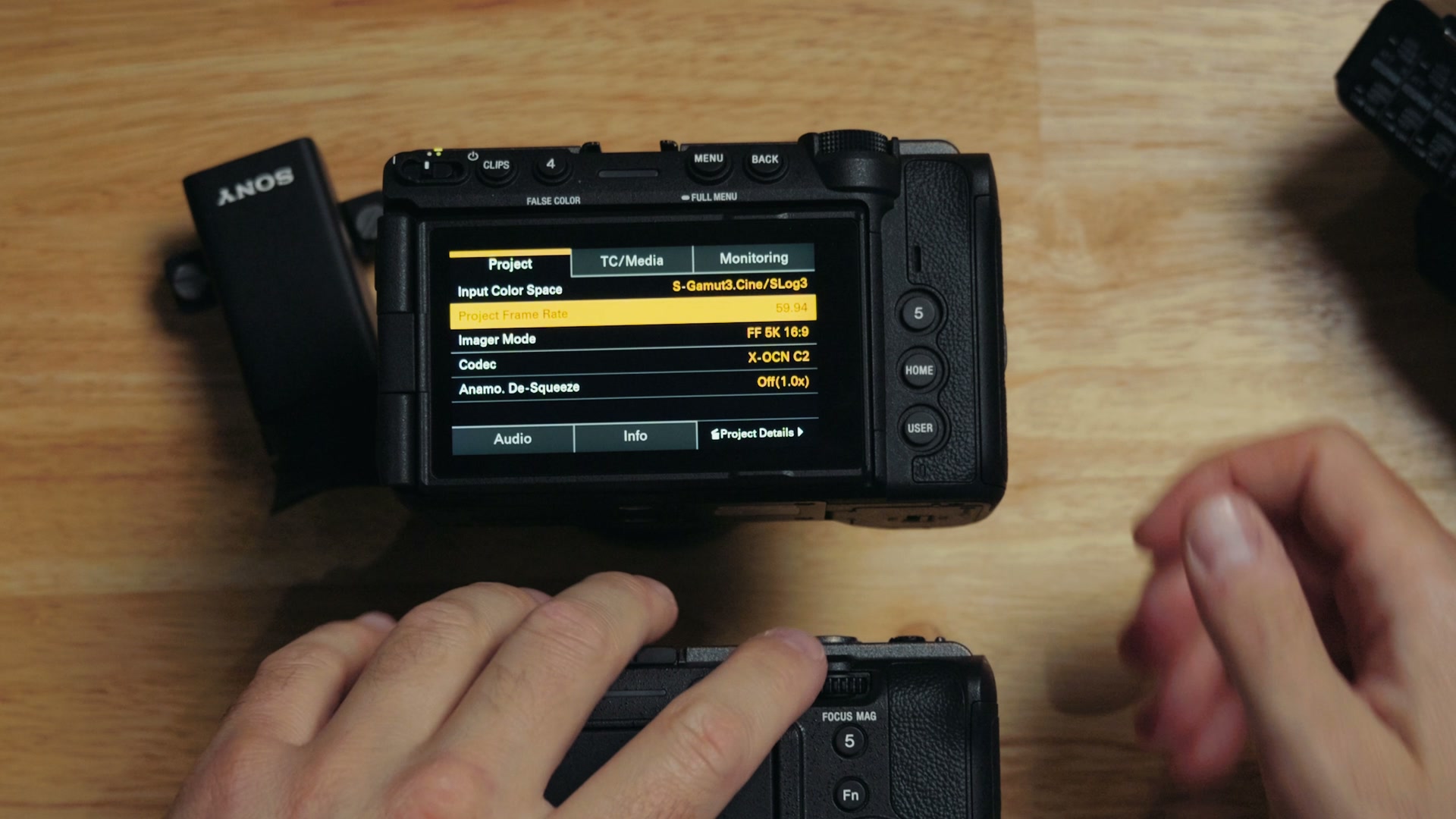
Sony told me this was intentional, because they want this camera to be a stepping stone to a Burano or a Venice. In the past you would start with an FX30 or FX2 or FX3, and then jumping up to a Burano or Venice was hard because the interface, the controls, and the menus all looked so different. With the FX5 built as that stepping stone, the menus still take enough cues from the alpha line that you will pick them up quickly, while being close enough to the Burano and Venice that you could pick up one of those and use it once you know the FX5.
In other words, the FX5 is more of a cinema camera than anything else.
It cannot take photos. At all.
To drive that point home, here is another one of the few cons I found, and it may upset you a little if you are coming from an FX3. The FX5 is not capable of taking raw photos. You cannot even take stills with it. This is a video camera in the purest sense of the term. No photos allowed, even though there is a nice button sitting right there that makes you think you could.
Sony did tell me they have a robust firmware roadmap for this camera, and one of the features on it will be a setting that lets you grab screenshots from video you have already recorded in camera. So that is at least something, and there are more exciting firmware updates coming that we will get to.
Ports, timecode, and a surprise Ethernet jack
With no control dial on the back, operating the camera is different. Instead of using your thumb on the control wheel, you either hold the camera differently to reach the joystick on top or you use the touchscreen. That is not necessarily a bad thing now that the screen is so much larger, and if you think about it as a video camera you hold at your chest rather than a photo camera you hold to your eye, using the top joystick with your thumb becomes much more intuitive.
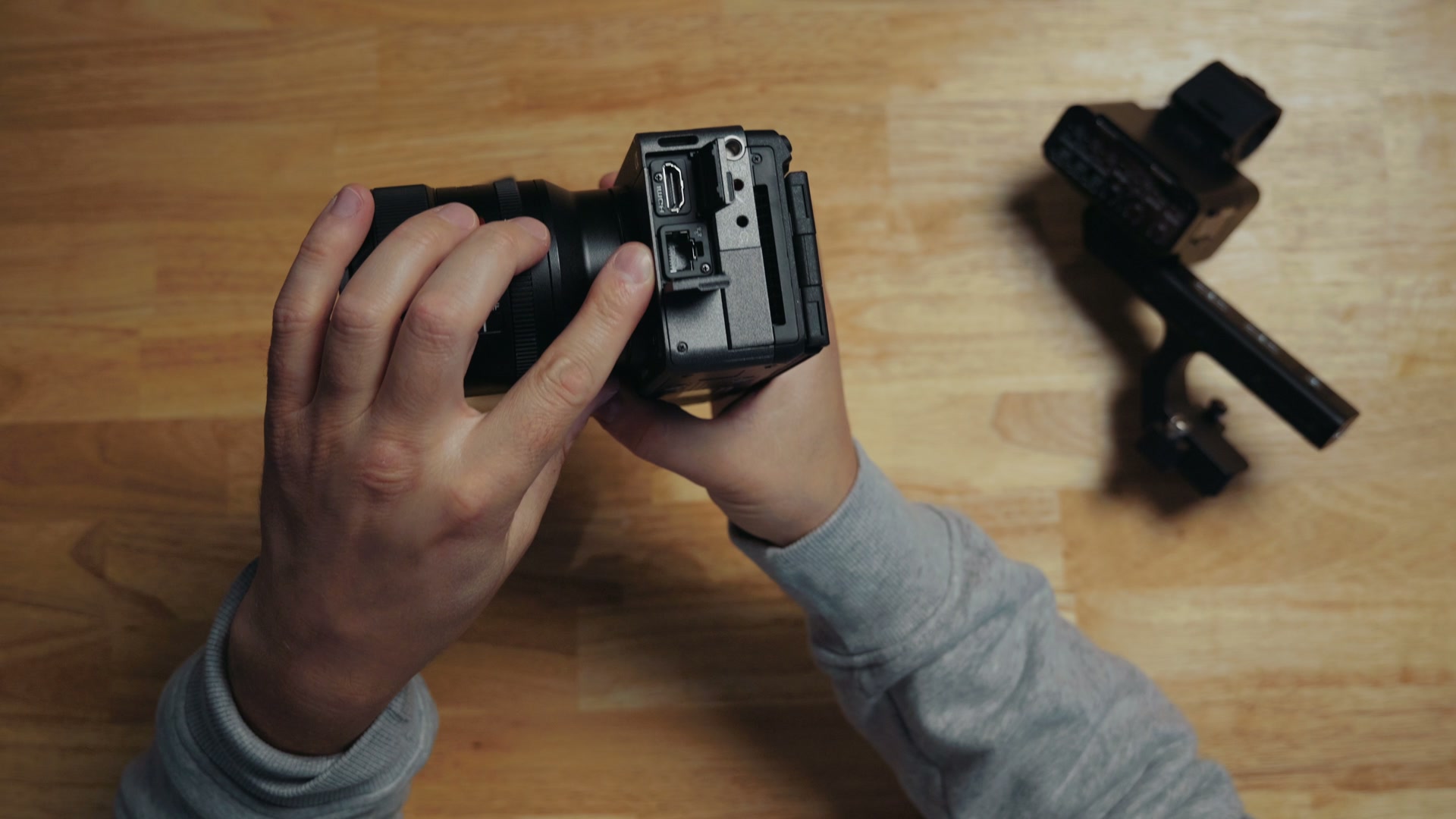
Everything else on the body is in good shape. There is still a fan inside with a very similar vent on the side for cooling. There is still a headphone jack and a microphone jack on the side, now under a flap that makes them easier to access. There is still a full size HDMI port. There is also a second USB type C port, just like on the a7 V. And alongside this camera Sony announced a USB type C timecode cable that works with it, so if you love timecode as much as I do, you can now hardwire it in.
Now for the weird news. Open the other port on the side and you find an Ethernet jack. This is the kind of thing you normally see on a high end sports camera like the a9 or the a1. Sony added it here because a lot of people are using these cameras in remote filmmaking rigs, and Ethernet is a great way to control a camera. My only wish is that you could swap that port out for an EVF port so it would work with the XLR handle at the same time. Or give us SDI. Either one, Sony.
The XLR handle records 32 bit float
Just like the handle Sony added with the a7R VI, the FX5 handle supports 32 bit float audio recording at up to 96 kilohertz. That gives you so much more flexibility. If your audio is too quiet you can bring it up without adding noise, and if it is too hot you can bring it down without distortion. The handle also includes screws to mount to the body, so it is a much more robust attachment than what you get on the a7R VI.
I ran a Deity S-Mic 3 into the XLR handle for a test and it sounds pretty darn good. I am glad to finally have 32 bit float on this camera.
The memory card slots did not change, and that’s the point
Pop open the memory card door and you are greeted with the exact same slots you are used to. SD and CF Express type A combo slots. No type B, nothing exotic.
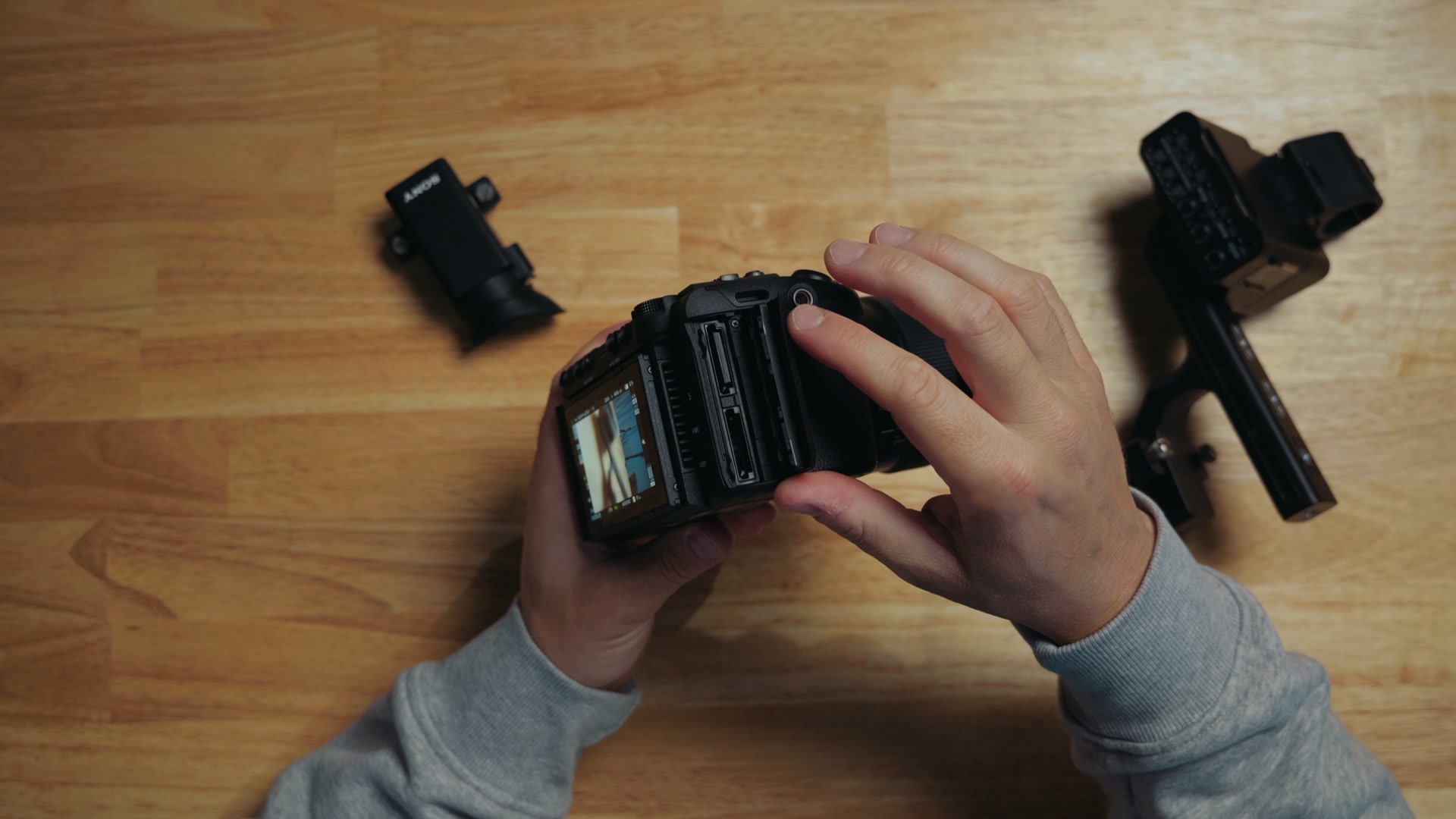
But hold up, because up until now, with the FX3 and FX30 and the rest, there has not really been a reason to use CF Express type A for filmmaking. Aside from literally one format, XAVC S-I in S&Q mode at 4K 120 frames per second, every other video format on the FX3 records fine to a much more affordable V90 SD card. That has always made it hard for me to recommend CF Express type A cards.
Sony has finally given filmmakers a reason to buy those higher end cards, because the FX5 has a feature that actually needs those bit rates. I have been hoping for this for years and predicted it, and it turned out even better than I thought.
Internal 16 bit raw is the headline
Sony finally included internal raw video recording.
I can see you side eyeing me already. Really, Matt, you are excited about this? All of their competition has offered raw for years. Canon had internal raw with the R5 in 2020. Nikon bought RED and you can now get REDCODE RAW in the ZR. Panasonic has had internal ProRes RAW for years.
But Sony did none of that. Sony looked at the Venice and said, hey, we have our own flavor of ultra high quality 16 bit linear raw that looks insanely good and gives you a ridiculous amount of flexibility in post. Let’s put that in the FX5 and let filmmakers adjust white balance, exposure, highlights, shadows, and color temperature after the fact.
It looks so good. This is the best I have ever seen a Sony camera look that isn’t a Venice or a Burano. The footage is gorgeous, and if you want to push it further, my LUTs are built for exactly this kind of grading work.
The compression is the actual magic
A lot of filmmakers avoid raw because the file sizes have historically been miserable across the board. Canon offers compressed raw and it is still huge. ProRes RAW is massive. Even REDCODE RAW on the Nikon ZR has basically no compression, and you find yourself needing multi terabyte cards fast. In short, raw is too big and memory cards are too expensive.
Here is where it gets crazy. Sony’s engineers worked some insane compression magic, because the FX5 films in three flavors of X-OCN, which is Sony’s proprietary raw. There is X-OCN LT, which is already a small file size for raw, and then they went further and added C1 and C2 versions with even higher compression and smaller files. Whichever flavor you choose, you are still getting 16 bit raw color. It is just a smaller, more compressed file.
How small? All three of these raw bit rates are lower than filming regular ProRes in the camera would be, and the C1 and C2 options are dramatically smaller than that, down in the range of some of the H.265 formats on this camera.
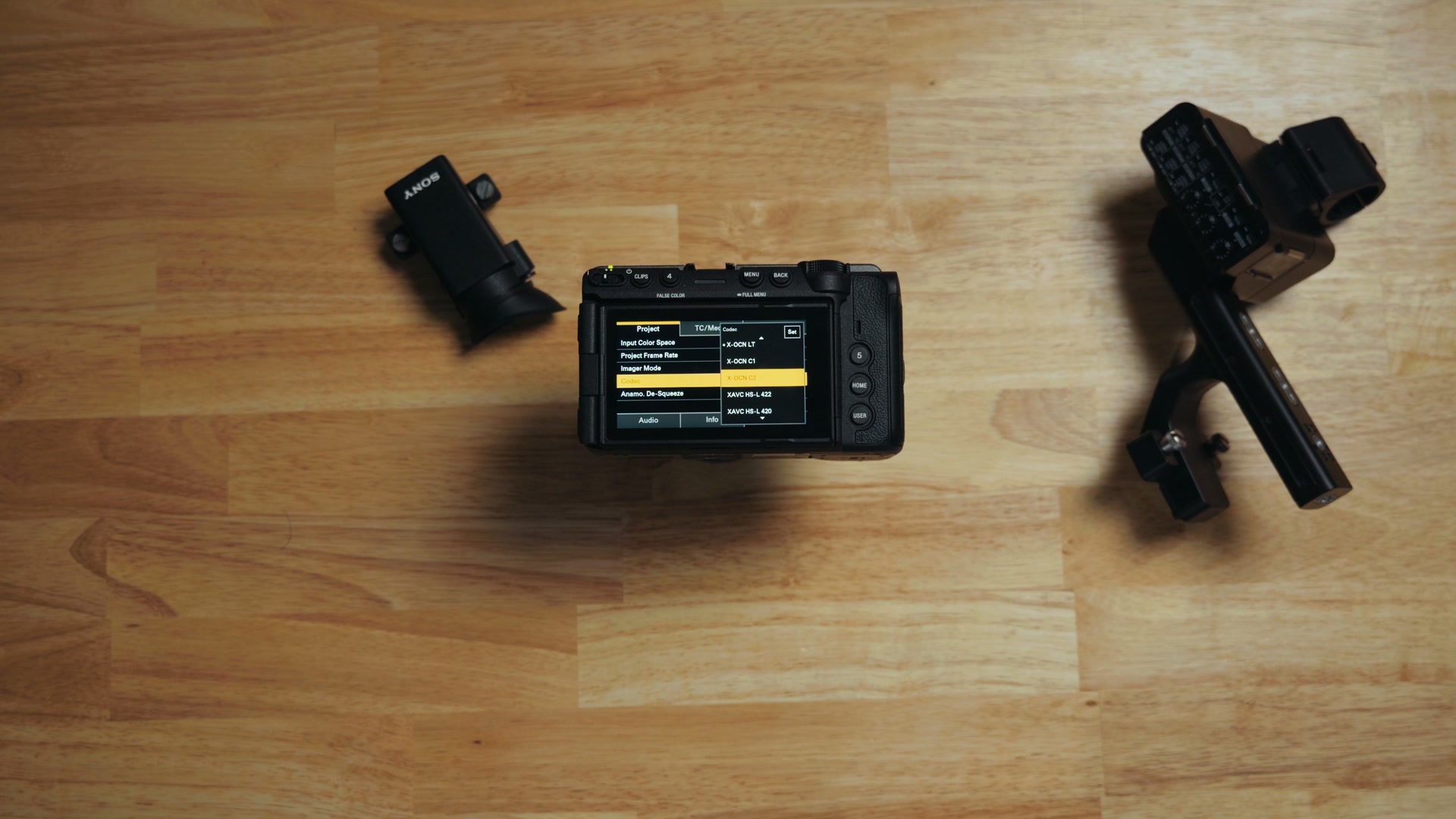
If your eyes are glazing over at the numbers, here is why I am so excited. Sony has released the first camera that is not an ultra high end RED cinema camera with a level of raw compression that makes filming raw feasible for basically anything you want to shoot, because the files are finally small enough.
Filmmakers have been skipping all the benefits of raw and settling for just 10 bit color to keep files manageable. And I say just 10 bit knowing that 10 bit still gives you over a billion colors. But 16 bit linear raw in this camera gives you 280 trillion. It is so much more. I have full intentions of buying this camera and using raw all the time, because it is finally both possible and financially feasible.
You can record raw to an SD card
Remember how I said Sony finally gave you a reason to buy CF Express type A cards? That was kind of a lie, because in my testing you do not actually have to buy CF Express type A to film raw. You can use V90 or even V60 SD cards and still record raw with this camera, which is absolutely insane.
There are limitations. You can film up to about 30 fps in 5K to an SD card, and you will need a CF Express type A card for 5K 60 raw. That is still really impressive.
If you are trying to convince your partner that you need to buy this camera, tell them how much money you are saving by not needing new memory cards. It basically makes the camera free. You owe it to yourself. Tell them Matt said it’s okay. I am also working on a full FX5 memory card buyer’s guide, so subscribe if you want to see that, and in the meantime my guide to Sony’s video format settings is a good place to start.
The sensor: 5K, open gate, and 69 percent more pixels
There were a lot of leaks and rumors saying this camera would have a global shutter sensor. I am sorry to tell you, it does not. In my opinion that is okay, because this is the purest and highest end CMOS sensor Sony has ever released.
It is a full frame, fully stacked sensor using Sony’s latest and greatest tech, and there are a few things about it that are actually going to matter to you as a filmmaker.
It is 16.6 megapixels, which means the FX5 records up to 5K. That may not sound like a big jump coming from 4K, but it is going from 8 million pixels to 14 million in 16 by 9. That is a 69 percent jump, and it makes reframing in post to deliver in 4K much easier.
Even better, and I am so glad I finally get to say these words: open gate is here. The FX5 films open gate up to 5K at 60 frames per second with a ton of anamorphic de-squeeze options available. 1.3, 1.5, 1.6, 1.8, and 2.0. If you have an anamorphic lens it should work great with this camera, and I am excited to test it.
And that 69 percent figure was just regular 16 by 9. Count open gate and this camera records literally double the pixels of 4K. Keep in mind it can only film open gate in raw, but given how manageable the file sizes are here, I think that’s fine.
4K 120 now, 4K 240 later
Back in 2020, Sony blew filmmakers’ minds by adding 4K at 120 frames per second to the a7S III. We were all just asking for 4K 60 and they said, how about double that?
This is where things get crazy again. Not only does the FX5 film 5K up to 60 frames per second in open gate, but if you drop the resolution to 4K it films at 120 frames per second with a very small crop, right out of the box at launch.
Now hold onto your beard. Remember that robust firmware roadmap? The biggest feature on it by far, in my opinion, is that Sony told me they are estimating a firmware update sometime in 2027 that unlocks 4K recording at up to 240 frames per second. That is stupid in the best possible way. Everything is going to be in super slow motion, baby.
The 35mm crop and Clear Image Zoom
With the FX3, the sensor was the perfect size to film 4K and there was no way to crop in on it the way you can on other Sony cameras, where you film with a 35 millimeter crop from the center of the sensor for more lens flexibility and what is basically a free zoom.
The FX5, with its much larger 16 megapixel sensor, is the right size to actually do that 35 millimeter center crop. On top of that, Sony updated their Clear Image Zoom technology, which is essentially a lossless quality digital zoom, and it now works with zoom lenses to give you a smooth optical and digital zoom together. Throw a 70 to 200 on the camera and Clear Image Zoom turns it into a 70 to 300. Enable the 35 millimeter crop on top of that and it becomes more like a 450 millimeter lens. Pretty awesome.
Triple base ISO, and yes, you can turn noise reduction off
One of the biggest fears I saw people worrying about online, myself included, was that raising the megapixel count would hurt low light performance. The thing filmmakers absolutely loved about the FX3 was its dual gain ISO at 800 and 12,800, which looked truly amazing in low light.
Good news. If the a7 V wasn’t already an indicator that Sony is improving their low light tech, with a second base ISO of 8,000 that is within spitting distance of the FX3, then this is. The FX5 is the first Sony camera with a triple base ISO. You get 800 on the low end and 12,800 on the high end just like the FX3, plus a middle base ISO of 4,000.
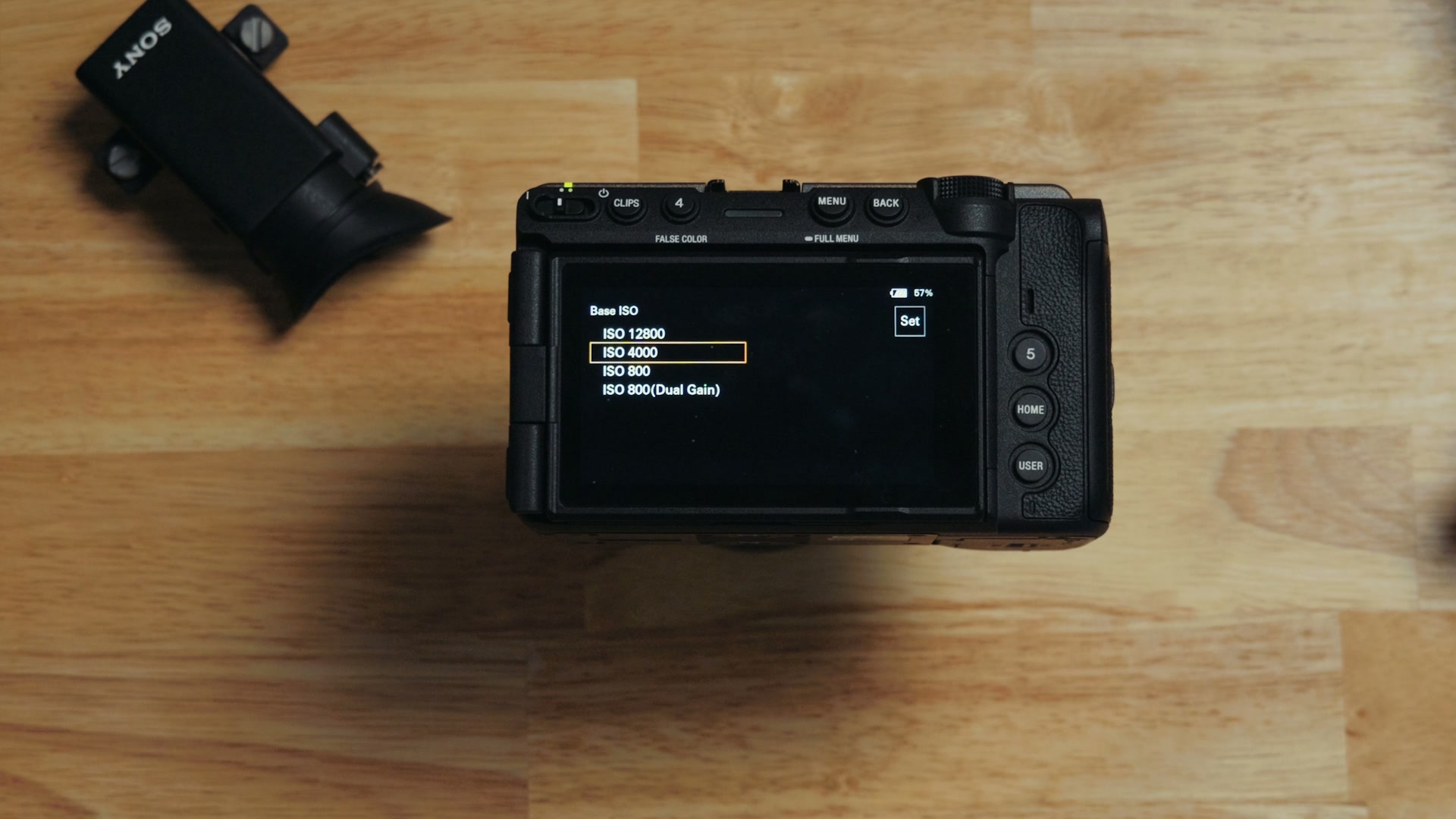
I think that middle stop is so great, because I have had so many filmmakers message me over the years wishing there was something in between. In plenty of scenarios it is hard to get all the way to 12,800 without overexposing, but 800 is too dark. ISO 4,000 is the Goldilocks setting.
Next complaint, and it is a big one for FX3 owners: noise reduction. The FX3 was notorious for being very aggressive with it, which over softened the image at high ISOs and cost you a lot of detail. That pushed a lot of filmmakers to the FX6, because that camera lets you disable noise reduction entirely, and some filmmakers prefer that look. Disabling it was something you only got on Sony’s higher end cinema cameras. FX6, FX9, Burano, Venice. Not the FX3.
Remember that Venice DNA? The FX5 lets you disable noise reduction. At the higher base ISOs like 12,800 it actually looks really good turned off, and really cinematic. If you are planning to crank ISO up to 32,000 or something, I would probably turn it back on, but you do you. I am just glad we have the option.
Dual Gain is different, and it is excellent
Please do not confuse this with the triple base ISO. Dual Gain is a feature Sony added to the a7R VI, and something Panasonic has offered for a while. When you enable it, which you do by choosing ISO 800 Dual Gain, the camera records a lower exposed and a higher exposed image while recording and combines them together, which gives your footage a higher dynamic range.
Sony says this camera does over 15 stops of dynamic range, and by my testing it is definitely up there. Filming raw and S-Log3 with Dual Gain on looks so stinking good, and there is so much room to push and pull the shadows and highlights.
Let me say it plainly in case I haven’t emphasized it enough: the footage from the FX5 is truly stellar, and in my opinion it is some of the best footage Sony has ever offered out of any camera. Filming 16 bit raw with the FX5 is such a jump in quality, and there is so much more flexibility in post and in color grading that it is insane. And the files are still relatively small.
Scopes are finally built in
What else have filmmakers been begging Sony for? Scopes. Sony said okay, we’ve been hiding them until this camera. You have waveforms. You have vector scopes. There is a new button on the back that says false color, and pressing it turns false color on immediately. It works really well.
It is so nice to have this built into the camera, and the screen is finally large enough to make these features feasible to actually use. I really like the layout of the menus around the screen too. They keep the preview clear while still showing you basically every setting you need. You still get the big six menu from the Venice side of the family.
Autofocus, IBIS, and a sensor you can physically lock
Sony is still taking the best parts of their photo lineup and putting them here. Autofocus has never been the strength of their cinema line. Not anymore, because they took the great autofocus from the alpha line and put it in this camera, with the same BIONZ XR2 processor and built in AI unit. The autofocus on this camera is the absolute best you can get from Sony, and both it and the IBIS are greatly improved. If you are coming from an FX3, and the FX3 was already good, you are going to be impressed by how much better it is. No complaints from me.
Speaking of IBIS, here is an interesting one. You can completely disable the IBIS, as in hard lock the sensor so it will not move at all. Filmmakers have asked for this for a long time, because even with IBIS off the sensor can still shake around. There is a catch: you have to send your FX5 to a Sony service center for them to physically lock it. I am pretty sure you can have it unlocked too, but this is not something you can do at home without dismantling the camera. It is kind of like Sony offering an IBIS and a non IBIS version of the same camera, which I think is great.
What I don’t like
Aside from the XLR handle and EVF not working simultaneously, and the camera not being able to take photos, I have literally one other complaint, and it is the one a lot of filmmakers were hoping and dreaming for. There is no internal ND filter.
I have talked to Sony’s engineers about it and they told me the technology is too big and isn’t there yet. I understand. I do want them to break the laws of physics and make it work at some point, but I think they wanted to keep the size of this camera very close to the FX3, so it makes sense. And when Sony looks at their sales data and sees how many people bought the FX3, they probably see filmmakers still buying that camera and still using ND filters on their lenses. Do I want to see an electronic ND, or Sony working out some magic for an ND filter in a small camera like this in the future? Absolutely. But it has not happened yet.
Battery life and overheating
Here is something I do not see people complaining about. The FX5 uses Sony’s new NP-SA100 battery, which gives it about 20 minutes more battery life than the FX3, and the FX3 was already pretty darn good. In my testing the battery life is really impressive. If you are filming long events, say really long wedding ceremonies, you are probably not going to love buying new batteries, but the extra runtime is nice and the camera does come with a dual battery charger, which is a nice touch.
What about overheating? This camera is basically the same size as the FX3, which never had an issue thanks to its fan. But the FX5 records significantly higher resolutions and raw video, which made me a little nervous. Sony sent me this camera to test in the middle of summer in Texas where it is often over 100 degrees, and then where I live has been getting horrific flooding and rain the entire time I had it. So I could not fully test overheating. Standing out in the rain saying it didn’t overheat is kind of useless. I am planning a full overheating test once the camera releases and the weather improves, so consider subscribing if you want to see that.
The price
I was a bit nervous about this one, considering how much electronics prices have gone up lately. I correctly predicted this price in a video several months back.
Sony said they wanted to keep the price of the FX5 as low as possible, and to do that the cheapest version they sell doesn’t come with any accessories. Unlike the FX3, where you were forced to buy the XLR handle with it, the FX5 is more like the FX30, where the handle is optional.
That base level FX5 comes in at $5,000. That is a healthy price to pay, about $1,200 over what the FX3 cost when it first released and about $800 more than the FX3 costs right now. Keep in mind Sony is keeping the FX3 around as the more budget friendly alternative. If you want the FX5 with the XLR handle, Sony tells me that will cost $5,600. They have not told me the price for the standalone EVF or the timecode cable, though I am sure B&H will put together a package with all of it.
Considering where this camera sits in the lineup, better than the FX3 but without the built in ND of the FX6, the FX5 still feels like a big upgrade in the specs department over both of those cameras. $5,000 feels fair to me for everything Sony is offering here, and I am very glad we are not looking at a six or seven thousand dollar camera, which honestly would not have surprised me.
Should you buy it
I am putting my money where my mouth is and picking one of these up as soon as possible, because I really love filming with Sony and it feels like the FX5 puts them back on top for a long time.
Me and a lot of other YouTubers have made videos about whether some camera would finally be an FX3 killer. It turns out the only camera that could kill the FX3 was going to come from Sony. And then Sony said, we aren’t even killing the FX3, you can still buy it, this is just the more advanced model. That makes a lot of sense to me. If I have to wait another five or six years for the next big advancement from Sony, that’s okay, because the FX5 gave filmmakers basically everything they were asking for.
If you want to get more out of the footage you are shooting, I put together my Edit Videos Like A Pro guide, which walks through the biggest rules I follow as a video editor. It is completely free to download.