
Sony got ten things wrong with the FX5, and almost nobody is talking about them. I still think you should know about all of them before you spend $5,000, because most of these are things you will never notice on a spec sheet. You only find them after you have actually lived with the camera for a while.
I am going to start with what is, in my opinion, the biggest annoyance of the whole camera.
1. The imager mode says 5K. You are actually shooting 4K.
Selecting your video format and resolution on the FX5 is, let’s say, confusing at times.
With other Sony cameras that pull more of their DNA from the Alpha line, like the FX3, FX2, and FX30, adjusting your video format is simple. Go into the menu, go to shooting, then image quality/recording, choose your file format, then choose your recording frame rate and resolution. Done.
On the FX5 this setting is actually quicker to change, but it is also less intuitive at the same time. You hit the menu button, which brings up the project panel, and you can change resolution, frame rate, and codec all on one page. That part is great.
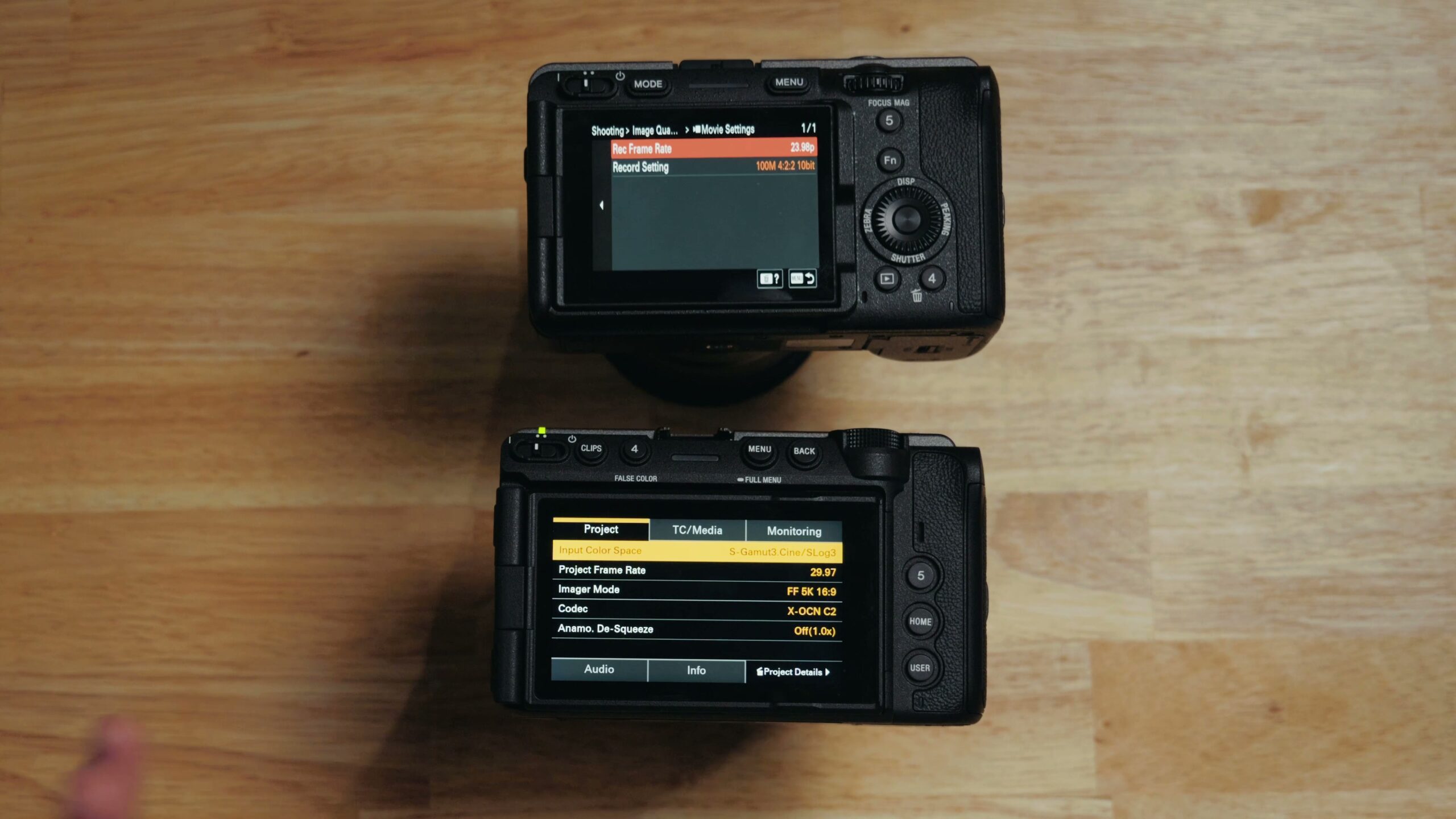
Here is where it falls apart. Say you want to film in 3:2 OpenGate. You go over to imager mode, select full frame 5K 3:2, hit execute, and the camera changes to that setting. Then you decide you actually want to film it at 120 frames per second, which the camera offers you as an option. You select it, press execute, and the camera reboots. When it comes back on, it is no longer filming in RAW.
It has silently switched to XAVC S-L 4:2:2, which is arguably the worst format to choose when filming. If you are not paying attention, you think your camera is recording RAW. It cannot do that at 120 frames per second, so it quietly picked the worst option for you and did not really tell you.
It gets worse. Even when you are filming and the imager mode says full frame 5K 16:9, if you are recording in XAVC S, HS, or I, look at the line directly below it. The video format says 3840 x 2160p 4K. The camera is reporting two different things to you on the same screen with very confusing labeling. You think you are shooting 5K. Nope. You are shooting 4K.
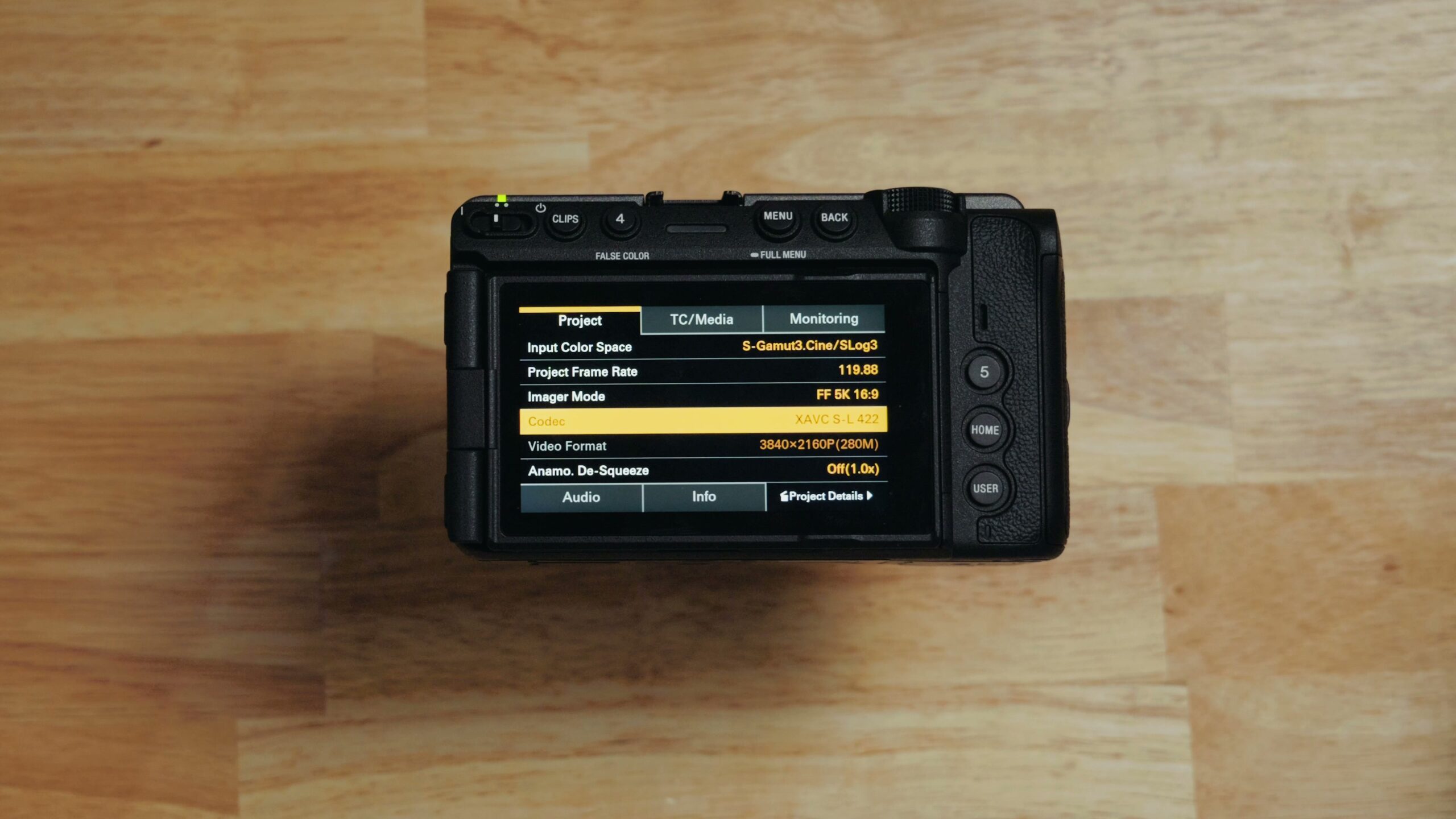
Thankfully this one could be fixed with a relatively easy firmware update. All Sony would have to do is make the imager mode say full frame 4K whenever you are actually filming in 4K. That alone would help a lot of people and make the camera far more intuitive to use. If you want to go deeper on what these formats actually mean, I broke them down in my guide to Sony’s video format settings.
2. The 10 second reboot that eats the moment
This one is related to all of those filming modes, and it is the sheer number of times this camera needs to reboot when you change video formats and resolutions.
Switch from RAW to a non-RAW format and the camera immediately restarts. Select codec, choose X-OCN because you want to record RAW, press execute, and off it goes. It takes about 10 seconds.
When I say 10 seconds, that does not sound like very long. But when you are trying to film something fast, like a wedding ceremony, 10 seconds feels like an eternity. You are standing there going turn back on, camera, hurry up, we are missing moments here.
It is not just RAW to non-RAW, either. It also restarts when you switch from 24 frames per second to a higher frame rate. Sitting at 60 and want to grab this next part at 24? Execute, reboot, another 10 seconds. This camera loves to restart. The FX3 was nowhere near as restart happy as this one.
I do not know if there is anything Sony can fix here with firmware. There is probably a real reason the camera has to fully restart. But if you are someone who films quickly and switches between settings a lot, you are going to notice how much slower it is to shoot with the FX5, and you are not going to love it.
3. OpenGate, but only in RAW
The FX5 can film in OpenGate, which is fantastic news. Other filmmakers and I have been asking for this for an incredibly long time, and I am so glad Sony finally included it.
At the same time, Sony still feels quite far behind Panasonic when it comes to how much OpenGate this camera actually supports. On Panasonic’s closest competitor to the FX5, the S1 II, you can film in 3:2 or 4:3, you do not have to do it in RAW, and you can choose from many different formats. You have options.
With the FX5 it feels like Sony took a page out of Canon’s book with the C50, where the answer is: you can film in OpenGate, but only in RAW, and only in 3:2. Please take this and be happy with it.
Sony has told me they are working on a firmware update to add 3:2 OpenGate in XAVC S-I as well, which is better than nothing. I would love to see XAVC HS get it too, with its much smaller file sizes. This is fixable with firmware, but Sony needs to actually do the work.
4. The EVF and the XLR handle fight over the same port
Now let’s move on to the physical problems, because these cannot be fixed with firmware. I doubt we see any remedy for these until an FX5 Mark II, hopefully sooner than 2035.
This is arguably the biggest issue with how the FX5 was built. I am happy that it works with a robust XLR audio handle just like the FX3. I am even more thrilled that Sony listened to filmmakers and went with a completely optional detachable EVF. What I do not love is that the EVF and the XLR handle attach to the same place on the camera.
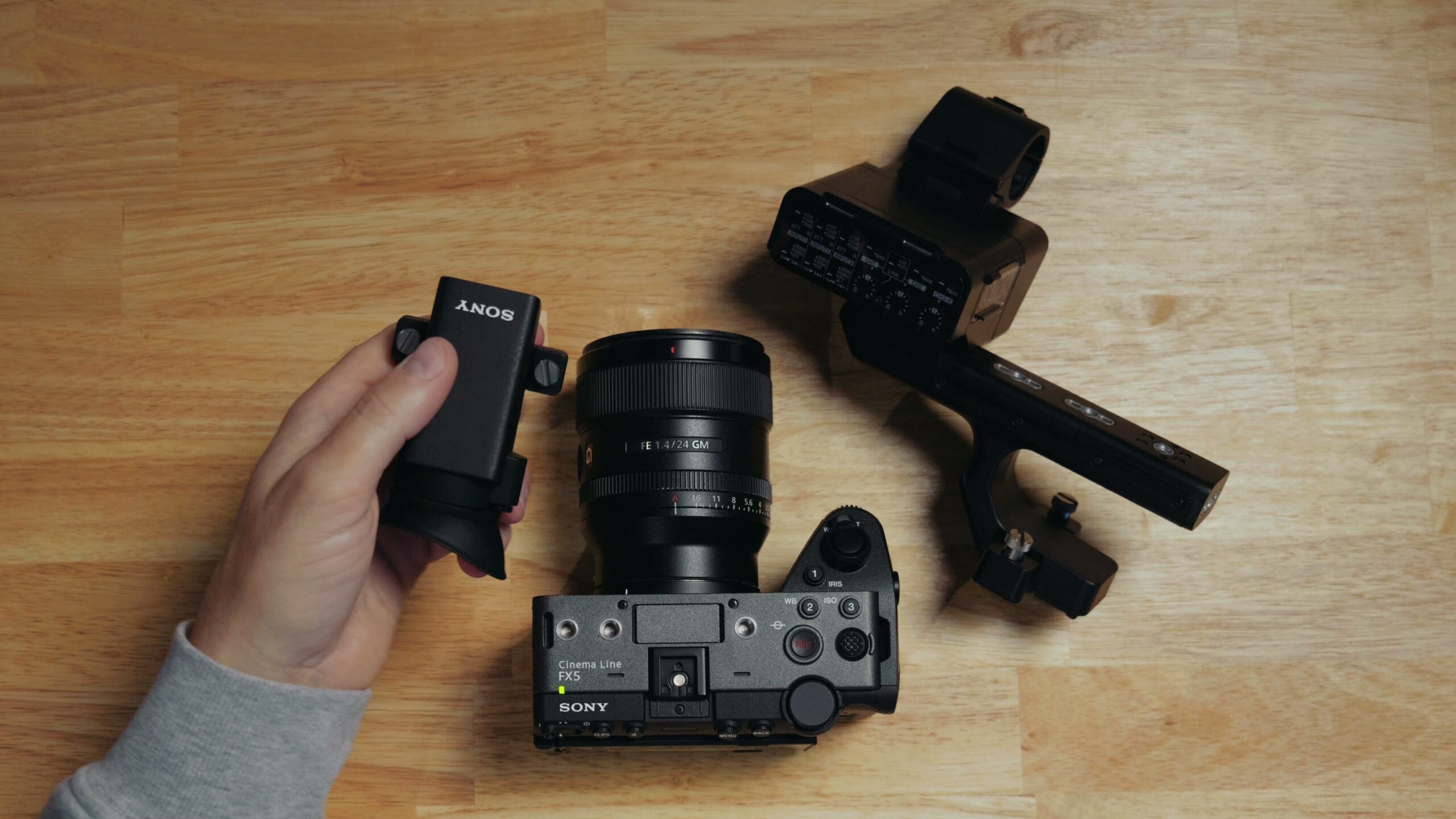
So you have to choose. Do you want a viewfinder, or do you want 32-bit float audio? You cannot have both.
When Sony first told me about this, I was excited to hear they were partnering with my friends at Kondor Blue on an EVF cable that connects to the proprietary port on top of the FX5 and lets you mount the EVF somewhere else on the body. That gives you a lot more flexibility if you are building something like a shoulder rig.
In a perfect world this EVF port would sit somewhere else on the FX5 entirely, so you could at least run a cable and use both the EVF and the XLR handle. Sadly that is not possible where it is. I keep thinking, could you scoot this over a little bit, move the hot shoe the other way, and nestle both up there?
The other workarounds I could see Sony making work on a future version: enable one of the dual USB-C ports to work with an EVF cable adapter, or build an XLR handle with a cutout at the bottom so you could run a right angle cable into the EVF port. But I have harped on this enough. I think Sony simply ran out of space on the camera, had to use the proprietary EVF connection port, and this was the only place it could go. It makes sense. It is still a compromise you have to live with.
5. The rear control wheel I keep reaching for
The biggest physical usability issue I have found is that I keep missing the rear control wheel that has been on the back of every previous Sony Alpha camera.
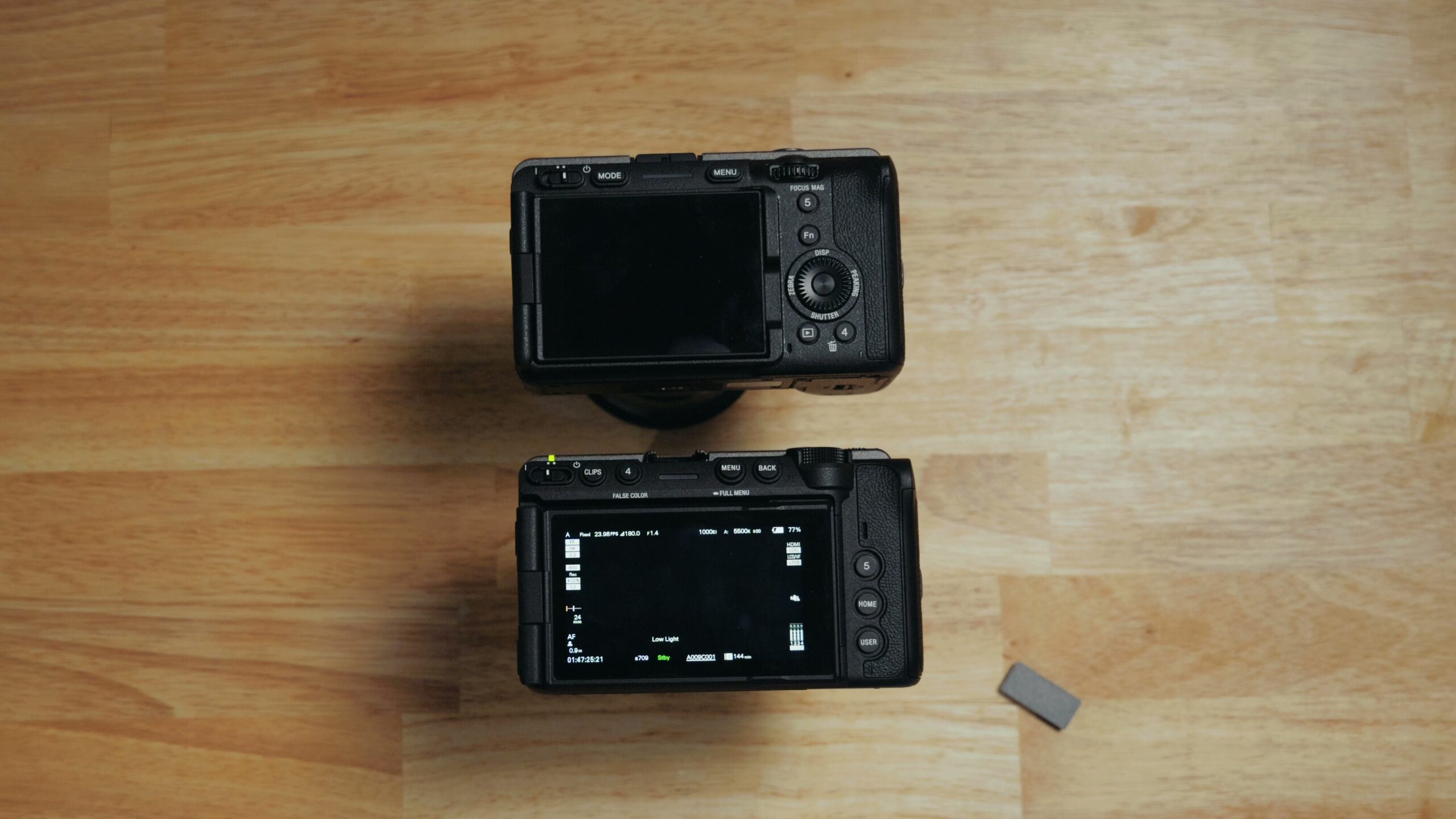
This is a genuinely tough one for Sony to solve, because they wanted to make the screen larger, which a lot of people are very happy about. That larger screen took away the space where the control wheel used to live.
But I would have happily taken a control joystick on the back of the FX5, just like the one you get on the top. That upper joystick is awkward to reach. You have to hold the camera a certain way and stretch your thumb over to it, and it does not feel as easy to use as previous Sony cameras where your thumb just rests on the control dial and you can spin it and hit every button you need.
Filmmakers will probably get used to it and it will end up being an easy workaround, but prepare yourself for a bit of a learning curve.
6. It can’t take a single photo
There is one feature missing from the FX5 that was on the FX3, and it may genuinely upset a lot of filmmakers. It certainly surprised me when I found it.
The FX5 cannot take photos at all. Not JPEGs. Not RAW.
It has a button that looks exactly like the photo button on the FX3, but it does not work for photography. It is just another customizable button, and Sony calls it the grab button.
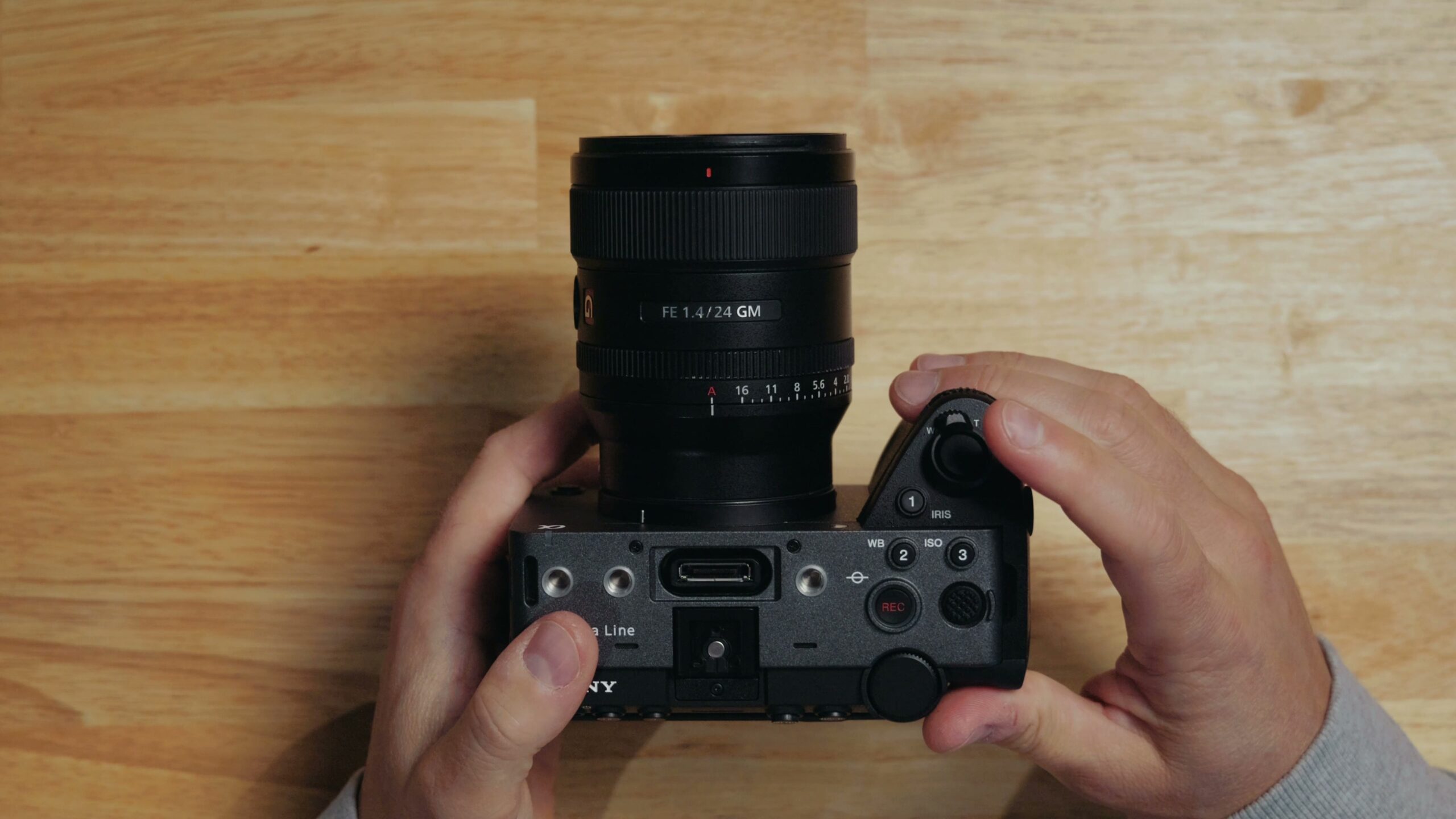
Grab a photo? Nope, can’t do that. Grab a video? Sounds a little weird, right? Oh well. Grab button.
The FX3, FX2, and FX30 are all video cameras with photo capability. The FX5 is purely a video camera, like a Venice or a Burano. That does make it less versatile than other Sony cameras. Sony has told me they are working on a firmware update to add the ability to capture stills from video on camera, but I doubt those will be RAW stills. If you want to take photos with the FX5, you are out of luck.
7. Scopes too tiny to actually use
Switching back to software for a second. Another feature Sony added that I am thankful for, but that also feels like the bare minimum, is built-in waveforms and vectorscopes. Filmmakers have been asking for these for many, many years. Credit where credit is due: Sony also implemented false color, and it works amazingly on this camera. It is a fantastic implementation.
The size of the vectorscope and the waveform monitor, though, leaves a lot to be desired. They are very small.
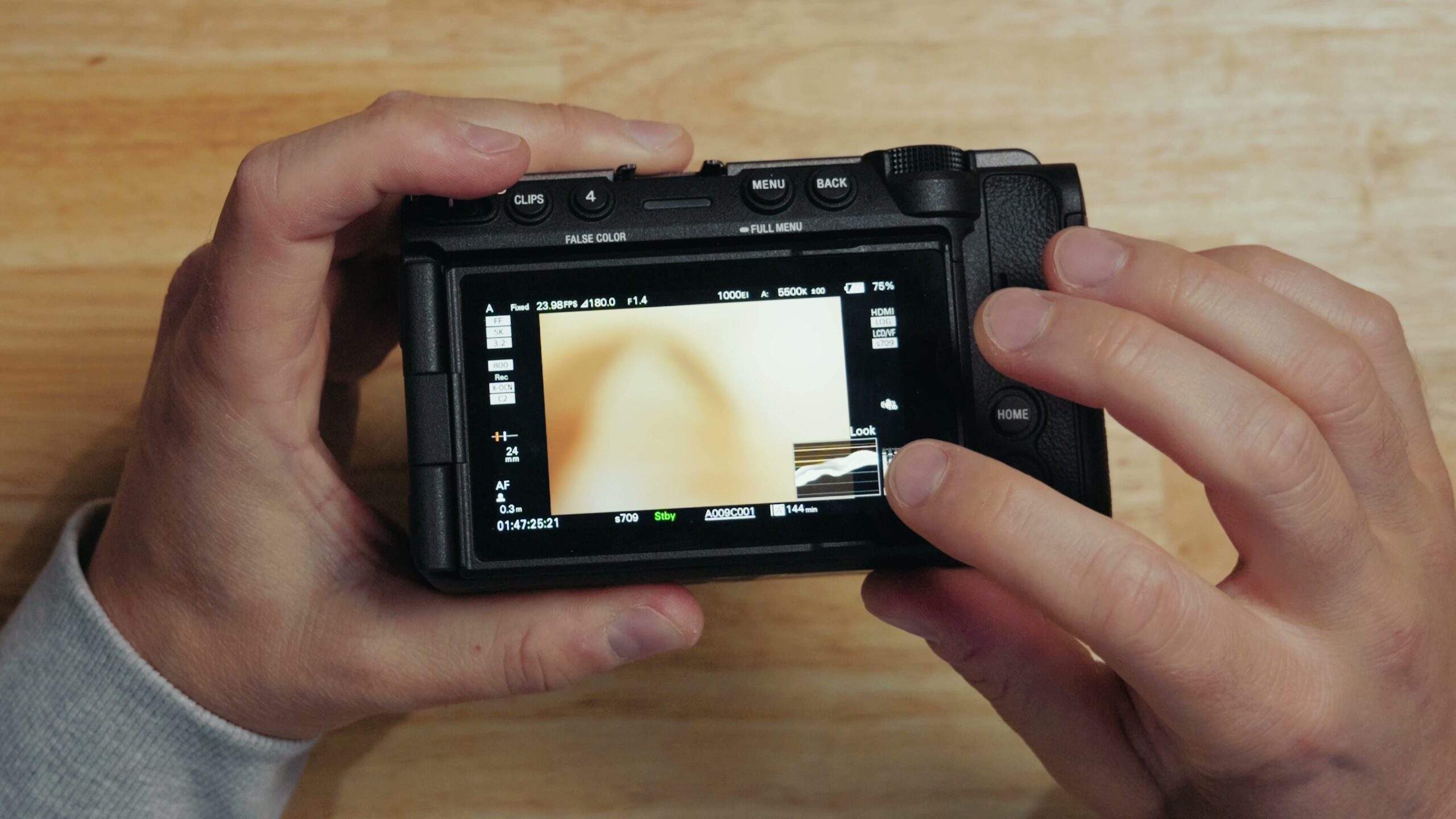
I would love to be able to adjust not only their size but their position on the screen, the way you can with the waveform monitor on the Panasonic S1 II. On the FX5 I am dragging this thing around and it ain’t going nowhere. There could be a setting I have missed, but by default these scopes sit in the bottom right corner, they do not move, and they are really tiny. That makes them harder to use than they should be.
Thank you for including them, Sony. Now please make them usable in a firmware update.
8. Hope you like gray and yellow
I will preface this one by saying it is more of a personal preference, but I think a lot of filmmakers coming from the FX3 will agree with me.
I do not love the color scheme Sony went with for the FX5 menus. I know it is very similar to Venice and Burano, where everything gets a much more muted, more professional palette. It is gray and yellow, and that is what you get. Hope you like gray and yellow, because those are your only options.
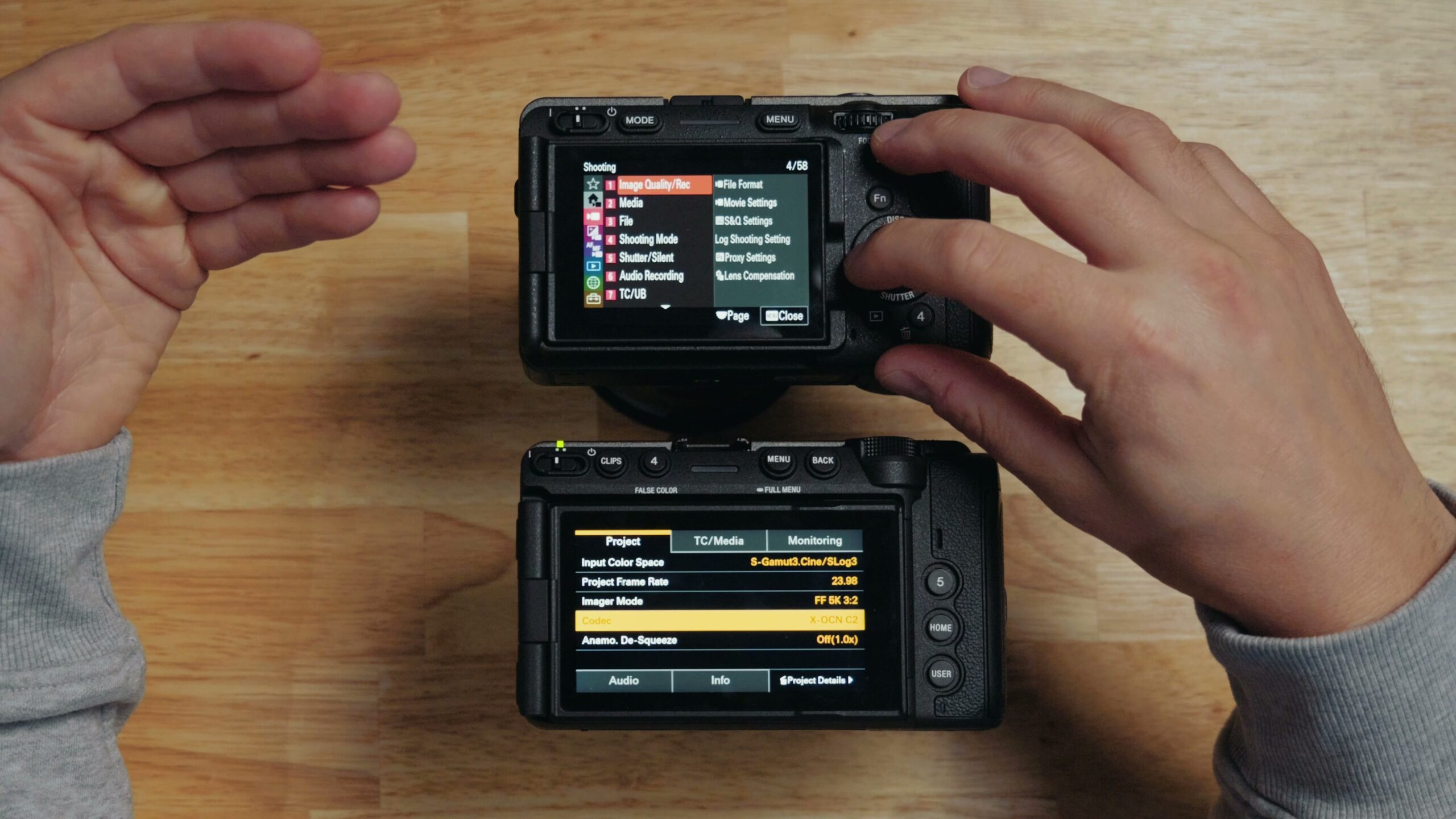
I am someone who likes the variety of colors you get in the FX3 menu. It makes things easier to navigate. When you are talking someone through a setting you do not have to say “go to the shooting menu.” You say “go to the red menu,” and they go, oh yeah, the red menu, I know where that is.
I am definitely not saying the Alpha menu is perfect either. It still needs plenty of work. But let me know in the comments whether you agree. Do you like the rainbow colors, or do you want the gray and yellow?
9. Ethernet where SDI should be
I may get some flak for this one. On the side of the FX5, underneath the HDMI port, Sony included an Ethernet port.
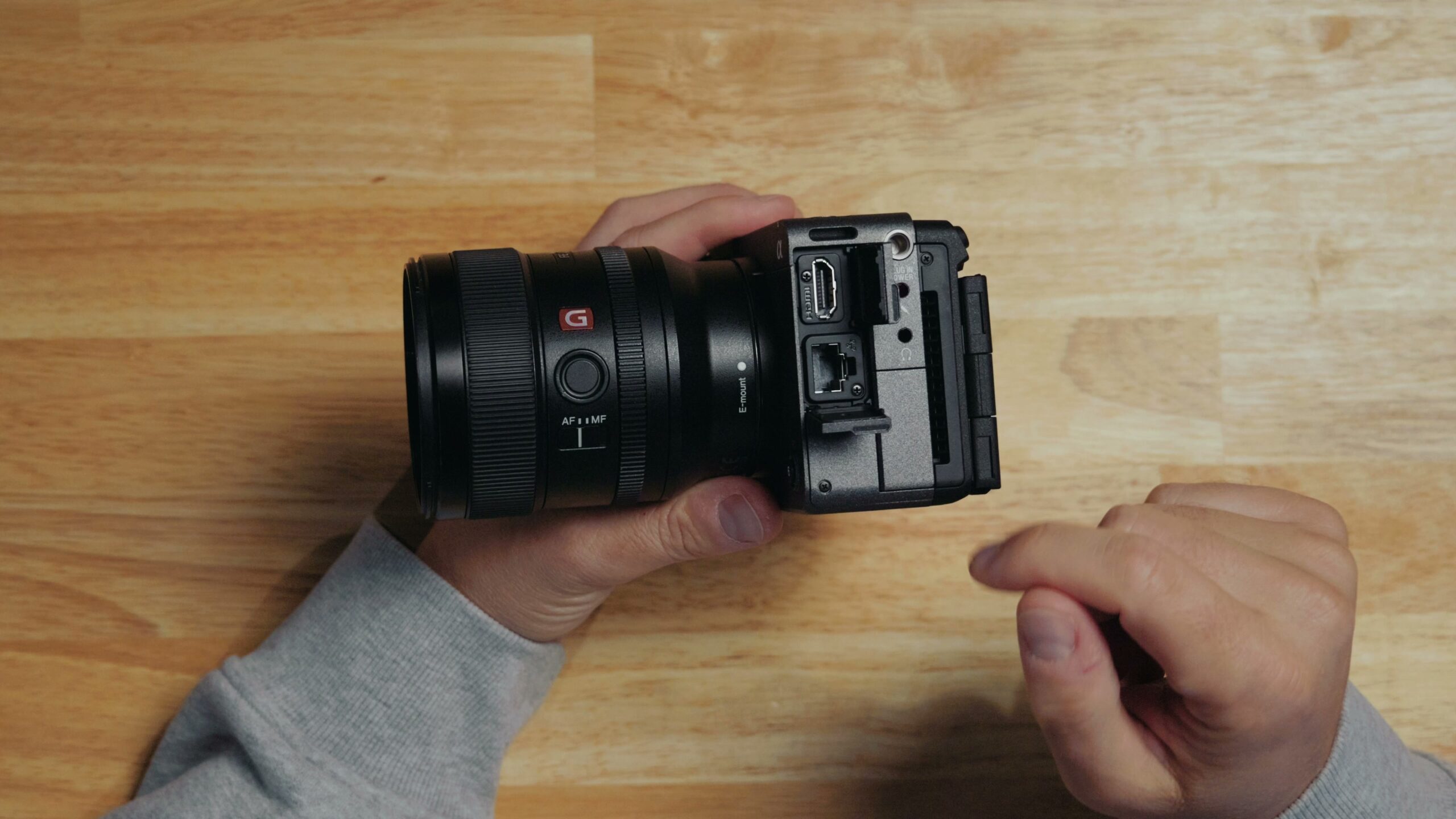
Sony told me this was for remote filmmakers who want a lot of cameras set up in a rig and need to control all of them. Personally, that feels like an edge case to me. If they had the room, I would have much preferred to see an SDI port here, which is considered a far more professional video transmission port than HDMI. I think a lot of filmmakers would have appreciated that over Ethernet.
If you disagree, let me know in the comments. I am happy to be wrong about this. Maybe it is interchangeable and you can use both. I do not know.
10. Still no built-in ND filters
I knew I had to mention this one, because people would be upset with me if I did not. So many filmmakers over the years, so, so many, have begged Sony to include an ND filter of some sort in their smaller cinema cameras. If any company could do it, it would be Sony.
Think about how mind blowing it would be to have a camera roughly the size of the FX3 that also had built-in NDs. Incredible.
Sadly, I have talked to Sony about this, and to Nikon and Panasonic too, and every single one of them tells me the same thing: there is simply not enough space in a camera this size to fit an ND filter. So I get it. The engineers are saying no.
But at the same time, what if they said yes? We can dream, right? What if they broke the laws of physics and made it happen? I guess we have to wait for an FX6 Mark II with the FX5 sensor. Give it built-in NDs and the IBIS from the Burano II and that would be a beast of a camera. Let me know if you want one like that.
Is the FX5 actually worth $5,000?
This last one I am genuinely not sure Sony got wrong, but I do want to hear from you about it, and that is the price.
At $5,000, this is definitely not a cheap camera. Taken in a vacuum against the FX3, which Sony is currently selling brand new for $4,300, it looks great. You spend $700 more and get a camera that is improved in almost every single way while being almost the same size. Awesome.
But it is only awesome if you are ignoring the competition.
Nikon has the ZR, which also records RAW, with a very large screen, a compact body, and great autofocus. It costs less than half the price of the FX5 at $2,200. I have a full walkthrough of how to film RED RAW on the ZR if you want to see what that workflow actually looks like.
Canon has the C50 and the R6 V, both quite competitive with the FX5 and both thousands of dollars cheaper. Panasonic has the S1 II, which beats the FX5 on OpenGate features and is also much cheaper.
Am I still buying one?
So what do you think? Is the FX5 worth it?
Personally, I am going to be buying one. But I also bought an FS5 when that camera came out over a decade ago, and that was $5,000 too. I remember a time when you had to spend $20,000 on a RED if you wanted to record RAW. We have come a long way. Cameras have gotten significantly better and cheaper.
It also feels like prices, especially for electronics, are going back up. So let me know what you think in the comments.
If you want more like this, I have written about where the FX3 II actually is and the upgrades Sony needs to make to catch back up. And if you want to get faster and better at the editing side of things, my Edit Videos Like A Pro guide is free. It covers the biggest rules I follow as a video editor, and I know it will help you with your own edits too.