
No DJ, no band, no house sound system, and toasts happening anyway. Here is the mic, recorder, stand and speaker I bring to rehearsal dinners, and how the speaker can pay for itself.
Continue reading
No DJ, no band, no house sound system, and toasts happening anyway. Here is the mic, recorder, stand and speaker I bring to rehearsal dinners, and how the speaker can pay for itself.
Continue reading
Dust floats around inside a mirrorless body before it settles. Give it somewhere to land that is not your sensor, using a ring of double-sided tape and about thirty seconds.
Continue reading
Five minutes, thirty minutes, an hour long documentary edit? Every wedding filmmaker gives a different answer. Here is how I worked out my own, and the moment in 2012 that changed what I offer.
Continue reading
I took a 360 camera to a wedding to find out whether it earns a place in the bag or is still a gimmick. It is brilliant for behind the scenes and it falls apart in the dark.
Continue reading
Your grade looks right in the preview window and washed out the moment you export it. On Mac the fix is a free LUT from Adobe. On PC it is one dropdown in the NVIDIA Control Panel.
Continue reading
This is Allyson and Mark’s wedding trailer from April 2019, with the camera, lens, and settings burned into the corner of every shot so you can see exactly what was used to get each one.
And here’s the thing I want you to notice before anything else, because whenever people ask me what they need to buy to make films like this, the honest answer is usually “less than you think.” Every single frame of this film came off one camera body. One. Plus a little 360 action camera for the last shot, which I’ll get to, because that one’s fun.
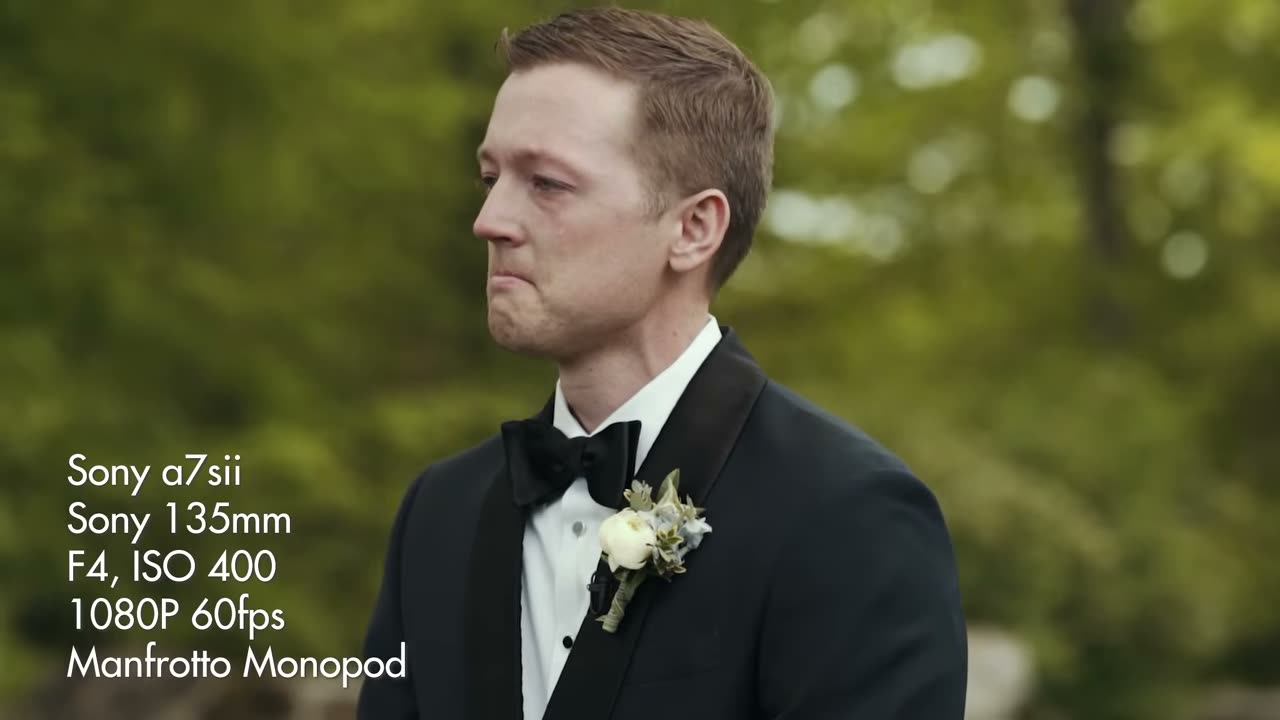
Same as always, the long lens does the emotional work, sitting between F2 and F4 and living on a monopod. Whenever a groom is standing there trying to hold himself together before he sees his bride, you want to be far enough away that he forgets you exist, and 135mm buys you that distance.
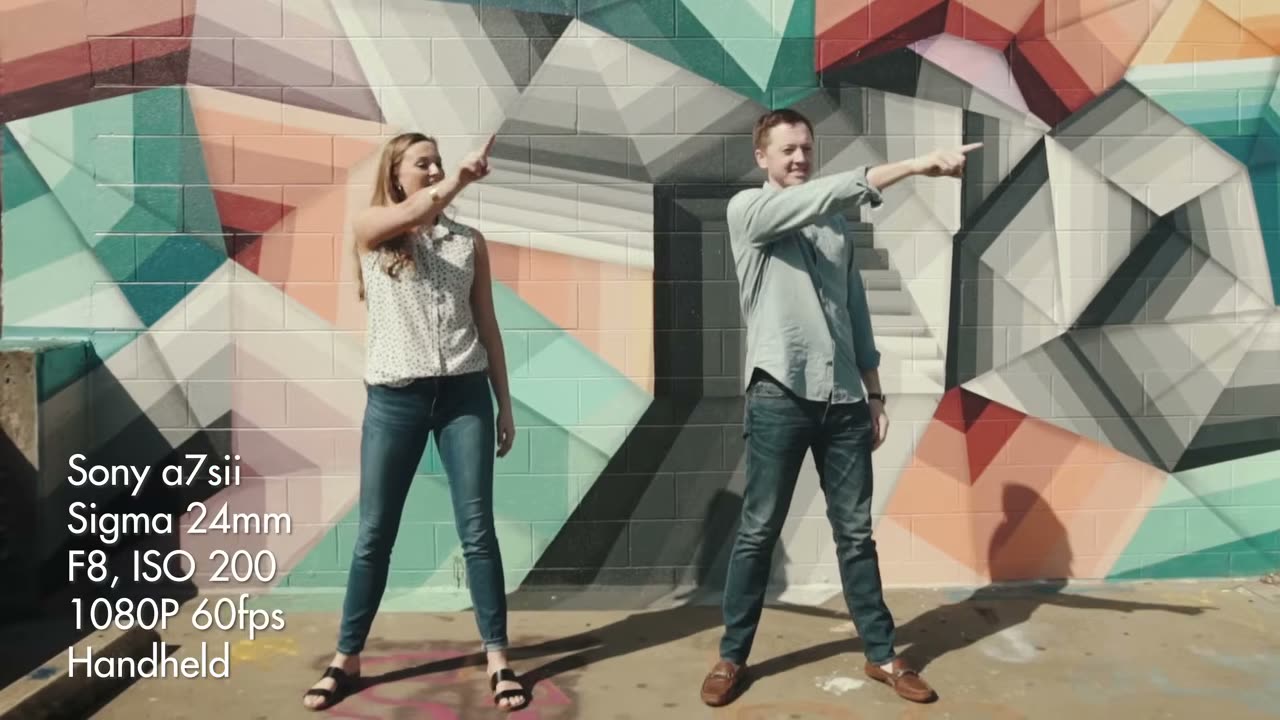
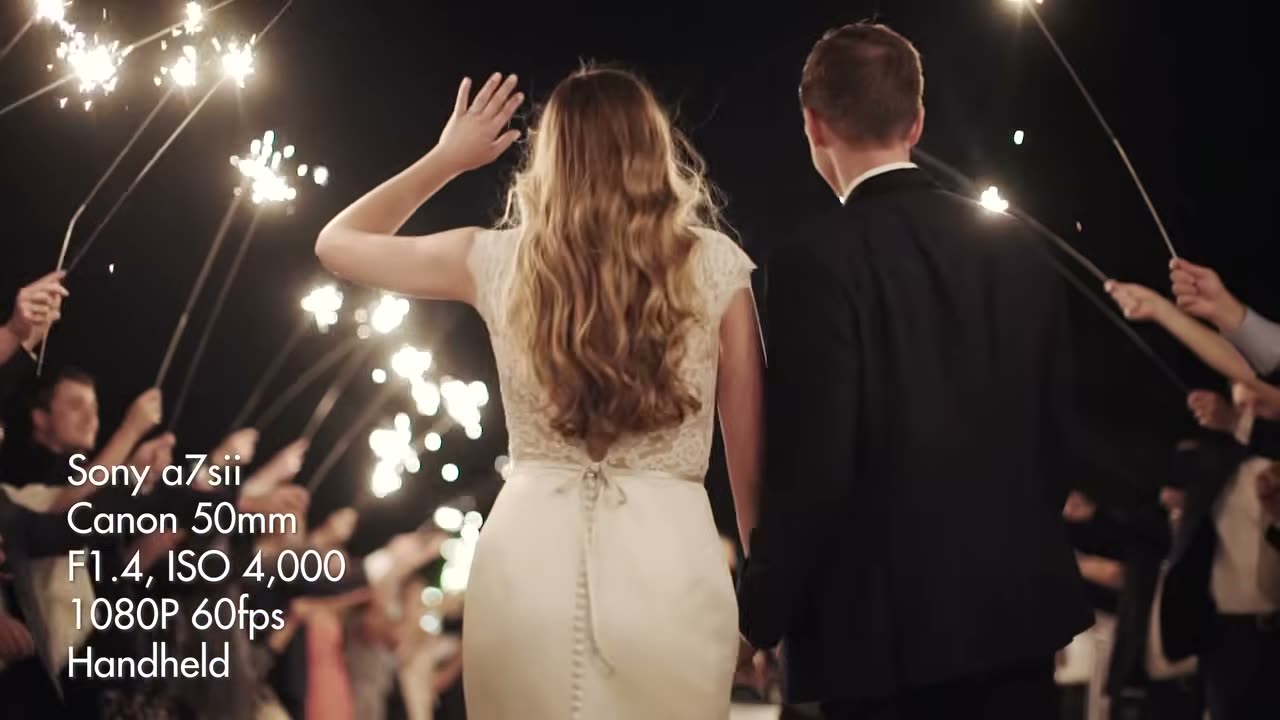
Every walking shot, every orbit around the couple, every push down the aisle is the 24mm on the Crane 2. Outdoors in daylight it’s stopped down to F8 at ISO 200 so focus takes care of itself while you’re busy walking backwards. Inside for the first dance it opens to F4 and the ISO climbs to 4,000, and by the sparkler exit it’s wide open at F1.4 at ISO 5,000.
That ISO range, 200 in the afternoon to 5,000 after dark, on a camera from 2015, is the entire argument for the a7S II. It just did not care about darkness.
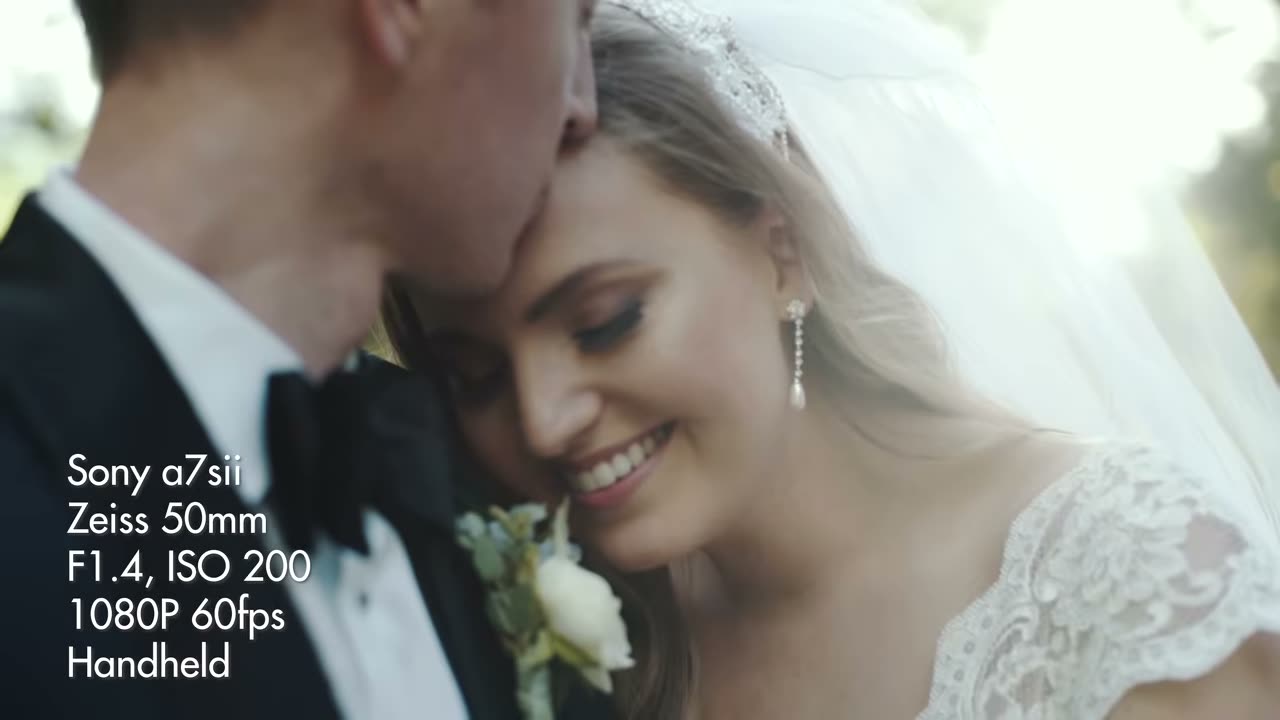
Two different 50mms show up in this film, a Zeiss and a Canon, both at F1.4, both handheld. That’s the lens for whenever you’re close enough that a monopod would be in the way and slow enough that you don’t need a gimbal.
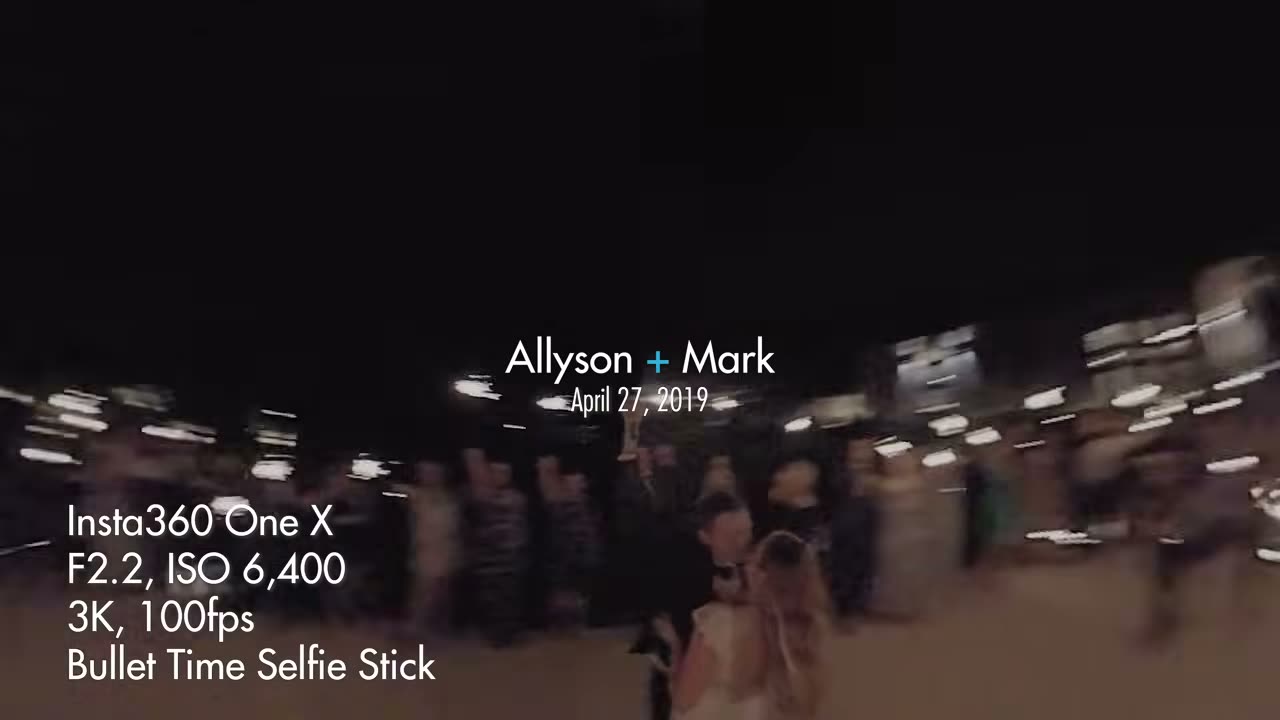
That spinning shot at the end, the one that whips around the couple in the middle of the dance floor, is not the a7S II at all. That’s an Insta360 One X on the end of a bullet time selfie stick, shooting 3K at 100fps at ISO 6,400.
You physically swing the camera around your head on a string. That’s the entire technique. The 360 footage means you reframe afterwards in the app and the stick edits itself out, so what you’re left with looks like a camera orbiting the couple at head height in a crowded room, which is a shot that would otherwise need a crane and a very patient dance floor.
It cost a fraction of any lens in this bag and it gets more comments than anything else in the film. Not everything has to be expensive to be worth having!
You’ll notice almost the whole film is 1080p at 60fps, and only a couple of the very still, very quiet close-ups are 4K 24fps.
Shooting 60 gives you room to slow a shot down in the edit and still have it look smooth, and on a wedding trailer that flexibility is worth more than the extra resolution almost every time. A shot of a groom breathing before he turns around doesn’t need to be slowed down, so it gets 4K. A shot of a couple walking through sparklers absolutely does.
If you want the same rundown on a different wedding, I did one for Allison and Seth’s trailer as well, and that one was shot on two bodies instead of one, so it’s a useful comparison.