
The Tascam DR-10L feels like it was built specifically for wedding filmmakers, and in my opinion it’s the best audio recorder a wedding videographer can buy. I own four of them.
To be clear, this is a positive review and I am not being paid or sponsored by Tascam to make it. I just really love this recorder, and I’ve been meaning to write this up for over a year.

You can get it on Amazon with a free SD card and headphones, as a two-pack with two cards and two sets of headphones, at B&H, or at Sweetwater. Everything else I use for wedding audio is on this gear page.
Size And Power
The first thing you notice is how small it is. I don’t have a Zoom H1 or F1 to hold up against it, only an H4, and next to that it’s dramatically smaller. Small enough to hide on somebody discreetly when you don’t want it obvious that they’re miked.
It runs on a single AAA. Tascam say nine to ten hours of battery life. In my real world use it’s closer to four or five. That’s still plenty, and if you’re filming a ceremony longer than four hours with no chance to swap a battery, you have bigger problems than this recorder.
The Power And Record Slider
This is, I think, the only time I have ever been excited about a power switch.
It’s a recessed slider. Hold it down for a full second to power on, hold it up for a full second to start recording. That design makes it basically impossible for someone to accidentally stop the recording, and if you try to power the unit off while it’s recording, it simply won’t.
Better still, while it’s recording every button goes into a hold state. Press them all you like and it just says KEY LOCKED. No more groom or officiant brushing the thing in their pocket and quietly destroying your ceremony audio.
The Screw-In Mic Connector

The other failure mode with small recorders is the mic input. Most of them use a headphone-style jack, and if the person wearing it tugs the cable, the mic pops out and you have nothing.
Tascam included a screwed connector instead. Screw it down and it is very close to impossible for the lav to come loose.
Auto Level, Limiter, And The Backup Track
This is a standalone recorder, so you can’t monitor levels. Yes, there’s a headphone jack, but I’m not running a long cable across a ceremony to listen to a groom. So it compensates two ways.
It auto-levels, so your audio sits at a sensible loudness. And it has a limiter, which catches most of the case where somebody speaks quietly for ten minutes and then shouts.
But my absolute favourite feature is the third layer. While it records your main track at around -6 to -3 dB, it simultaneously records a second backup track, either 6 or 12 dB quieter.
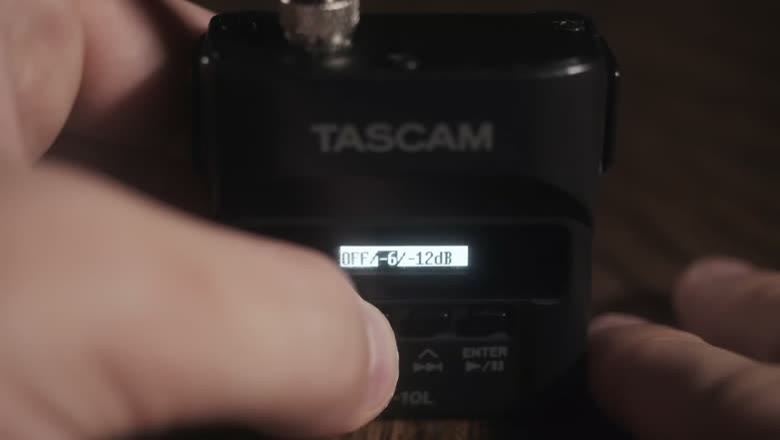
So when something does peak, I go into the backup track, pull the clean version of that snippet, drop it over the peaked bit, and it sounds fantastic. I want this feature in every recorder ever made.
If you want to go deeper, I’ve also got Every Wedding Videographer NEEDS These Audio Cables!.
How Does It Actually Sound?
If you’re watching the video above, I’m wearing one right now. That’s your answer.
Beyond that, go back through basically any wedding film on my channel from the past year and listen to the ceremony audio. Most of it was recorded on a DR-10L.
The stock lav mics that come with it are genuinely good. I’ve used them for a year without complaint, and upgrading the mic will cost you more than the recorder did.
If you want to get more out of that audio in the edit, I have a whole video on how I mix wedding audio in Premiere, including a preset you can download that’s built for exactly this recorder’s output.
Cost, And How Many To Buy
Prices below are from September 2018 and are worth checking before you buy.
The DR-10L with the lav mic was $200. Remember it has no internal storage, so you also need a microSD card. Tascam sell bundles that throw in the card and a pair of headphones at the same $200, which is what the Amazon links above point at.
So how many? My four break down like this: one on the groom, one on the officiant, a white one on the bride, and a fourth spare for ceremonies with two officiants, which has genuinely happened to me.
- Starting out, tight budget: buy one and put it on the groom. If the officiant and the bride stand close enough, one recorder gets you the message and both sets of vows.
- Around $400: buy two. One on the officiant for a clean message, one on the groom. As long as the bride is standing reasonably close, that’s decent vow audio.
- If you want it properly right: buy three. Two black, one white. Groom, officiant, bride, and pristine audio across the whole ceremony.
And if you’re now asking how on earth you mic a bride, because wedding dresses are confusing, I made a whole video on that too.