
The year is 2008. Canon has just released the 5D Mark II, a rather standard update to their full frame photography DSLR line, save for one afterthought: the addition of video recording at 30 frames per second. Video recording that also happens to be the most bokehlicious thing filmmakers had pretty much ever seen up to that point.

That kickstarted the DSLR filmmaking revolution and paved the way for most of the compact filmmaking cameras we use today. But back in 2008, Canon only really had one main competitor. That competitor was the anti-Canon, with cameras and lenses that competed very well on every feature, but with lenses that mounted to their cameras and focused in reverse. I am speaking of course of Nikon.
But First, A History Lesson
2008 was an inflection point in Nikon’s 100 plus years of existence, because unlike Canon, who chose to include professional filmmaking features, Nikon chose to essentially ignore them, and one could argue that opened up gaps in the market for Panasonic and Sony to step in.
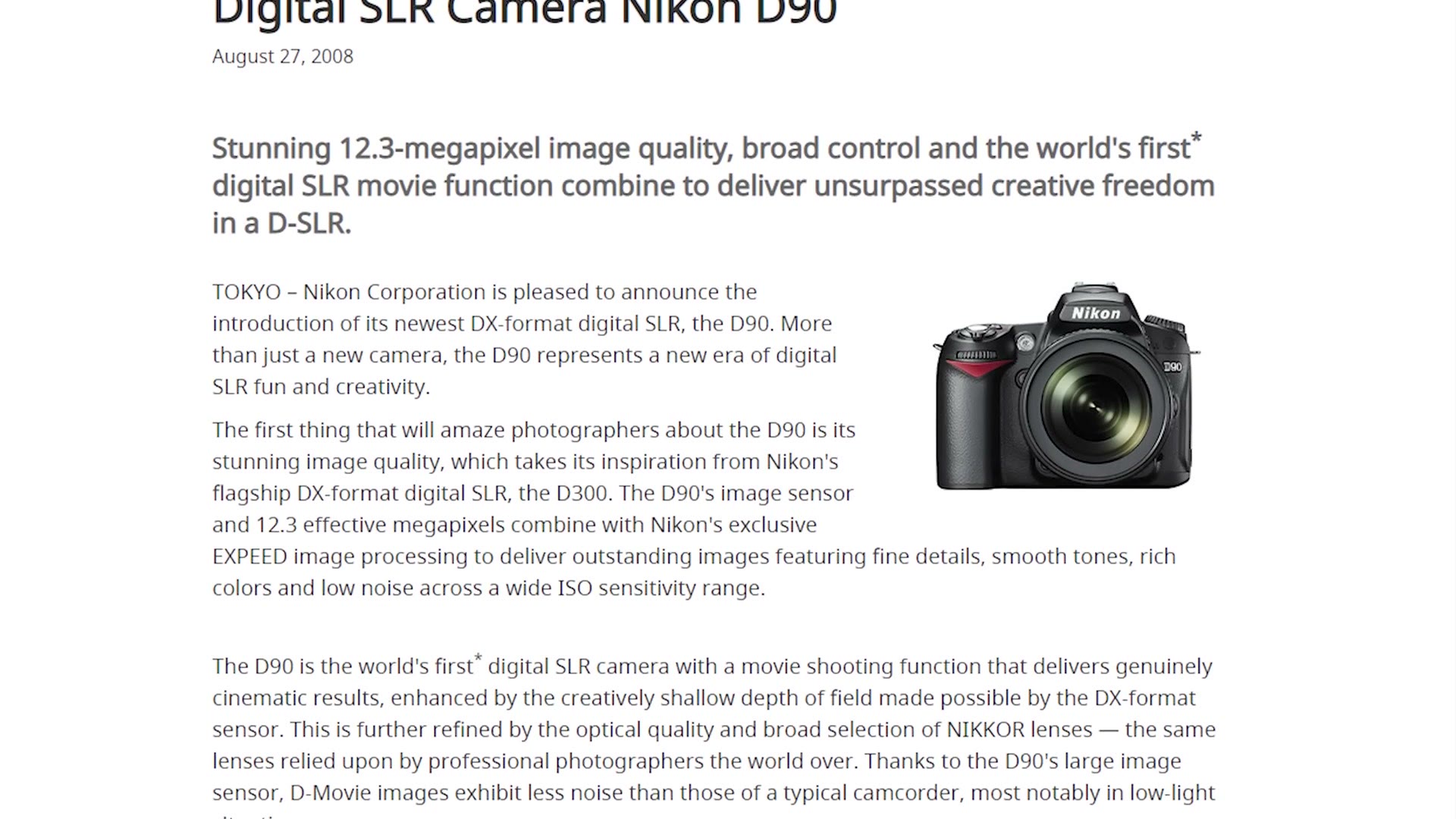
To be clear, Nikon did announce their D90 DSLR in 2008, a camera that, just like the 5D Mark II, could record video. But unlike the 5D, the D90 could only record for 5 minutes and did not include basic features like exposure control. That lack of even basic control over the video capabilities of their DSLRs persisted for years, even as Canon kept releasing DSLRs with more and better video features and Panasonic released their incredibly popular GH series.
By seemingly their own choice, Nikon chose to ignore this new filmmaking market, and so it left them behind. By 2011, only three years after the 5D Mark II, I still knew photographers using Nikon, but the vast majority of filmmakers had migrated to Canon DSLRs.
Now here we are over a decade and change later and suddenly things are different, because Nikon appears to have finally woken up. Not content to let Canon, Panasonic and Sony dominate filmmaking, in the past few years Nikon have emerged with mirrorless cameras in their Z series, all of which have decent video capabilities. But decent is not enough in this age of competition, and Nikon knows it. So in early 2022 they went all out and announced a camera so stuffed full of filmmaking features that it is essentially impossible to ignore.
If you are a filmmaker who does not at least have Nikon on your radar, you had better add it, because what they are doing is incredibly impressive and their future looks extremely bright.
Time To Review The Nikon Z9
This new camera is the Z9, and with the history out of the way, which I think is really important for understanding the context Nikon is coming from, we have got to talk about this camera. I am going to review it from the perspective of a wedding filmmaker and tell you why you need to start noticing Nikon, especially if you film weddings or documentaries or pretty much anything else.
For the sake of ethics, I want you to know this video is not paid or sponsored by Nikon, and while they did send me this camera to check out, it is going back to them very soon. The first time they see this video is the first time you see it.
This Camera Is Chonky
The first thing you are going to notice about the Z9 is its size. Whenever I first took this camera out of the box I said, dang, this reminds me more of a DSLR than a mirrorless camera. This thing is chunky.
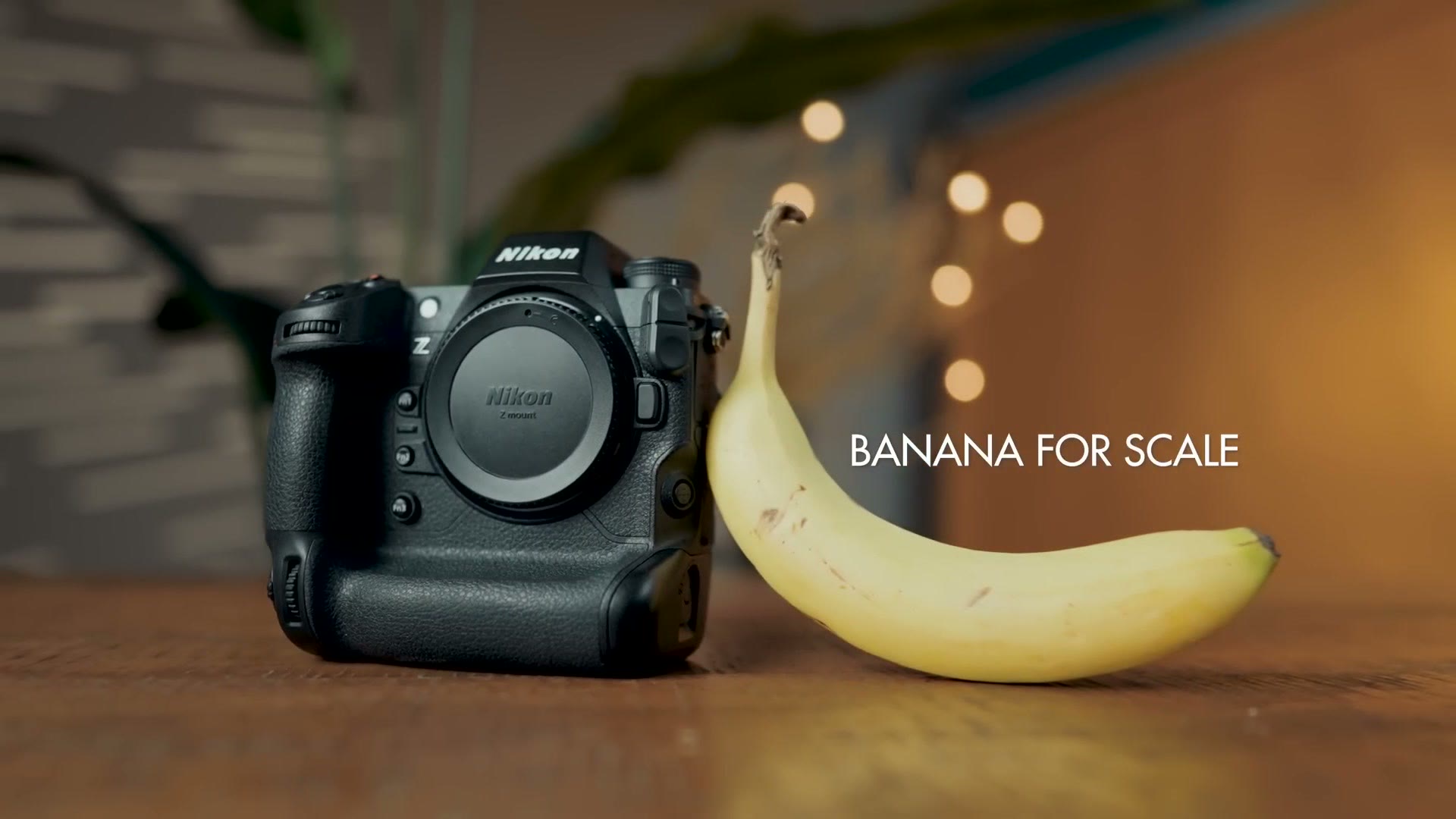
It is big, it is heavy, and you can definitely tell Nikon went more the Panasonic route with their mirrorless cameras, where they are not afraid to make them big, versus Sony, who have made their mirrorless cameras a bit larger over time but are still pretty darn compact by comparison. I would keep the Z9’s weight in mind if you are planning on filming a long wedding day, because holding this thing can get tiring after a while.
With that large size though, you are getting a very well put together camera that ergonomically feels great to hold. It is also covered in buttons. Wow, so many buttons. Whenever I said this camera is stuffed full of features, I was not joking.
On the left side you have a full size HDMI port, USB-C that supports power delivery, headphone and microphone inputs, and an ethernet jack, which I know high end photographers need, but it really does cement that this camera has everything and the kitchen sink.
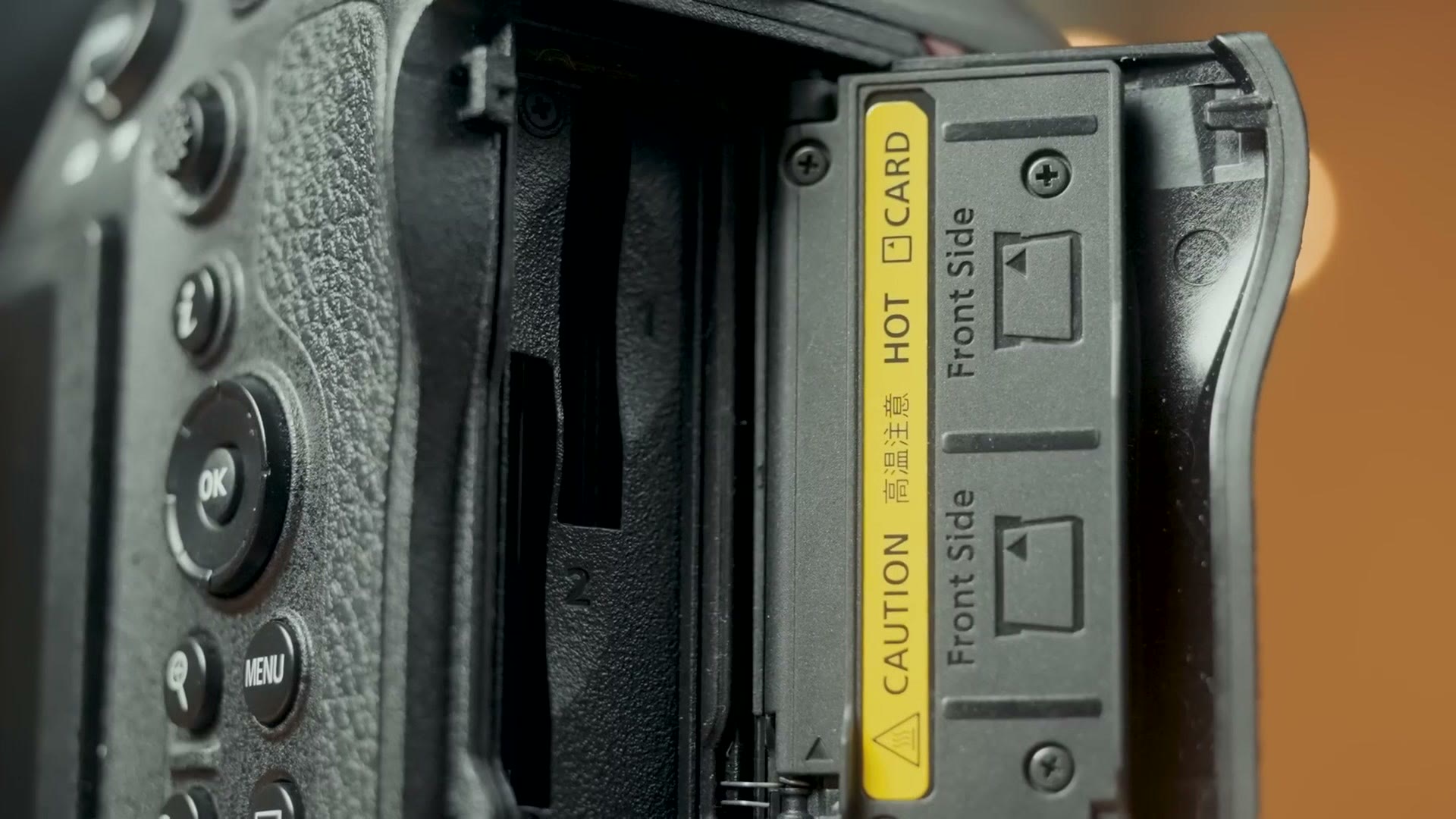
On the right side you have dual CFexpress Type B card slots, as well as a bright yellow warning that says “caution, hot card.”
I love seeing dual card slots as a wedding filmmaker, because weddings are one take events where you do not get any do-overs, so recording to two memory cards is another backup. I recommend pretty much anybody who films weddings use dual memory cards. Unfortunately though, even with dual slots, the Z9 can only record video to one slot at a time, meaning it does not actually offer that backup. It is not a deal breaker, but there are two slots. Come on Nikon, enable dual recording. This is a weird miss on a camera so packed full of filmmaking features.
Looking at the back, you have a really nice sized screen that tilts up and down and also side to side. Unfortunately the screen does not flip out so you can view yourself, but I do not think that is a deal breaker for wedding filmmakers. If you are a YouTuber, sorry, you can use an external monitor.
One thing I love is that little switch above the screen that toggles between photo and video modes. That reminds me so much of the photo and video switch on my Canon 7D. It is cool to see something like that about a decade after I saw it on the 7D body.
Rapid Fire Features
The Z9 has in-body image stabilization like most mirrorless cameras these days, and in my testing I found it to be good. It is not as good as what you get from a Panasonic, but it is still very usable.
The Z9 also has autofocus that works great in video mode. In my testing with the 24-70 and a 50mm f/1.2, it locked onto faces and eyes quickly and easily and held them well. Similarly to Sony’s a7R V, the Z9 uses AI to detect different objects and focus on them, which definitely helps.
Talking manual focus, this camera is also really interesting, because Nikon lenses normally adjust focus in the opposite direction from everybody else’s. Where you would rotate a normal lens counterclockwise to focus to infinity, with a Nikon lens you rotate counterclockwise to focus closer. In this camera’s lens settings though, you can actually change the direction the lenses focus, bringing your Nikon glass in line with all the other lenses out there. That is really cool, and I love that they give you that feature, because it is going to make switching to Nikon much easier for filmmakers.
Monstrous Resolution And Frame Rates
Now let’s get to the big enchilada, and the reason this camera is so darn impressive. We have got to talk about resolution and frame rates, because the Z9 is, in a word, an absolute monster.
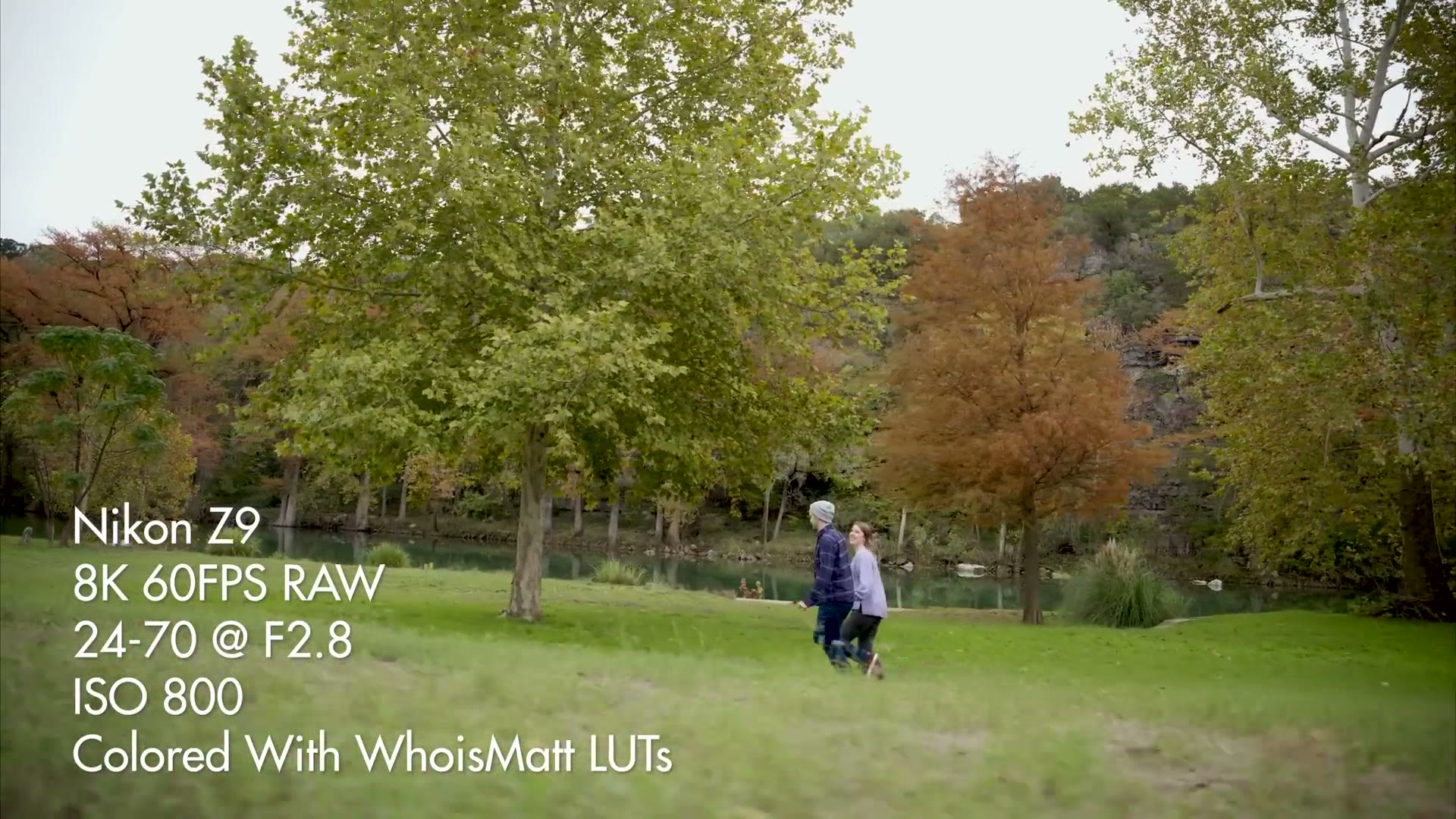
At the time of making this video we are seeing a lot of cameras that at least film in 8K, but all of them feel like they are just barely hitting that resolution, with compromises to stabilization, codecs, recording times and crazy rolling shutter, proving that 8K is really in its infancy for mirrorless. With the Z9 all of that changes. Where most of its competition is limited to 8K at 24 or 30fps at most, the Z9 says, how does 60 frames per second sound, with an over two hour recording time?
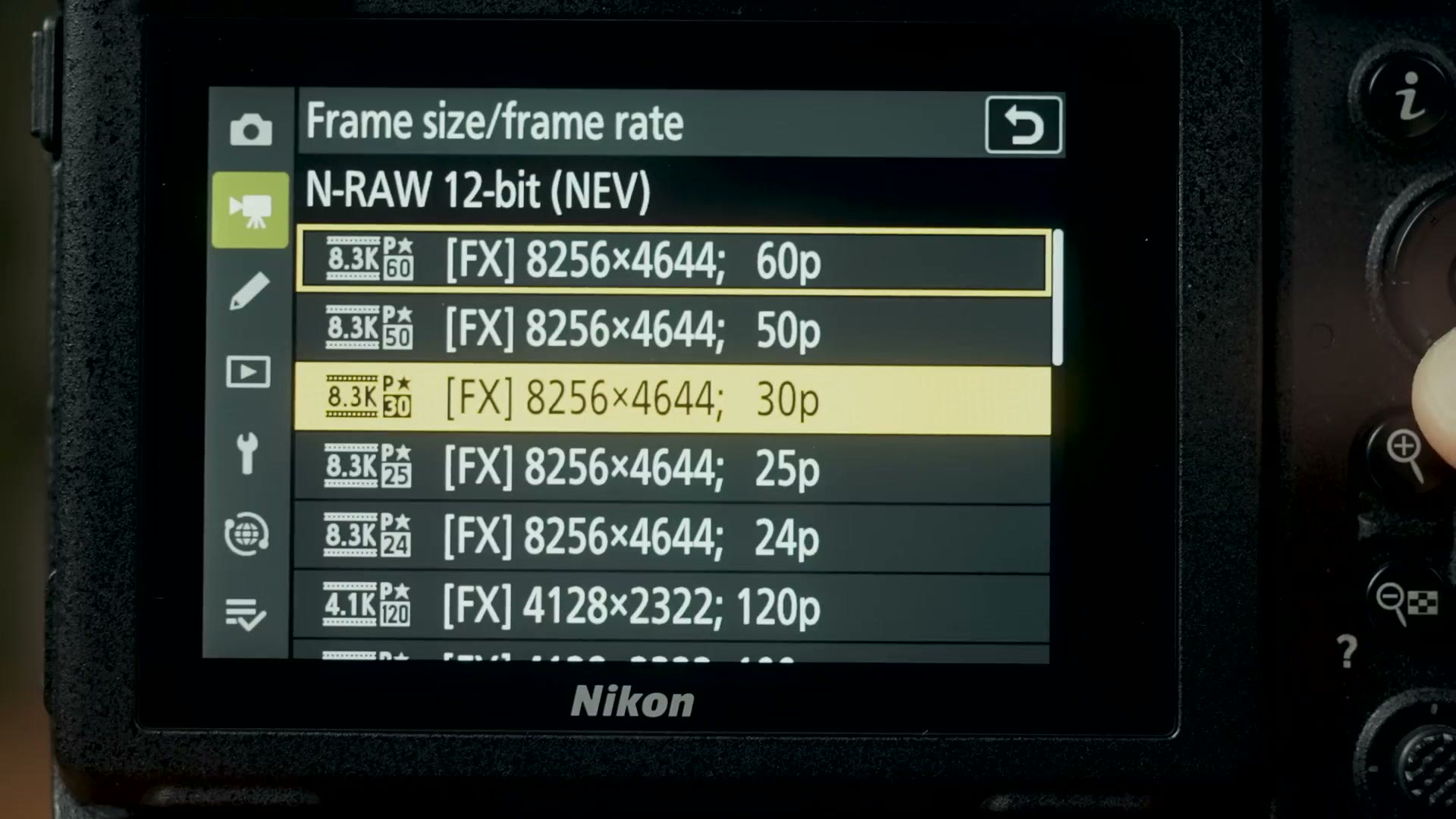
Dang, this is nuts. Heck, I can still remember in 2020 whenever specs were starting to leak for the Sony a7S III and I could not believe they might be releasing a camera capable of filming 4K at 120fps. Here we are a couple of years later and Nikon is releasing a camera that goes far bigger than that, with 8K at 60. So cool.
This Camera Might Be Illegal
More important than the resolution are the video formats and codecs Nikon packed into this camera, because this camera is so powerful it might be illegal. Let me explain.
Whenever they first announced the Z9 it was incapable of filming raw video, but Nikon said raw would come in a firmware update, and a few months later raw support was added. So yes, the Z9 can film 8K at up to 60fps in their proprietary N-RAW 12-bit codec, as well as 4K at up to 60fps in Apple’s ProRes RAW.
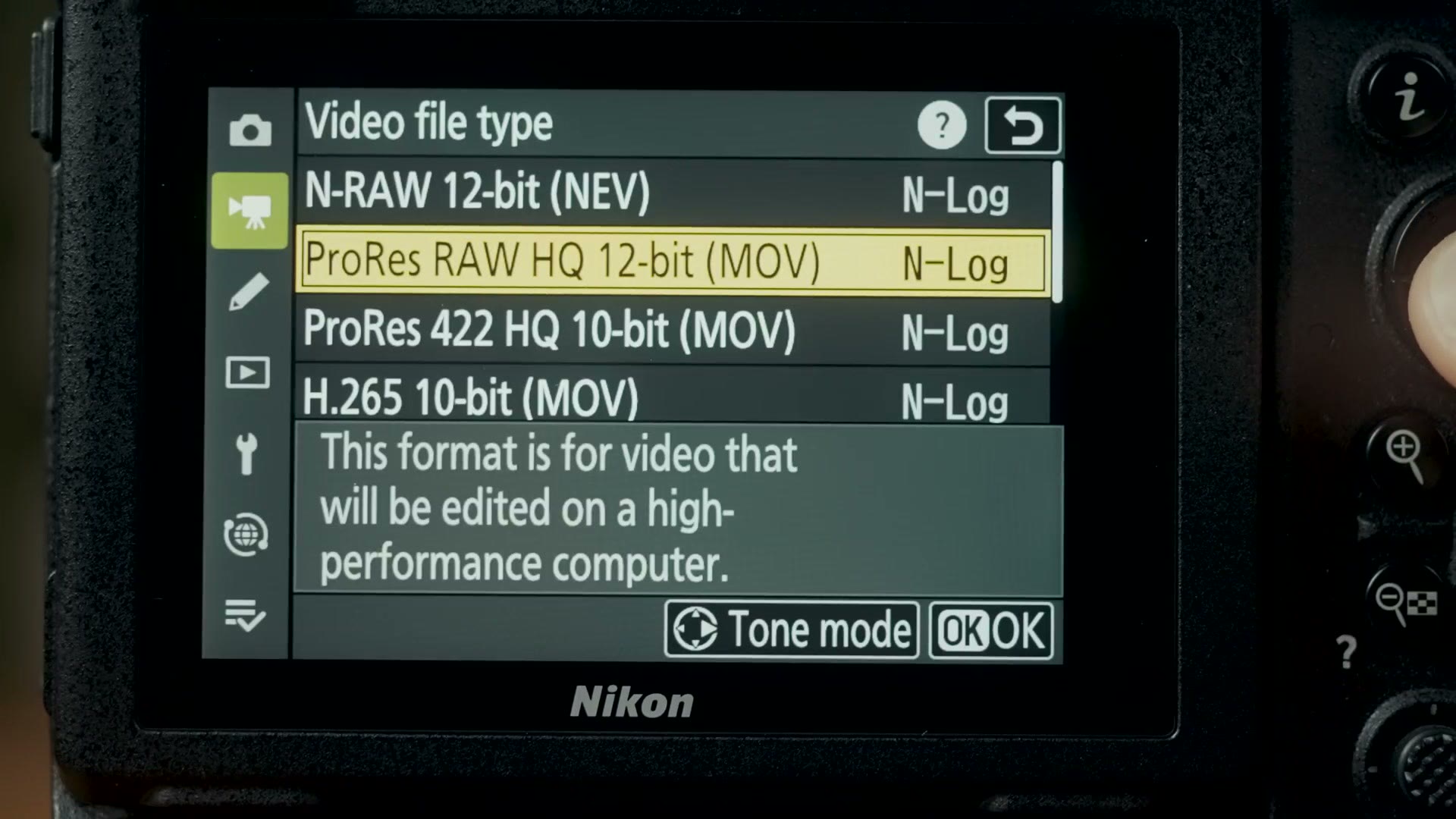
That is incredibly impressive, but more importantly, I want you to look at their competition. Notice that Sony and Panasonic do not currently offer raw video recording in camera, and if you want raw you need an external recorder over HDMI, like an Atomos. Why is that?
Well, remember how I said this camera might be illegal? The reason none of Nikon’s competitors offer compressed internal raw video recording is a patent held by RED, the camera company, not the color. I am simplifying a lot here, but one of RED’s innovations was creating a compressed raw video codec for their cameras, which they applied for and received a patent on. I am not a lawyer, but I have read many articles about this patent saying it is overly broad and essentially prevents any of their competition from competing in the compressed raw video space.

RED has since taken Kinefinity, Sony and even Apple to court over this patent, and they all lost to RED. I am pretty sure you are probably thinking, Matt, what about Blackmagic? Oh yeah, RED sued them too, actually. But Blackmagic got around RED’s patent by changing the way they record raw video, partially de-Bayering it in camera. That is a whole other video though.
We have got to get back to Nikon including internal raw recording with the Z9 via firmware update. In short, that is a very noticeable update, and it is not just me and you and other filmmakers who noticed, because RED noticed also, and they recently sued Nikon over it. Both companies are still fighting it out in court at the time of making this video.
Who deserves to win? Like I said, I am not a lawyer. But I can say that if you buy a Z9 right now today, it has these internal raw recording capabilities, and I have no clue whether after the case is settled there might be another firmware update that removes the feature. So I guess if you are going to buy a Z9, that might be an argument for buying one now and then never updating the firmware ever again.
Legality aside, it is incredibly cool to see Nikon not only embracing a proprietary raw codec with the Z9 but also including ProRes RAW internally. This camera gives you so much flexibility. Pretty much every frame rate and resolution you could ever want is in here, and if you are a wedding filmmaker, I think this camera is pretty well future proof for quite some time.

Do you need 8K? Well, no. But having filmed a wedding in 6K before, I really appreciated the ability to zoom in post whenever I was stuck in the back of a church in the balcony, unable to get any closer. The RED camera I was using to film in 6K at the time made my life so much easier. So I do think there are benefits to 8K, and plus, if you do not want to film in 8K, there is nothing stopping you from switching down to 4K and filming in whatever frame rate you want.
File Sizes Get Crazy
In regards to 8K there unsurprisingly is some rolling shutter, but more importantly, especially if you are filming raw, the Z9 eats memory cards like me at one of those sushi restaurants where the sushi comes by on a little train and you pick off as many plates as you want.
Nikon sent me a 650 gigabyte memory card to use with the Z9, and with that card completely empty I still had less than 15 minutes of recording time available before it would be completely full, if I chose to film 8K at 60fps in raw. So be careful. This footage is beautiful, but like my beard, it is also dangerous.
While you’re here, take a look at DON’T Fall For This Photo & Video SCAM!.
Speaking of beautiful footage, the Z9 does support recording in Nikon’s N-Log picture profile, which gives you great dynamic range, and it supports that profile regardless of the video format or resolution you are shooting in, which is great. Side note, I have a set of color presets called WhoisMatt LUTs, and I am pleased to tell you all the Nikon footage in this video is colored with them and they work great.
Battery And Lowlight Performance
With all this 8K talk you are probably wondering how this camera handles overheating. There is a setting in the menu, Auto Temperature Cutout, that you can set from Standard to High.
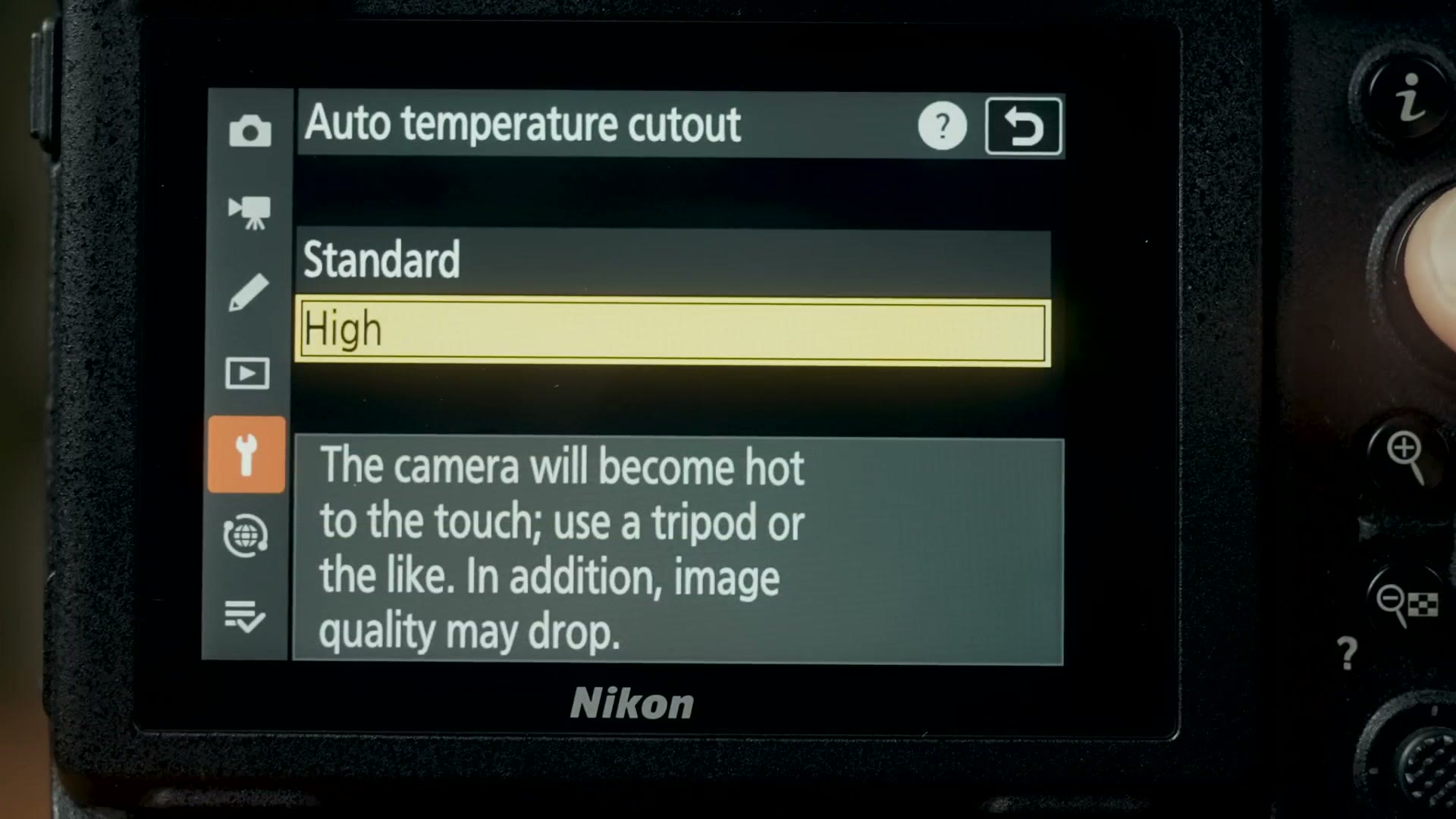
The good news is Nikon says this camera is capable of recording up to 2 hours and 5 minutes in 8K without overheating, and even then the camera will not overheat, the recording will just stop and you will need to restart it. It is a weird limitation, but it probably will not affect you unless you are filming a super long wedding ceremony or an insane round of toasts at a reception. In my testing, which admittedly is in a Texas winter so I do not have the summer heat to leave this camera out in, I did not experience any overheating.
Likewise, you may be concerned about battery life whenever filming at such high resolutions and frame rates, but I have to say, this camera comes with a massive, and I mean massive, battery.
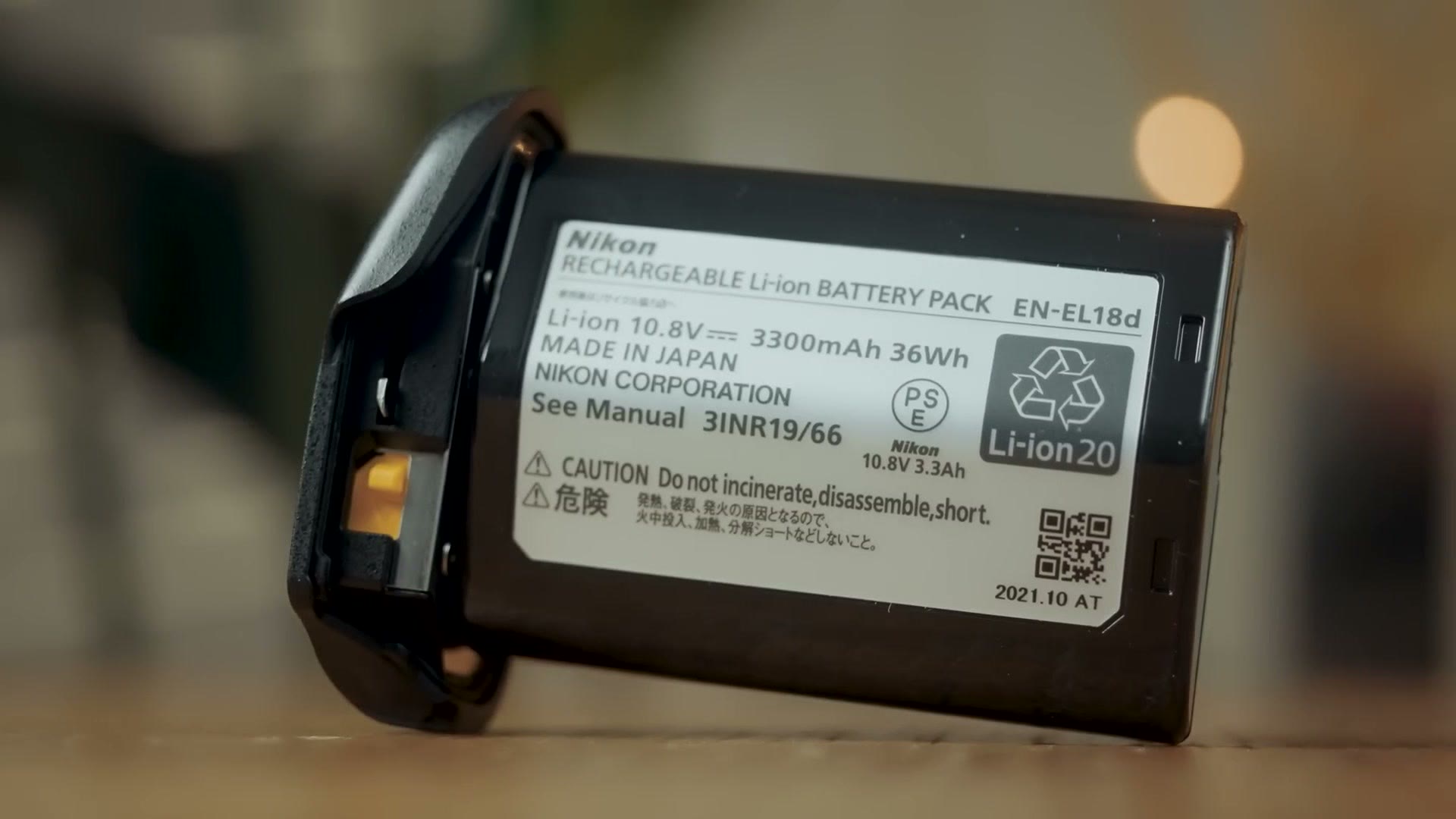
Just look at this thing. It is huge. It easily lasts 2 to 3 hours, which is stellar for a wedding. I still think you are going to need 2 to 3 batteries depending on the resolution you are filming at and whether you choose to film raw, but the battery life is still very good overall.
Now, what about low light? If you film weddings, the odds are you are never going to have full control over the lighting. In my testing, especially considering the Z9 is a full frame camera with a large sensor, I found it looks good up to around ISO 12,800 before it started to get really noisy.
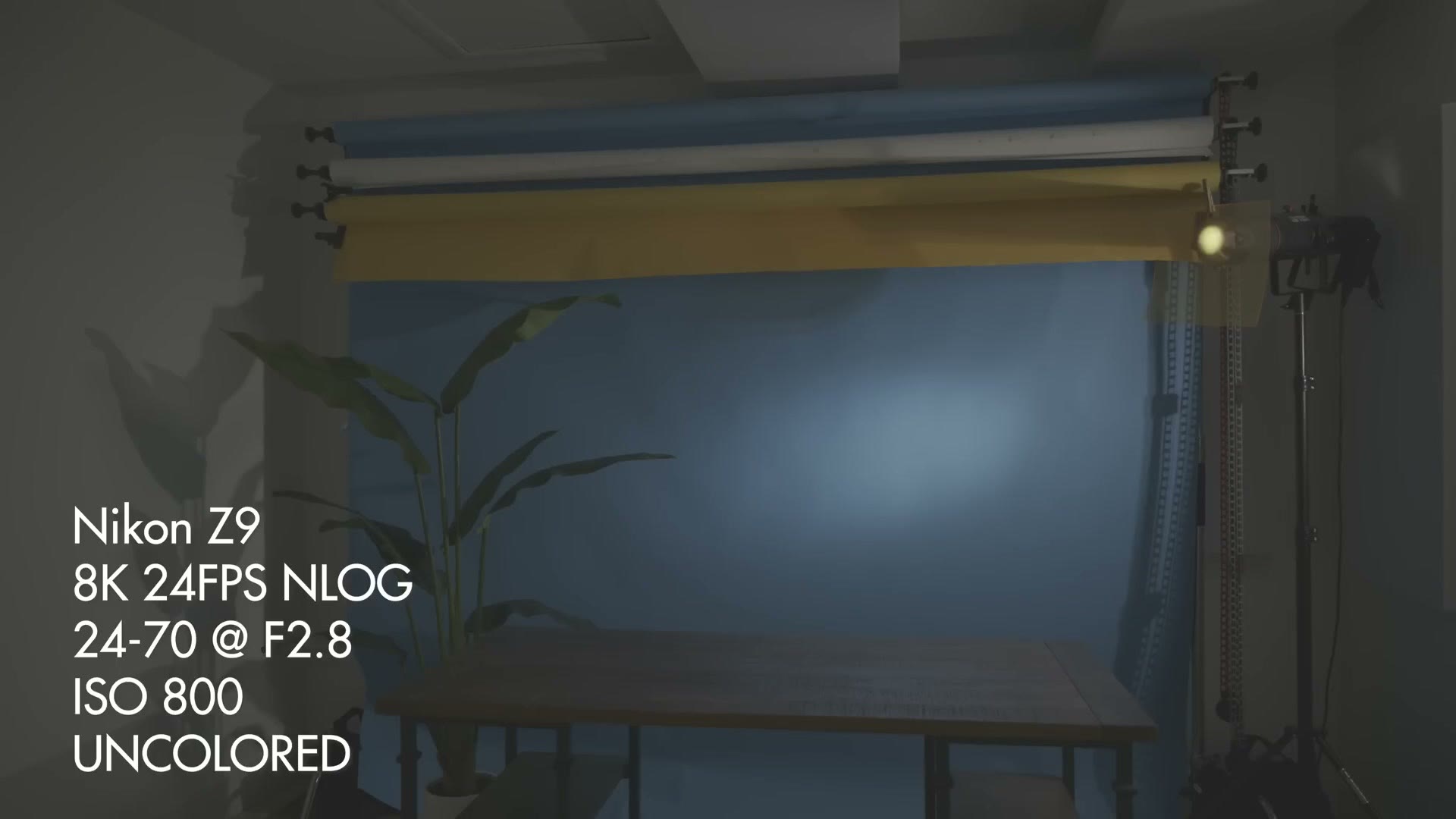
You could go higher if you needed to, because a reception or ceremony was really dark, but you may be dealing with some noise. Regardless, I always recommend bringing lights to a wedding, and that is going to give you better quality footage overall.
The Price, And Should You Buy It?
Now let’s talk about price, because this is where things get really interesting and more nuanced than just a number. At the time of making this video the Z9 costs $5,500, which is definitely a hefty chunk of change. But whenever you consider everything this camera is capable of, I definitely think it is worth it.
Whether you should buy it though comes down to a deeper question than whether you can afford it. Remember that with any camera you are buying into an ecosystem, meaning you need to consider not just the camera but what lenses are available for it, whether you can adapt lenses from other manufacturers, what accessories you can buy, and what options you have for B or C cameras alongside it.
In a vacuum the Z9 is arguably one of the best cameras available today, and it is a no brainer to recommend for filming weddings or honestly anything else. But I want you to take a moment and look at the lenses Nikon currently has available.
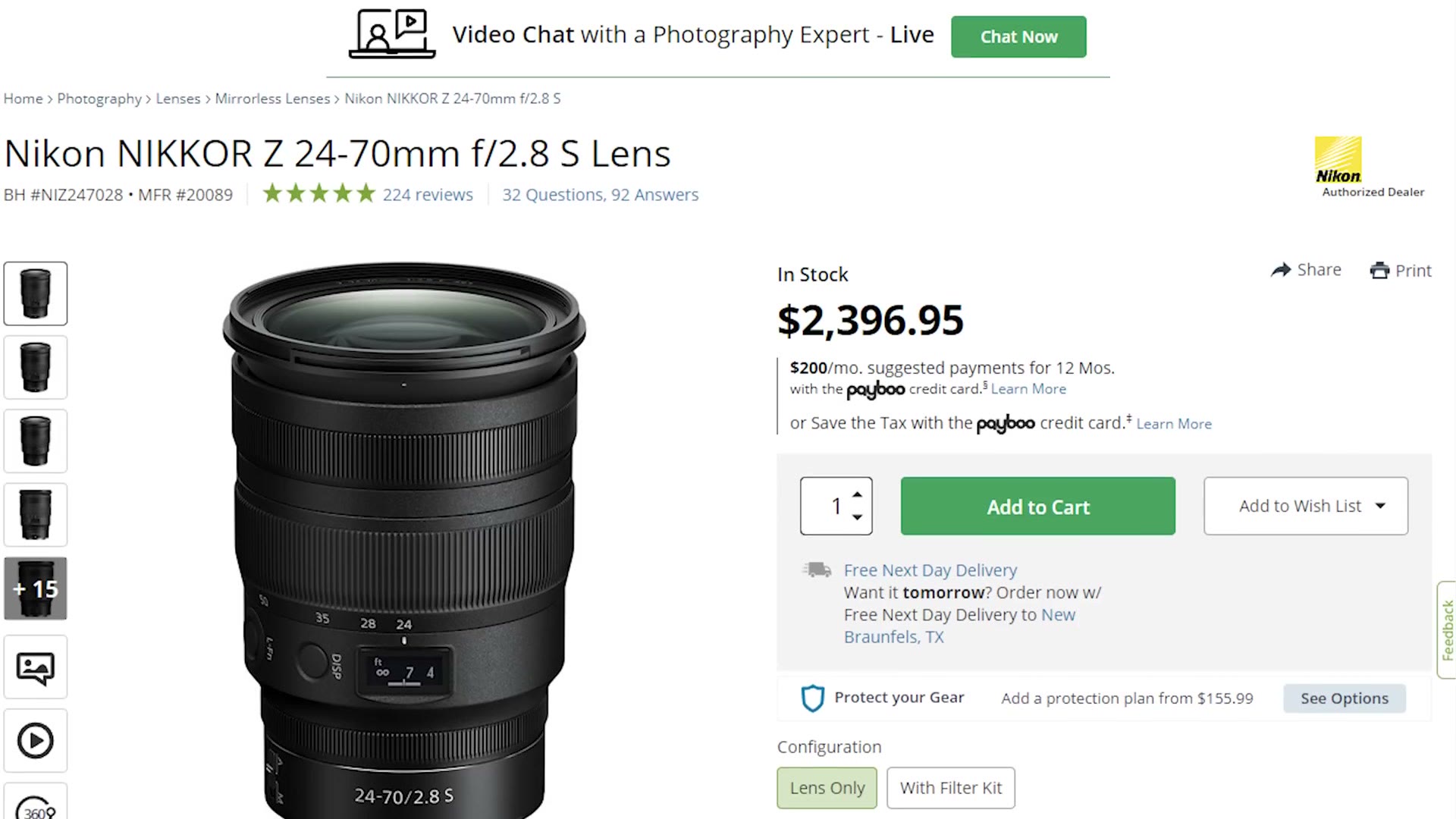
I love seeing that they have the basics like a 24-70 and a 70-200, and they also have cooler lenses like a 50mm f/1.2 and even an f/0.95. All of these lenses are going to be a significant investment, and that f/0.95 costs more than what I have paid for a car before. But you need to check whether Nikon has all the lenses you are interested in using. One cool feature of their website is that it shows you all of the lenses they currently have available as well as a preview of future lenses they are working on, so that is a great way to do your research.
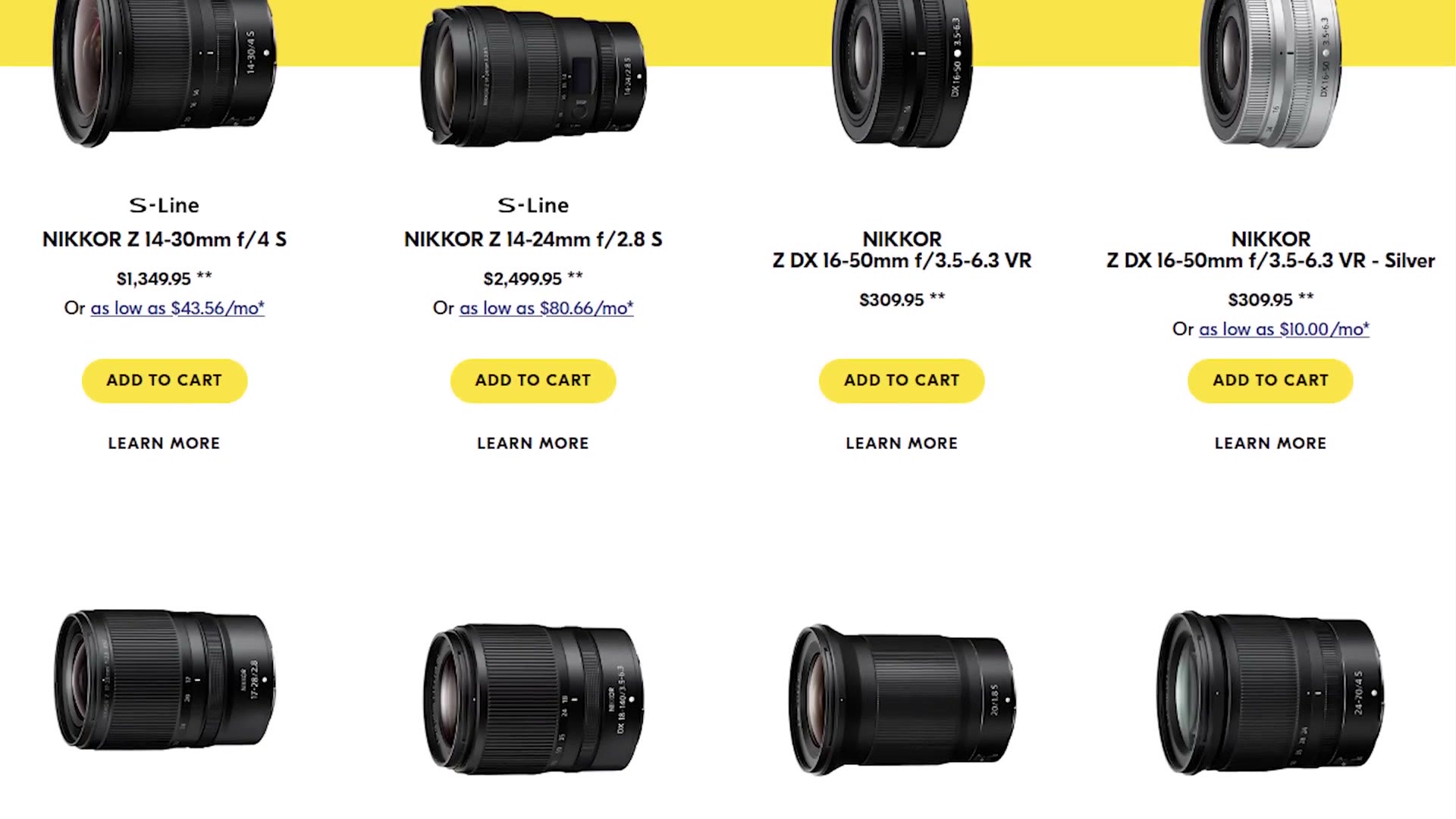
More important than lenses though, and this is my main hangup about the Z9, is that there are currently no other cameras Nikon makes that come even close to this level of performance.
One thing I love about Sony, and the reason I recommend them so much, is that you could go out and buy an FX3 to use as your A camera to film a wedding, but instead of needing to buy a second or third FX3 for your B or C cameras, you can invest in the FX30, which matches the FX3 visually and offers many of the same features in a significantly more affordable body. Sony offers a great ecosystem of cameras at different price points that match each other visually, which makes it easy to save money as you build out your kit.
With Nikon, at the time of making this video, they do not have a secondary camera that performs comparably to the Z9. If you want another camera with internal raw recording, or even 10-bit color without raw, you do not have any option but to buy another Z9. The Z7 II comes close, but it is still only 8-bit.
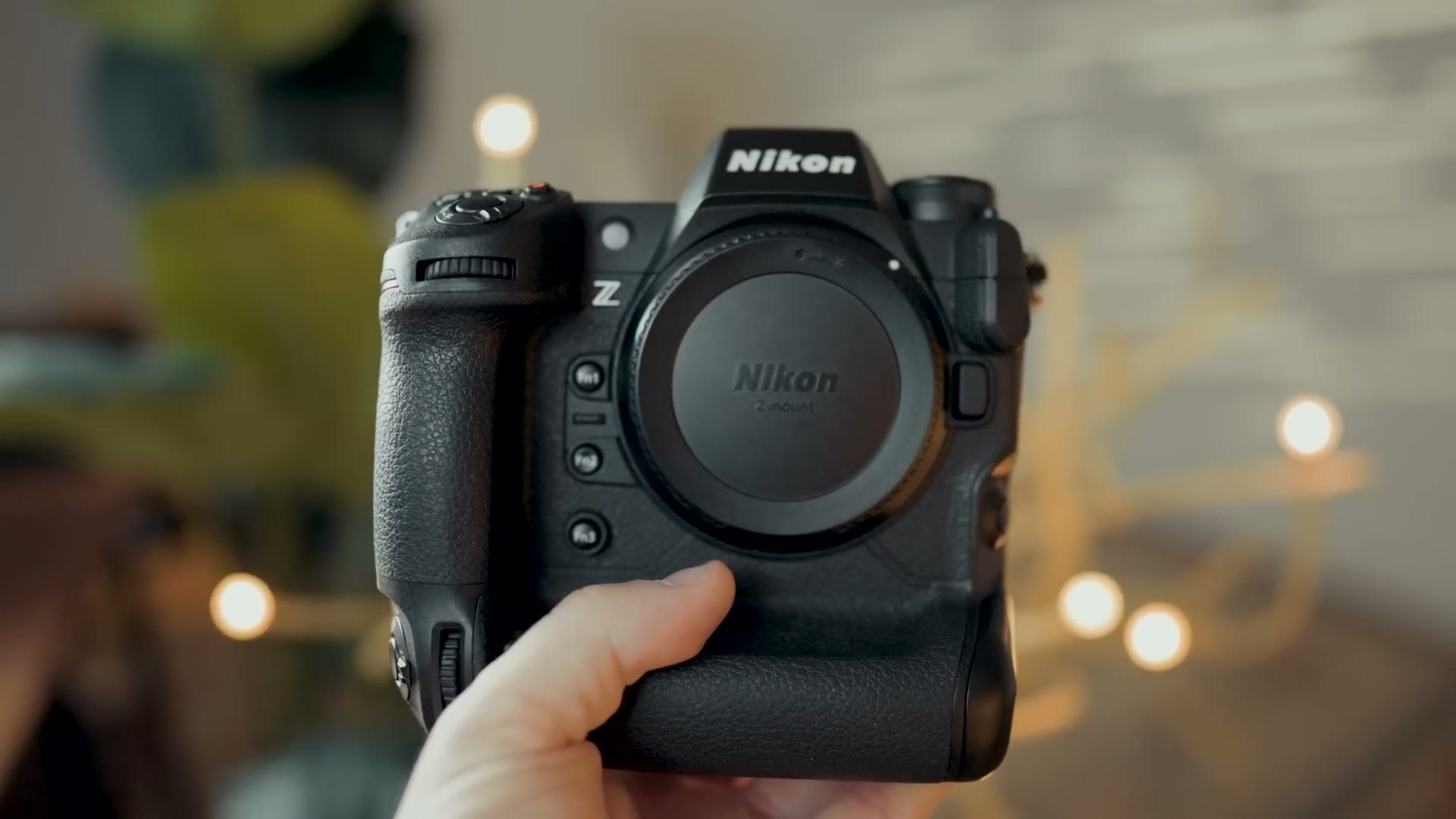
So we are at an interesting crossroads. It feels like Nikon have finally woken up and begun to compete in the filmmaking space, and they have done it with a huge bang. But whether I think you should buy this camera to film weddings relies on two things.
Either you have a ton of money to invest in cameras and lenses, at which point I would say heck yeah, buy two Z9s and you are going to absolutely love them and make some amazing films. Or, more likely, I am going to tell you to wait, because I want to see what other cameras Nikon is going to make that are more affordable and will build out their filmmaking ecosystem better. If Nikon can release a more affordable camera, a Z7 or a Z6 III, that does not quite attain the heights of the Z9 but can match the footage from it, say in 4K 10-bit instead of 8K, then I think Nikon is going to be a very viable option in the camera landscape.
You can buy the Nikon Z9 at B&H, at Amazon, at Adorama or at Best Buy.
Do You Film Weddings And Use YouTube?
If you are a wedding filmmaker like me who is also on YouTube, I would love to help you out. I put together a free guide called YouTube Tips for Wedding Filmmakers, which shares some of the biggest practical things you can do right now to get more views and bookings on YouTube as a wedding filmmaker. It is completely free.

Thanks also to Vincent Laforet, whose “Reverie” footage opens this video, and go follow Zach Mayfield too.
If you want to go deeper, I have filmmaking courses here, and here is my full list of filmmaking gear.
Thanks so much for reading, and have a great day!