
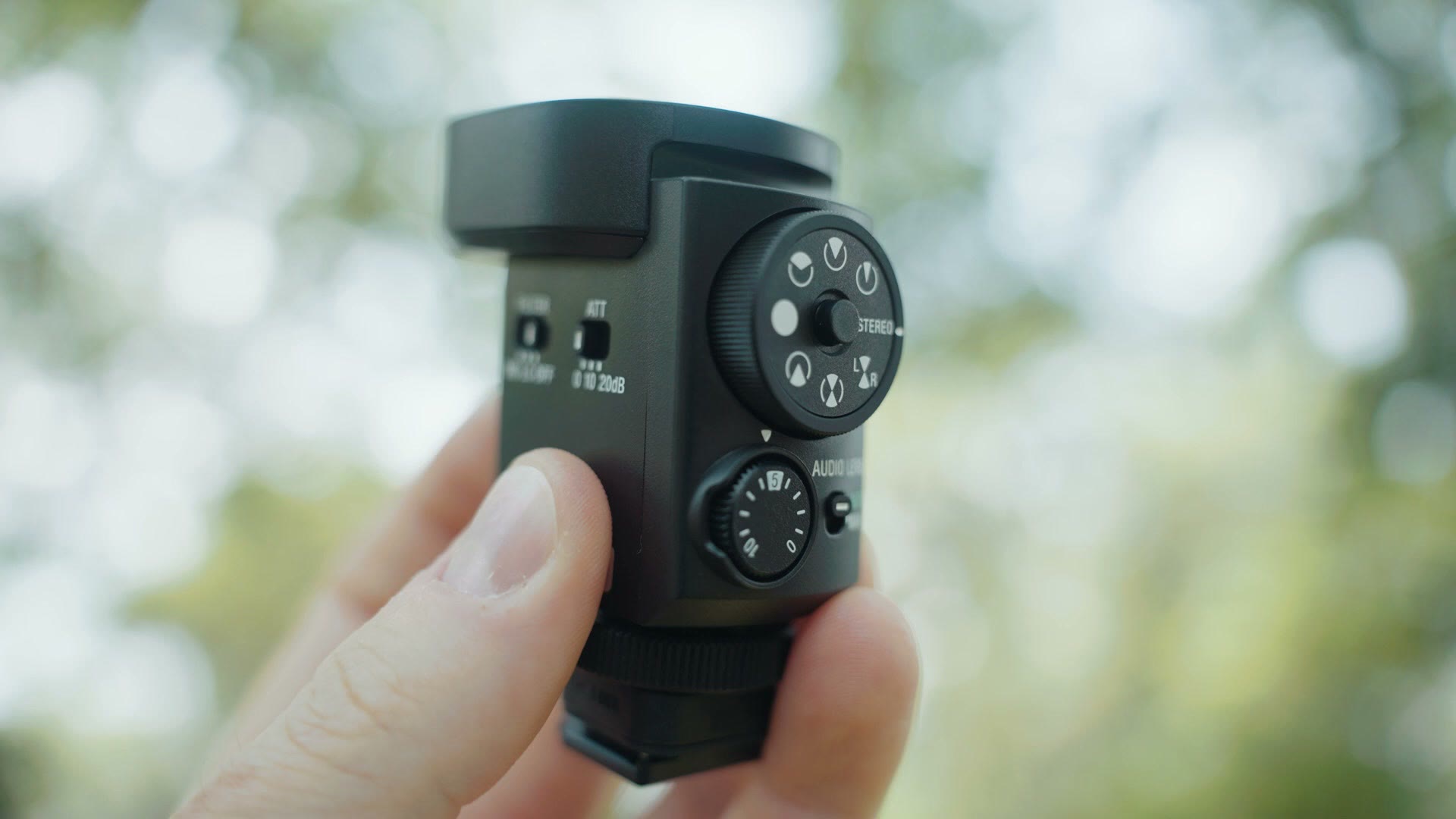
This is one of the coolest shotgun microphones Sony has ever made, and they have made a lot of shotgun microphones. Specifically, this is the ECM-M1, and it has some really cool tricks up its sleeve.
I’m going to review it and tell you whether it’s a good purchase if you want to use it in professional filmmaking scenarios, or more as a fun vlogging mic.
Also, for the sake of ethics, I want you to know this video is not paid or sponsored by Sony, but they did loan this mic to me so I could make this review, and it’ll be going back to them very soon.
Great Features From Sony’s Other Mics
Sony has taken a lot of inspiration from their earlier mics when creating this one. Just like the ECM-B1M that I love, this one attaches to your camera’s hot shoe, and as long as you have a newer Sony camera, that hot shoe provides all of the microphone’s power as well as acting as its input, meaning you do not have to run a cable from the mic into your camera’s microphone jack. Heads up: this link goes to the newer Sony ECM-M1.
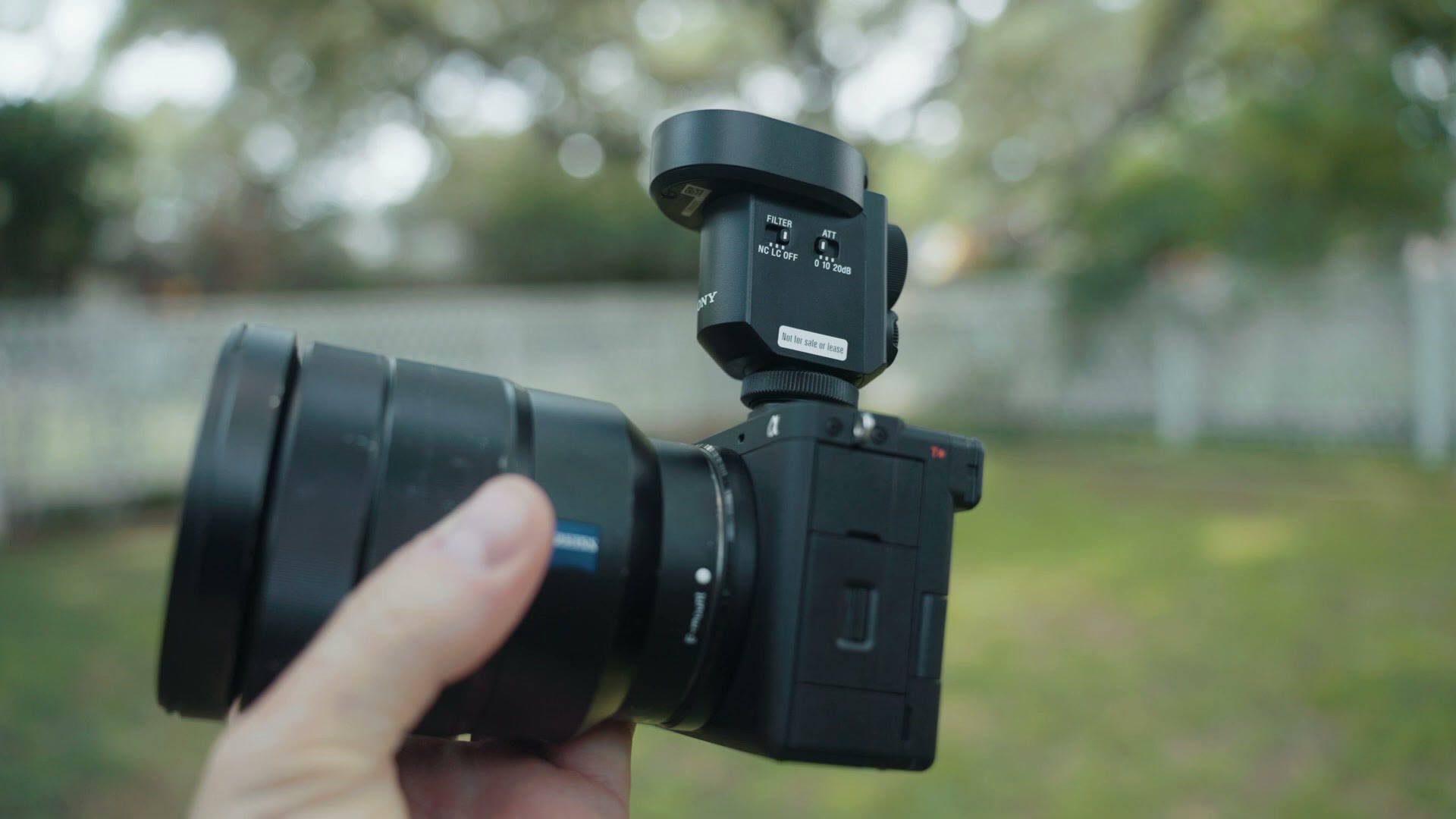
That also helps prevent your mic jack from breaking in the event you drop your camera. Overall I love Sony’s implementation here, because it makes using an external microphone feel like a more seamlessly integrated part of your camera. It’s awesome.
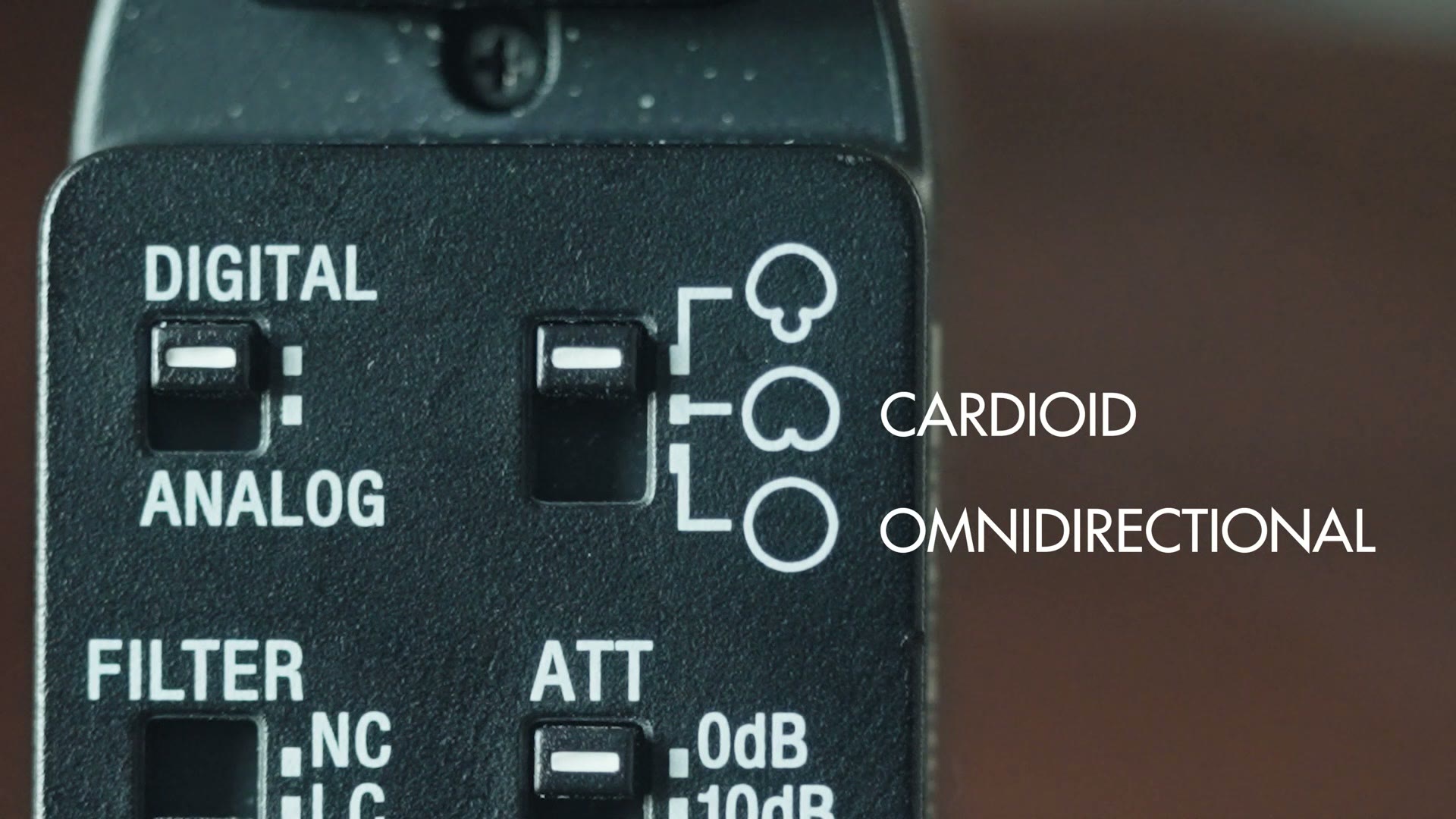
Going back to similarities, just like the ECM-B1M and other Sony mics, this one includes filters to reduce wind noise and rumble, an attenuator to control the gain, an auto and manual audio level switch, a dial to set your levels manually, and an analog/digital switch to make the microphone compatible with older cameras.
What Makes This Mic SO COOL
So at this point you’re probably thinking this sounds really similar to Sony’s other mics, and you’re right. But I said this one has some tricks up its sleeve, so now we need to turn our attention to the really big dial that dominates the back, because that’s where the magic happens.
If you remember from my ECM-B1M review, one of the coolest features of that microphone was that it let you change the direction the mic picks up audio from. You could set it to record only in front of the mic like a shotgun, or set a wider pickup pattern if you had two people next to each other and wanted both recorded, or go omnidirectional and record everything around the microphone.
Well, with the ECM-M1 you get that feature on steroids. Do you want control over your directionality? How about an extreme level of control? How about eight separate options for how this microphone picks up audio? This is nuts.
Mind Blowing Mic Examples

First up, you can set the M1 to record a super directional source in front of it. In that case it picks me up speaking directly into the mic, but as soon as I go off axis even a little bit, you notice the quality degrades very quickly.
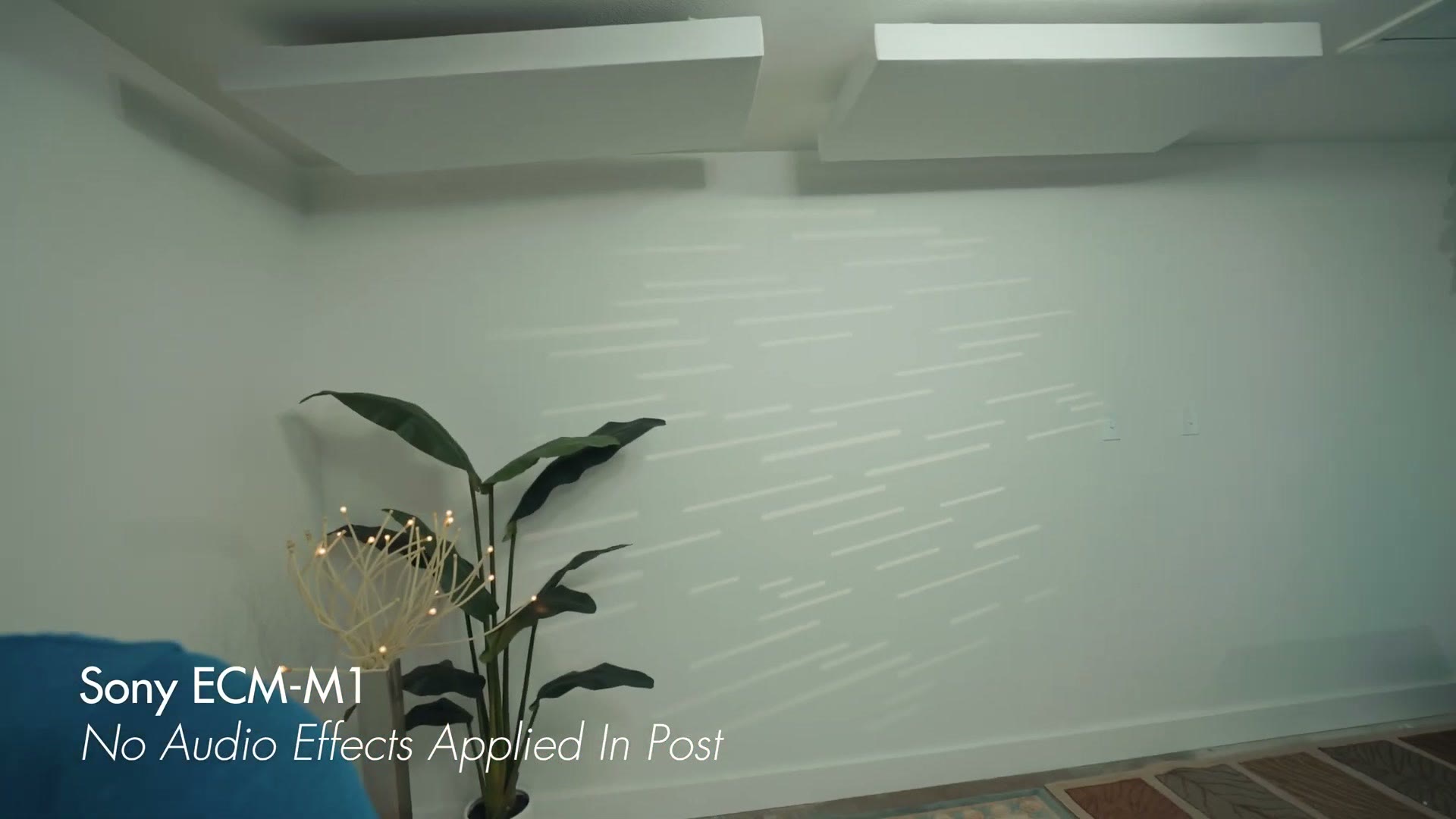
Next you can set that directionality a little wider. So if I go off axis, it isn’t as bad as it was with the ultra directional setting, though you can still tell it’s a little different.
Going really wide now, the mic is picking me up in front and really far off to the side. Far off to the side. Still picking me up. Pretty cool.
Then omnidirectional, where regardless of where I rotate around the microphone it still picks me up pretty much the same all the way around. Which is great if you have a lot of people speaking or you need to record a whole room.

Now you can’t see me, because I’m holding the camera and I’ve set the directionality to record behind the microphone. So you can hear me speaking from back here. This is a really cool feature, because the microphone can be set up to record everything both behind and in front of it.
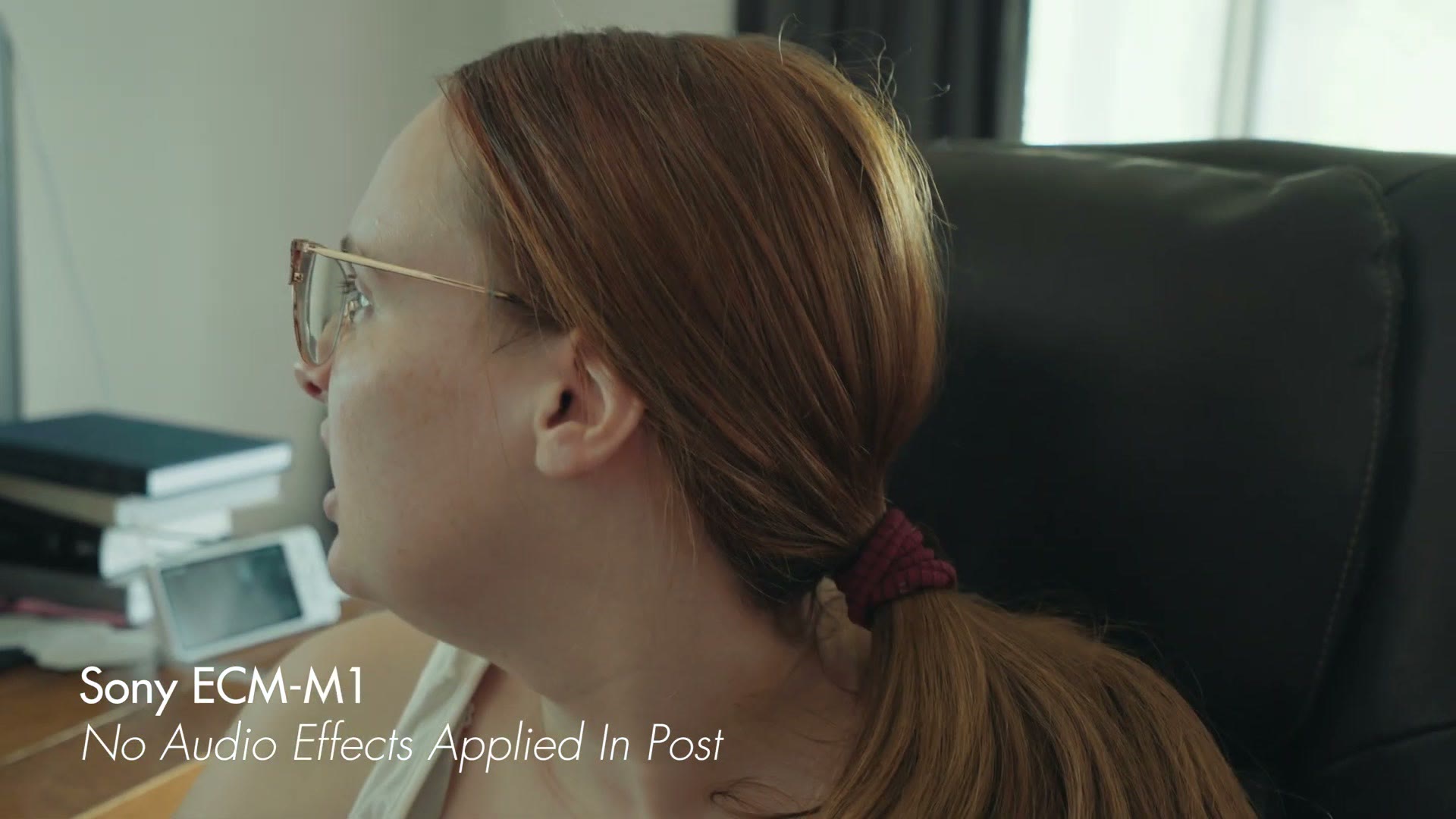
So if I’m conducting an interview of my wife here, you can hear both of us. There’s even an option to record the front to one channel and the back to the other, so you get them separated.
While you’re here, take a look at Wedding Filmmakers Will LOVE This Mic – Sony On Camera Shotgun Microphone Review (ECM-B1M) and COOLEST Camera Gear Coming In 2025.
And lastly there’s a setting for stereo recording. Not as exciting as the others, but it’s there.
One more thing about that big dial. If you want to lock it so it doesn’t accidentally get rotated, which would be pretty hard to do to be clear, you press the center button to lock it.
Audio Quality

Overall this mic is pretty cool, right? I’ve never seen a microphone capable of doing this many things.
That said, if the audio quality sucked, all of it would be meaningless. And that was one thing I was nervous about whenever I first saw this microphone, because it’s quite compact, and just like Sony’s ultracompact ECM-G1 that I reviewed, small mics can suffer from an elevated noise floor and a lack of bass. That one was fine for what it is, but I wasn’t able to recommend it for professional filmmaking, like filming a wedding.
Thankfully my fears were unfounded with the ECM-M1, because hopefully as you’ve heard from the examples above, it has very impressive audio quality that I would say is very close to the reigning Sony on-camera microphone champ, the ECM-B1M.
The Price: Should You Buy It?
That’s a good thing, because the price is really comparable too. Sony set the price for this microphone at $350, while the ECM-B1M is essentially the same.
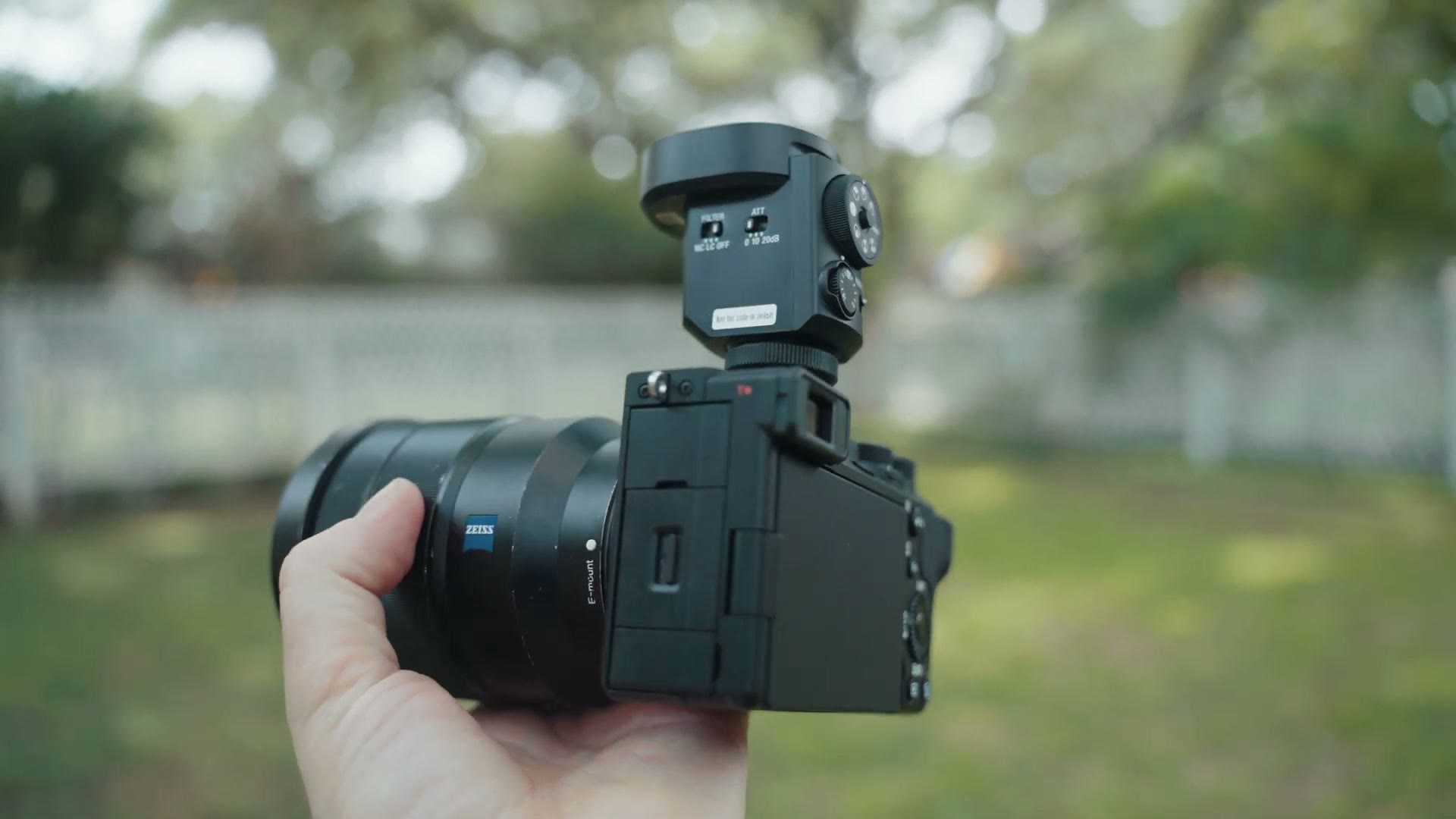
So which one should you buy? I think the choice is pretty easy. If you need all of the settings the ECM-M1 provides and you think you’ll actually use them, go for it. But if you want a powerful microphone with great audio quality and you don’t need that much control over directionality, just get the ECM-B1M. I love it.
Bonuses For Filmmakers
If you like the colors in this video and you want colors like these in yours, check out my color presets.
And my free Edit Videos Like A Pro guide shows you some of the biggest things that took me years to learn as a video editor. It’s really going to help you level up your editing, and it’s completely free.
Thanks so much for reading, and have a great day!