
Audio recorder battle! Zoom F3 versus Tascam FR-AV2. These are both fantastic 32 bit float audio recorders with XLR inputs in a compact package, but they don’t quite match up when it comes to features. So which one should you buy? I’m going to answer that question and tell you all ten of the differences between these two recorders, and which one is the better choice.
And because I want to help you out even more, I want you to know I’ve created a free gear guide that shares all of the audio equipment you should buy, not just audio recorders. As a bonus it also includes all the other video equipment I recommend, from cameras to drones to gimbals.
Also, for the sake of ethics, I want you to know this review isn’t paid or sponsored by Zoom or Tascam.
Size And Build Quality
Starting off from a size perspective, both of these recorders are quite similar, with the F3 being a bit more square shaped due to its large support legs, while the FR-AV2 is thinner but more rectangular. They will both still very easily fit in your hand.
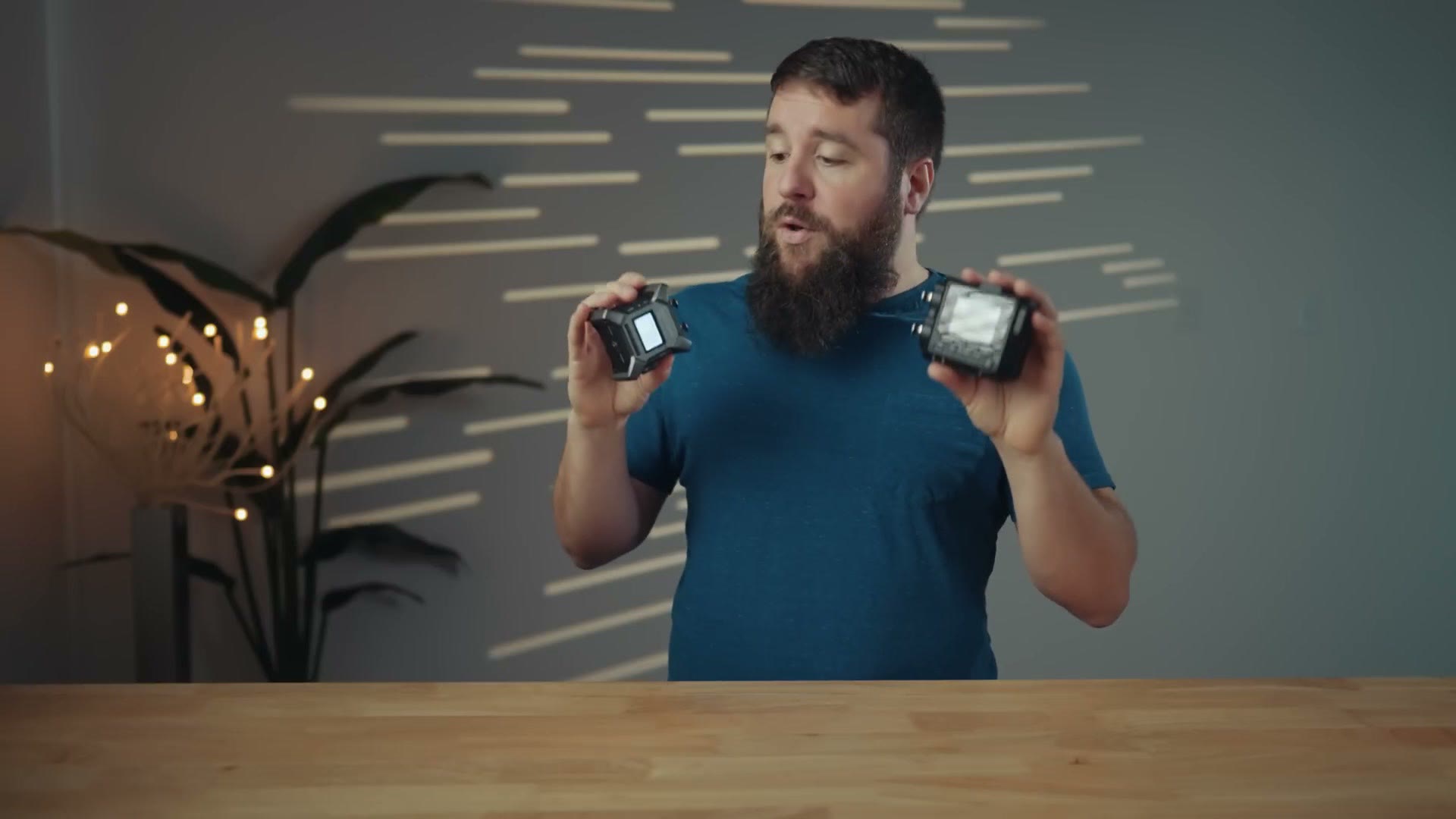
From a build quality standpoint they feel very similar. Both are made with a high quality plastic, aside from the bottom of the F3, which has these nice metal rails that will help you strap the recorder to something, whereas the Tascam has much smaller plastic rail indentations.
Personally, I don’t ever strap my audio recorders to something like a boom pole. But if you are someone that does that often, you may find you prefer the F3. For me though, I really don’t love how large the rails are on the F3, and I’ve actually considered cutting the feet and rails off the bottom of this recorder, which would make it significantly more compact.
Screens: Black And White vs Color
Now for the first major difference. The FR-AV2 has a very nice color screen.
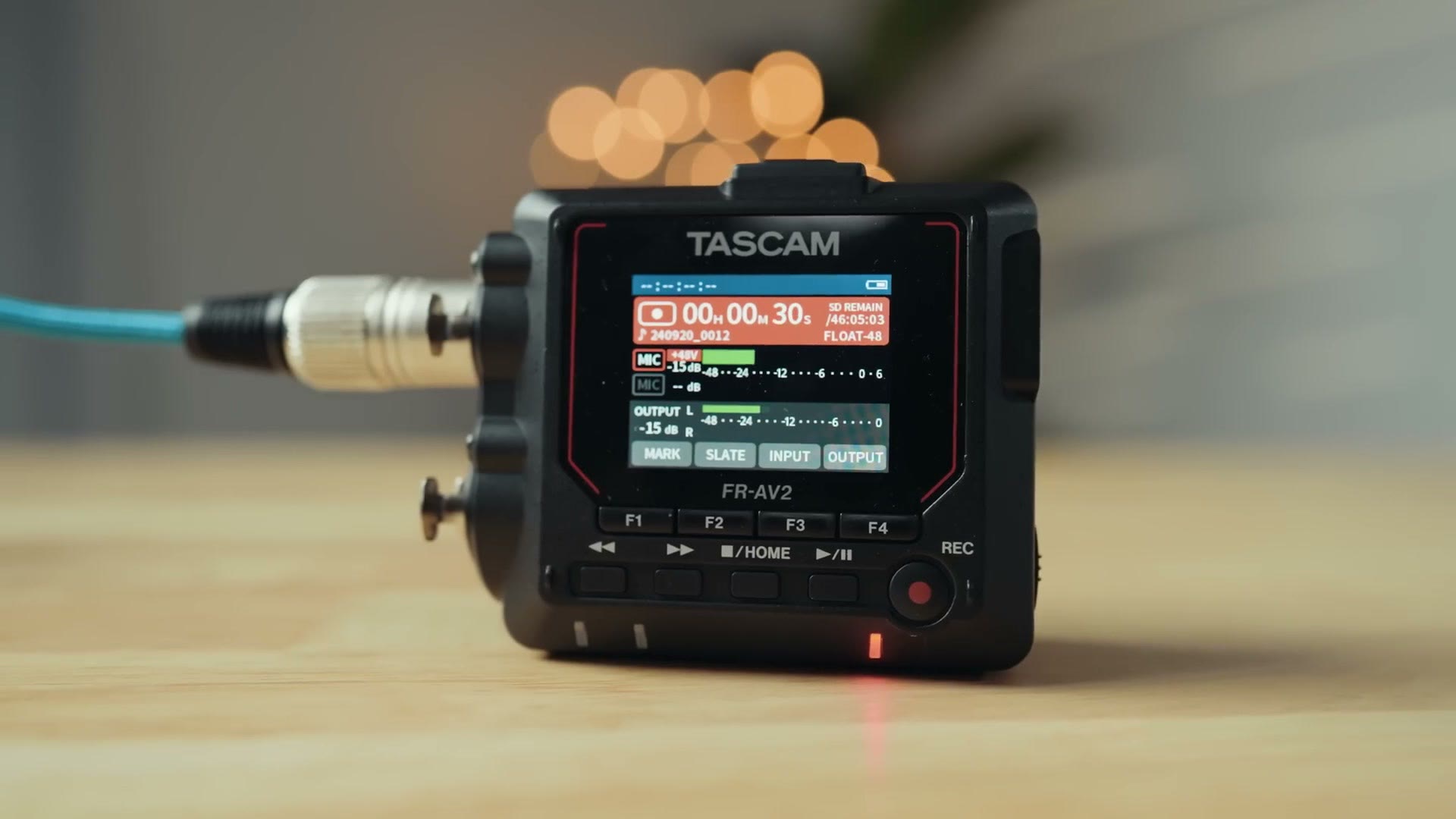
While the F3 is a black and white LCD that feels kind of like a backlit Game Boy.
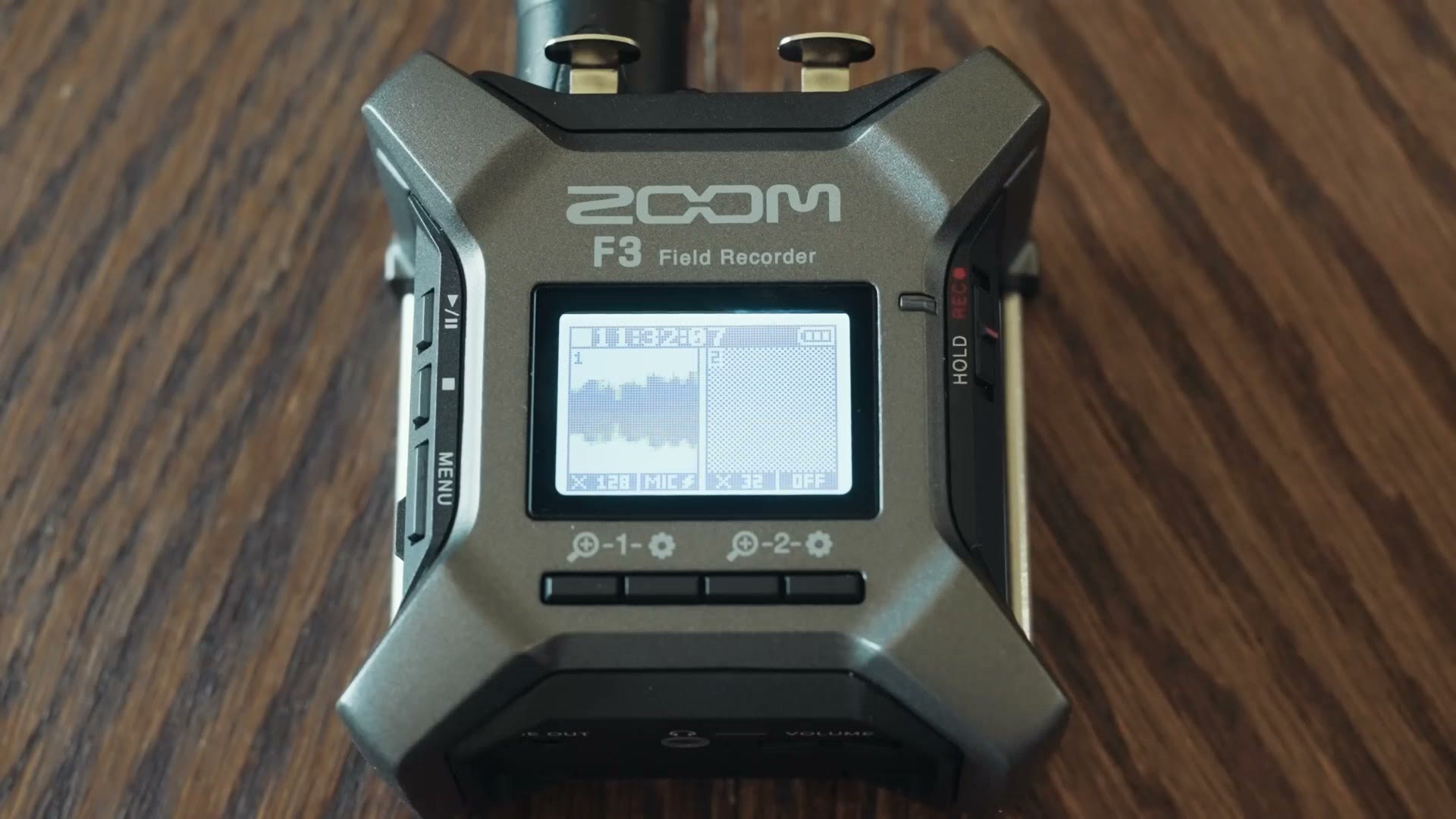
That isn’t a bad thing. Very retro. I like it. And in my experience, having a color screen on an audio recorder isn’t a necessity, and while it’s nicer to look at, from a usability and performance perspective it makes literally no difference. So we’ll call this one a tie.
Power And Battery Life
Where they are not a tie is in the area of power, because the Tascam requires more power for that color screen, and to help it get the juice that it craves. Oh, you know what I’m talking about. Brawndo. It’s what plants crave.
The FR-AV2 requires three AA batteries, whereas the Zoom F3 only requires two.
As far as battery life goes, whenever I put them both head to head recording 32 bit float audio with phantom power enabled using lithium batteries, I found the Tascam FR-AV2 lasted for 10 hours and 54 minutes, while the Zoom F3 lasted for 11 hours and 35 minutes. Meaning the Zoom F3 beats the Tascam by 41 minutes, which is not a massive difference in my opinion.
The Zoom F3 wins this round, but regardless of what you are filming, both of these recorders should easily have battery life that lasts long enough.
Inputs
The next big difference is immediately noticeable as soon as you look at their inputs. The Tascam has combo inputs, meaning it can take both XLR and quarter inch cables.
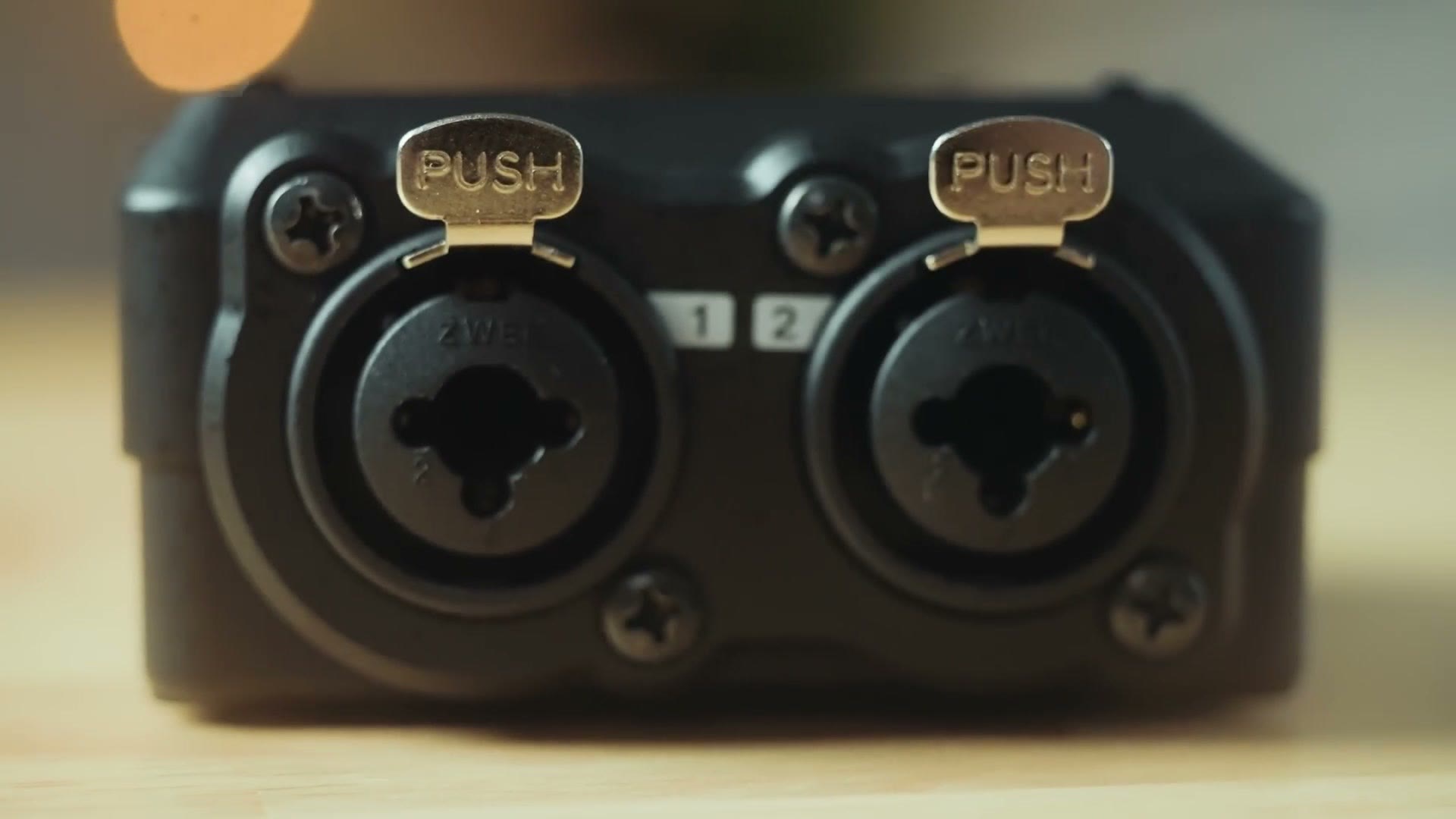
The Zoom, on the other hand, is limited to only taking XLR cables.
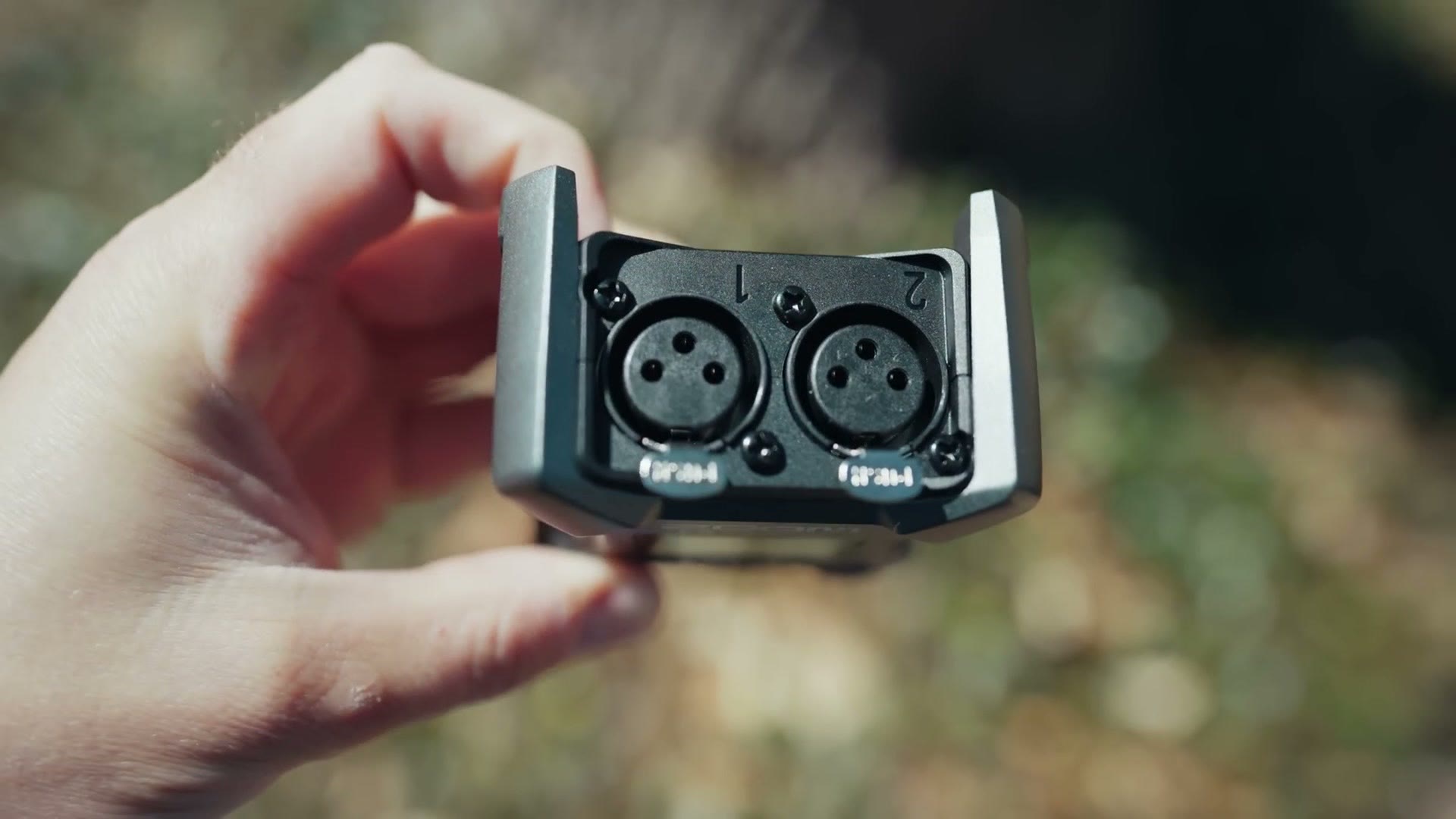
Personally, as a wedding filmmaker, I prefer having combo jacks because this gives you more versatility in the cables you’re able to use without requiring an adapter. So the FR-AV2 wins this round. But if you’re someone that only ever uses XLR cables and you don’t use quarter inch, then this isn’t going to be a huge con for you, and the F3 is still a fantastic choice with its dual XLRs.
Speaking of things that work great with both of these audio recorders, I want you to know that I’ve created a set of audio cables with my friends at Kondor Blue, and they work perfectly with both.
Wireless Control And Monitoring
This is another area where these recorders have a big difference between them. Both the F3 and the FR-AV2 do not support wireless control out of the box. You will instead need to purchase a separate Bluetooth adapter for them. For Zoom it is the BTA-1 adapter, and for Tascam it is the AK-BT2.
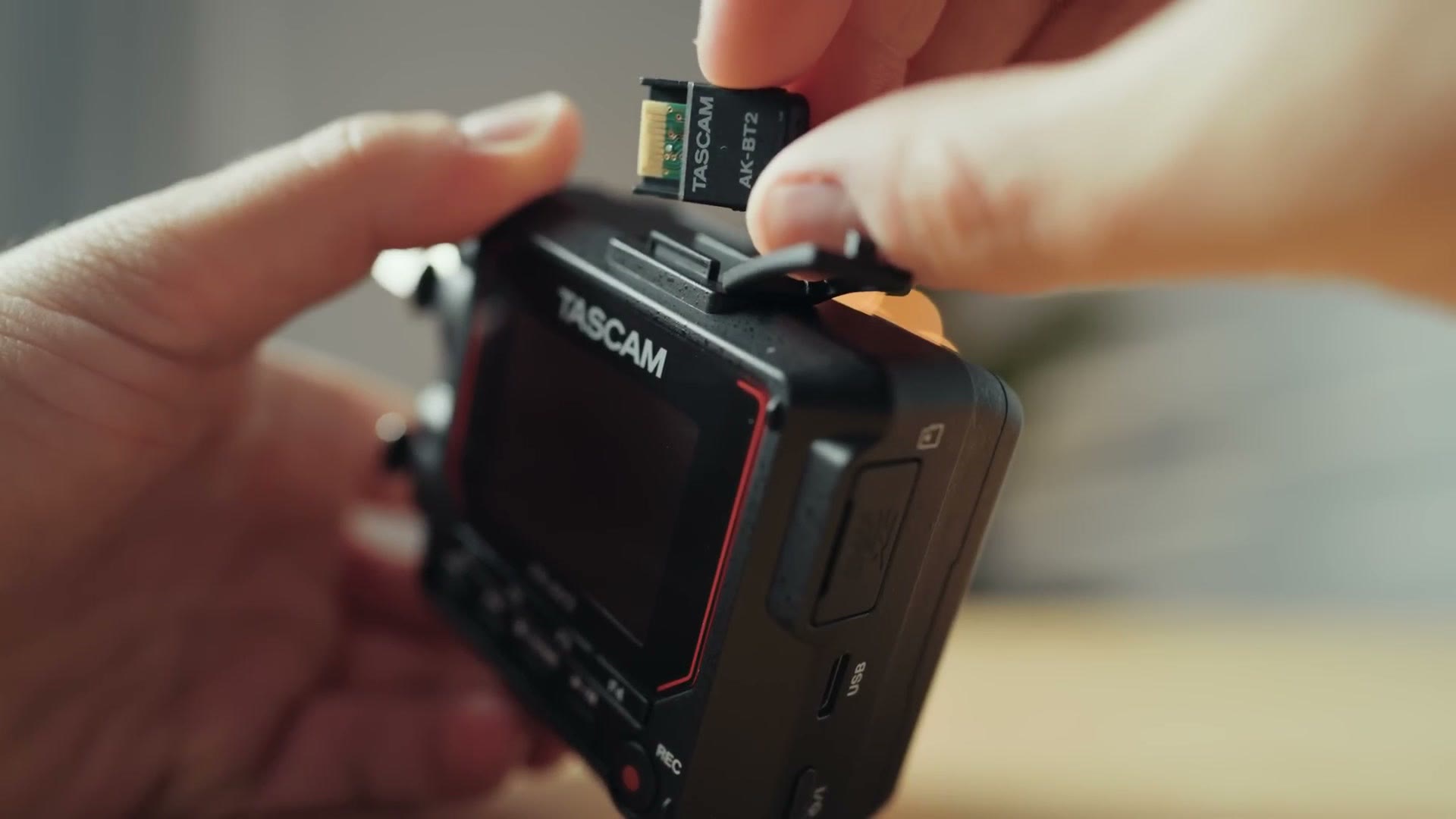
The AK-BT2 is a new adapter that offers new functionality specifically for the FR-AV2, and this new functionality is also what separates the Tascam from the Zoom. Because while both of these Bluetooth adapters will insert into their respective recorders and enable you to wirelessly control the recorder over Bluetooth using a phone app, this updated Bluetooth adapter for the Tascam also has the new capability of enabling you to wirelessly monitor your audio over Bluetooth using a set of headphones.
All you have to do is go into the Tascam settings, enable Bluetooth audio monitoring, then pair a set of Bluetooth headphones to your audio recorder, and you’ll be able to monitor the audio being recorded in real time. This is a feature I know many filmmakers have been requesting for years, so I was really happy to see Tascam include it.
Unfortunately, this wireless monitoring capability is not supported on the Zoom F3, and if you want to monitor your audio while it’s recording you’ll have to use an old fashioned set of wired headphones plugged into the recorder, something you can also do on the Tascam as well. So this is another round where the FR-AV2 beats the F3, because it gives you a feature the F3 is incapable of offering.
Ease Of Use
Next, let’s talk about an area where the F3 wins. You already know this if you’ve watched my Zoom F3 review, but if you haven’t yet, one of the most user friendly features of the F3 is that because it only records 32 bit float audio, you don’t actually have to set the audio gain when recording.
I realize that may sound really counterintuitive, considering I’m sure you’re used to having to turn on a recorder, set your gain level, then press record. But with the F3 you can skip that middle step. And truthfully, you are forced to. Any time you turn on the F3 it’s automatically going to set its gain level, and while it’s going to show you a preview of the waveform on the screen that you can zoom in and out on, that isn’t actually going to affect the volume of the audio being saved.
It’s kind of weird to get used to, but once you do and you start to trust that the F3 is setting its gain properly, you’re good to go. Plus, because it’s recording in 32 bit float, you can always raise or lower the audio level without worrying about it peaking or being too quiet.
This means you can really be up and recording with the F3 in a matter of seconds. Just turn it on, press record, make sure you’re seeing little waveforms without needing to actually check them, and you know you’re recording good audio. This is one of the reasons I’ve recommended the F3, because the way it works is incredibly user friendly and it’s really hard for you to screw up recording good audio with it. In short, it’s great for beginners.
Alternatively, with the Tascam FR-AV2, it’s not quite as quick to turn on and get recording, because this recorder does let you change your gain level. And I know some filmmakers prefer to do this even when recording in 32 bit float, so I think that’s nice that the Tascam gives you control over it. Just be aware that it takes a few extra steps pressing buttons to dial in your gain.
And while it doesn’t really matter much when you are recording in 32 bit float, keeping in mind that you can also set the FR-AV2 to record in 24 bit audio as well, which definitely could peak or be too quiet so you want your gain dialed in manually, then it makes sense that it’s an option.
By the way, I want you to know that with the earliest firmware version of the FR-AV2, that firmware would cause the phantom power setting to be disabled every single time you power cycled the recorder, which meant you’d have to go back into your settings to re-enable it. That was a big pain, but it has been fixed in the latest firmware, so make sure you’ve updated.
So for this ease of use category, I’m going to give the win to the Zoom F3. But just know that if you’re someone that prefers more control, you may want to go with the Tascam instead.
Timecode Support
This is the one that may be a make or break for you and your recorder choice, because one of these recorders is vastly more capable here than the other.
Let me preface this by saying that both of these recorders support timecode over Bluetooth, meaning that if you purchase the separate Bluetooth adapter for either of them, you can then use timecode with Atomos timecode devices.
All that said, while timecode over Bluetooth works well with both, it does require you to use Atomos timecode devices, which are more expensive than some of their competition. And especially if you’ve already built out an ecosystem of timecode devices that are not from Atomos, you would basically have to purchase a lot of extra devices from Atomos to make it all work.
Thankfully, here’s the big difference. With the Zoom, you are limited to only timecode over Bluetooth. The Tascam, on the other hand, has two 3.5mm jacks on the side which support linear timecode signals, meaning this recorder essentially works with any other timecode system.
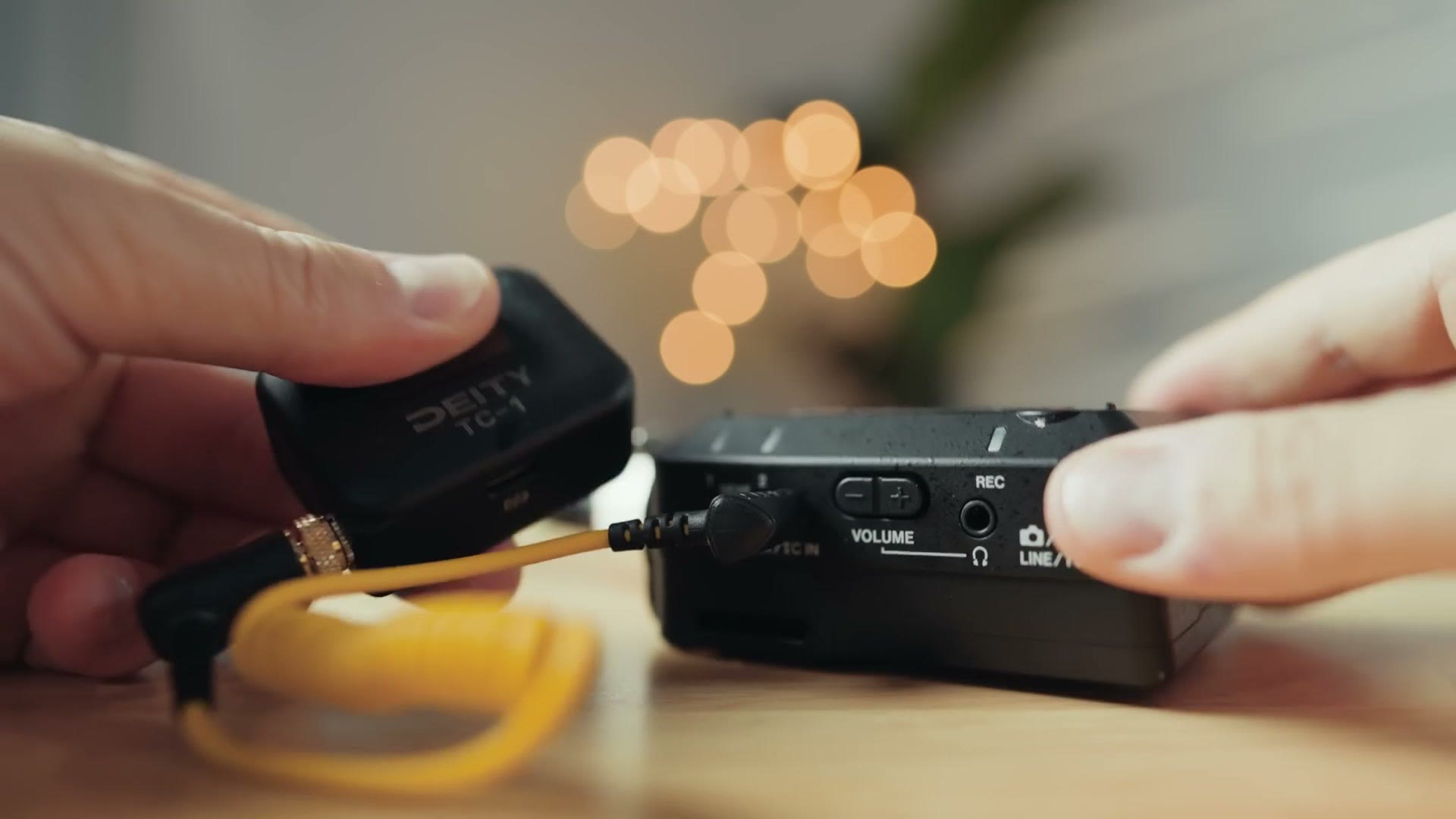
So if you already have timecode generators from Tentacle Sync or Deity, all you have to do is plug one of them into the input or output of this recorder and it is immediately integrated into the rest of your timecode devices, enabling you to sync any of the audio you’ve recorded with the FR-AV2 in just a couple of clicks.
This is a huge time saver and makes the FR-AV2 incredibly versatile when it comes to timecode, because it means you’re no longer going to be locked to the Atomos timecode system like you are with the F3, potentially saving you a lot of money and making this recorder dramatically more useful.
In short, if you are someone that uses timecode, this is a complete no brainer. The FR-AV2 would be my recommendation every single time.
Audio Quality
All this about timecode and wireless audio monitoring and combo jacks wouldn’t matter if the audio quality from either of these recorders sucked, right? Like if one of them was dramatically better sounding than the other with a lower noise floor and better preamps, then that would be the one you’d probably want to go with. Well, don’t worry, I tested that too.
I recorded room tone with the same shotgun microphone running into both recorders set to the same gain levels, then boosted the gain the same amount on both so you could hear the difference, if any, between the noise floors. Which tells you how good the preamps are.
To me both of these recorders sounded excellent with fantastic preamps, and I couldn’t really hear a difference between them. They were both so similar that I think you’re going to get great audio regardless of which one you choose. So in this audio quality category we’re going to call it a tie. I’ve been very happy with both of them.
The Price: Which Should You Buy?
This is another area where there is a significant difference between the two. At the time of recording, Tascam charges $399 for the FR-AV2.
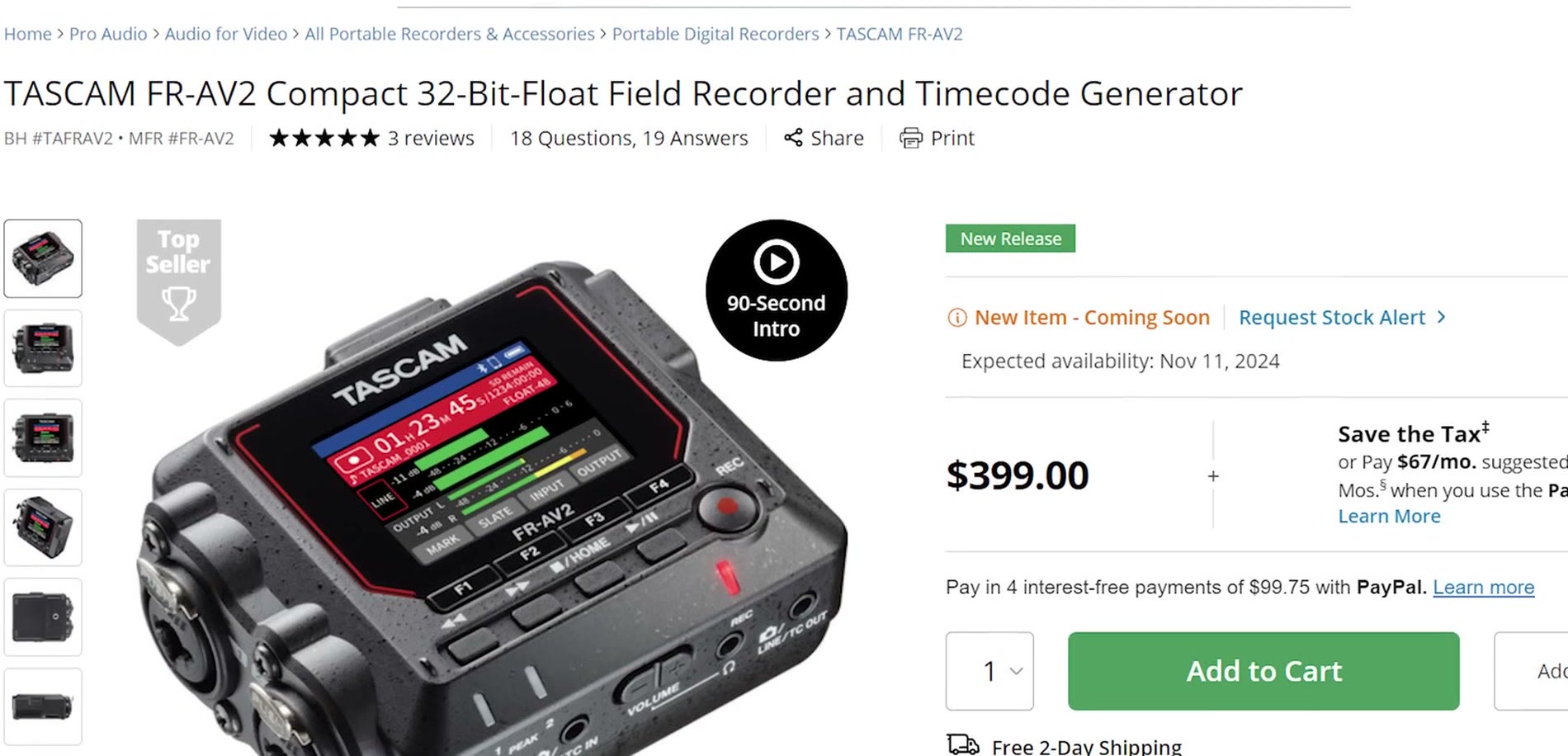
While Zoom, who has had the F3 available longer, is charging right around $300.
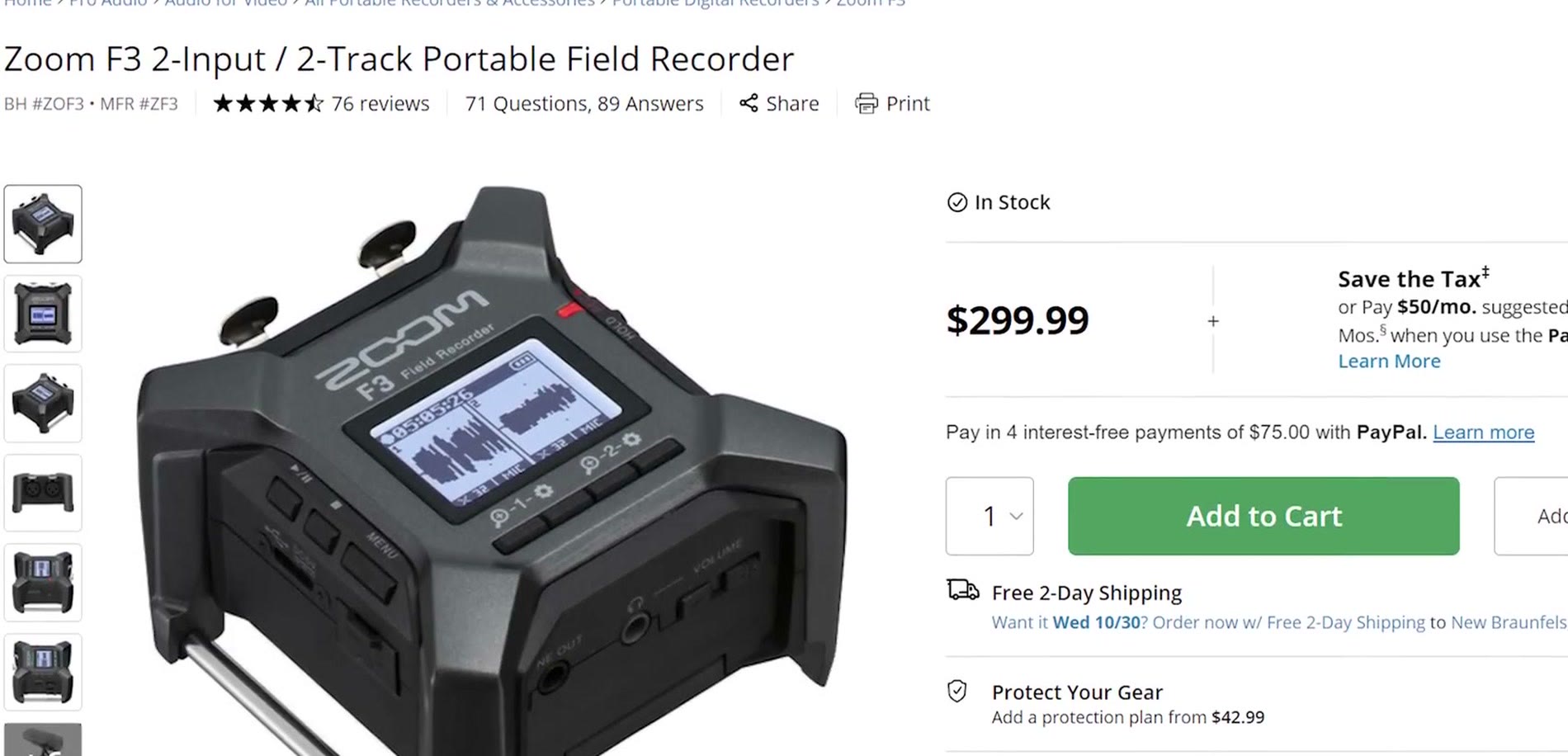
Keep in mind, of course, that Tascam and Zoom like to have sales often, so these prices fluctuate a lot.
As I’ve already shown you from the audio quality test, both of them are going to be great at recording high quality audio, meaning it really comes down to the extra features.
If you are someone planning on using a recorder in a studio setting where you don’t ever need to wirelessly monitor your audio over Bluetooth or use timecode, and you’re always just using an XLR cable, in that case I would wholeheartedly recommend saving your money and getting the Zoom F3, because it’s such an easy to use recorder that you can turn on and press record without needing to check your audio levels, and know you’re going to be recording high quality audio that sounds great.
Alternatively, if you are a filmmaker that has been wanting a recorder that will let you wirelessly monitor your audio over Bluetooth, you use more than just XLR cables and you have quarter inch cables in your bag as well, and you want a recorder that will work with the vast majority of timecode systems out there and isn’t just limited to Bluetooth timecode, in that case I would say the Tascam FR-AV2 is for you. It is one of the few recorders out there with all of these extra features, many of which you may have been wanting for a long time.
Personally, I’m planning on using both. I’m reserving the F3 for recording my YouTube videos because I can leave it set up here in my studio, turn it on, press record, not worry about it and know I’m going to be recording good audio. But I’m also going to be bringing the FR-AV2 along to weddings I film, because a wedding is definitely a situation where being able to wirelessly monitor your audio over Bluetooth, and maybe even use timecode, would be really useful.
If you want the longer individual reviews, I’ve made those too: the Zoom F3 review and the Tascam FR-AV2 review.
I hope this audio recorder battle has been able to help you with your decision. And if you’re a wedding filmmaker and you’ve been wanting to level up your audio recording at weddings, my free gear guide is going to show you all of the audio gear I recommend, as well as all the other gear too.
Thanks so much for reading, and have a great day!