
If YouTube was where people uploaded random funny clips they shot on a webcam, Vimeo was its cooler, arguably hipster cousin. It was where professional filmmakers went to put up their cinematic masterpieces, hoping to earn one of the most sought after awards on the internet: inclusion in a playlist called Staff Picks.
This is the story of the creation, the success, and what looks like it is soon to be the end. This is the rise and fall of Vimeo.
The Creation, And The Golden Era
I have been making videos since 2006, a year after YouTube was created and two years after Vimeo was. At the time, if you wanted to upload a video, YouTube was where you went.
Then around 2008, with the release of the Canon 5D Mark II, Vimeo began to set itself apart. It offered a haven: free of pre-roll and mid-roll ads, with the focus squarely on your content. And it did it all in HD.
Remember what YouTube was then. The platform that now streams 8K HDR was capped at a bare minimum standard definition of 320×240. I still remember when they added the HQ playback button, which was not high definition at all, just a bump from mediocre standard definition to barely average standard definition.
Vimeo, meanwhile, gave you 720p. Not even full HD, and it did not matter. It was a massive upgrade.
I still remember watching Reverie, Vincent Laforet’s short that more or less sold a million Canon 5D Mark IIs. The low light, the depth of field, all of it looked incredible, and part of what made it land was that you could actually watch it in HD on Vimeo.
I have watched thousands of films there over the years. So many short films that would have flopped on YouTube found real success on Vimeo, because the platform was synonymous with high quality video, which made it enormously attractive to new filmmakers like me.
There were so many creative people uploading unique, cinematically powerful work while we all worked out how to use these DSLRs, with their beautiful images and their absurd limitations. A twelve minute recording limit before the camera just stopped. It was rough. It was also such an empowering time to be a filmmaker, making things we simply could not have made before.
Staff Picks
The peak of Vimeo came in two parts, and the first was arguably the most influential playlist of videos ever created.
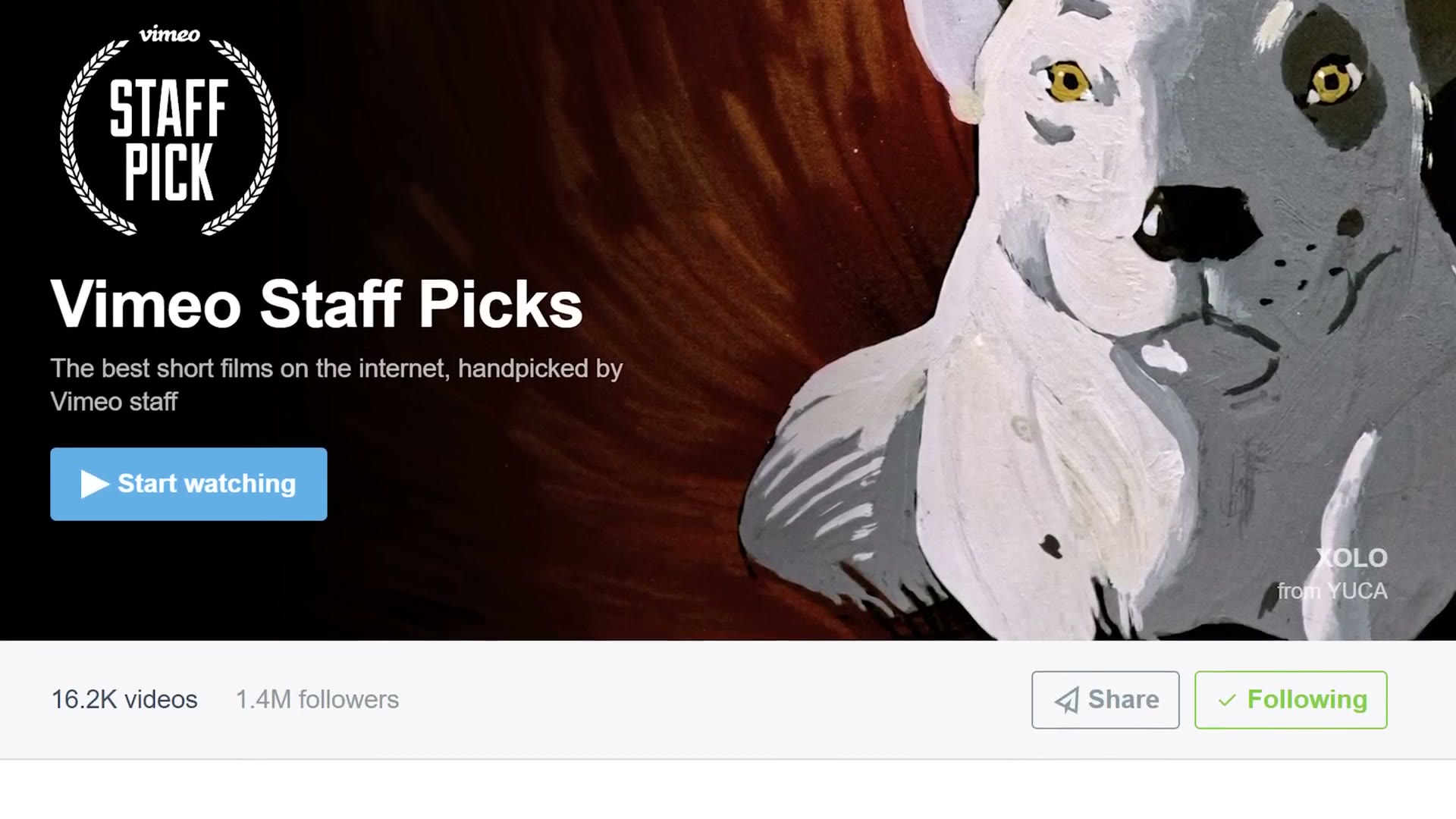
Even now, inclusion in that unassuming playlist had the power to take anyone with a creative eye and a story to tell and put their video in front of the most influential people in filmmaking, across Hollywood and the commercial world. It transformed careers overnight.
Vimeo employees, who unsurprisingly watched a lot of what got uploaded to their own platform, would pick a handful of videos every few days and add them to Staff Picks, which they featured heavily across the site. Any video chosen also got a badge displayed prominently on it, marking it as something special. If you saw the badge, you knew you were about to watch something great.
The Story Behind The Still
The second part of that peak was a contest, and it is still one of the most creative and fun things I have ever seen anybody run.
Vimeo’s staff realised they were cultivating a community, a very powerful one made up of some of the most talented up and coming filmmakers in the world. So beyond a playlist of who they thought was best, they asked: how do we get more people uploading their best work here?
The answer was The Story Behind the Still. Vimeo hired a filmmaker to create the first episode of a short film. Anyone could then enter a video that picked up on the last frame of that film and carried the story into the second episode. That episode ended on another still, and the story continued from there. On and on, until seven episodes and seven filmmakers had been chosen, and all seven came together to shoot the finale. The complete film, with all its chapters, aired at Sundance.
Side note: the filmmaker Vimeo hired to make that first episode was Vincent Laforet, the same person whose Reverie set off the DSLR revolution in the first place.
Because the contest ran weekly, it was part reality show, part contest, part film festival. I personally know filmmakers who won it. I look back on it as one of the coolest things I have got to witness as a filmmaker, and honestly it is too big to do justice inside one article. Tell me if you want a whole piece on just the contest, because it was a genuinely cool time.
Why Vimeo Was The Default
By 2009, Vimeo was cruising, and for a lot of filmmakers it was the default place to upload, not YouTube. Four reasons:
- HD playback, which nobody else had.
- No ads on the videos themselves.
- A heavily customisable embed player, including stopping other creators’ and your competitors’ videos appearing at the end of yours.
- A positive community, with good comments and none of the hate you get on YouTube. It was a safe place for filmmakers to be encouraged.
Then competition came knocking, and it all started to fall apart.
The Beginning Of The End
Vimeo’s value proposition was the highest quality video streaming on the internet. That changed the moment YouTube enabled HD, then 4K, then higher.
Vimeo raised its own playback to 4K to compete. But YouTube is owned by Google, a company with thousands of data centres worldwide streaming very high quality video very fast to anything. And what I noticed, along with a lot of other filmmakers, is that while Vimeo claimed 4K, in practice it struggled to play it smoothly even on a fast connection.
I have fibre internet, and I have lost count of how many times a Vimeo video has paused to buffer or frozen entirely. Do not get me started on skipping ahead, which is a reliable way to kill playback completely and force a page reload.
So the thing that had been Vimeo’s biggest differentiator became one of its biggest technical failures. Going from 720p, which was relatively cheap to serve, to full HD and 4K takes dramatically more bandwidth, and Vimeo could not throw money at that the way YouTube could. They did not own the infrastructure. They rented it.
Meanwhile YouTube kept growing to billions of viewers a month, and Vimeo never saw that kind of explosion. It was still a competitor with hundreds of millions of monthly visitors, but a much more niche one, mostly filmmakers. That community was incredibly powerful. To a market that only values getting bigger, it looked like a company that had stopped growing.
The Pivot
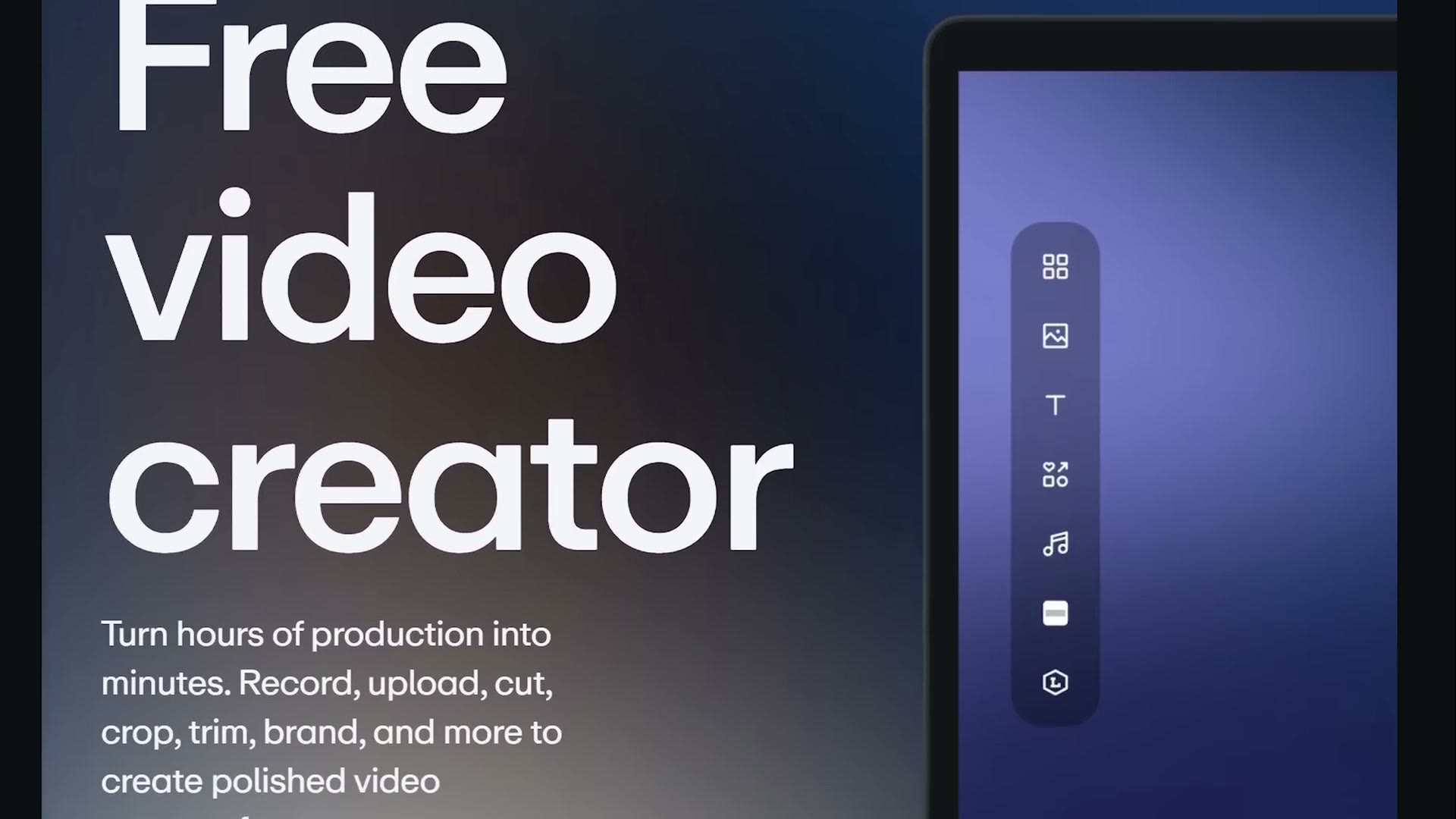
So in 2017 Vimeo pivoted away from competing with YouTube and toward software as a service. You could upload a video to Vimeo and have it pushed out to other platforms including YouTube. You could send a client a review link and collect feedback, similar to Frame.io. You could even edit videos in a tool called Vimeo Create.
They were trying to carve out their own space, helping creators make and host video. But there was a storm coming for the community of filmmakers that was the actual lifeblood of the company.
The Copyright Storm
From roughly 2004 to 2011, Vimeo was pretty relaxed about what music you put in your videos. There was never a robust copyright claim system, and I cannot recall anybody I knew getting in trouble for it. They would not let you upload a Hollywood movie, but music was more or less fair game.
And a lot of new filmmakers, especially wedding filmmakers like me, used a lot of copyrighted music. Remember the timeline here: Musicbed was not founded until 2011. Artlist did not exist until 2016. Before that, licensing music meant negotiating directly with an artist or their label, or paying one of a few expensive royalty free sites whose catalogue was extremely cheesy. It was a difficult time to be a filmmaker, especially if you did not like xylophones.
The first sign of change came in 2011, and it came publicly. Joe Simon, an incredibly talented wedding filmmaker, filmed the wedding of then Dallas Cowboys quarterback Tony Romo to Candice Crawford, and cut it to a Coldplay song he had not licensed. He uploaded it to Vimeo. Within days it had millions of views. Coldplay’s label noticed and filed suit. The video came down and the label settled for a sizable amount.
A lot of filmmakers took notice and started licensing the music in everything new they uploaded. Crisis averted, right?
No. Because the storm had not hit yet.
The Ban Hammer
Two years before the Coldplay story, multiple record labels had sued Vimeo over copyrighted music on the platform. That case ran for years, mostly behind the scenes, and barely touched ordinary users.
Then around 2017 Vimeo started enforcing copyright far more strictly. And the most consequential part, by a mile, was that they went after old uploads.
If you were a filmmaker who had uploaded between 2006 and 2016, a full decade, and any of those videos had copyrighted music in them, it did not matter whether they were public, unlisted or private where only you could see them. Vimeo had software that could scan every video on the platform. It would find the music, delete the video, and give you a copyright strike. Two strikes were a warning. The third deleted your account.
That is a reasonable system if you are catching someone uploading one video at a time, because the first strike tells them to stop.
It is not reasonable when you scan a decade of back catalogue at once. People got multiple strikes within minutes of each other. Filmmakers I know went to bed one night and woke up the next morning with their accounts of over ten years deleted.
Should they have known better? Yes. Should they have deleted those old videos? Also yes. But I know firsthand that a lot of these people were wedding filmmakers who had uploaded in 2007 or 2009, learned the lesson from Joe Simon’s lawsuit in 2011, and gone back and set those old videos to unlisted or private specifically so nobody could watch them. Their reasoning was that a private video does no further harm to a label, because nobody is listening to it.
Vimeo communicated none of this. It was just the ban hammer swinging wildly, and the result was thousands of filmmakers’ accounts deleted over behaviour they had already corrected years earlier.
These were Vimeo’s most loyal users. People who had uploaded to the site for over a decade. And Vimeo removed them from the platform without a thought, destroying the tightly knit niche community they had so carefully built and which was their single biggest strength. Zero compassion. Just cold corporate decision making.
Then The Storage Bill
Around the same time, Vimeo moved to cut server and hosting costs by dramatically limiting how much video you could keep on the platform unless you paid significantly more. This is not YouTube, where you upload as much as you want for free. On Vimeo you pay for it, which is deeply stifling for getting new creators on board.
I had already moved from a paid Vimeo Plus account to a free one, because I was not getting much value out of it. So when the hosting crackdown came, I had to go in and delete my entire archive. I went from hundreds of videos uploaded over many years down to eight.
Filmmakers who had spent a decade creating and sharing there were suddenly told to pay up or delete nearly everything. If copyright had not got you, this did.
Bigger, Better, Capitalism, Baby
On the business front, though, things were looking up. In 2021 Vimeo went public and peaked at a $5 billion valuation. They acquired smaller companies in AI and webinars. Investors love growth and acquisitions.
Then cracks. The pandemic had given Vimeo record growth in 2020 and 2021, with everybody suddenly sharing video and live streaming, and like every company, that rocket did not keep climbing.
In 2022 Vimeo limited all users to two terabytes of bandwidth a month. Yes, bandwidth is expensive. But imagine posting a video to YouTube, having it go viral, and YouTube saying sorry, you have used too much bandwidth, we are shutting your channel down. That would be insane. That is what Vimeo did.
Then came layoffs of hundreds of employees, a desperate move toward profitability. Then they removed support for their smart TV apps, which made watching a Vimeo video on a television significantly harder. Imagine delivering a wedding film to a couple and having them ask how to watch it on their TV.
The writing was on the wall, and like an armadillo out in the desert too long, the vultures started to circle.
Then A Lifeline. Sort Of.
In September 2025 Vimeo announced it was being acquired and taken private again. Could it be saved, shielded from the perpetual growth that shareholders demand?
I thought so. Until I saw the name of the buyer.
Bending Spoons. Yes, like from The Matrix. And I will let their own history with the companies they have bought help you decide whether this was a good move for Vimeo.
In 2019 Apple featured an incredible pro filmmaking app during a keynote. It was called Filmic Pro, and it brought real professional video capability to the iPhone. Filmmakers loved it. I recommended it, and so did a lot of other people.
Three years later, in 2022, Filmic was acquired by Bending Spoons, who immediately made the app essentially unusable without an expensive subscription. A little over a year after that, the entire original development team was laid off. The app still exists. You do not see me or anyone else recommending it, and I do not think it has been in an Apple keynote since. There are better and more affordable options now, like the Blackmagic Camera and Final Cut Camera apps that rose to fill the gap.
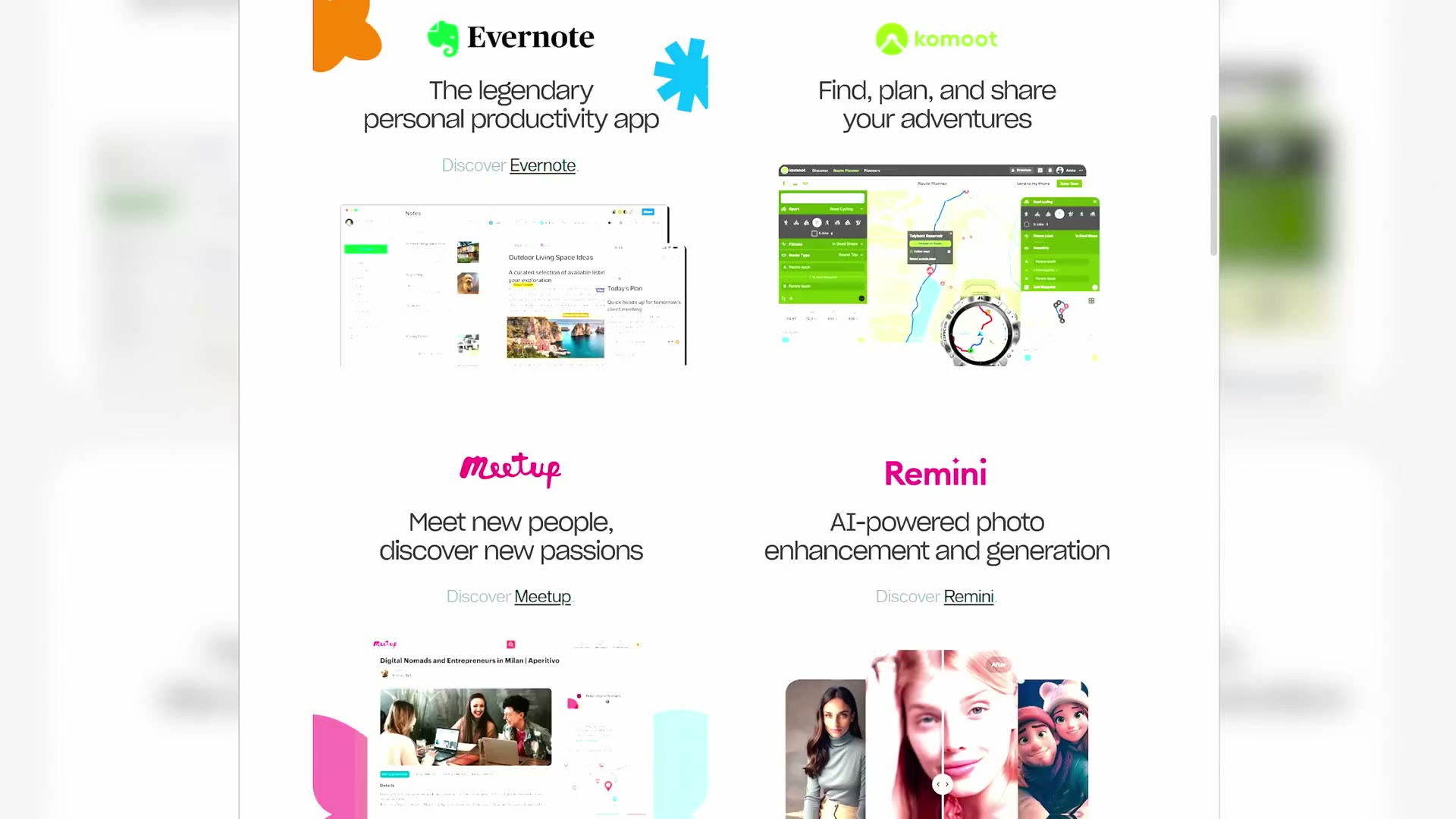
In November 2022, Bending Spoons acquired Evernote, a much loved note taking app friends of mine raved about. Six months later, again, the entire original development team was laid off. You do not really hear anyone talking about using it now.
WeTransfer was widely considered one of the best ways to send video files to clients, because small files were free and large ones cost very little. Bending Spoons bought them in July 2024. In September, a few months later, they fired 75% of the employees.
There have been more. StreamYard. Even AOL, yes, the You’ve Got Mail company, all acquired in the past two years.
The pattern is not subtle. Bending Spoons finds a struggling company, buys it relatively cheaply, fires most or all of the original staff, raises the cost for the end user and bleeds it dry. And with Vimeo acquired in late 2025, one of the most loved hosting sites for filmmakers looks to be pointed the same way.
What Vimeo Is Like Now
I have spoken to friends who still use it, because they are working professionals with hundreds of clients who need a simple, high quality way to share video. They tell me it has got worse and worse over the past few years, with more bugs than ever:
- Videos uploaded and shared with a password randomly stop working, so you get to tell an impatient client they are not authorised to view their own film.
- Embedded videos break and refuse to play for no reason.
- Portfolio pages have terrible organisation controls, burying your newest uploads at the bottom of the list, and sometimes not showing them at all.
- Thumbnails reset to a default.
The site was essentially falling apart before the acquisition. Given Bending Spoons’ record, I do not have much hope any of it gets fixed.
I hope I am wrong. I hope they turn it around and invite filmmakers back. My bet, looking at their history, is that they leave the site as it is, crank the subscription cost, milk it for as much profit as possible, and eventually shut it down and move on to the next one.
That is how this ends. Not with a sudden shutdown, but with a slow stutter of playback, failing to buffer, before it pauses forever.
If you are making the move away from Vimeo, or you already did it a long time ago, my Edit Videos Like A Pro guide is free and covers a lot of what took me years to learn.