
Here is what filmmakers want to see from the Sony a7S IV. At the time of making this video we are coming up on three years since the release of the Sony a7S III, and I want to look into the future and talk about the three biggest things filmmakers want to see in the successor to that camera.
What If There Is No a7S IV?
Before we get to those, I want to blow your mind with a thought. What if there is not an a7S IV?
To be clear, the a7S series has been incredibly popular, but if you ask most filmmakers today what Sony camera they want to buy, they are not going to say the a7S III. No, they are going to say they want an FX3. So this is just a theory, as is the rest of this video, but I can see a future where Sony does away with the a7S line of cameras and only offers the FX line. If you consider that the a7S is really just a video centric version of Sony’s a7 series of cameras, then whenever we are talking about an FX3 successor, like say an FX3 II or an FX4, those cameras are just even more video centric versions of the a7 series. They are just the video-iest video cameras you can get.
Wishlist 1: A Built In ND Filter
Anyways, my theorizing out of the way, the first thing the vast majority of filmmakers I have talked to want to see Sony add to the a7S IV, or the FX3 II, or whatever they come out with, is the biggest one. That feature is of course a built in ND filter.
It is no surprise. By far the biggest differentiating factor between the FX3 and the FX6 is that the FX6 has an electronic variable ND filter. And if there is one thing filmmakers want in a smaller, more compact body like the a7S IV, it is an ND filter. Heck, I am betting most filmmakers would be fine if the camera had to get a little bit thicker or heavier to fit one. Even if they made the camera twice as large, it would still be smaller than the Nikon Z9, for example.
Sony has talked about adding an ND to the a7 series of cameras, but they said there are limitations to what they can do, and namely there are two restrictions. The first, as we already discussed, is the size of the camera. I do think adding an ND would make it significantly larger. But in addition, the more difficult issue they face is that if they add an ND filter, they may have to get rid of in body image stabilization, a feature the vast majority of filmmakers absolutely love, and also a feature that happens to be missing from the FX6.
The way Sony’s electronic variable ND filter works is that it is a piece of glass that sits in front of the sensor. But whenever you consider that the sensor would be moving if it has IBIS, you suddenly need what I assume is a much bigger piece of glass, and everything just gets more complicated because it is all moving. So I am not saying Sony cannot fix it or figure out an internal ND with IBIS, but it is definitely complicated.
Wishlist 2: Recording To An External SSD
The next addition filmmakers want to see added to the a7S IV is a very popular request, which I know is popular because I get comments asking me if the a7S III supports this feature all the time.
See, whenever Blackmagic introduced their cinema cameras they added a lot of great features, including a new one that immediately all filmmakers wanted, and that feature was the ability to record via USB-C to an external hard drive. Yes, instead of needing to spend a lot of money on memory cards, you can instead buy a relatively cheap solid state drive, connect it to your camera with a USB-C cable, and record all of your footage externally.
This is super convenient, and whenever Sony released the a7S III it included a USB-C port, so why would it not include this feature? In addition, we are also seeing Panasonic include the ability to record to an external SSD with their new S5 II, so this would be a great feature to see Sony add as well.
Wishlist 3: Internal ProRes And Internal Raw
Speaking of Panasonic features Sony should add to the a7S IV, the next one Sony should take from Panasonic is the ability to record internal ProRes. ProRes is such a ubiquitous codec these days, and it is used by so many cameras and so many filmmakers whenever they are editing, that it is a no brainer for Sony to work to add ProRes recording natively to the a7S IV. Of course the file sizes may end up being larger, but remember, if you are recording via USB-C to an external hard drive, it is going to be pretty easy to have an SSD large enough to handle all of that data.

Now, speaking of large file sizes, there is a little bit of a bonus here, but there is something else I know pretty much every filmmaker wants and that is going to be hard for Sony to get, due to legal reasons. The next thing filmmakers want is for the a7S IV to have internal raw recording.
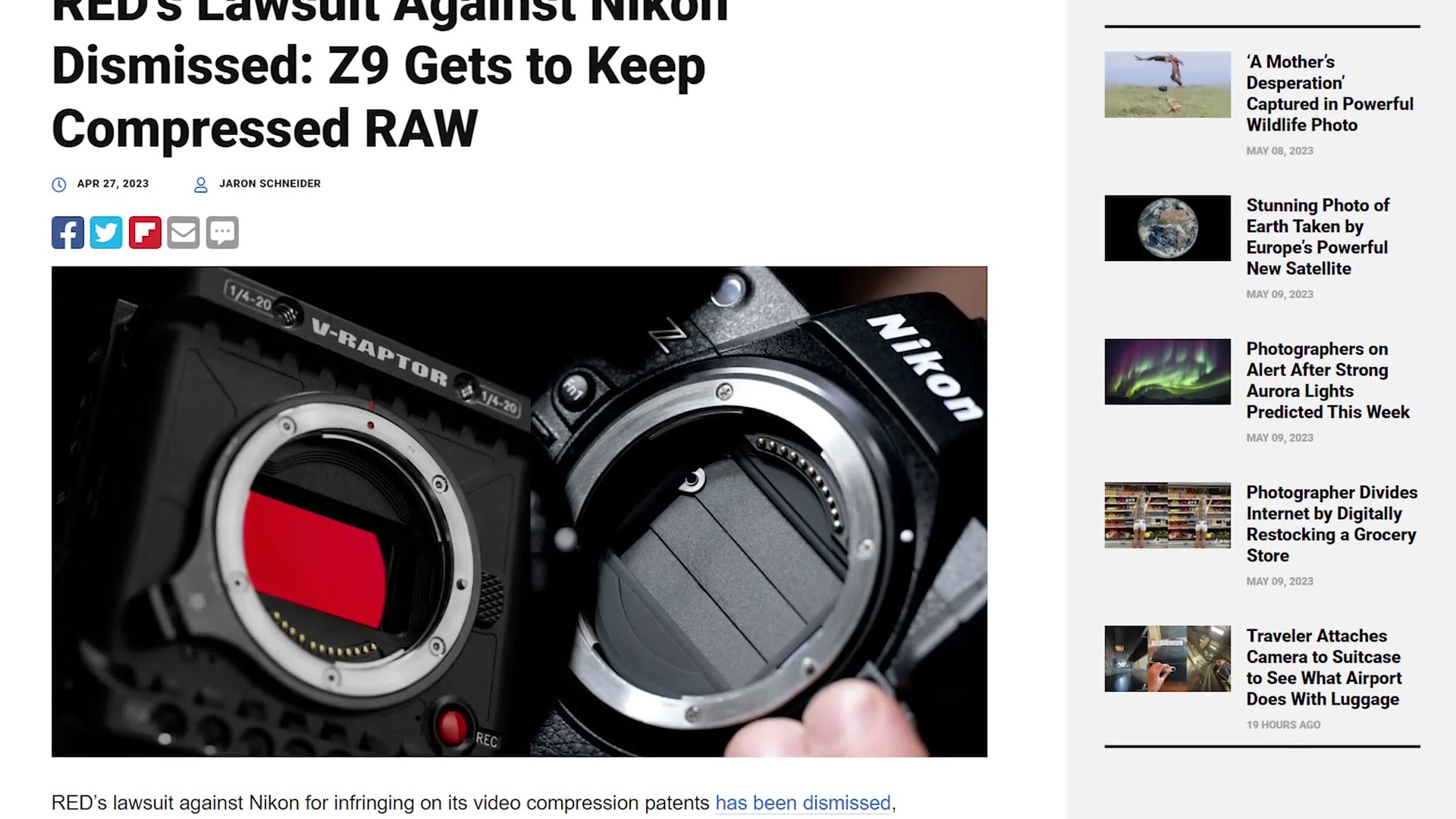
This is a huge ask, and Sony has not wanted to do it before, mainly, I believe, for legal reasons. The main thing you need to keep in mind any time we talk raw video is that RED, the camera company and not the color, currently holds a patent on compressed internal raw video recording, and they recently applied for another patent and were granted that one as well. RED has been extremely aggressive about protecting this patent and have sued Sony in the past whenever they were considering implementing raw recording internally in their cinema cameras. That has led to Sony’s Cinema Line requiring an external raw recording module, and all of their cheaper cameras like the a7S III, FX3 and FX6 only supporting raw recording out to an external recorder like an Atomos.
Here is where things have recently changed though. In 2022, Nikon added compressed internal raw to their Z9 and RED sued them over it. But in April 2023, Nikon essentially won whenever the case against them was dismissed, and they are now allowed to use compressed internal raw recording in all of their cameras.
I would love to see Sony figure out what Nikon did and be able to implement raw the same way, and I am betting a lot of other filmmakers would like that as well.
Bonus Wishlist 4: Make S-Cinetone The Default
Codecs aside, there is something else I think a lot of filmmakers would really appreciate if Sony implemented in the a7S IV. Here’s the deal.
Whenever a filmmaker asks me what picture profile they should film in with the a7S III, I really only have two recommendations for them. For the vast majority of filmmakers I recommend filming in S-Log3, because it is going to maximize the video quality you can get from the camera. It is one of the main reasons you buy a 10-bit camera, and while it may take more work to color grade, the results are completely worth it. Not to mention, if you use my color presets, which I have tuned to work specifically with S-Log3, they make color grading really easy.
That said, some filmmakers do not want to film in S-Log3, and I completely understand. Maybe those filmmakers are working on a time crunch where they do not have time to color grade, or they are working with a client who wants the unedited files delivered directly to them, and they know that client has no clue how to color grade video, so delivering them log footage would be a nightmare.
For those filmmakers who do not want to film in S-Log3, the only other picture profile I ever recommend is S-Cinetone. This picture profile is going to give you a fantastic looking image that does not quite reach the same level of dynamic range as S-Log3, but it does look great straight out of camera, and most importantly, it looks dramatically better than how the camera looks whenever you have the picture profile set to off.
So here is my recommendation for Sony with the a7S IV. I want to see Sony make S-Cinetone the default picture profile for the camera. Quit letting filmmakers buy this camera and film by default with the picture profile off, which just gives them the opportunity to complain that the colors do not look good. There is a reason filmmakers buy Canon cameras, for example, and do not bother using C-Log. They film in the standard picture profile and it looks gorgeous and contrasty straight out of camera.
My point is that if you want your footage to look gorgeous and contrasty straight out of your Sony camera, you need to use S-Cinetone. If Sony were to make S-Cinetone the default, and then take picture profile off and make that its own custom picture profile filmmakers could still use if they needed to, I just think a lot of filmmakers would be dramatically happier with the footage they were getting straight out of camera, and the footage we see from Sony cameras all across YouTube would look dramatically better.
Get These For Your Sony Cameras
Speaking of looking dramatically better, I know I just mentioned them, but I am going to mention them again. If you want to make your video edits look dramatically better, you have got to check out my color presets. They are going to make your footage look incredible, and they work with Sony cameras including both the S-Log3 and S-Cinetone picture profiles, as well as other cameras like Panasonic, Canon and Nikon.
I am also going to link my Edit Videos Like A Pro guide. This guide is going to walk you through some of the biggest things you can do to edit your videos better and faster. It is completely free.
If you want to go deeper, I have filmmaking courses here, and here is my full list of filmmaking gear.
Now, did I miss anything Sony should include in the a7S IV? What do you think future Sony cameras need?
Thanks so much for reading, and have a great day!