
I am going to start this review by saying that I am not a photographer and I have never claimed to be. But that said, I think if you are someone who not only films weddings but also photographs them, the Sony a7R V is arguably the most compelling hybrid option out there, whether you are looking at Sony or pretty much any other company for that matter.
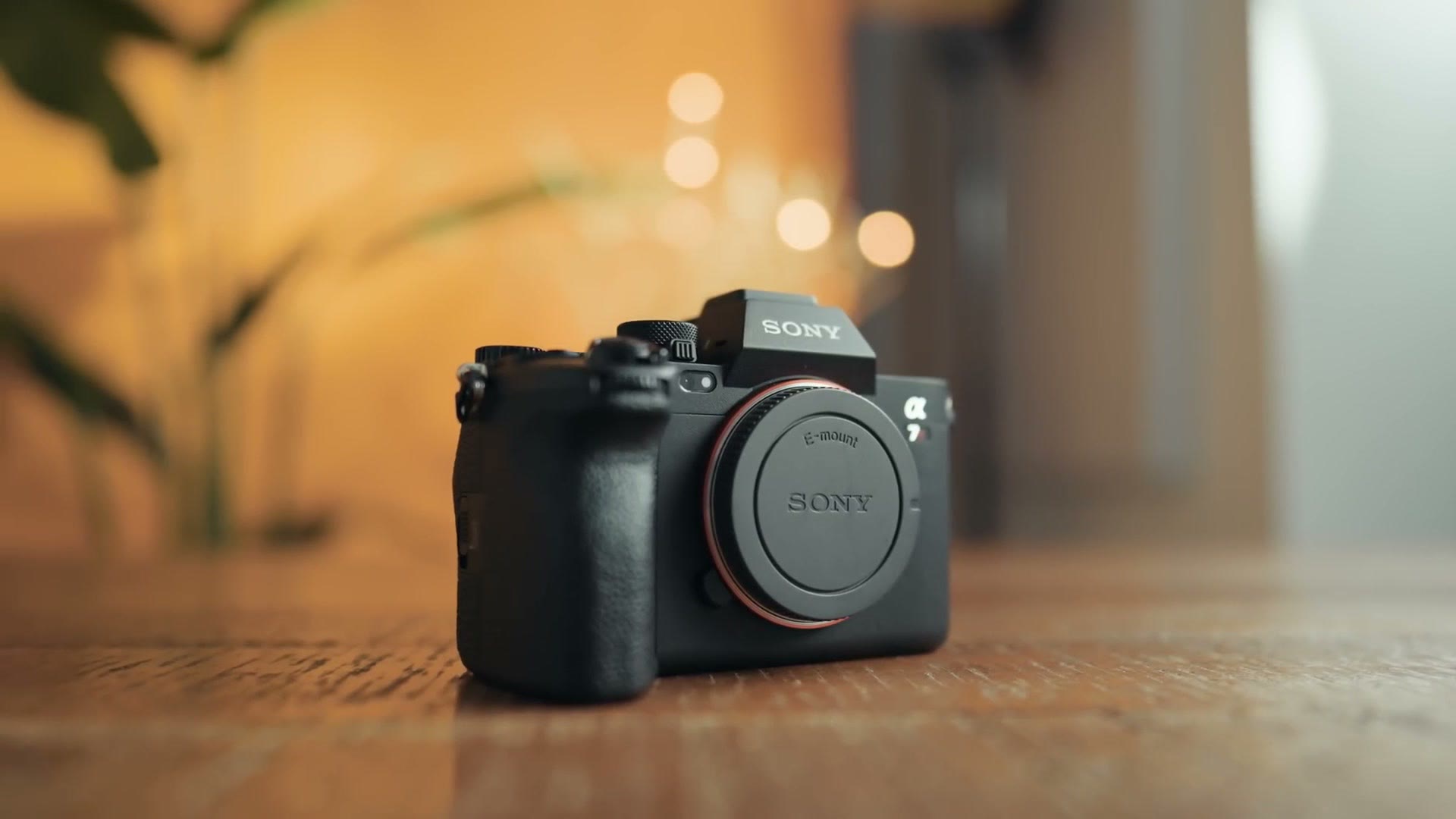
It offers a lot of the same features as the flagship Sony a1, but in a body that manages to do new tricks while also costing thousands of dollars less. Heads up: this link goes to the newer Sony a1 II. So if you are looking for a camera that can take great photos and then, with a flick of a switch, turn into an 8K shooting monster, you have got to check out the a7R V.
I am going to review it from the perspective of a wedding filmmaker and tell you whether it is a good camera for you if you film weddings or other documentary events. And since this is a camera that has traditionally been aimed at photographers, I will be considering wedding photography here as well, so regardless of which side you are on, keep reading.
Before we get started, for the sake of ethics I want you to know this video is not paid or sponsored by Sony. They did loan me this camera for review and it has to go back to them very soon, and the first time they see the video is the first time you do.
Sony’s Old Way Of Doing Things
In the past Sony did a really good job of segmenting their product lines. You had the a7S series, targeted solely at filmmakers with a much lower megapixel sensor, purpose built for filmmaking. Then you had the a7R series aimed at all the pro photographers who needed a high megapixel camera, and I personally know a lot of wedding photographers who love and use the R line. And lastly you had the a7 with no letter after it, which was as close as Sony got to offering a hybrid, combining a relatively high megapixel sensor with some of the video features. But while it was a jack of all trades, it really was a master of none.
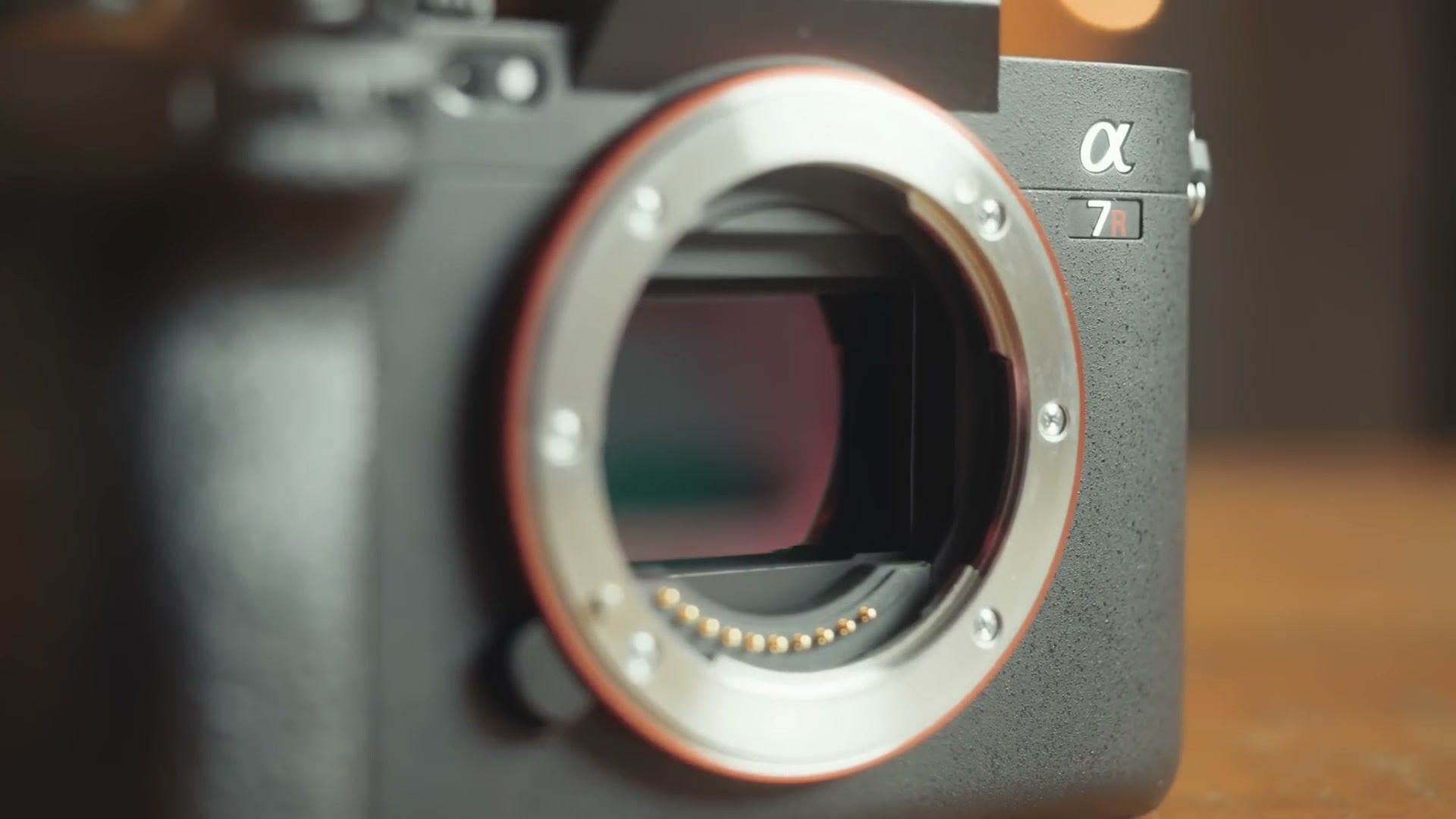
Sony wanted you to specialize. They wanted you to pick one camera, and maybe, if they got lucky, you would buy both the S and the R.
But lately things have been changing. In 2019 Sony released the a7R IV, and that is one half of the last pair of cameras I would consider part of the old system. I still remember Sony’s press conference for the R IV vividly, because I wanted it to be the a7S III so bad, and whenever they got on stage and said look at it, it is the R IV, and it has the exact same video capabilities as our previous cameras, I died a little bit inside. Thankfully the next year Sony released the a7S III and I was happy again.
Then we started seeing competitors like Canon introduce cameras with both amazing photo and video features combined, like the R5. I mean, aside from that whole overheating thing, and you can watch my overheating test for that camera here.
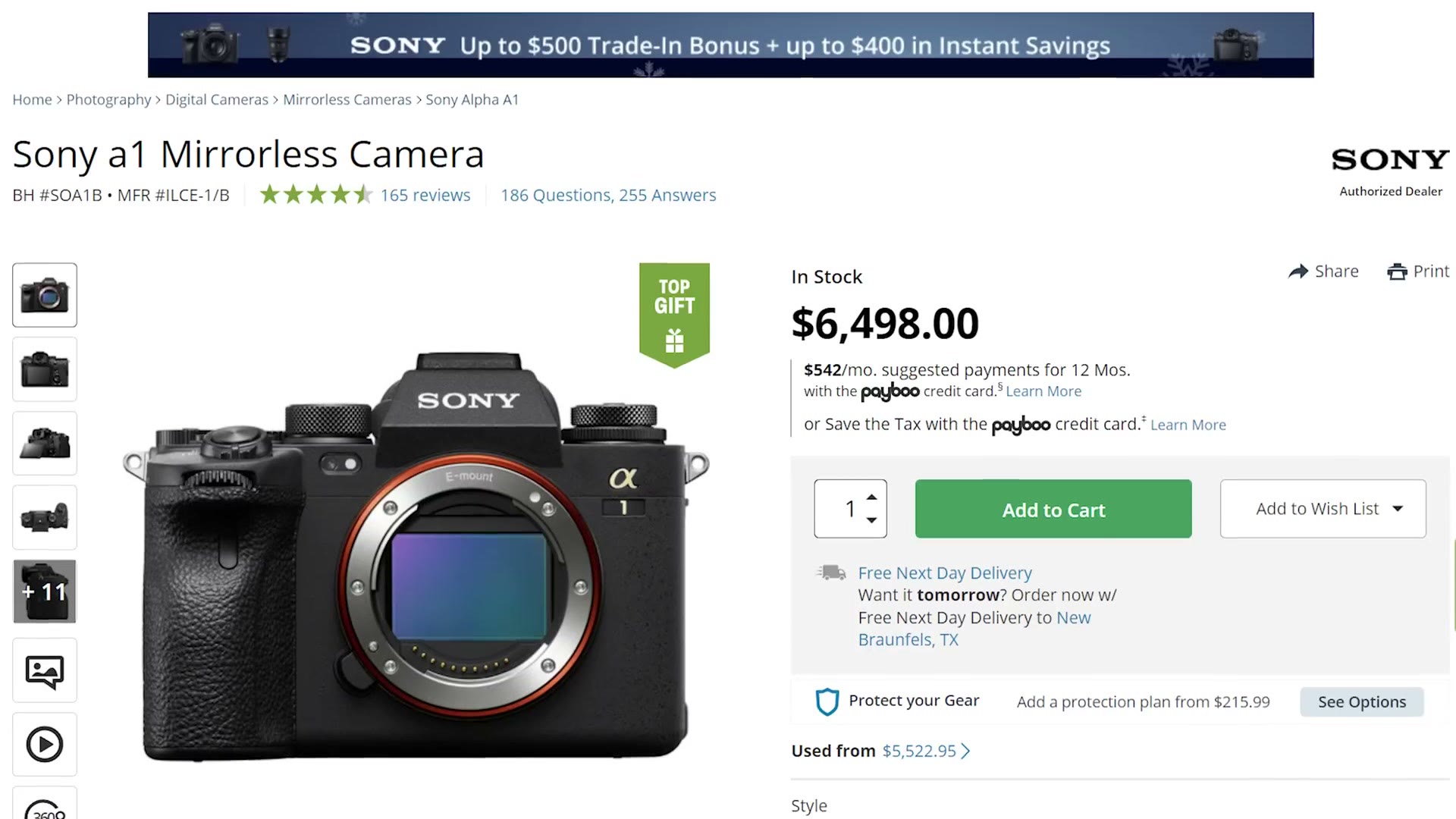
Sony had to compete, and finally with the a1 they released a true hybrid capable of both amazing 50.1 megapixel stills and amazing video all the way up to 8K. The issue is that the a1 was really meant to be a halo product, the ultimate camera Sony crammed all of their latest technology into, and like all halo cameras it was incredibly expensive at over $6,000. Do not get me wrong, I am really happy Sony started combining photo and video into one camera, but it came at quite the cost.
Thankfully the a1 was a portent of things to come, because the a7R V finally gives us a closer merger of photo and video for a much better price, with even fewer compromises than the a1.
The New Fancy Screen
Starting with body and build quality, this camera shares a ton with the a7 IV. The buttons are all the same and in the same places, which I have zero complaints about. But whenever you get to the back of the camera, the screen is where you notice the big difference.
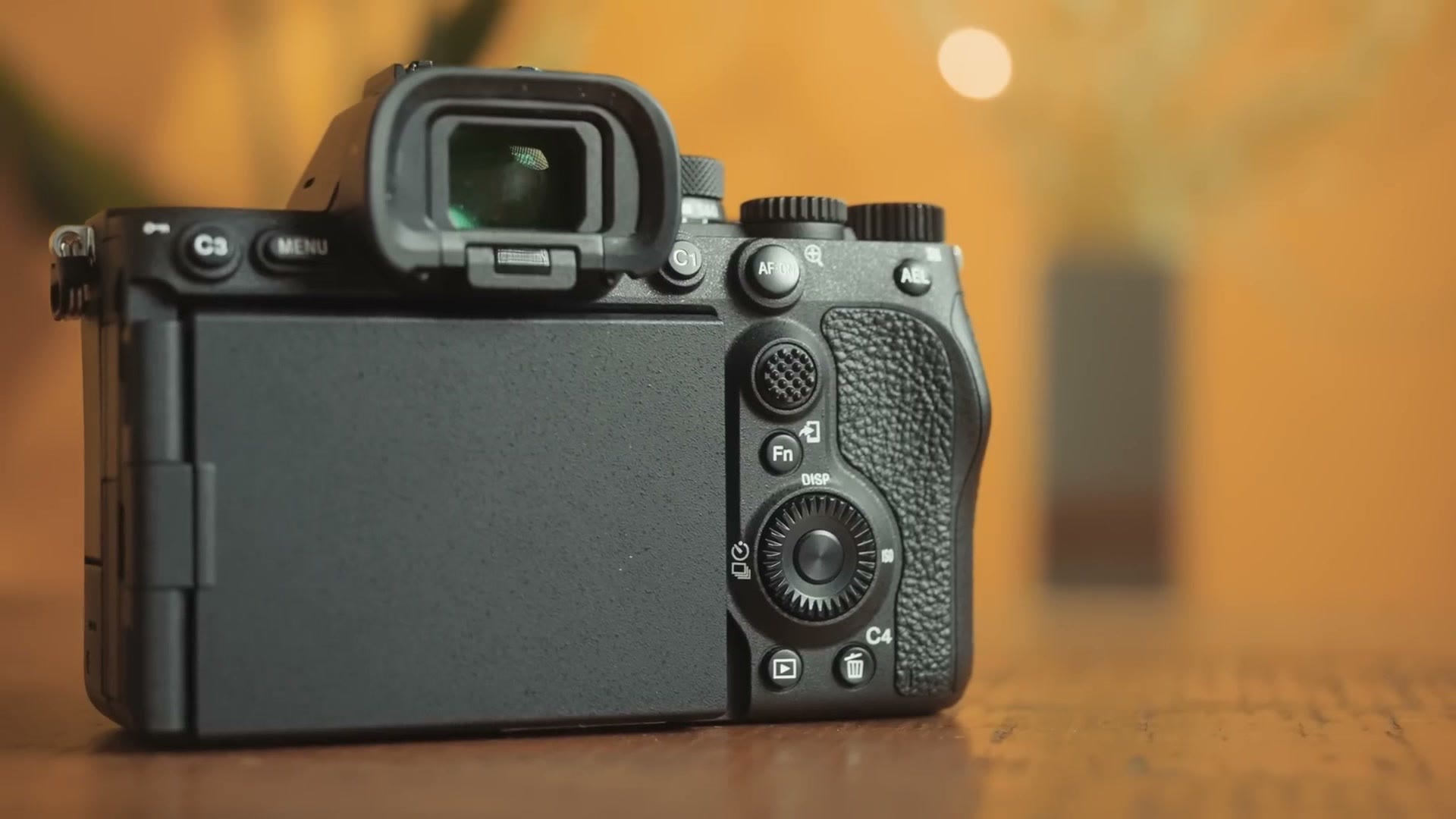
For years Sony used a vertical articulating screen, which I really liked as a filmmaker because I could hold the camera at chest level, tilt the screen up, and look down to see what I was filming. Unfortunately it could not flip around and let me see myself while filming, which is a big pain for someone who films himself fairly often. Sony then tried to fix that with the a6400 and a6600, which had a screen that flipped completely upward so you could see yourself above the camera, which of course caused issues if you had a microphone mounted up there. Heads up: this link goes to the newer Sony a6700. Then they announced the ZV-1 with a screen that flipped out to the side like pretty much all of their competition, and they started including flip out screens on all their newer cameras. Heads up: this link goes to the newer Sony ZV-1 II.
It has been great, but the problem is that a lot of filmmakers, and especially photographers, preferred the old tilting screen. And while it was not a huge deal to flip your screen out and then tilt it up, it still significantly increased the overall footprint of the camera. I am sure there were some Sony engineers wishing they could create the best of both worlds. Thankfully they did not have to look far for ideas, because Panasonic released the S1H several years ago with a screen that could flip outward to the side and also tilt up and down vertically. Revolutionary. There was also a mega thick screen. Heck, the entire camera was thick. If you have ever used one, you know what I am talking about. Beautiful footage, but wow, that was a thick boy.
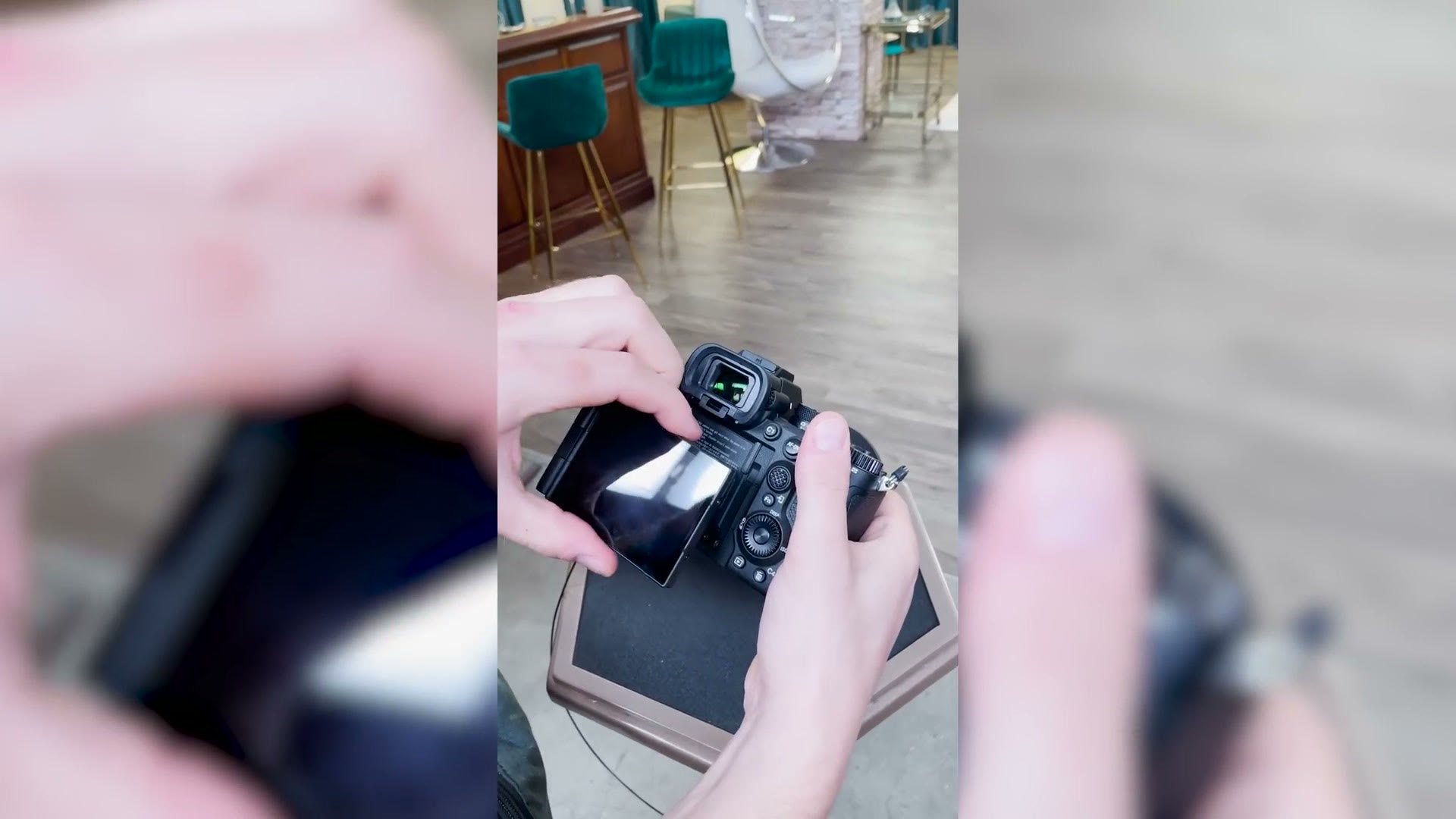
Anyways, I am happy to say that with the a7R V, Sony has now included a screen that not only flips outward but also tilts up and down, giving both filmmakers and photographers the best of both worlds so you can get amazing footage and photos from any angle. It is really just fun to play with too, because while it does look thin, it is very solidly built and does not feel flimsy at all.
So if you are a wedding filmmaker or photographer and you commonly find yourself contorting into weird angles to get a creative shot, the a7R V has my new favorite screen on any Sony camera, and once you use it you are going to wish Sony put this screen on every single one of their cameras. Honestly, hopefully they will.
Side note, this screen is also a huge argument for buying the a7R V over the a1. Having used the a1 and felt rather limited by its lack of a flip around screen, the R V screen is dramatically better.
Ports And Cards
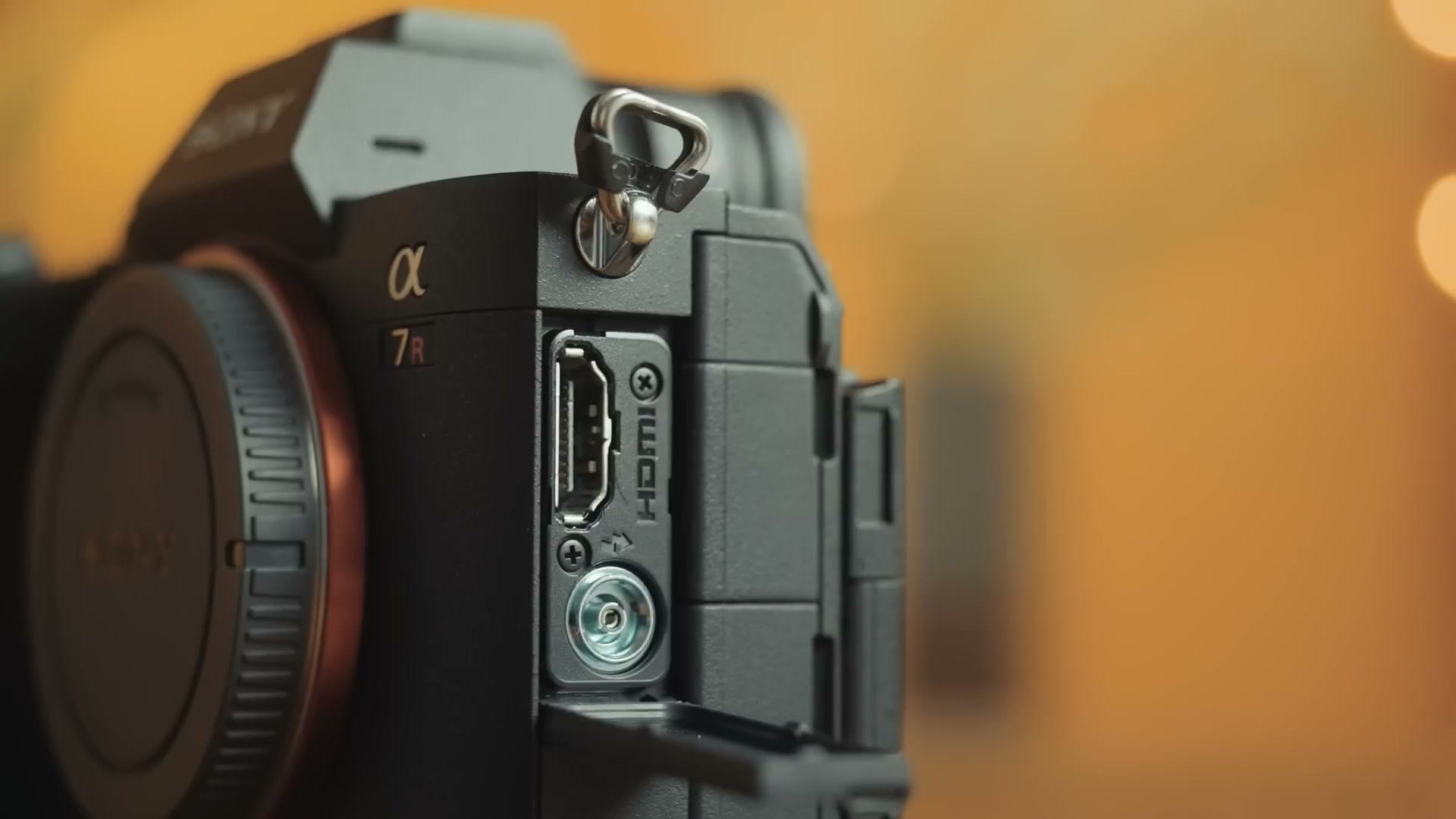
Other than the screen, the a7R V packs pretty much everything else you expect from a brand new Sony camera. You get a full size HDMI port that supports external raw recording, micro USB as well as USB-C that supports fast charging and lets you use the camera as a very expensive webcam, a mic jack, a headphone jack, and a hot shoe on top that electronically supports Sony’s microphones like the ECM-B1M. Heads up: this link goes to the newer Sony ECM-M1.
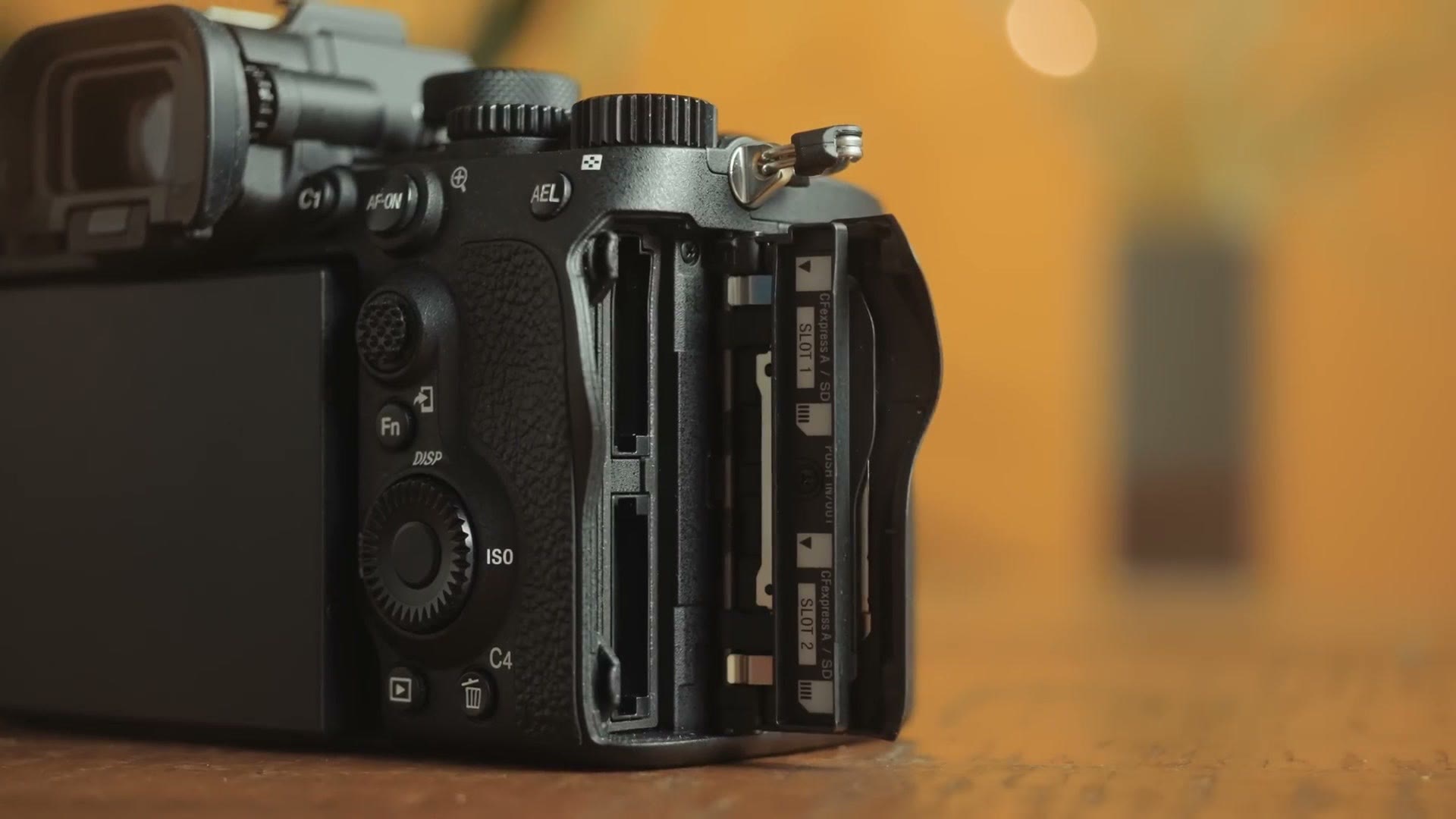
On the other side you also get dual CFexpress and SD card slots, which you are going to love. And if you are a wedding photographer or filmmaker, I would always recommend recording to dual cards, because in the event one card fails you have a backup. Considering that weddings are one-take events where you do not get any do-overs, any redundancy you can build into your camera is always a great idea.
Overheating
There is one thing you will not find on the a7R V, and that is slots for a fan on the back of the camera. This is not surprising considering it is a hybrid photo and video camera rather than something like the FX30. But Sony says they put the same heat dissipation technology they designed for the a7S III into this camera, meaning it should still be able to record for quite a long time before you deal with any overheating.
Of course, keep in mind this camera can record in 8K, and any time you start filming at a resolution that high you are basically asking for overheating at some point. So if you are filming a wedding ceremony outdoors in the summer, maybe do not film that ceremony in 8K if you do not want a sad surprise when the ceremony is done.
Menus And New Features
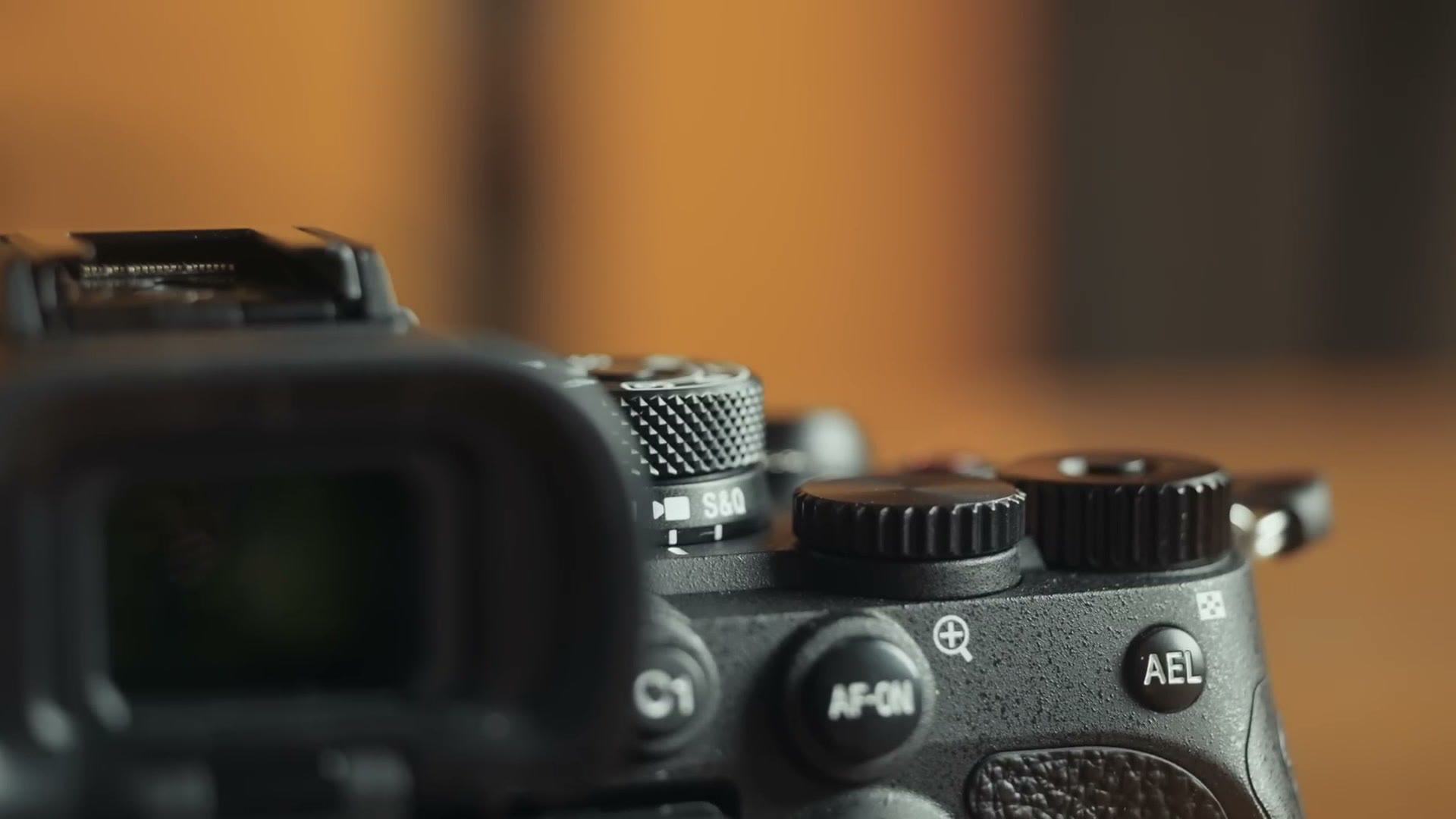
One nice feature Sony took from the a7 IV is the photo and video mode switch on the top of the camera, which is especially useful if you are a hybrid shooter who needs to film and take photographs at the same event, because whenever you flip that switch it changes all of the menu structures to be more photo or more video oriented depending on the mode you are in. Like other new Sony cameras, you can also customize the buttons and the function menu differently depending on which mode you are in, which helps you make very quick setting changes.
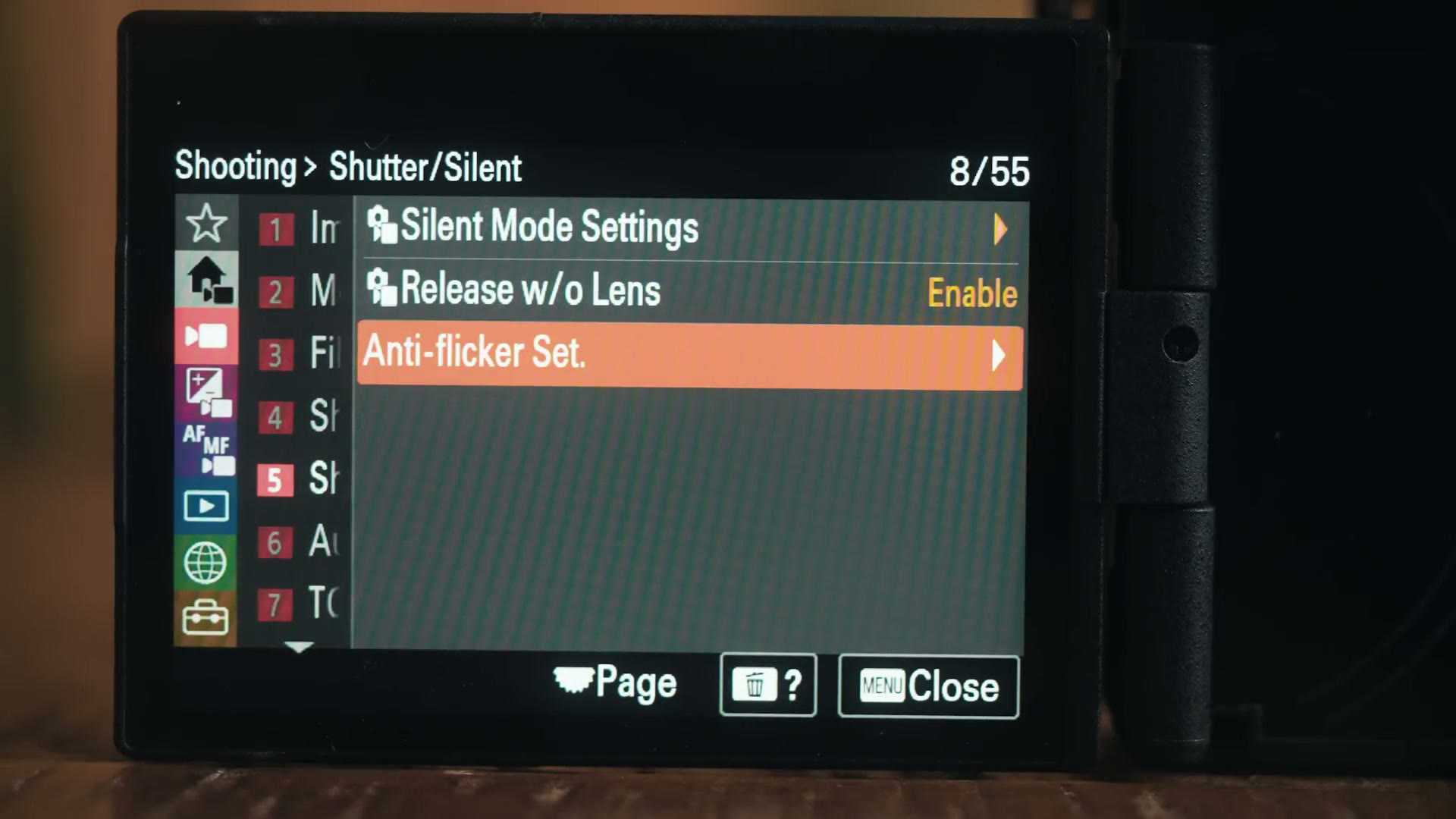
Sony has also put all of their newer software features in this camera. You get focus breathing compensation, which is mind blowing and eliminates focus breathing with supported native lenses. You get the focus map feature that gives you a colored overlay showing what is in focus, which is great for manual focusing. And you get variable shutter control, which helps you remove flicker if you are dealing with really cheap lights that are flickering badly.
These are all great, but they are also a bit controversial right now, because Sony has not updated their older cameras with these features via firmware. Which means that in terms of software features, the a7R V costs thousands of dollars less than the a1 and also has more features, features that could be added to the a1 with a firmware update. It is a big pain and I would love to see Sony update their cameras.
Evolutionary Photo Features
For photographers, I feel like the R V is a bit more of an evolution than a revolution. From a photo standpoint you are still getting a 61 megapixel sensor that is similar to the one in the a7R IV, and the same sensor turns up in the much smaller a7C R. That said, whenever Sony released the R IV it felt a bit ahead of its time, like Sony was really pushing that processor to even be capable of handling that many megapixels. It has been a few years now, and the underlying technology to handle and process those 61 megapixel images is greatly improved. You can now take up to 583 compressed raw photos at ten frames per second before you fill up the buffer, which is awesome. There is also a new higher resolution viewfinder at 9.4 million dots, up from 5.7 million on the R IV.
Revolutionary Autofocus
Those features are evolutionary, but hold up, because the autofocus is definitely revolutionary for both photo and video.
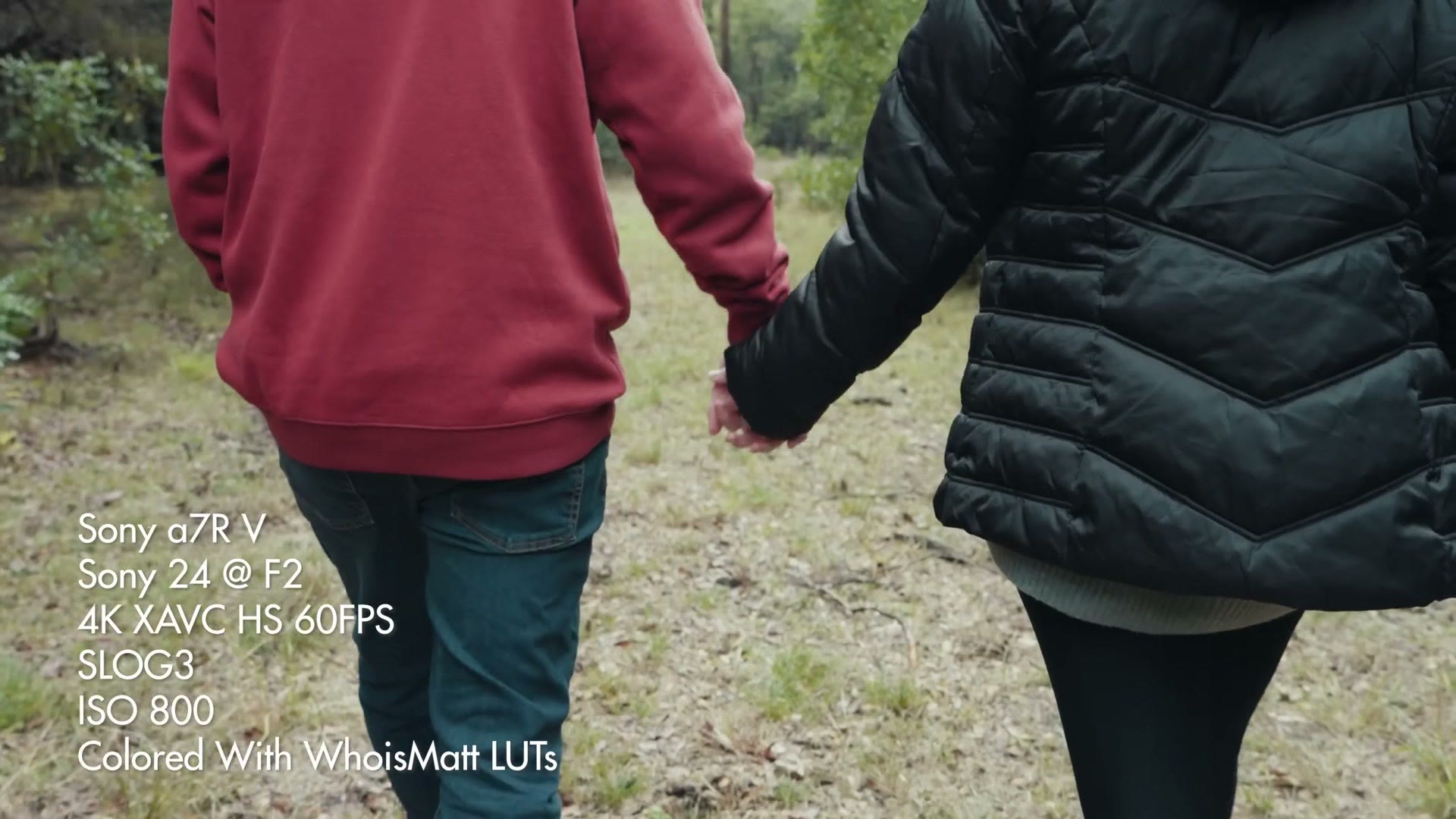
I am so excited to tell you that we are finally seeing the larger camera companies copy Apple and Google and start using things like deep learning and artificial intelligence to dramatically improve the performance of their cameras. In Sony’s case, they used deep learning to dramatically improve their autofocus. It is still using phase detection points across the entire sensor, but those points are now much smarter thanks to a new AI processing unit in the R V. In both photo and video mode the camera can now recognize human, animal and bird eyes, and even more than that, it can also recognize cars, trains, planes and insects. So pretty much regardless of what you are filming, this camera is going to be able to focus on it faster and more accurately.
But there is more, and this is going to be really exciting for you if you are a wedding filmmaker or photographer, because one of the biggest benefits of that AI chip is the addition of what Sony calls human pose estimation. What that means is that the camera can now not only look for faces and eyes, but it can look for human bodies, and it can tell where the arms and legs and torso are.
Now why should you care about this, unless you want better autofocus for taking feet pics, which, hey, that is a different business and I hear it is very lucrative. No judgment.
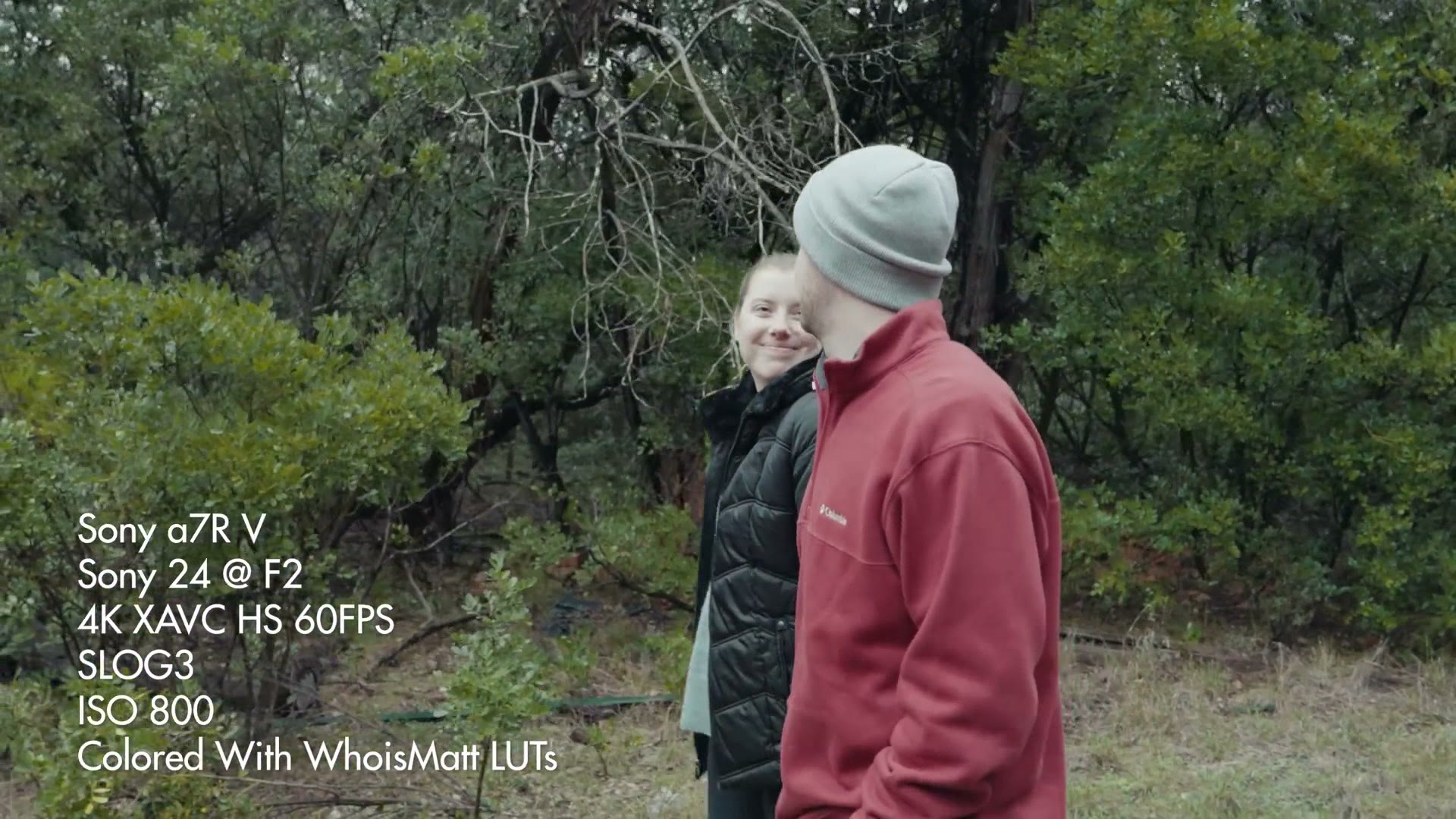
Feet pics aside, the reason the camera being able to see limbs and torsos matters so much is that it lets the camera work out where a person’s face is without them even looking at the lens. In the past, with older Sony cameras, if the person you were filming was not facing you, the camera had no clue what to focus on. But now that it can recognize a body, it can say, well, here are the feet and here is the torso, which means the head must be right above it, so that is where I am going to focus. And whenever that person does turn around, they are going to be perfectly in focus.
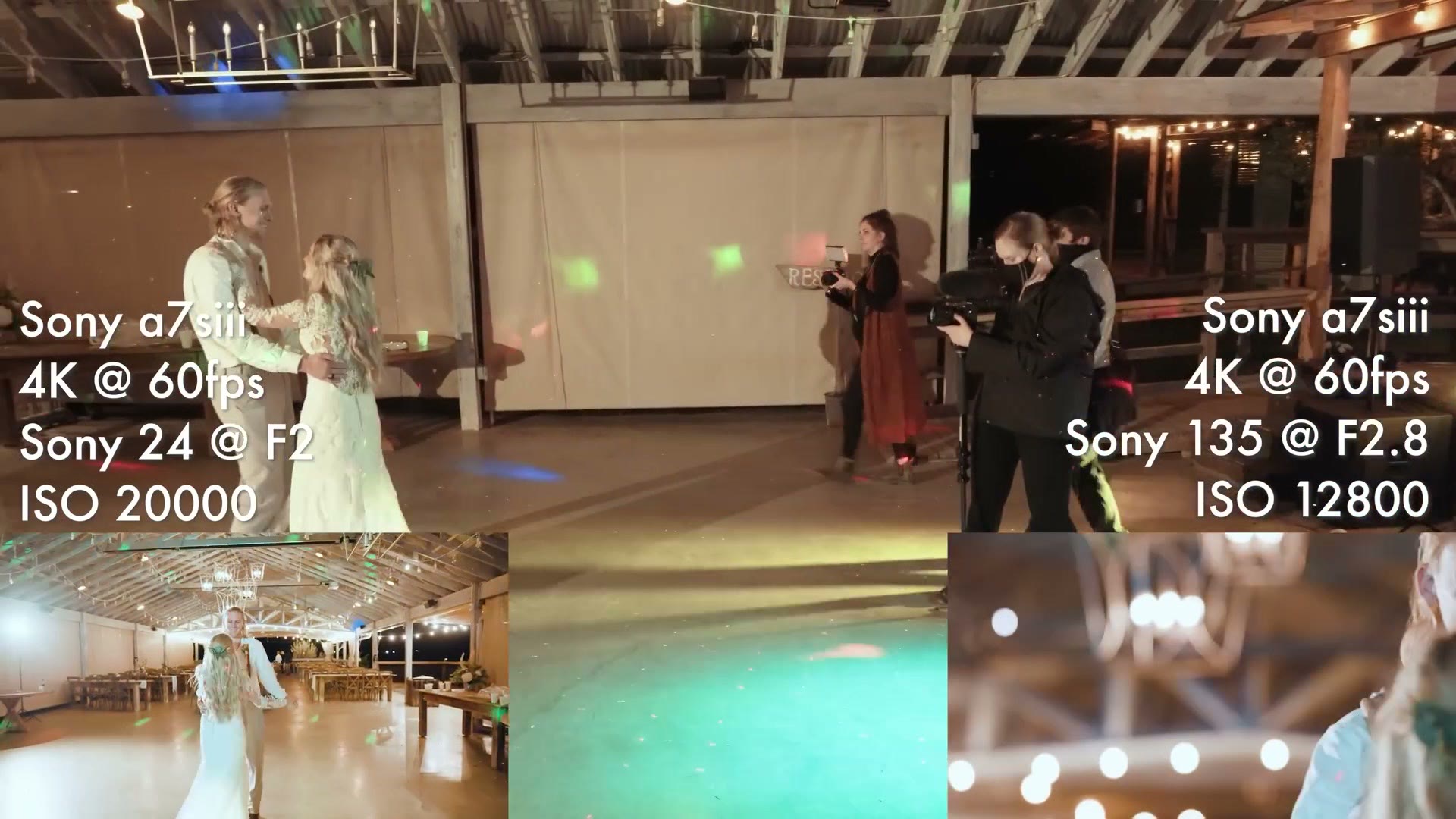
Think about the dance floor. You are always trying to get great shots there, but there are 50 or 100 faces your camera could be confused about. What do you want it to focus on? In reality you want it locked on the couple right in front of you, but the bride is currently being twirled around by the groom, so it is really hard for the camera to maintain focus. Or at least it was, because now the camera can recognize the bride’s torso, estimate where her face is from that, and keep her in focus. It is super cool, and I cannot wait for this to be in every single Sony camera moving forward.
I also want them to incorporate more artificial intelligence and machine learning into their cameras, because let’s be honest, iPhones and Google Pixels are kind of eating the major camera manufacturers’ lunch whenever it comes to using AI to enhance photo and video, and I want that capability in my bigger cameras. Can you imagine something like the cinematic mode on the iPhone that blurs out the background? You would normally not need that on a full frame camera like this, because it has a large sensor and you can put a wide aperture lens on it. But imagine you could only afford cheaper F4 lenses, and then you could turn on an artificial intelligence bokeh mode to essentially turn that F4 lens into an F1.4 lens. That could be cool. Dream with me. It is beautiful.
Revolutionary IBIS
Sticking on this revolutionary trend, we need to talk about IBIS. No, not irritable bowel syndrome. I have made that joke before, but I am a dad, so it is still funny to me.
In body image stabilization has been in Sony mirrorless cameras ever since the a7R II and a7S II, and whenever Sony released the a7S III it got even better with the addition of active stabilization, which smooths the footage further by cropping in on the sensor 1.1 times. Now, even with active stabilization, Panasonic filmmakers will tell you Sony has fallen far behind on IBIS performance, with the general Sony retort being something about autofocus. We are not going to start a war here. Please do not start a war in the comments.
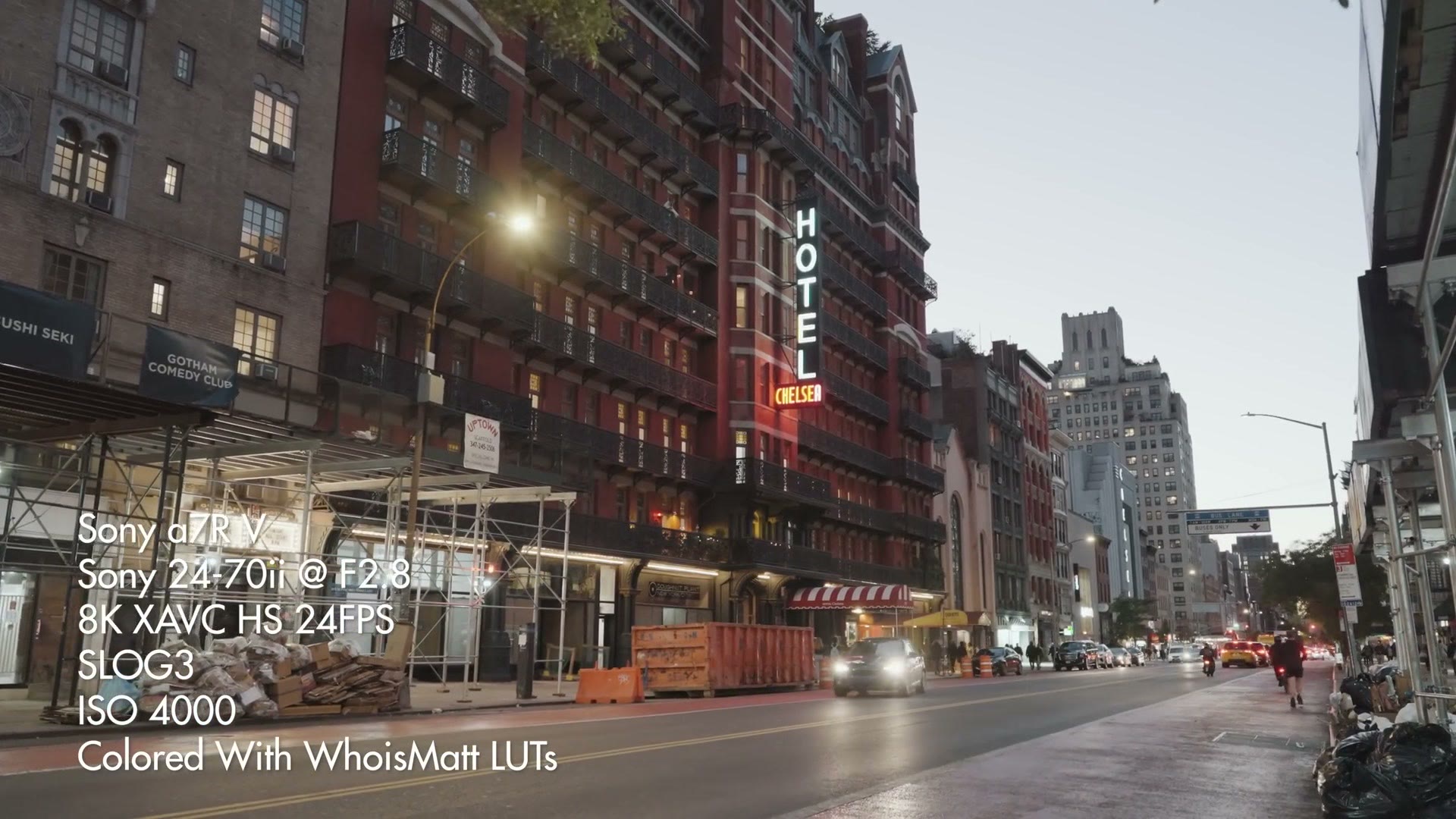
My point is that with the a7R V it feels like Sony is finally starting to catch up. Sony claims up to eight stops of in body image stabilization, and whenever I tested this on the streets of New York City I found it substantially improved over previous Sony cameras, especially considering I was not using a lens with optical stabilization. You can see the full IBIS test here.
And if you are a wedding photographer, imagine being able to take even longer handheld exposures. It is pretty great.
Goodbye Old Bulb Timer
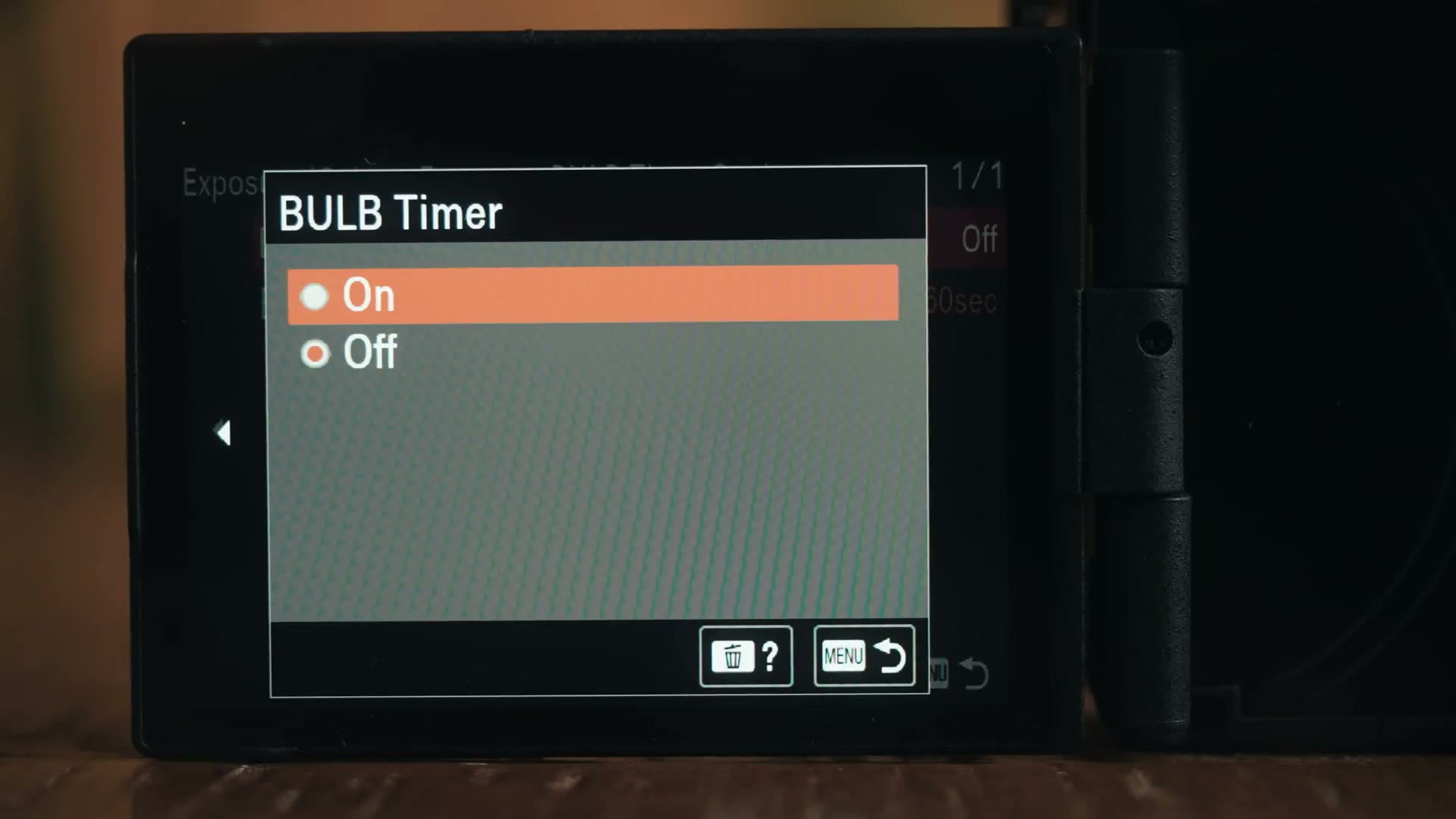
Another little update that does not really relate to IBIS but that I think is really cool: Sony has removed the bulb timer limit. If you have ever used a previous Sony camera and wanted to take a long exposure, you know you were limited to holding the shutter open for 30 seconds unless you used an external intervalometer. That has changed with the a7R V, because the bulb timer limit has gone from 30 seconds all the way up to 15 minutes, which effectively gets rid of your need for an intervalometer. Which is great.
Battery Life
In my testing I found the a7R V battery life to be very comparable to Sony’s other new cameras that use the FZ100 battery, so I would expect to go through three to four on a wedding day if you are filming. And if you are photographing a wedding, I would expect to go through about the same number you normally would with a Sony camera. Sorry, I have not photographed a wedding with this camera. Photography. What’s that? I am trying. Okay. We are making this review here.
Video Features And Formats
Sorry photographers, we need to talk about video for a bit, because as I said at the start, this is a camera where we are really starting to see Sony combining their best video features with their best photo features. So photographers, you can tune out, or you can pay attention and get into video. Join us. Join us.
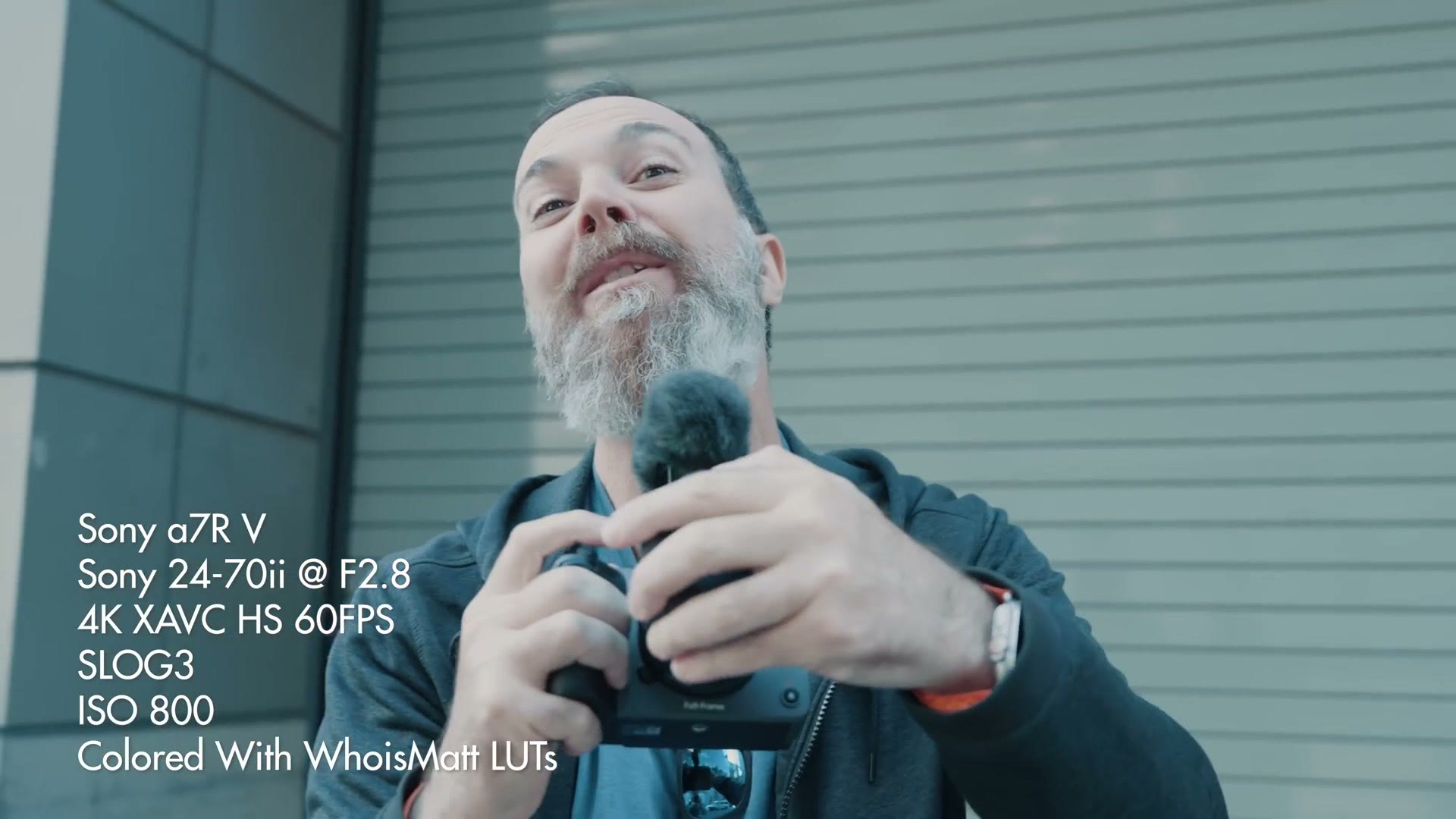
With the a7R IV you really were not getting these video capabilities, so it is so great to see them now. Just like Sony’s other new mirrorless cameras, you get the exact same picture profiles and bitrates, meaning the R V can record in XAVC S, XAVC HS and XAVC S-I, and XAVC HS in particular can record 8K at 24 frames per second. All of these formats record in gorgeous 10 bit color, plus you can use all the picture profiles you expect from newer Sony cameras like S-Log3 and S-Cinetone, so you can easily match this camera with your other Sony cameras.
Unfortunately the a7R V does not fall under the cinema camera umbrella, which means it does not include Cine EI or the custom LUT feature you would see on the FX30 or FX3. But we can dream that they would include it in a future firmware update, right? I have a lot of dreams about firmware updates.
Side note, all the a7R V footage you are seeing here, as well as everything else, has been colored with my WhoisMatt LUTs, which work great with footage from all cameras.
Frame Rates And Resolution
The headline feature is that the a7R V can film 8K at 24 frames per second in roughly full frame. More on that in a second.
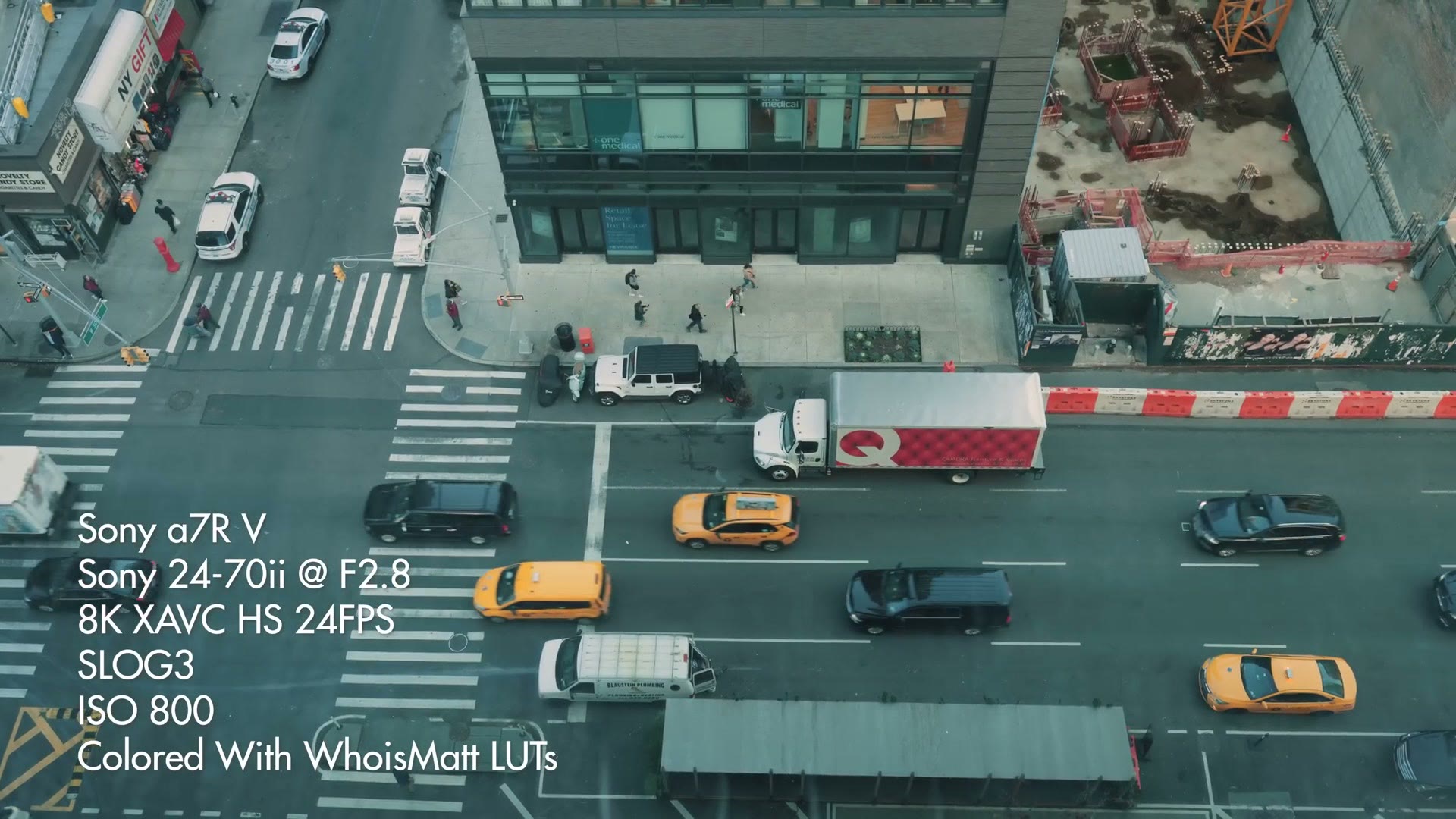
This footage looks gorgeous, but I will warn you that it does unsurprisingly have compromises, like significant rolling shutter, so be careful filming handheld. 8K also comes with a 1.2 times crop of the sensor, which is not major, but keep in mind it is a bit of a loss of width. Importantly, it also disables active image stabilization, because that would crop in even more and the camera would lose too much resolution, and you need all those megapixels for 8K.
One cool thing though is that you only need a V60 speed SD card to film in 8K, so if you have one of those laying around, congratulations, you do not need to buy CFexpress Type A. Just use an SD card.
In addition to 8K you also get a lot more frame rates to choose from, including 4K UHD up to 60fps. Just like 8K, that 4K 60 crops in 1.2 times, but unlike 8K you can use active image stabilization, which is a win. You can also film 4K at 24 and 30 frames per second, and as a big plus, neither of those has a crop, so you get that 1.2 back and you are full frame again.
One last note about the 4K 24 through 4K 60 frame rates: all of them use pixel binning, which means they are not going to be quite as high quality as they would be if the camera was oversampling down to 4K. That said, they still look good. Sony is using a good algorithm. Just be aware of it if you want to do some pixel peeping.
Lastly, the a7R V does offer a Super 35 crop mode for 4K at 24 and 30, which crops in on the sensor 1.5 times and essentially turns it into an APS-C camera. That probably does not sound like a good thing, but the benefit is that in this mode the camera will not pixel bin, and it will actually oversample from 6.2K resolution, which should give you a nice boost in sharpness. That Super 35 crop mode works in photo mode too, which helps if you want to crop in camera. And speaking of cropping in camera, if you are filming a wedding ceremony and you want to punch in, just use Super 35 as a free zoom. Pretty fancy.
So there are some compromises with all of these settings, but overall you are still getting a camera capable of recording 8K at 24 and 4K at 60, which sounds pretty good to me. Do I wish there was a 4K 120 option? Of course. But that is where Sony wants you to buy the a1.
Low Light Performance
When I had the camera for a day in New York City I took the chance to do a low light test, and you can watch the full test here. But here are the highlights.
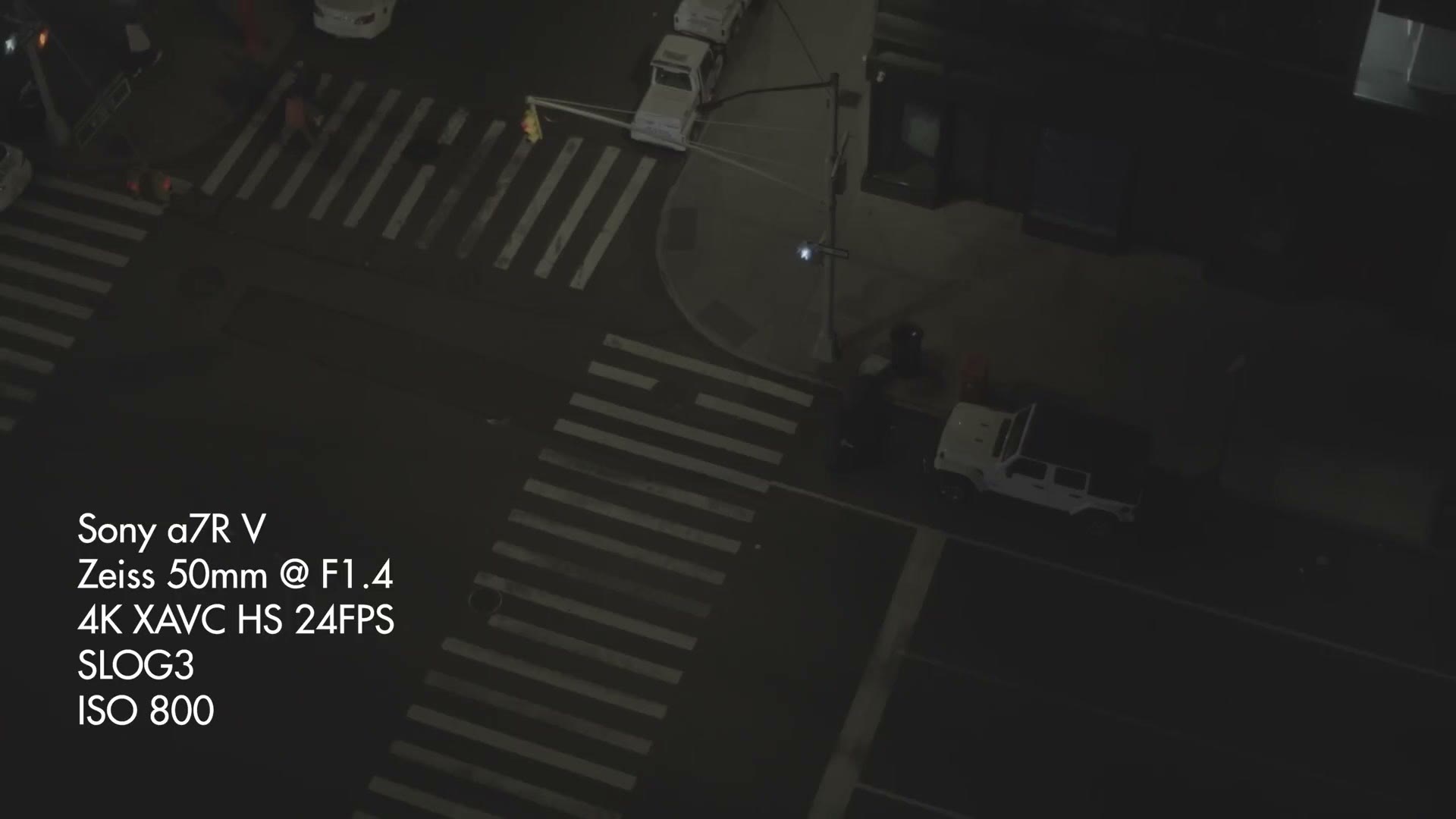
Just like a lot of Sony’s newer cameras, the a7R V looks to have a dual native ISO, where there are two ISO levels at which the camera looks its best with the least amount of noise. When you are filming S-Log3 those two levels are ISO 800 and ISO 2500. As you start to push the ISO higher you are going to notice more noise appear in the image, but even whenever I went to ISO 12,800 I still found it quite usable, and if you needed to push all the way to ISO 32,000 I think you totally could at a wedding.
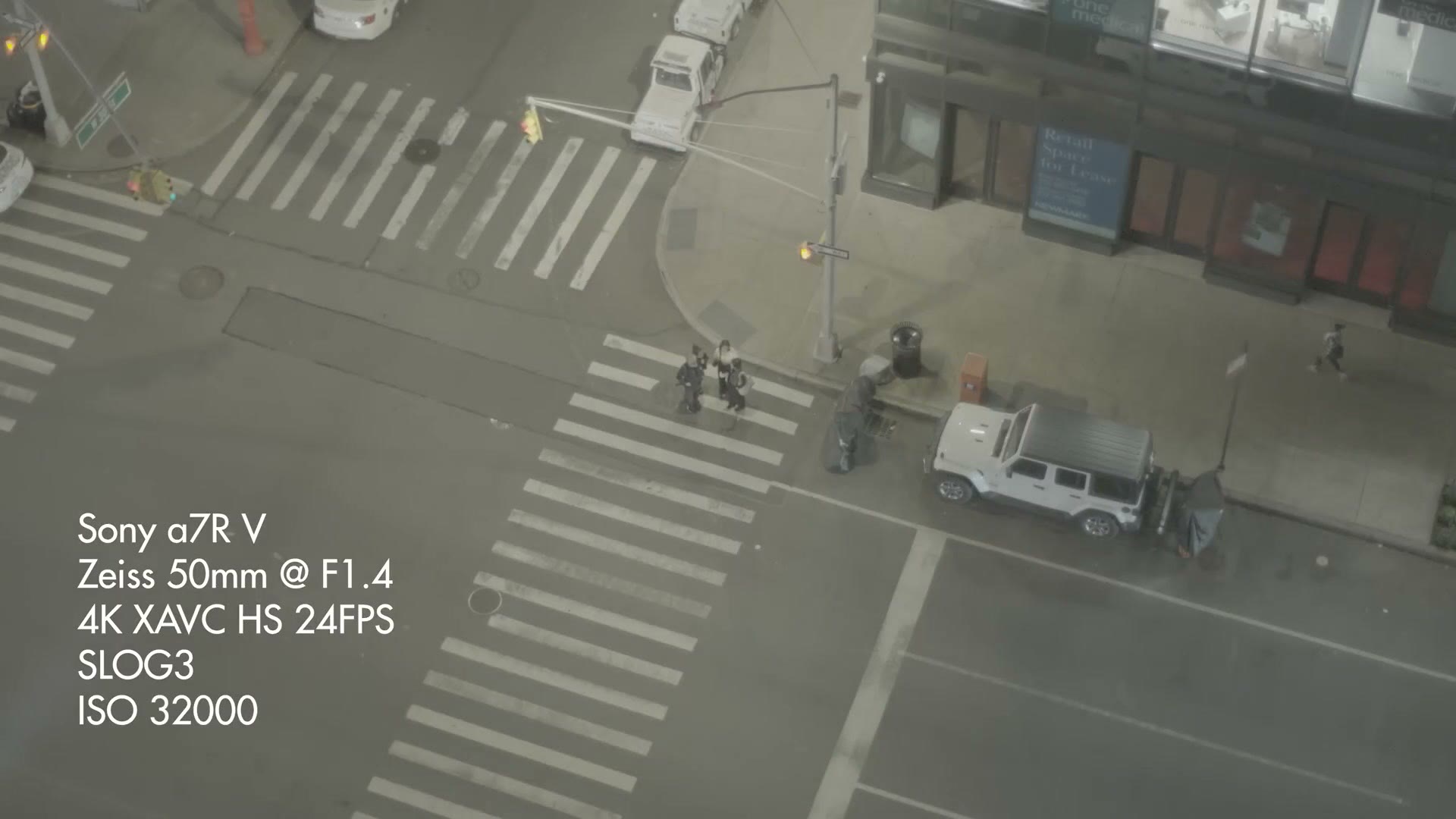
By all means, please bring lights to a wedding, or if you are a photographer, use your flash. But this is really impressive low light performance for a camera with such a high megapixel sensor, and I think it offers a lot of versatility regardless of the lighting scenario you find yourself in. Save for needing to film outside under a full moon where that is the only light you have got, in which case I would recommend the a7S III or FX3, I think you are going to be fine with the a7R V.
The Price vs The Competition
I think Sony has positioned the cost of this camera really well. At the time of making this video the a7R V costs $3,900, which is a fantastic value, especially whenever you compare it to their flagship a1, which comes in at $6,500.
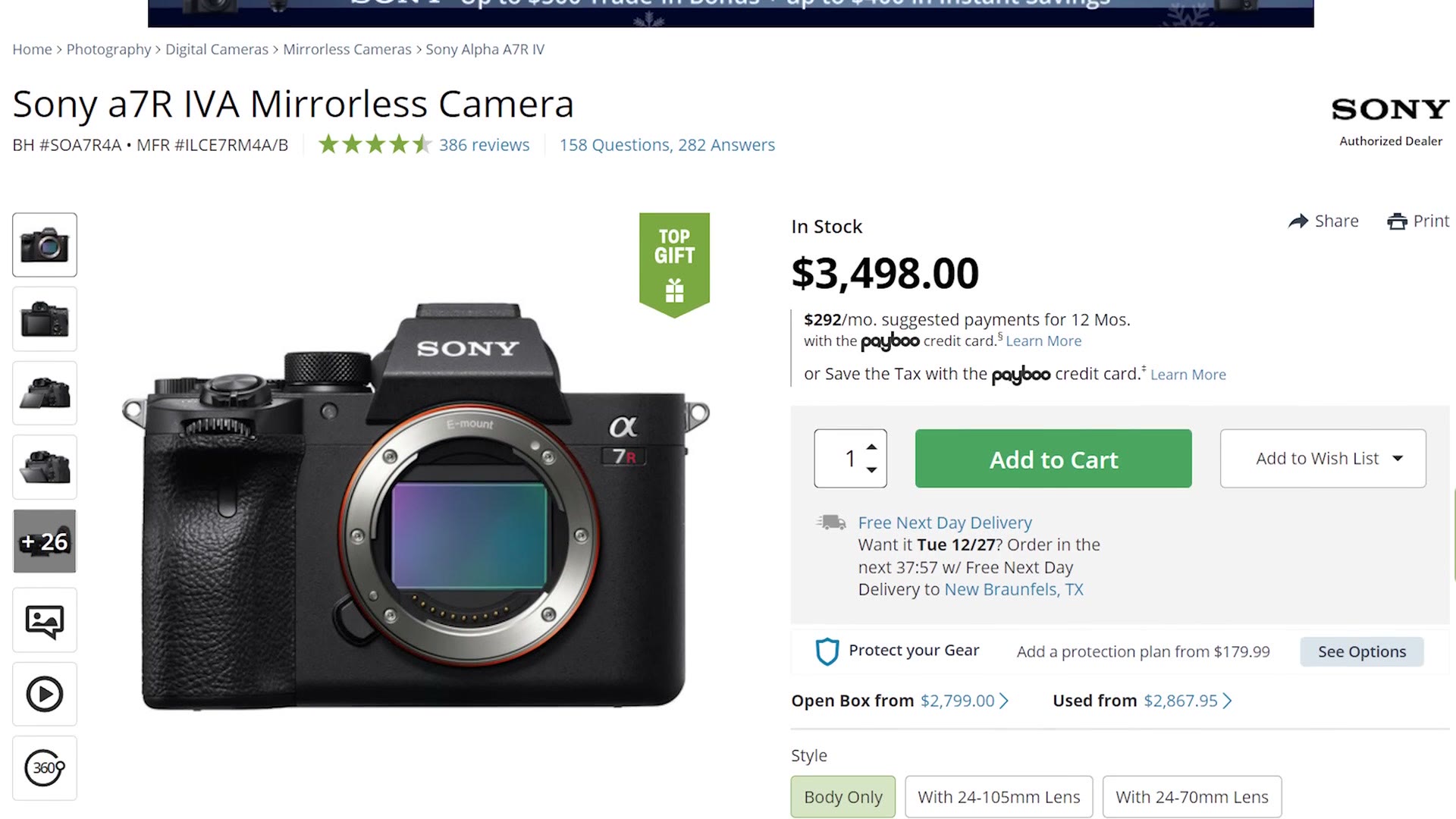
And if you consider that the predecessor to this camera, the a7R IV, cost only $400 less whenever it came out, a $400 price increase for the a7R V does not sound so bad.
Should You Buy The a7R V?
If you have the budget and you are considering buying the a1, I would pause and take a very close look at the a7R V, because aside from some of the more niche high end features the a1 offers, like faster photo frame rates and 4K at 120, the a7R V competes with it very well and honestly surpasses it in a lot of ways. You still get to film in 8K, but you get to do it in a better body that includes a dramatically improved screen that can flip around as well as tilt. You also get much better in body image stabilization and stunning autofocus performance that is significantly more accurate and can really help you take more photos and videos that are usable and properly in focus.
Like I said at the start, a lot of the photo features here are evolutionary, especially whenever you consider you are not getting a megapixel bump. But even so, it feels like this camera, with its faster processing, is much better able to take advantage of the megapixels it does have. Plus, when you look at it from a video standpoint, this is the first time Sony has put this level of video capability in a camera at this price point.
Let me make it simple for you. For the past year I have recommended that hybrid photographers and filmmakers who need a camera that can do both should buy the a7 IV, a camera that offers a lot of great features at a great price but still has a lot of compromises. Hello, cropped 4K 60. With the introduction of the a7R V, yes, you are spending more money. But if you are someone who wants a camera that can perform at an extremely high level for both photo and video, where you could take it out on a Saturday and photograph a wedding and then turn around on Sunday and film a wedding with the exact same camera, it is a no brainer to recommend you buy the a7R V.
You can buy the Sony a7R V at Amazon, B&H, Best Buy or Adorama.
Speaking of no brainers, if you are a wedding filmmaker I have put together a free guide called Level Up Your Wedding Films, and it is going to show you some of the biggest tips and techniques I have learned over the years to dramatically improve the quality of your wedding films. These are all practical things you can apply to your business pretty much immediately, and the guide is completely free.
Thanks so much for reading, and have a great day!