
Finally, a cool lens from Sony! This is the new 28-70mm f/2 GM, and after lenses that arguably didn’t set the world on fire, like the new 85mm 1.4 Mark II for example, which I know a lot of people were hoping would be something more attention grabbing like an f/1.2, Sony is finally throwing down the gauntlet at their competition from the likes of Canon and saying, hey, we can make a 28-70mm lens at f/2 as well, but ours is going to be smaller, dramatically lighter, sharper, and cheaper.
So if you are a Sony user that has been jealous of your Canon friends for having such a cool lens, well, now you have something even better. In this review I’m going to be looking at this magical new lens from the perspective of a wedding filmmaker, and telling you if it’s a good choice for you to purchase if you film weddings or corporate or commercial videos or documentaries.
And speaking of wedding filmmaking, if you want help booking your next wedding, I have a free workshop that’s going to show you how to book your next wedding in 30 days or less.
Also, for the sake of ethics, I want you to know this review is not paid or sponsored by Sony, and this lens is on loan from them and will sadly be returning to them pretty soon. Which is a bummer, because it’s really, really good.
The Size And Weight
What first struck me about this lens was the size and weight. At 918 grams, this 28-70 feels far closer in weight to something like Sony’s original 24-70 Mark I GM lens. This new 28-70 only weighs 32 grams more than that old 24-70, which is totally wild and shows you just how much work Sony has put into decreasing the size and weight here.

Let me have one more weight comparison. Remember how I mentioned at the start that this new 28-70 is dramatically lighter than Canon’s 28-70 option? I was not joking when I used the word dramatically. This new Sony is 36% lighter than the 28-70 from Canon. We’re talking 918 grams for the Sony versus 1,430 for the Canon, or 2.02 pounds for the Sony versus 3.15 for the Canon. Yes, Sony literally made this lens a pound lighter than what you get from Canon.
Let’s talk more about the size too. Let me preface by saying this is definitely a girthy lens, bigger around than many of Sony’s other options. You’re not gonna be able to get your hand all the way around it unless you have very large hands. But it’s not uncomfortably large to hold, and it’s only 92.9mm in width compared to Canon’s 28-70, which is 103.8mm. Sony says their 28-70 is 11% smaller overall. And if you want a good idea of the size, this lens has an 86mm filter thread on the front.
It Barely Extends When You Zoom
Whenever you look at the length, it’s about 20mm longer than Sony’s new 24-70 Mark II at the wide end. And then when you zoom it in and the lens extends, here’s where it gets even more surprising, because this lens barely extends. Look at it. It only gets about three fourths of an inch longer.
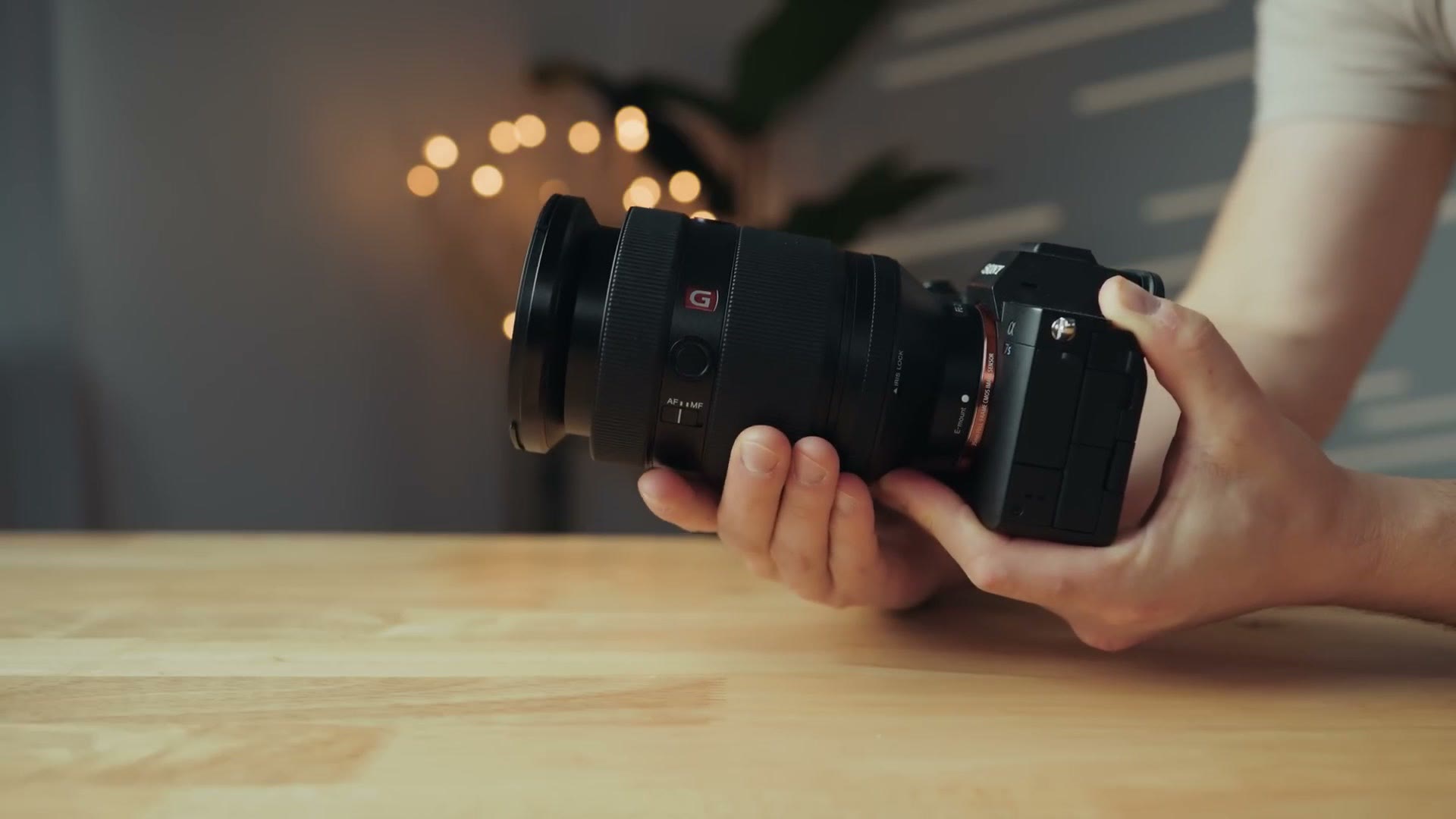
This is way less than how something like a 24-70 extends, and let me say too that the weight distribution shift whenever you zoom the lens in or out is incredibly minimal as well.
Why should you care about this? Well, if you’re a filmmaker and you commonly find yourself putting your camera on a gimbal like I do, you should be really excited about this, because it means you’re not going to have to rebalance your gimbal whenever you zoom in and out. You won’t even have to think about it once you initially balance the lens on the camera. It’s awesome.
The only way I could even feasibly think of this lens being improved is if Sony had opted to go for an internal zoom, where the lens itself never extended at all and only moved the glass internally. That seems like it would be relatively easy to do considering how short the extension is. But hey, I’m not an engineer in Japan making these things, and regardless, this is such a small weight shift that making it an internal zoom wouldn’t really make much of a difference in my opinion.
I want to reiterate again that this lens is an f/2. It’s starting to rival a lot of prime lenses in regard to how much light it can let in, and to let in that much light a lens usually needs a lot of glass, which is heavy, because glass is heavy. But Sony have pulled off some technological wizardry to use dramatically less glass and keep the weight and size down. It’s really impressive.
Versus The Sigma 28-45mm f/1.8
Talking more about the f/2 aperture now. Whenever I saw this lens I immediately thought back to a lens from Sigma that I had reviewed, their new 28-45mm f/1.8, which was a very impressive lens. But people had two complaints about it, the first being that it only had a zoom range of 17mm from wide, which is not that large, and that reduced the versatility of that Sigma.
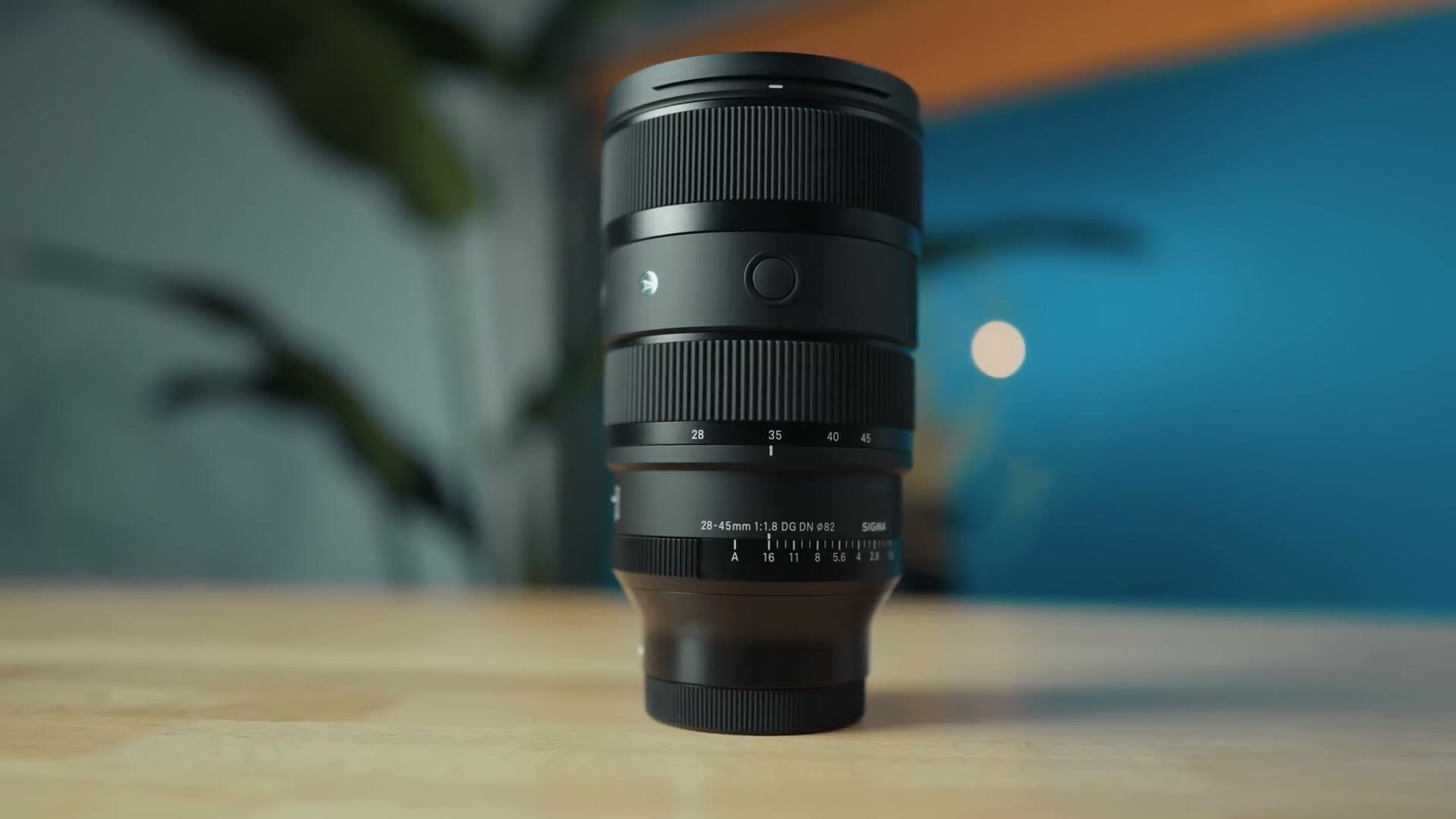
But here comes Sony with a lens that starts at the same width of 28mm but now gives you 42mm of zoom range, making it dramatically more versatile. Oh, and the Sony also weighs 32 grams less than the Sigma. To be clear, the Sigma is also an f/1.8 compared to the f/2, but I really don’t think you’re going to notice a difference between these two lenses, and most of the filmmakers I know would much rather have the extra zoom range versus an extra bit of light.
The 28mm Controversy
We do need to talk about the other controversy of that Sigma 28-45, though, and that’s a controversy this new Sony shares as well, because both of these lenses are 28mm on the wide end and I’ve heard many complaints from filmmakers saying that this is not wide enough in their opinion. Sprinkle in some added spice of rumors leading up to the launch saying that this new Sony would be a 24-70 f/2 and not a 28-70, and although I’m recording this review before the lens is released, I’m betting there are going to be some people that are upset it isn’t wider.
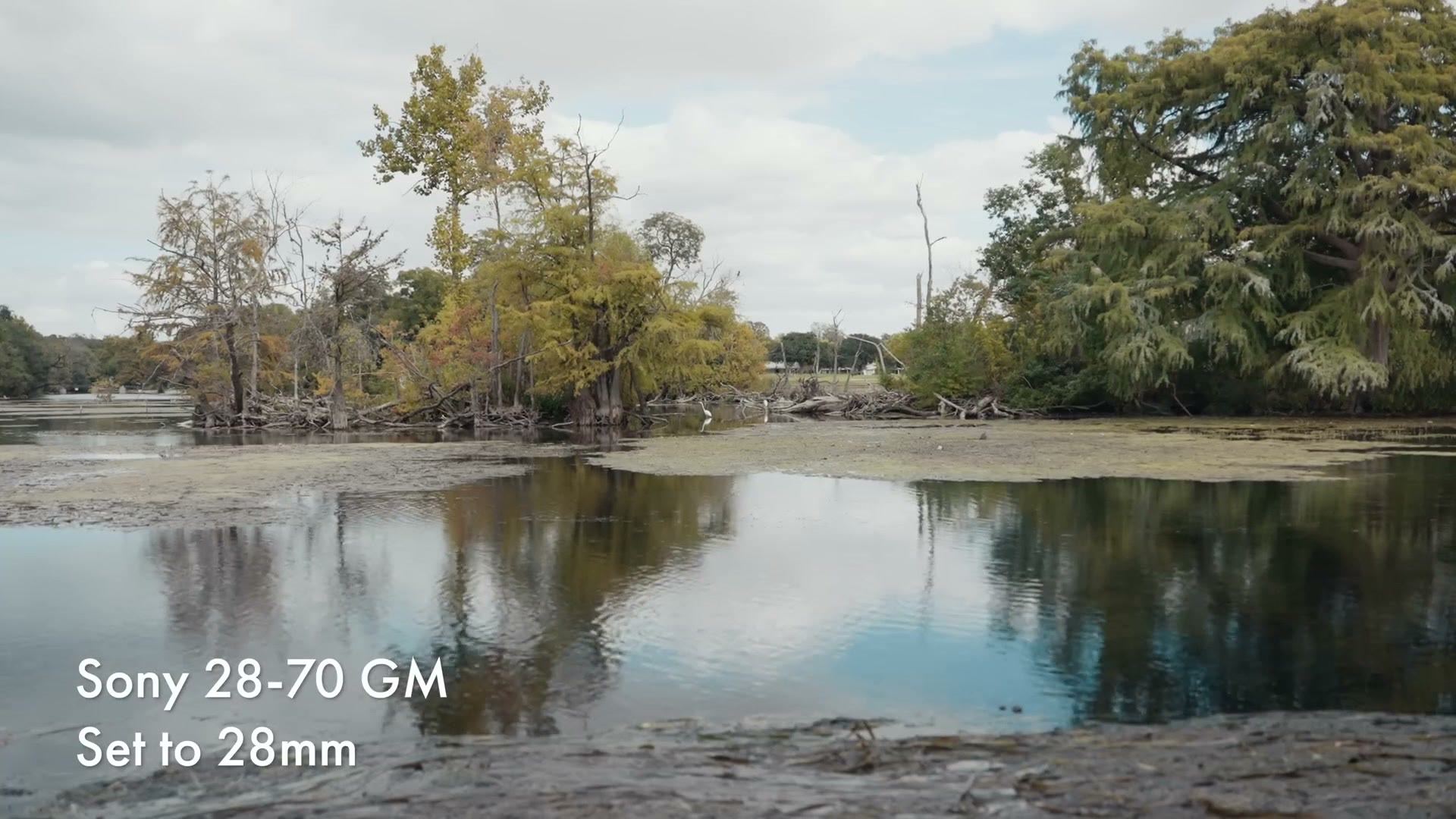
To that, I would say remember that rumors are just rumors, and while it’s fun to get excited about them, it’s also really easy to overhype a lens or a camera or any other product in your head before it’s officially released and we know the exact specs.
I do think that at some point we could see a 24-70 f/2 from one of these lens manufacturers. But considering how much tech and research it looks like Sony put into developing this 28-70 to make it as small and light as possible, I’m betting that adding those extra four millimeters on the wide end would make this lens significantly heavier, larger and more expensive, which Sony doesn’t like to do. They like creating smaller, lighter weight lenses when they can, and as someone that films weddings and carries a camera and lenses around all day, I do appreciate that.
So just like with my Sigma 28-45 review, I don’t think this lens only being 28mm instead of 24mm is a dealbreaker, and once you start to use it you’re not going to necessarily miss that extra width. But hey, that’s just my opinion. If you are at all concerned, please consider renting this lens before you pony up literally thousands of dollars for it.
Image Quality
All of these size and weight reductions wouldn’t matter if the lens didn’t create a high quality image, if it wasn’t sharp or had a lot of weird distortion or distracting lens flares. But I’m happy to tell you that this lens creates a very high quality image, and at f/2 the bokeh looks gorgeous, and you can definitely tell that you’re not using an f/2.8 lens.

All of the footage I filmed with this lens was incredibly sharp, the colors looked great, and it’s everything you would expect from a Sony GM lens. Unfortunately I don’t have a Canon camera and their 28-70 to do a direct comparison to, but Sony were pretty darn emphatic whenever they showed me this lens, telling me it was significantly sharper than the offering from Canon, especially in the corners of the image. Eventually I’m hoping to get my hands on one of those and do a comparison between the two lenses. That could be a lot of fun.
Autofocus And Focus Breathing
As you would expect from a modern Sony lens, autofocus and manual focus performance were superb as well, and considering how much glass is having to be moved around in this lens, I was really impressed by how fast and accurate the autofocus was. Sony has been targeting having all of their lenses be capable of autofocusing at 120 frames per second, and this one can do that too, which is great to see.
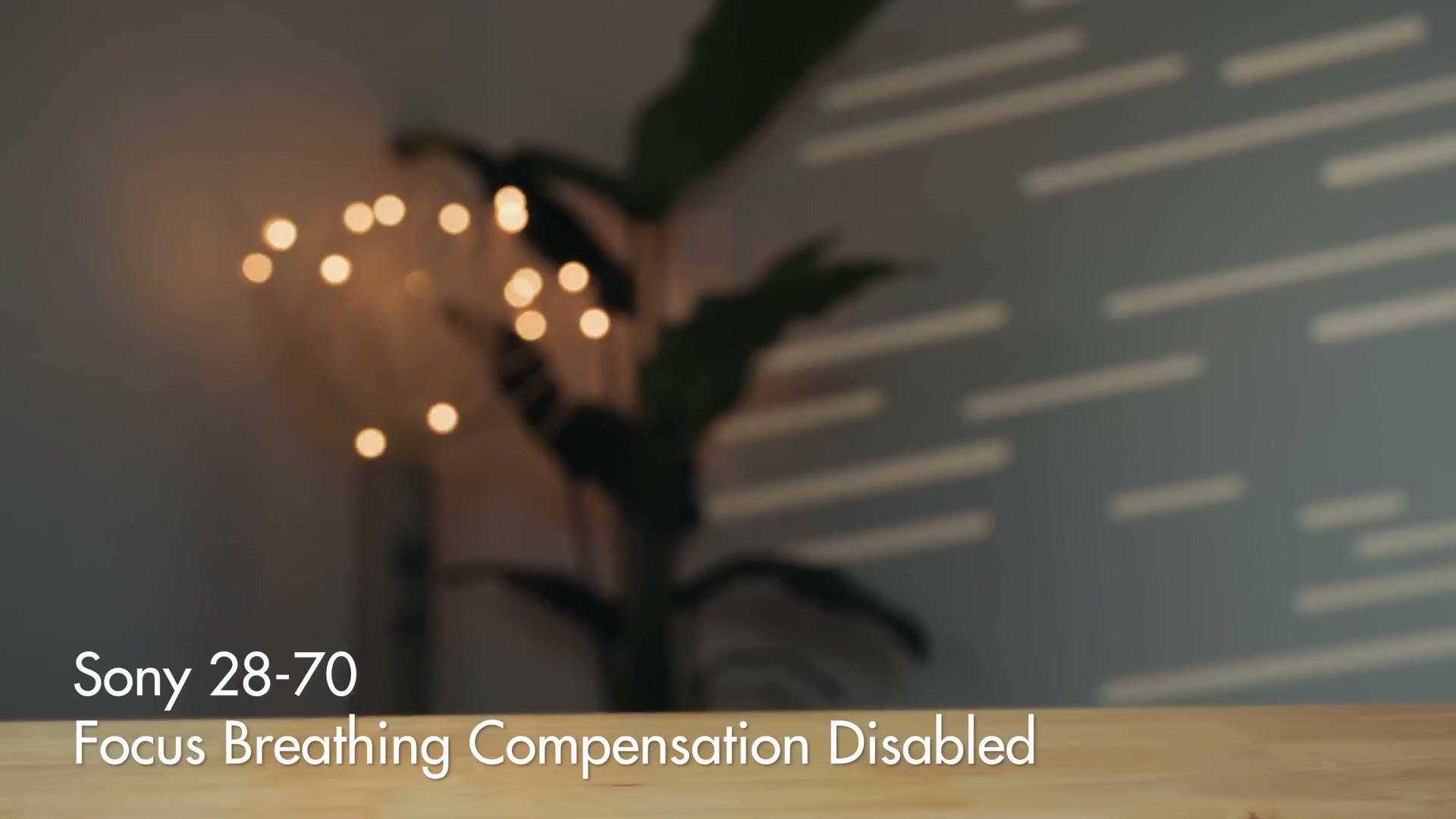
Whenever I tested focus breathing, I’m happy to tell you it was very minimal. And in addition, because this is a Sony lens, it also supports their focus breathing compensation feature, which is in pretty much all of their newer cameras at this point and essentially eliminates focus breathing with a very minimal crop. So you can just turn that on and not worry about it if you’re stressed at all about focus breathing.
The Controls
This is a modern GM lens, so it comes with all the features you would expect, including two programmable buttons on the front, an autofocus and manual focus switch, an aperture control ring with a switch to make it clickless, and another switch to lock the iris.
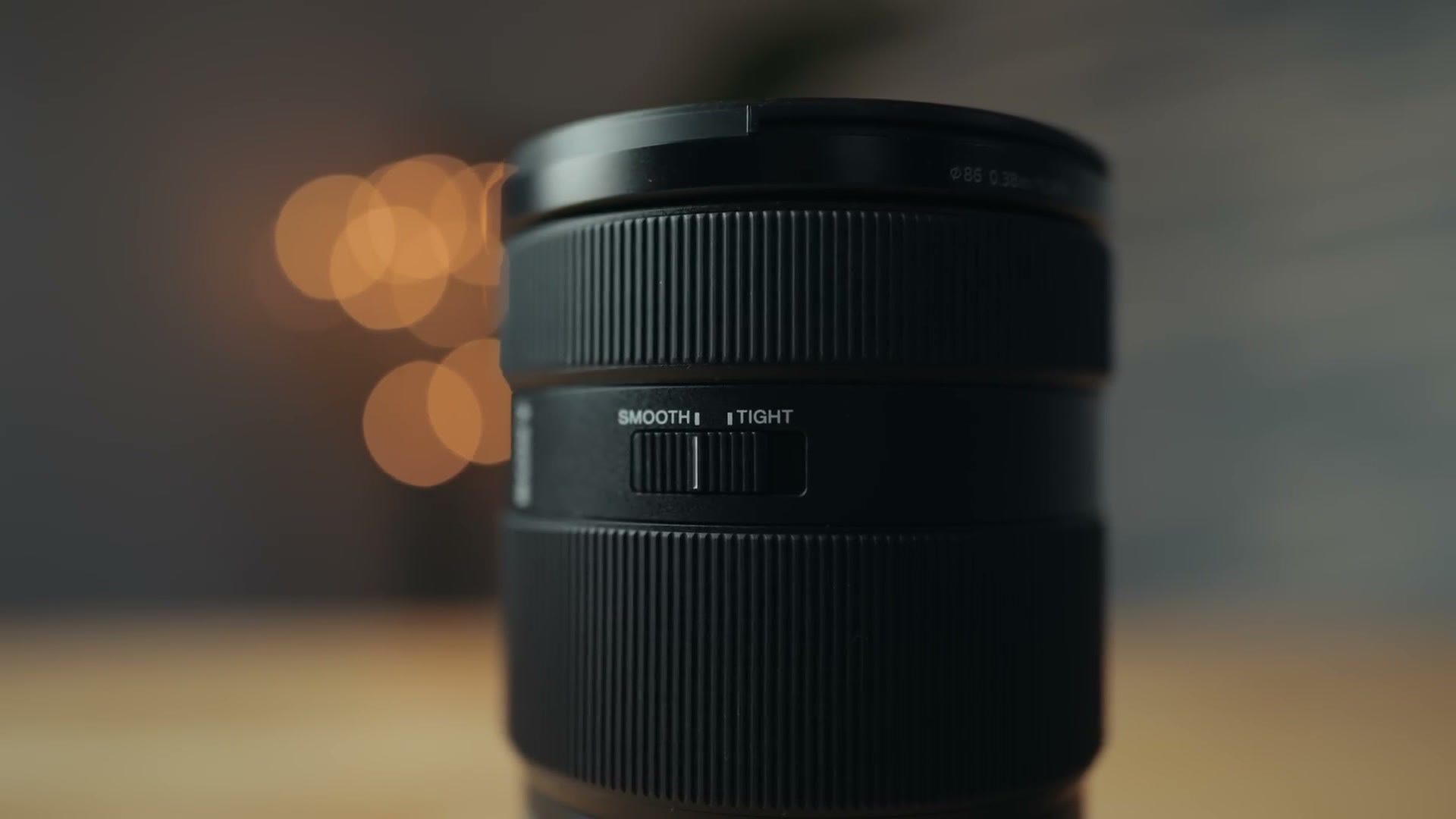
In addition, you have another switch up at the top that’s very cool, which lets you switch between having a smooth or a tight zoom ring, so depending on the type of zooms you’re trying to do and how precise you want to be, you can flip that switch to adjust it as well.
The Price
Sony has told me they’re targeting a price of $2,800 for this lens, which is definitely a healthy chunk of change. But whenever you consider that Canon’s 28-70 lists at $3,099, suddenly Sony starts to look pretty competitive. Worth knowing that Canon does discount theirs, and it was down to $2,799 whenever I recorded this, so shop around before you buy either one.

And that’s really what I feel like the entire creation of Sony’s 28-70 has been about. Competition. Sony looked at what Canon had made with their 28-70 and said, give us a few years and we can make a lens that is a pound lighter, 11% smaller, sharper, and less expensive. People with Sony cameras don’t have to be jealous of Canon having this lens anymore. Maybe now it’s time for Canon users to be jealous of Sony.
Should You Buy It?
In my opinion, if you’re looking for an all in one lens that does a lot of things well, but a 24-70 f/2.8 is a little boring for you, let’s say, then this 28-70 at f/2 is far more exciting. And if I was looking for a lens that could film a wedding and still perform very well even at a very dark wedding reception, this is where I start to think this lens really shines as an all in one option you could keep on your camera literally all day.
If you can envision yourself doing that and using this lens the vast majority of the time, that’s when I start to think the high price is completely worth it.
While you’re here, I would love for you to check out my free Wedding Filmmaker Gear Guide. It’s going to show you all of the equipment you need to purchase to film a wedding, and it’s going to help save you from wasting money on gear you don’t need. You can download it completely for free.
Thanks so much for reading, and have a great day!