
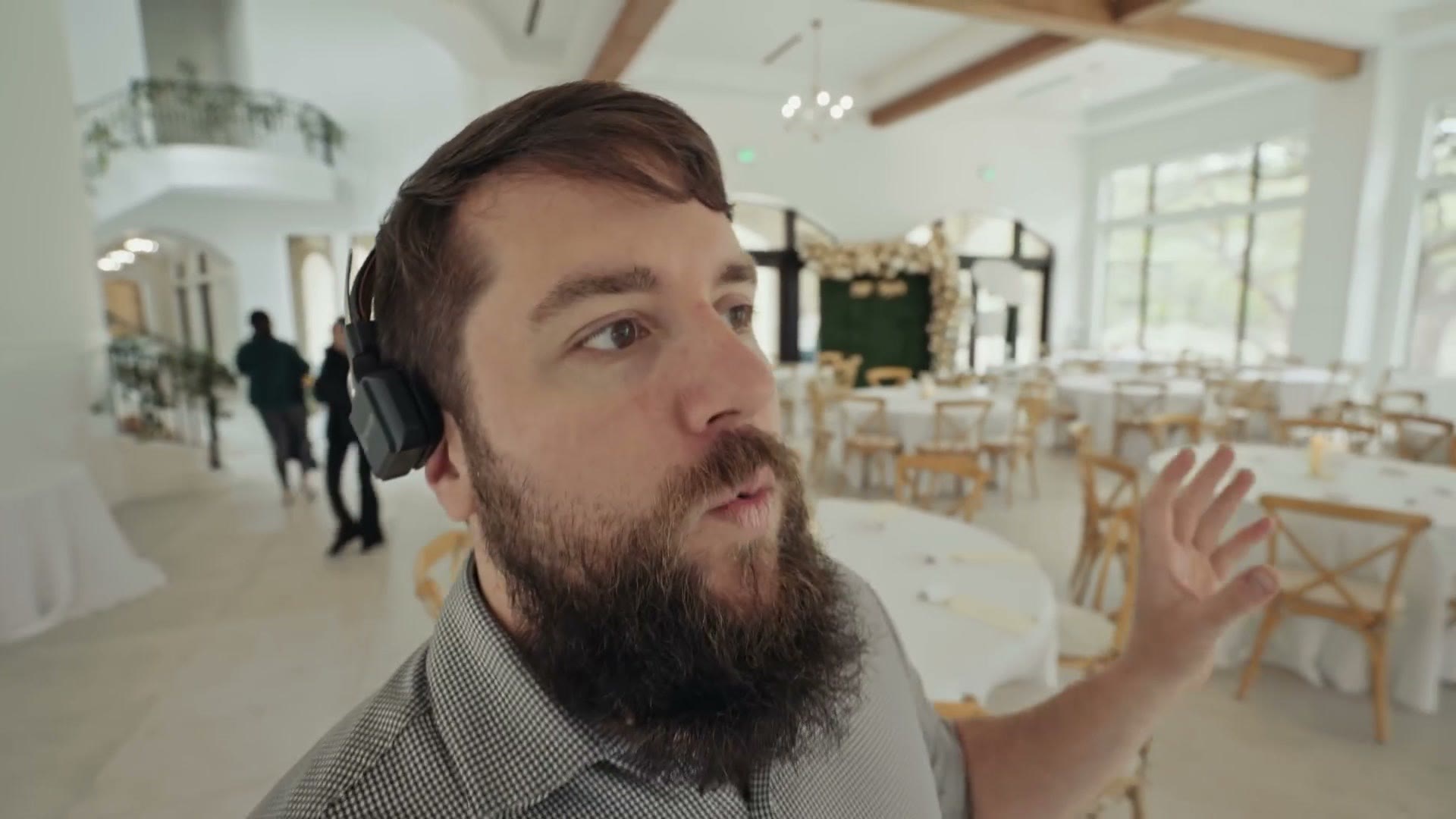
Today I’m taking you behind the scenes and showing you how to film a reality TV style wedding. And you’re probably wondering what the heck that is. Things get even crazier, because this isn’t my wedding. I have not been hired to film it. Instead we are following along with Justin Porter Media, and I’m going to show you how he films a reality TV style wedding.
The first thing you need to know about Justin is that he does everything differently than most other wedding filmmakers. He goes bigger. Put it that way.
The Van
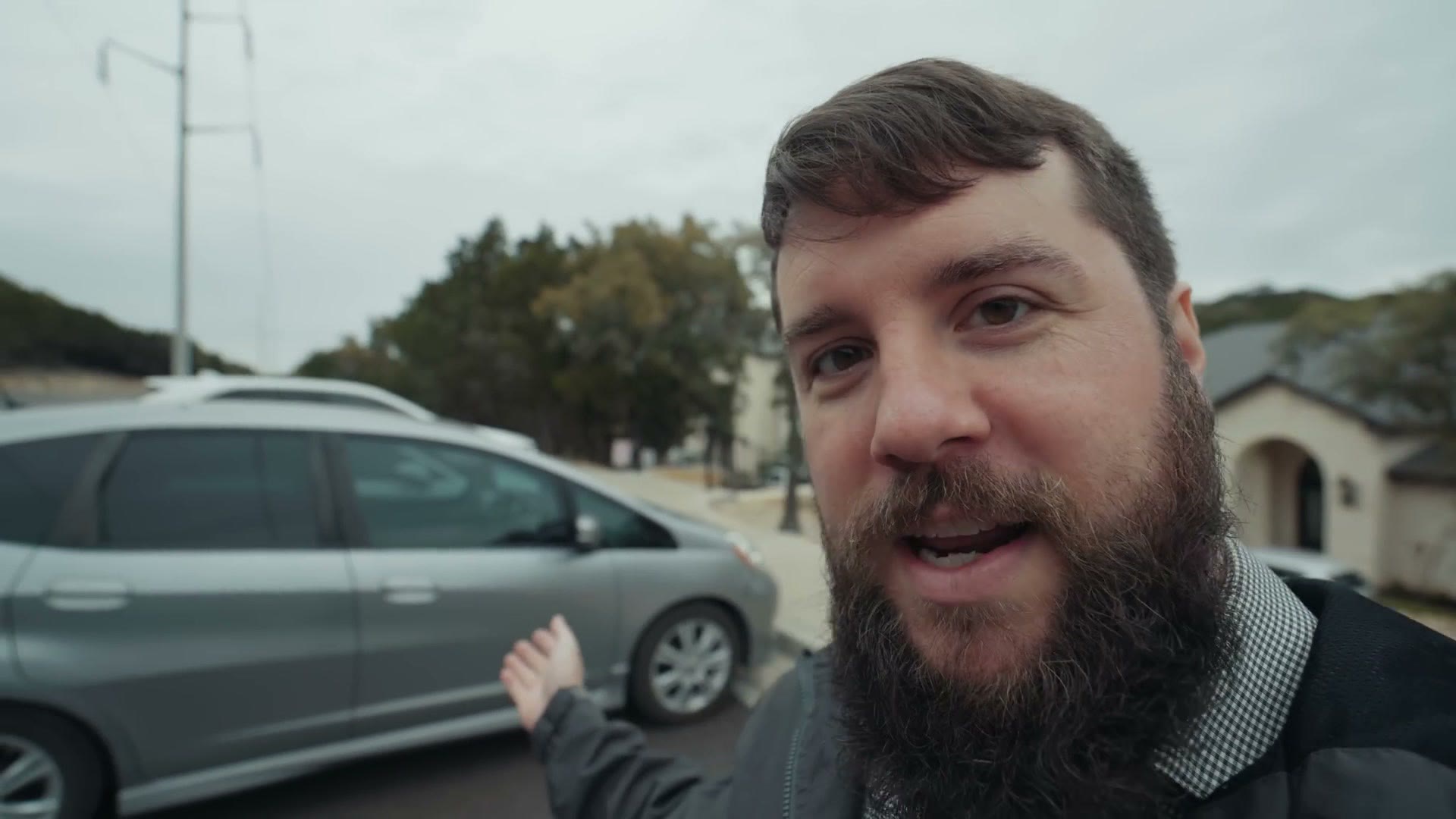
Case in point. Here’s my car, a little tiny Honda I drove here in. And here’s what Justin shows up in.
Look at the amount of gear this man brings to a wedding. And it’s not just the gear. It’s the cameras he’s using, it’s the number of people he brings, it’s everything.
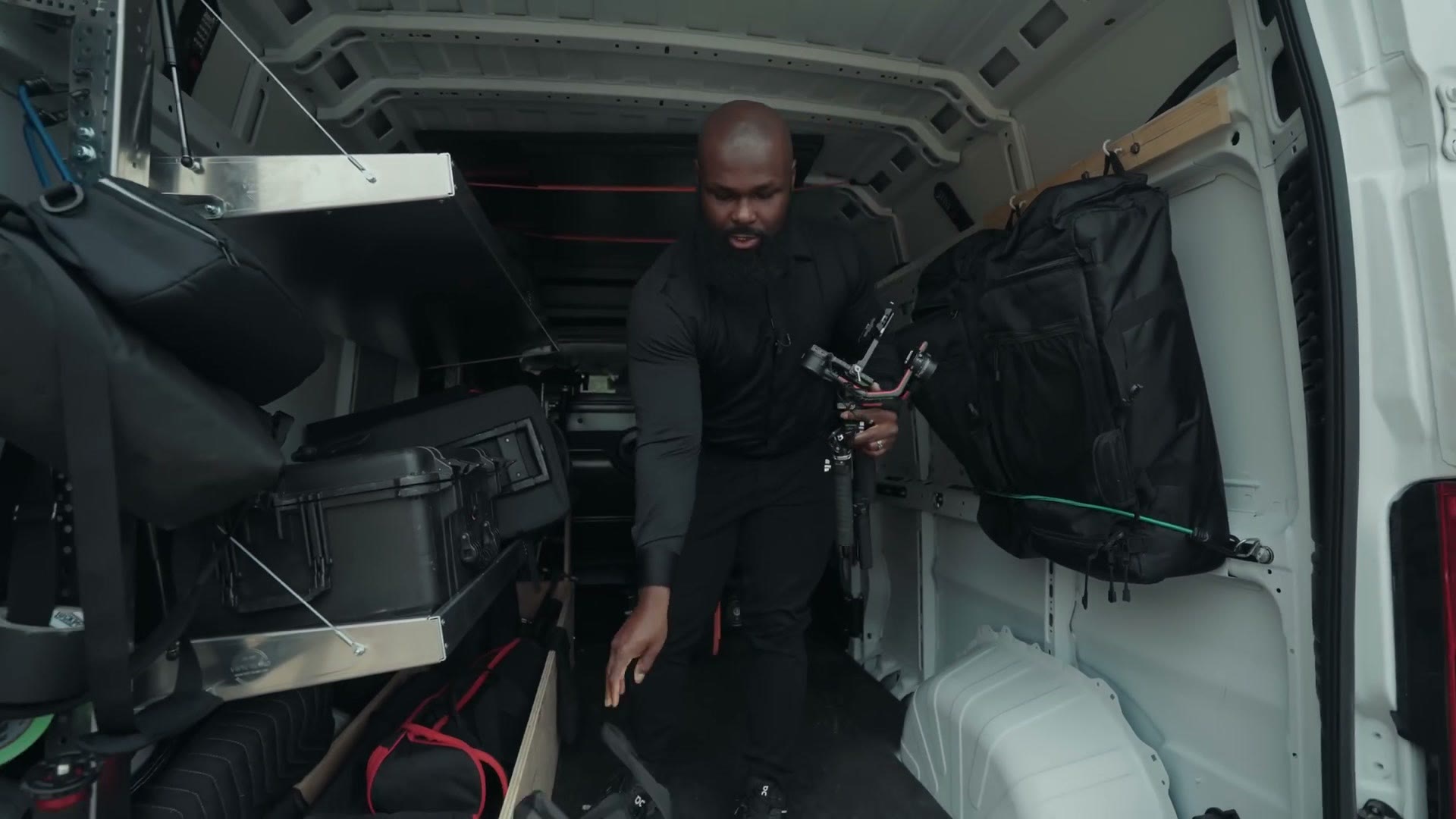
He’ll admit the load in and pack up is the worst part of it. In his words, some days he wishes he just had a gimbal and an a7S III and that was that. But then he starts editing and thinks, nah, forget it, I need all of it.
In the van: 20 uplights, all of his light stands, the flat base stands, a Blackmagic Pocket 6K Pro, a drone that isn’t coming out today, a second gimbal, a DJI RS2 he uses for overheads, an RS3 Pro on a ring grip, and a pile of V-mount batteries, because Blackmagic cameras drink through them. Heads up: the Blackmagic Pocket Cinema Camera 6K Pro link goes to the newer Blackmagic Pocket Cinema Camera 6K G2. Heads up: the DJI RS 2 link goes to the newer DJI RS 4 Pro. Plus headsets for everybody, which I made very sure included me.
Timecode Before Anything Else
The first thing Justin does on arrival is jam sync timecode into all of his audio recorders, all of them at once, so that if he needs another one later in the day he doesn’t have to re-jam. It’s ready to roll.
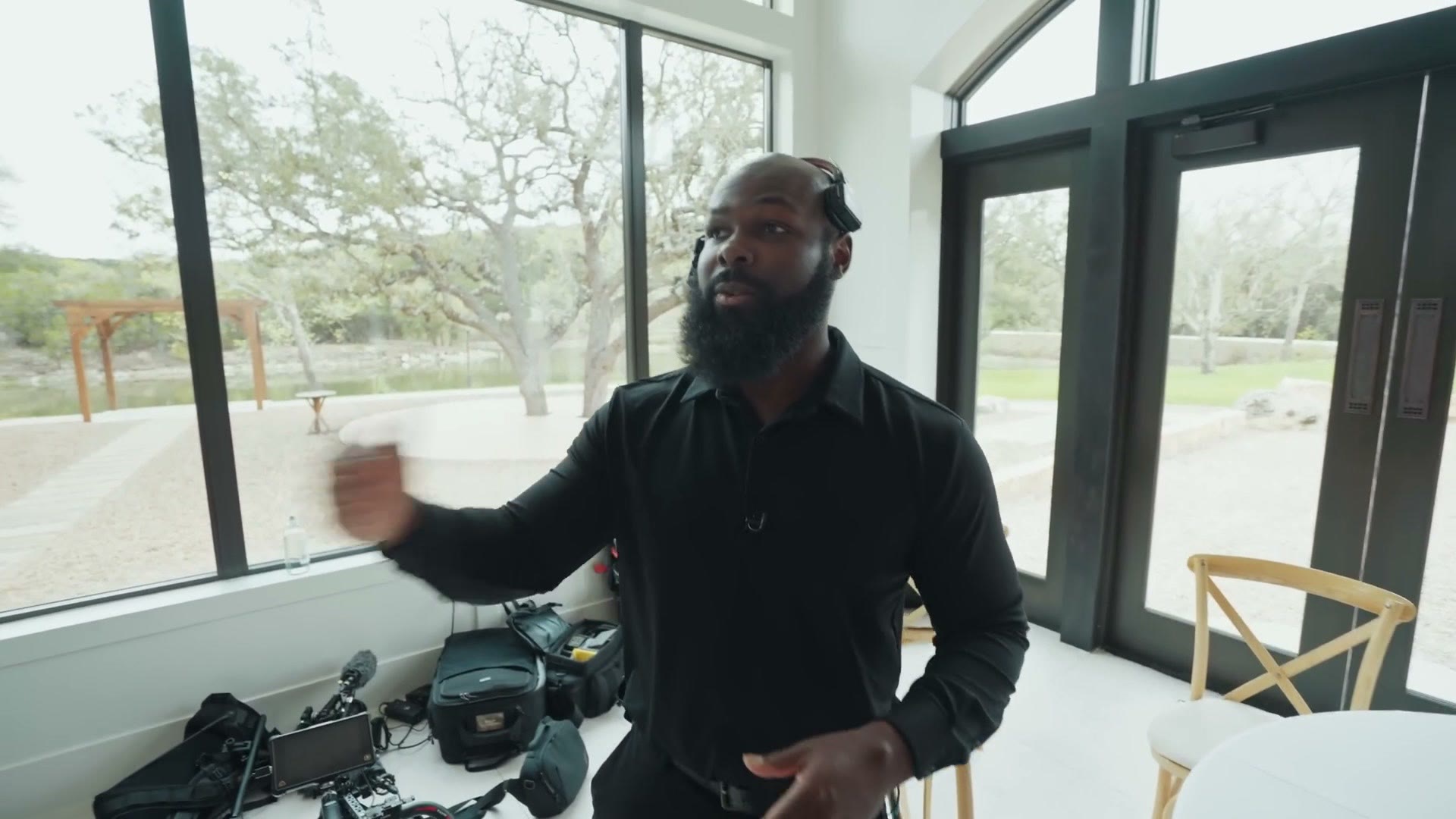
He also showed me something I didn’t know his recorders could do. In the settings you can switch one out of record only mode and into TC Box mode, which turns the recorder itself into a timecode generator. Jam it once from your master box, unplug it, and now that recorder can jam sync a camera or another recorder. He was out of dedicated timecode boxes because he was running four cameras, so he just made another one. Everything is running at 23.976.
The Cameras
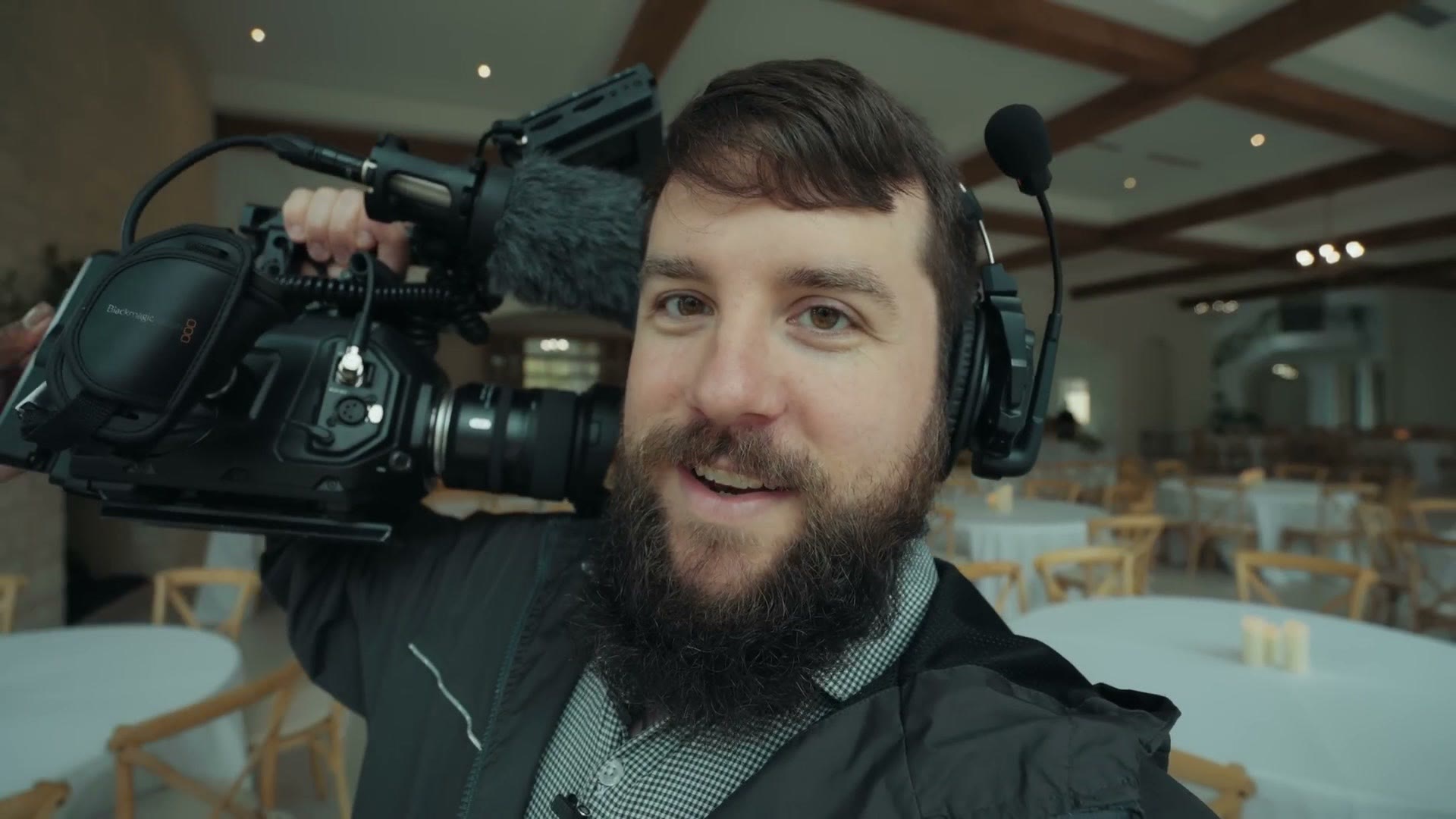
I film with an a7S III because I’m always trying to go as lightweight as possible. And then there’s Justin’s rig, which is a Blackmagic Ursa Mini Pro 4.6K G2 with a Blackmagic Video Assist 12G seven inch monitor, a Tamron 24-70mm f/2.8 and a Rode NTG3 shotgun mic, all on an Easyrig. Heads up: this link goes to the newer Blackmagic Pyxis 6K. Don’t skip arm day.
Two Pocket 6K Pros handle the ceremony. And the gimbal camera isn’t a Blackmagic at all, it’s a Panasonic S5. Heads up: this link goes to the newer Panasonic S5 II. He switched to it for one reason, longer battery life. That’s the only thing he was looking for out of a gimbal camera. I love that this guy is mixing camera brands and models and manufacturers and it just does not bother him at all.
Everything Gets Set Up Before It’s Needed
It’s 11:30 in the morning and Justin already has a ceremony camera built and standing in position. His reasoning is that he does so much story chasing that they’re often filming right up until the last minute and then have to run in and start shooting the processional. So if the cameras are already in place, and the reception lights are already in place, he doesn’t have to worry about setting up later.
“The whole name of the game is keeping the camera in your hand so you don’t miss a moment.”
That’s a really good mentality. Whenever I first started filming weddings I missed so many moments because my camera would be down at my side or set on a table. You have to be aware of where your camera is at all times, and that’s how you get the moments.
He Lights The Entire Reception
Justin isn’t just filming this wedding, he’s lighting it. And I don’t mean lighting it in the sense of putting up one light for the reception like most of us. I mean he is lighting the reception.
Look down at the bases of those stands. Those are umbrella stands, the kind you’d buy at Home Depot for a really big backyard umbrella, and he’s dropping his light stands into them. He ends up with an ultra compact, very small footprint stand that is extremely hard to tip over because it’s so heavy. He does the same thing with C-stand bases so he can take a light outside if he needs to.
His reason for lighting all of it is straightforward. He needs the quality of the evening shots to match the daytime shots. You get all these beautiful shots of the bride in her dress outside and everything looks amazing, and then the reception comes and, in his words, “we use Blackmagic so we can’t go to unlimited ISO like some people. So 3200 max, and that’s it. Anything past that you’re literally treading on thin ice.” So he lights everything, and it also gives it a more filmic look.
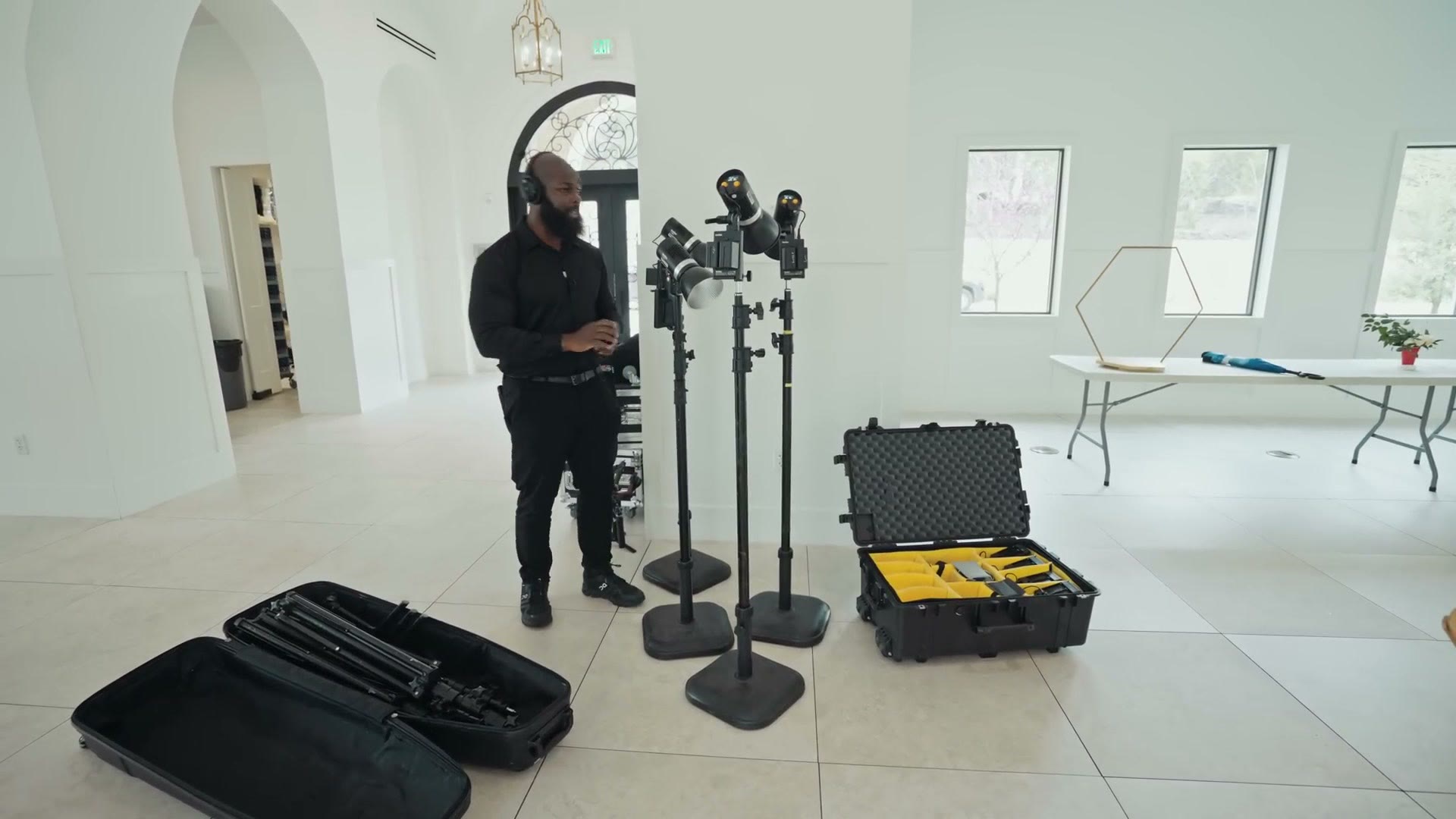
Four lights go up, one shining at each corner of the dance floor, which floods it and minimizes shadows, and the spill acts as a key light on the guests so he can get reaction shots. Determining the pitch is trial and error. Angle too far up and you get nothing but wash in the light and the camera, angle it down and you lose the throw. And the height he’s getting off those stands is something like 15 feet. Stupid tall. Way taller than you’d normally get out of an eight or even a ten foot stand.
The lights themselves are Godox SL60s, and Justin was quick to say he no longer recommends them. He’d point you at the Amaran 60x instead, because the app is ten times better and they’re cheaper. Heads up: this link goes to the newer amaran COB 60xS. Those just didn’t exist whenever he invested in this kit.
Then there are the 20 uplights, which are DJ uplights he controls over Bluetooth from an iPad app. This is where I really started to get it. A lot of what Justin is doing is about control. When you show up to a wedding you normally have no idea what the DJ’s uplighting is going to be. Is it going to be cheap? Is it going to be green, or bright purple, and make everyone’s skin tones look like Smurfs? Justin doesn’t have that problem, because he owns the uplighting.
He’s picking colors off the couple’s own wedding palette rather than defaulting to something that just flatters skin tones, and he has opinions. “I hate candlelight. It’s a boring color. I think it looks good to our eyes but on camera it looks very, very boring.” What he’s going for instead, and I quote, is a grown and sexy lounge. You heard it here first.
Twelve Microphones
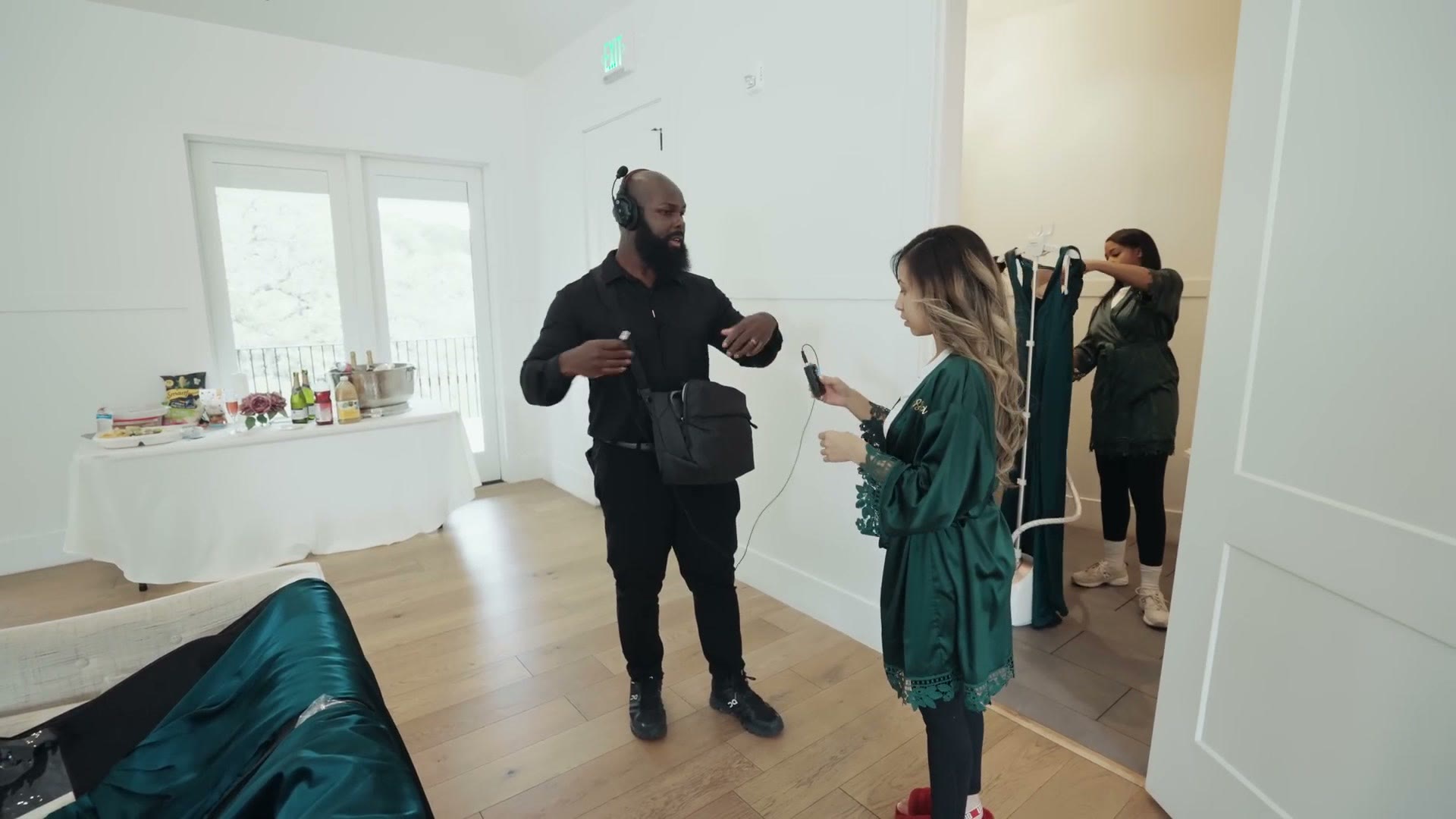
Justin mics the bridal party. Not the bride and groom and officiant. The bridal party. Twelve microphones on this one wedding.
And it’s not quick. He’s running cable through the inside of the bridesmaids’ bras so the mics stay put after they change into their ceremony outfits, working around the chains the groomsmen are wearing, and keeping every mic numbered in a document on his phone so he knows which mic was on which person whenever it comes time to edit. It took about 30 minutes of nonstop miking, and it’s exactly why he keeps his best mics for the bride, groom and officiant.
Audio is king. You have to have good audio for your wedding film because that’s how the story gets told. Justin just takes it to a level I hadn’t seen before. Most of us say audio is important and mic three people. He mics everybody.
The Interviews Are The Backbone
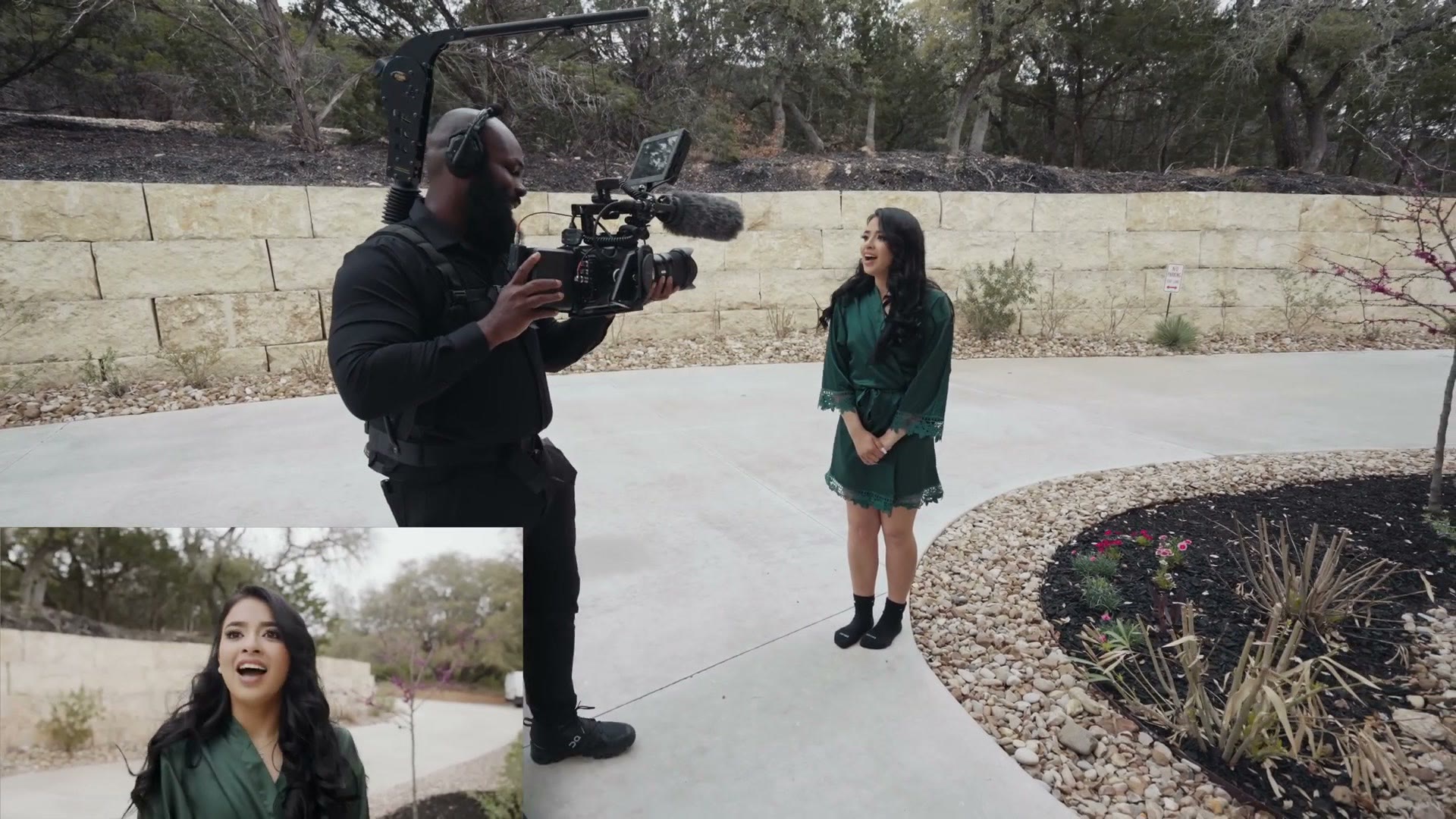
This is the part I found most fascinating from a storytelling standpoint. Justin isn’t relying on the bride or groom reading a letter, or on a single sit down interview. He’s talking to the groom and asking how he met the bride, and the groom says, well, actually I told her on our first date that I was going to marry her. Justin files that away. Then whenever he gets to the bride he says, hey, by the way, the groom mentioned that he knew he was going to marry you the first time you went on a date. And suddenly she’s telling that story from her side, and then she’s pulling in a bridesmaid, and it’s all connected together.
He also keeps the energy up. He catches people while they’re doing something rather than sitting them down, and by an hour in the bridesmaids were saying “interview me, interview me.” They were into it. That is not an accident, it’s the product of him spending the entire morning making everyone comfortable with him being there.
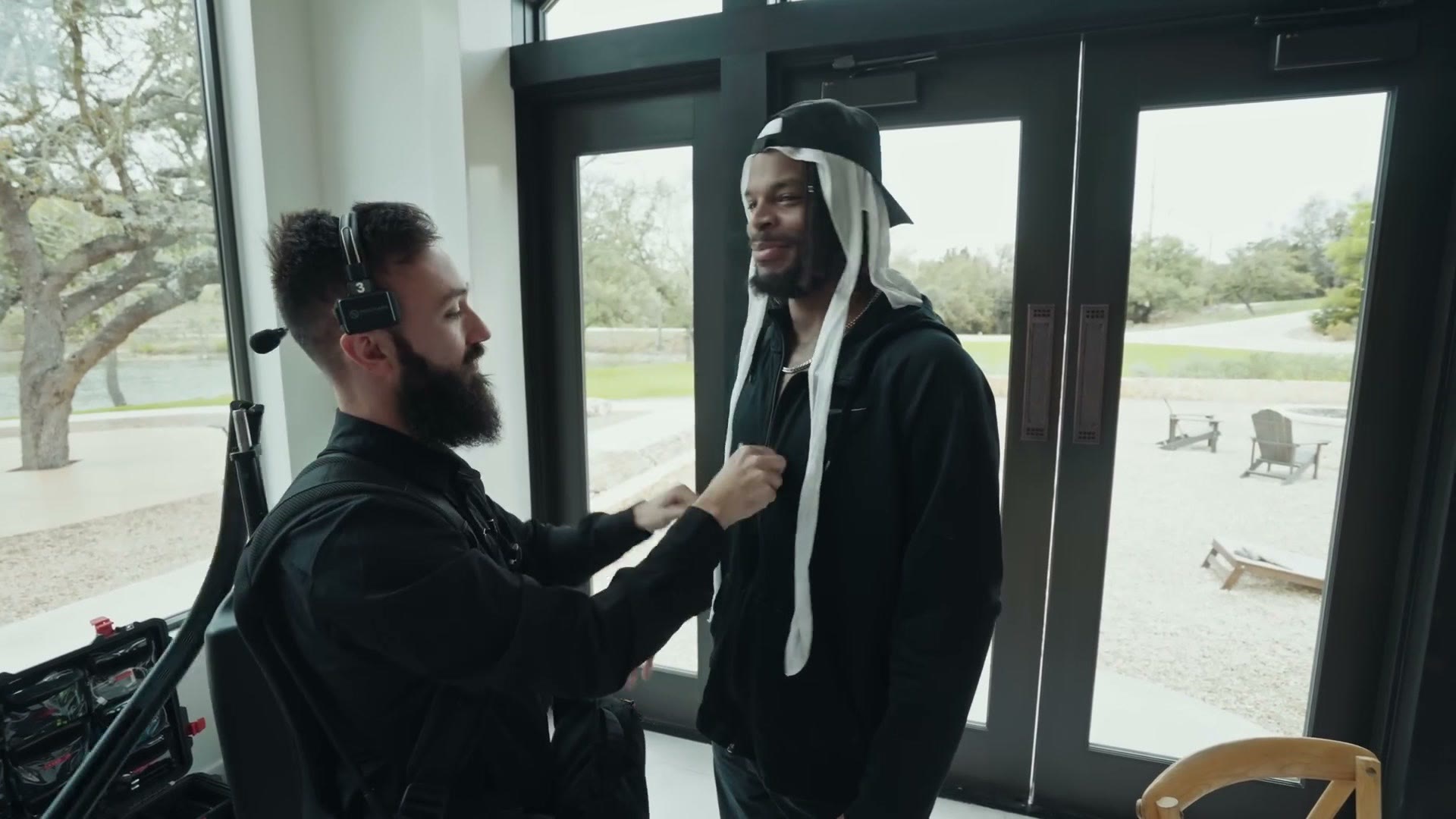
When a problem came up, and Robbie’s interviews upstairs were losing energy the moment the bridesmaids got pulled into a quiet room, Justin’s fix was information. He grabbed the groom, asked about how they met and got engaged, and fed it straight to Robbie through the headsets so Robbie had something to open them up with.
How He Uses A Second Shooter
The dynamic between Justin and his second shooters really started to click for me partway through the morning. Justin is building the core of the story. He’s doing the interviews, pushing people, asking the questions, keeping track of all the story threads. His second shooters are doing all of the B-roll.
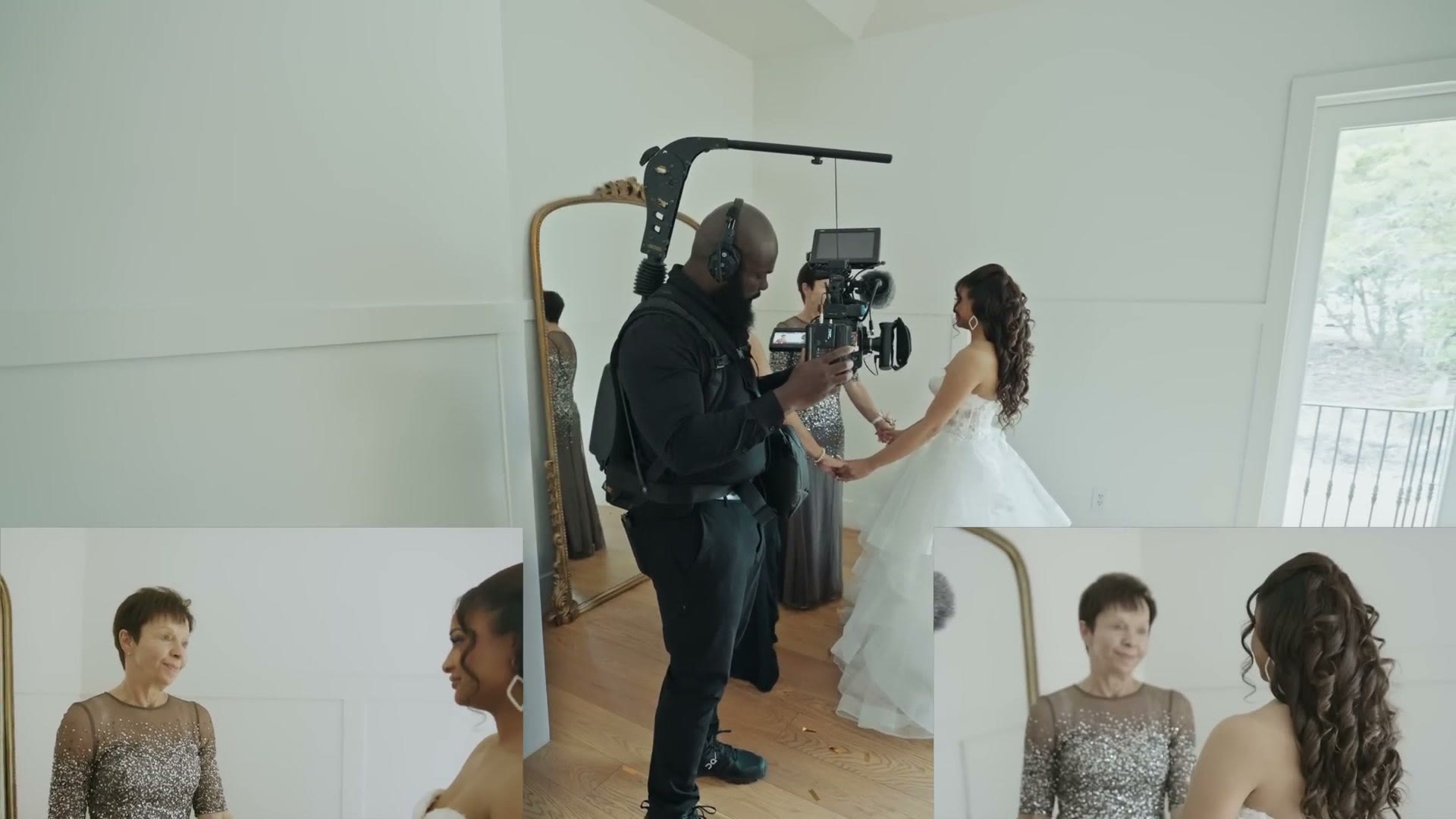
Something else I noticed watching Robbie work is that he shoots much longer takes than I would. I’m typically shooting ten second clips, max. Robbie stays on a clip and stays on it, and the benefit is that whenever one of those big moments happens, he already has the soundbite rolling.
And the Hollyland headsets, which I honestly wasn’t sold on before this day, turned out to be the thing that makes it all work. Justin and Robbie coordinating shots by whispering to each other across a room is so, so powerful. Unless you have a second shooter who really knows your style, having that channel open changes everything.
The Ceremony
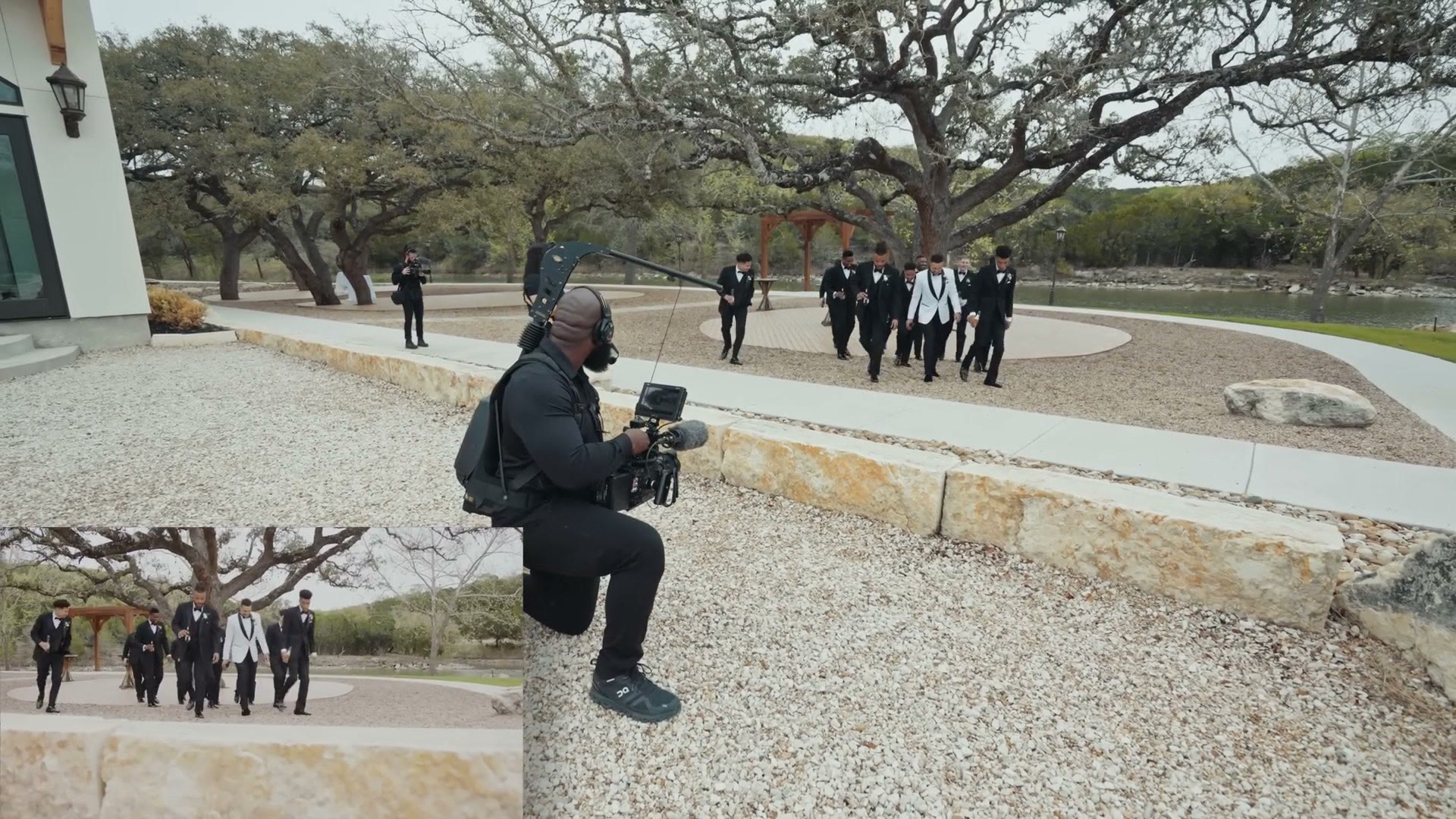
Two Pocket 6K Pros for the ceremony plus the gimbal, and a pro tip I already do myself: he puts his tripod down early to reserve his spot, ideally next to something so people have to walk around it.
The father of the groom was officiating, his ninth wedding officiated and the first for one of his own sons, and Justin had already talked to him beforehand and encouraged him to say something personal during the ceremony. That is the kind of thing that separates a good wedding film from a great one, and it happened hours before anyone hit record.
The biggest thing that stood out to me watching him film the ceremony, though, was his pure lack of fear about getting the shot. He is not afraid to move across the stage. He is not afraid to stand next to the groom to make sure you see the bride come down the aisle. At one point during the unity candle he walked up to the bridesmaids and asked them to scoot back a little because he needed the angle. Ballsy move from my boy here.
Cocktail Hour And Portraits
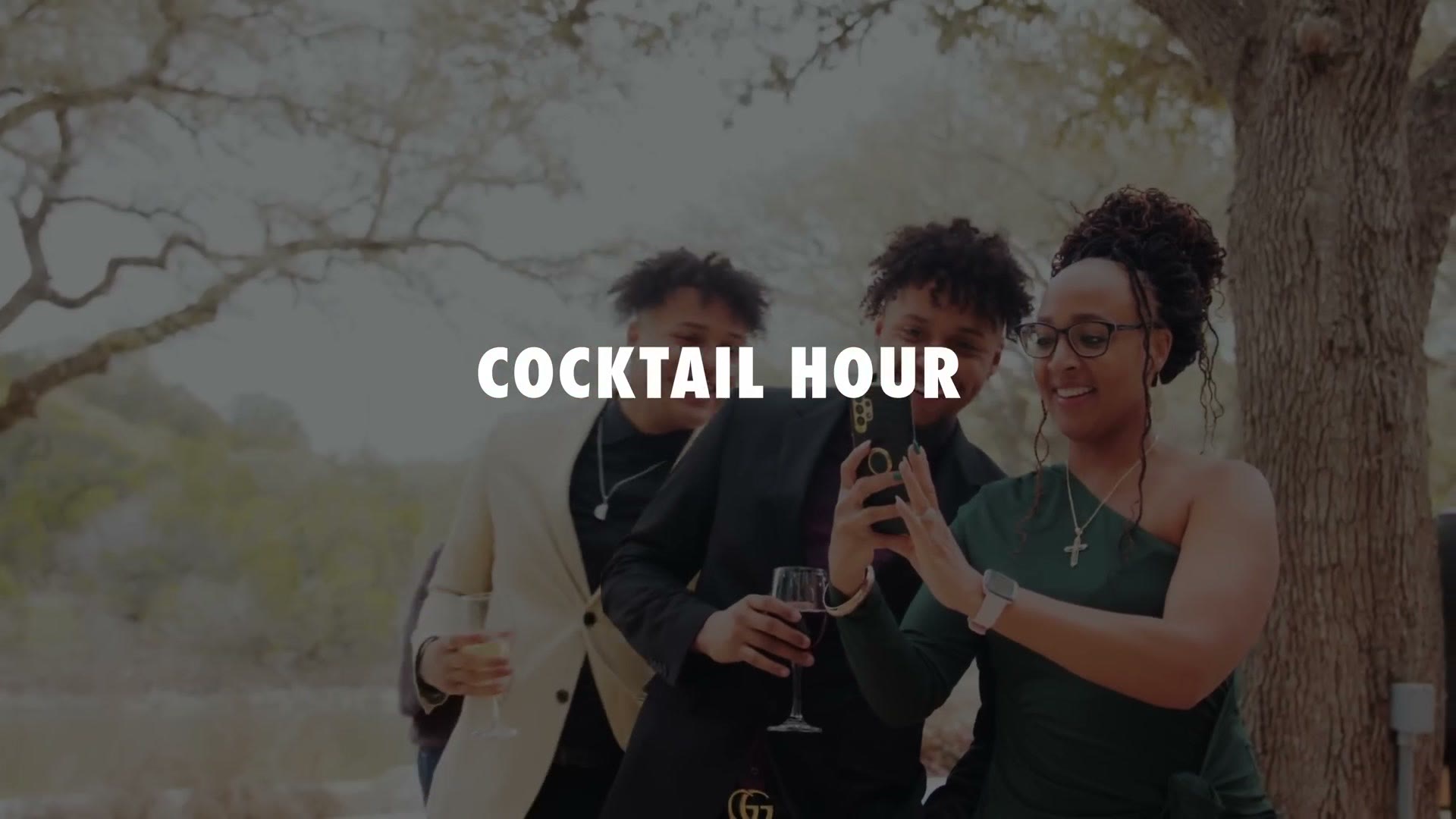
The ceremony ends and this guy is immediately back in interview mode, running around cocktail hour asking everyone how they feel about the wedding and what they’d tell the couple, collecting soundbites the whole time.
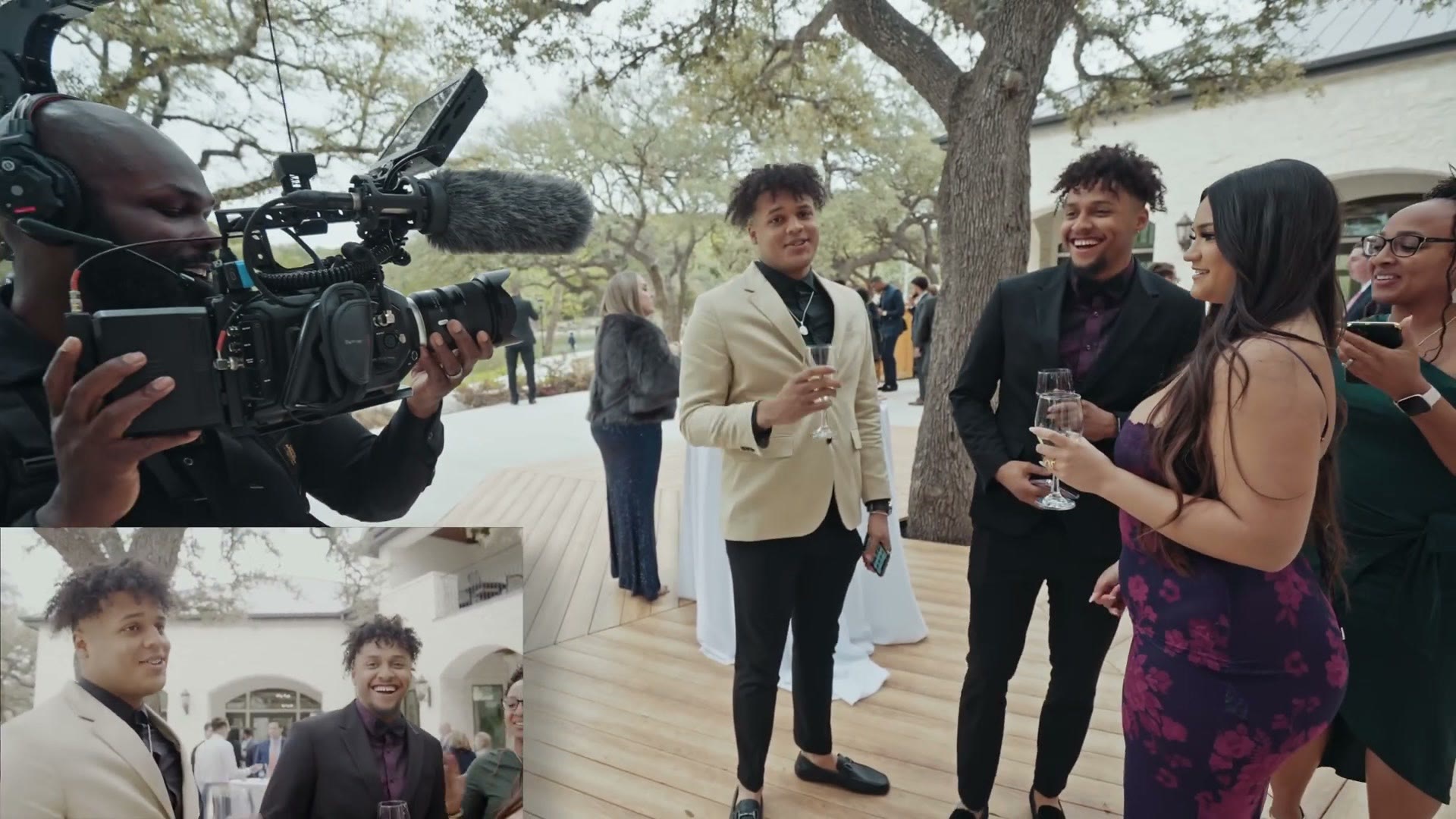
His couple portraits philosophy is the complete opposite of mine, and I found that genuinely useful to see. He waits for the photographer’s pose, gets his shot, makes them kiss, and moves on. Meanwhile I’m over here with six locations planned and 45 minutes to an hour blocked out with the couple. He also doesn’t go under the veil. He helps the photographer get their shot and then goes and gets a different one.
Speaking of which, The Road To Reality is worth a look too.
One more feature he showed me on the gimbal that I didn’t know I needed: he can double tap a button to lock the gimbal, which turns it into a handheld stabilized rig like an Easyrig, then double click again to unlock it whenever he wants something cinematic. His hands never have to leave the ring grip.
The Reception
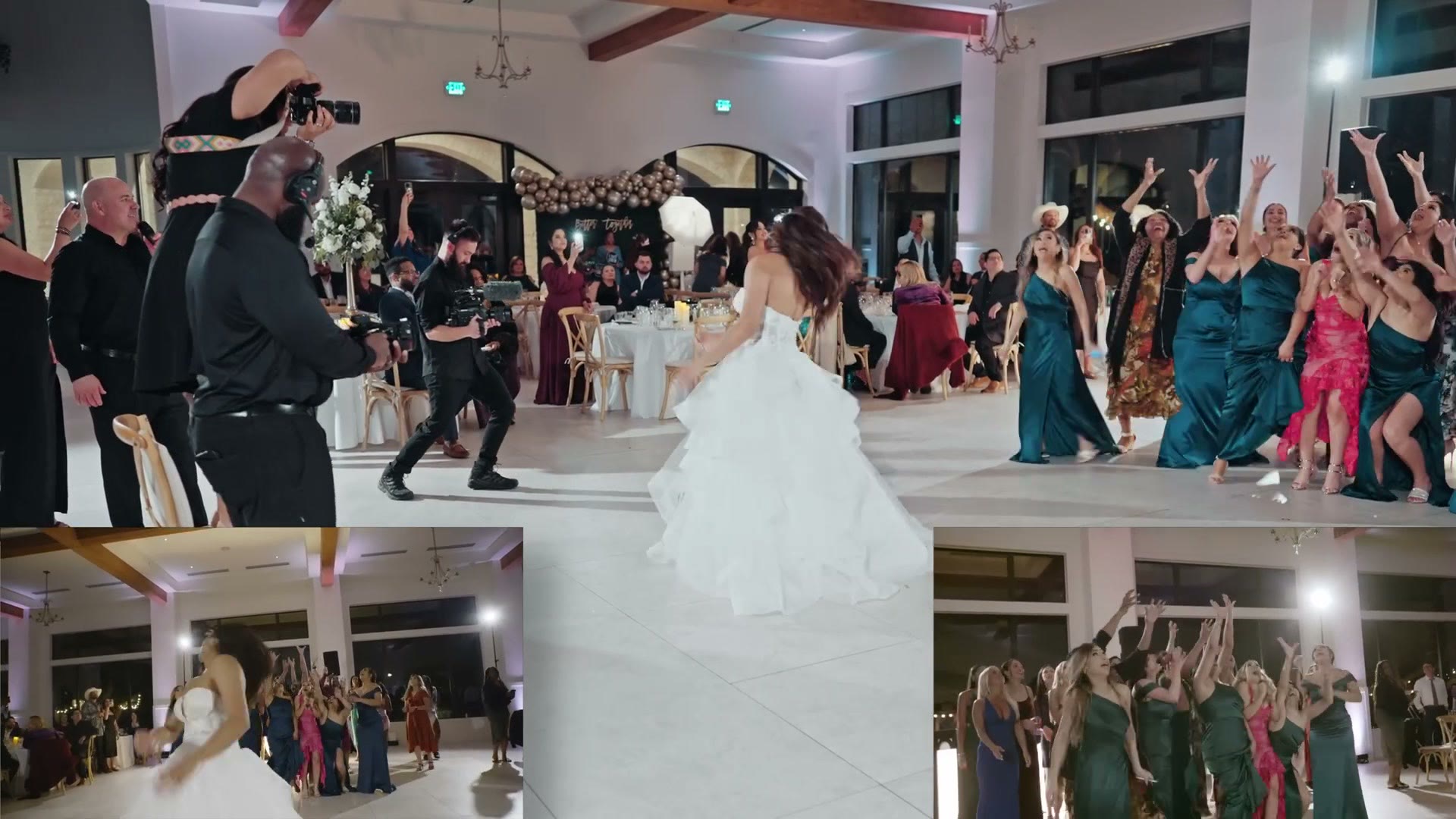
Grand entrance, first dances, fireworks, smoke. It’s nuts. The first dance with sparklers and smoke looked really, really good, and all of that lighting work from the morning is what made it possible.
For the toasts he got everybody out onto the dance floor in a semicircle, all the bridesmaids and groomsmen, then locked a camera on a tripod for a very controlled shot. Because the speaker is in the middle facing the crowd, as long as you don’t go behind them you can walk all the way around and pick up reaction shots. And he makes everyone take their chair back to their seat afterwards, which is a smart little move I hadn’t thought of.
The Send Off, And Then Back Inside
This was a fake exit, done early, and Justin still took control of it. He brought out a few more lights for the send off, because as he put it, the last clip of your film is what people are going to remember. If the send off is grainy and noisy, that’s the part they’ll remember every single time they watch it. They won’t remember the beautiful first look with her dad. They’ll remember the thing they hate.
He also worked with the photographer on where the sparkler boxes should sit, and asked whether the limo could move back a bit to give them more room, because there were about 200 people at this wedding. His attitude on that is simple: if you don’t ask, people aren’t going to do it. So ask.
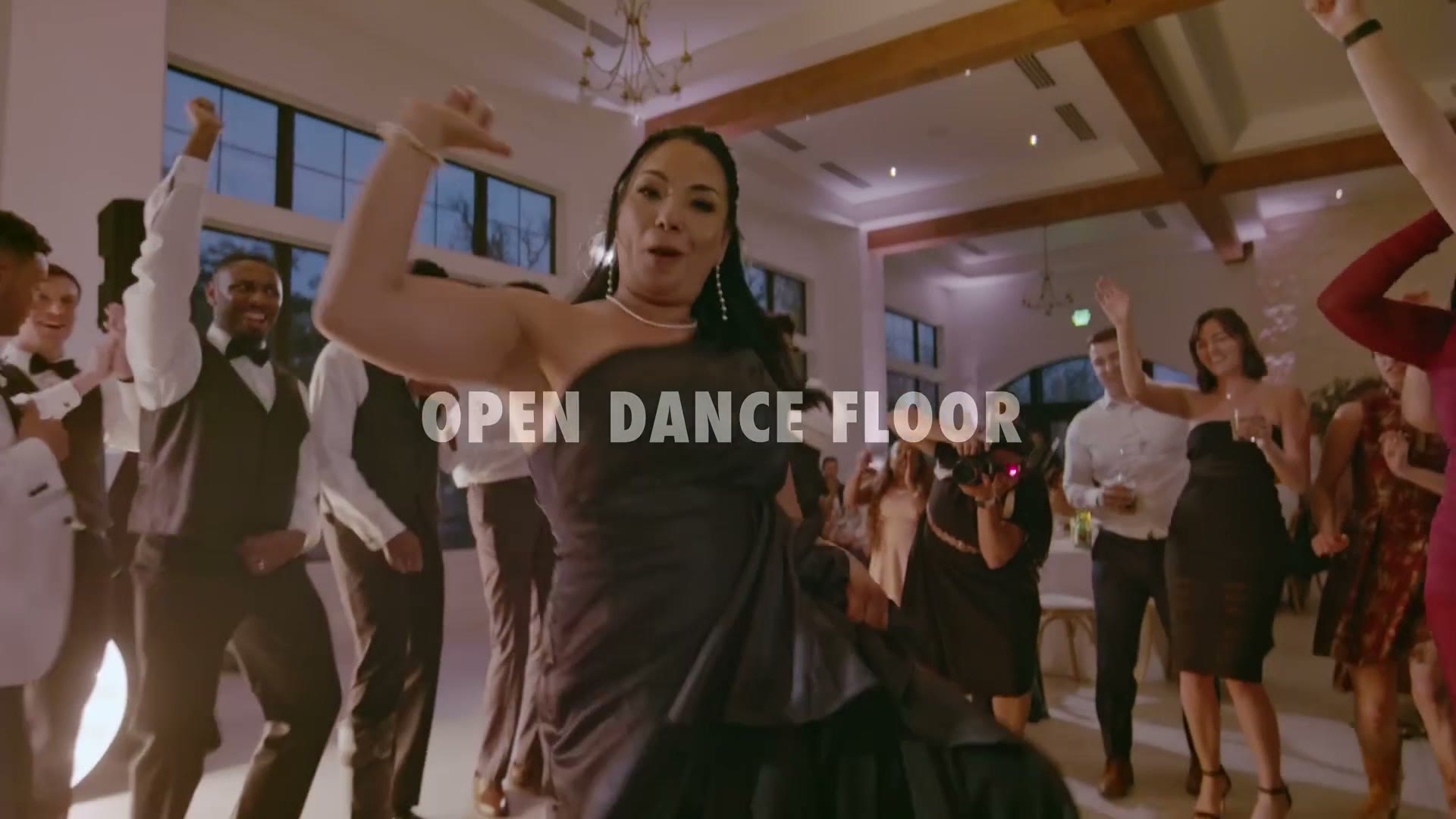
Back inside, the DJ turned off his big lit-up sign and the room went dark, and Justin flipped all of his lights over to RGB mode at the exact moment the music turned over to the dance set. All the colors changed and the room instantly felt like a party. Having the control to dictate exactly when the lighting changes like that is so cool to watch.
He also went around pulling the mics off everybody at this point, and then spent a good while personally demanding that guests get on the dance floor. He does not take no for an answer, and it works. People got up.
The Debrief
Here’s the part that gets me. Justin was two people short that day. His grip wasn’t there and his other assistant Conner had a personal issue, so it was just him and Robbie doing all of that.
He’s also slowly moving away from wedding day interviews entirely on his three to four day documentary package, doing the proper interviews months in advance so the wedding day itself can be pure reality and whatever happens.
On the question of control, which I know some filmmakers are going to bristle at, his answer was this. The couple hired you to do a job. They paid thousands of dollars for a film. Whether you take the fly on the wall approach or the more controlled one, the control he’s exercising is only there to make sure what they can document is the best it can be for the couple. He doesn’t want them watching it in ten years with their kids and thinking, man, this sounds horrible.
What I Took Away From It
I’ve been filming weddings for 13 years. I’ve seen a lot of stuff, I have my way of doing things, and I like my way of doing things. But I knew that going along with other filmmakers and watching them work was going to open up my eyes to different ways of doing things, and this one really did.
Watching Justin work made me question things. Why don’t I mic more people? Why am I not asking more genuine questions? Because whenever you sum up what the reality TV style really is, it comes down to audio, and to pulling the story out of people who are willing to be vulnerable with you.
And Justin’s own take on that is the piece I keep coming back to. A big setup makes people less at ease, so he has to work ten times harder than most filmmakers to make everyone comfortable. Right out the gate in the bridal suite, the whole job is making everybody feel like this dude is cool, I can be myself around him. Because the minute they feel the energy is off, you can bring them outside for an interview and they will not open up.
I’ve watched thousands of wedding films. Dozens every month. I have never seen somebody chasing the story at this level, and I think you’re going to start seeing people emulate it.
You can follow Justin on YouTube and on TikTok.
Thanks To Musicbed

Musicbed is one of the best places to license music for your wedding films, and it’s the sponsor of this video. I’ve personally used them for over a decade, and it’s one of the only brands I trust to find incredible sounding music for my films.
For example, whenever I filmed the wedding of Monica and David in the mountains of California, they were a couple who had been together for so long, and I knew I needed a really powerful song to carry the emotional weight of it. The track “It’s You That Makes Me” by Prince of Spain was perfect for that moment and really helped connect it with the audience on a deep level.
Because they have the largest roster of independent artists, with music curated specifically for filmmakers, you’re always going to be able to find exactly what you need. You can hear the difference for yourself when you sign up for a free account, and use the coupon code MATT2MONTHS at checkout to get two months free on an annual subscription.
If you liked this style of behind the scenes video, where I tag along with another wedding filmmaker and show you how they film a wedding, let me know in the comments who else you’d like me to go film a wedding with.
Thanks so much for reading, and have a great day!