
An f/1.8 full frame zoom lens. What?! This is the new Sigma 28-45 f/1.8, and I am going to be reviewing it from the perspective of a wedding filmmaker, because aside from its weight I think this lens is an excellent choice if you film weddings, or corporate or commercial videos, or anything where you need a lens that excels in low light performance while also giving you an internal zoom, meaning it is perfect for gimbal work because the weight is not going to shift as much.
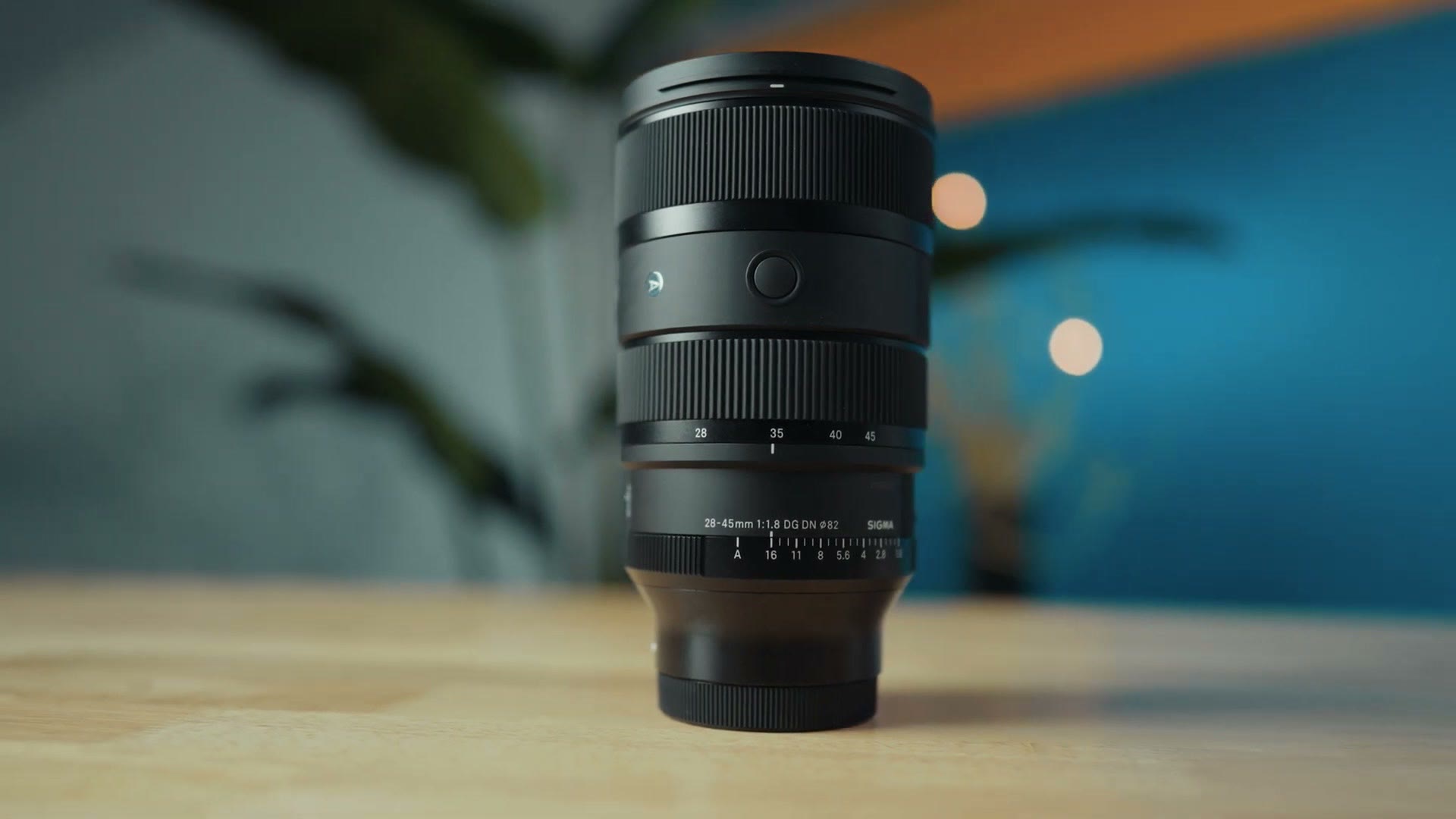
Spoiler for how I feel about this lens out of the way. Also, for the sake of ethics, I want you to know this video is not paid or sponsored by Sigma. They did loan me this lens so I could make this review, and I will sadly be returning it to them very soon. But considering the price, I might have to pick one of these up, because I am already thinking of several situations where I am like, dang, that would be a nice lens to have for that.
Why Sigma Made This Lens
Let’s start off this lens review with some drama. Gotta love drama, right? As I often do whenever I get a new piece of gear, I made an Instagram Reel showing it off, and it got hundreds of thousands of plays. That Reel actually managed to generate some controversy, with two complaints about this lens consistently showing up.
Before I share those complaints with you, let me set the context for my general take about this lens. My take is that this Sigma 28-45 builds upon the legendary success of Sigma’s earlier 18-35 f/1.8 APS-C lens, which filmmakers absolutely loved. Sigma realized this and said, hey, what if we make a full frame version of that lens? And that is what they did with this new 28-45.
Complaint 1: The Width
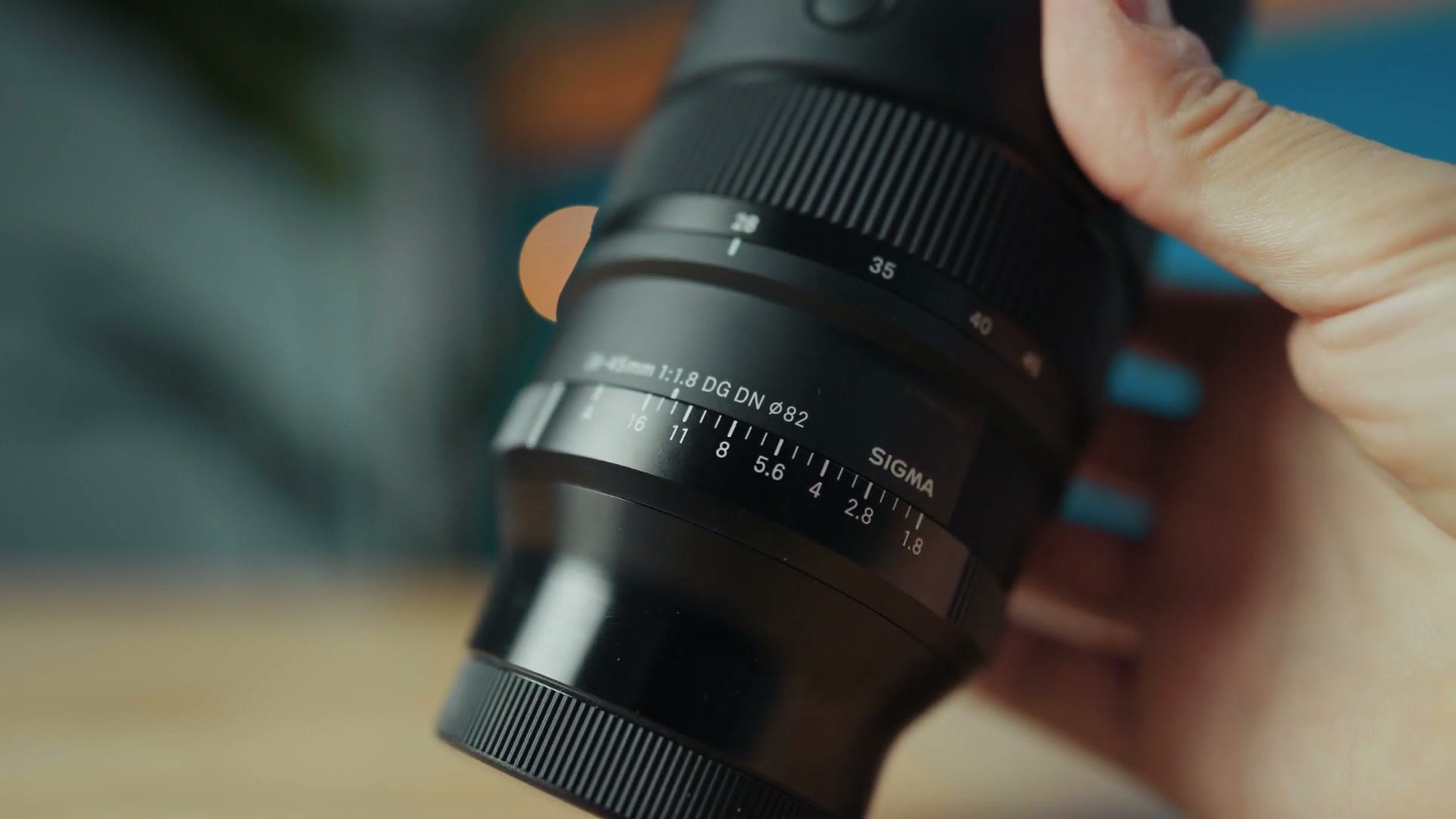
So imagine my surprise whenever I posted that Instagram Reel and started seeing multiple comments complaining about the width of this lens, repeatedly saying that 28mm is not wide enough and it really needs to be 24mm if Sigma wants people to buy it.
I have two responses. First, hey, if you are not happy with the width of 28mm because you have used lenses that wide before and you always found yourself wanting a bit more, I totally get that. Heck, I am filming this video on a 24mm right now, not a 28mm. But I think that has more to do with the fact that 24mm lenses are a lot more common than 28mm lenses.
Here is my second response, and here is where I am going to give you more pushback. The issue is that the older Sigma 18-35 this lens is based on was specifically made for APS-C crop sensor cameras, meaning that even though it said 18-35mm, on a full frame camera it was not actually that wide, and you have to do a bit of math to figure out its actual width. Specifically, with the EF mount version of that lens, Canon’s APS-C cameras had a 1.6 times crop, so multiply the 18mm of that earlier lens by 1.6 and what you thought was an 18mm is actually a 28mm on a full frame camera.
Yes, both of these lenses have the exact same width on the wide end, which means that if you are complaining about this new Sigma 28-45 not being wide enough, you are basically complaining that the older Sigma 18-35 was not wide enough either. And considering how many glowing reviews I saw for that lens over the years from filmmakers who absolutely loved using it and never complained about the width, I think you need to use this lens before you write it off.
Complaint 2: Too Small Of A Zoom Range
The second complaint is that 28-45mm is too small of a zoom range. It is only a 17 millimeter zoom, after all. But going back to the previous Sigma lens now, how many millimeters was that? 18 to 35 again. Oh yeah. 17mm.
Like I said, these lenses are essentially the same, with this 28-45 just being a larger version. Of course, that 1.6x crop on the other lens lets you do a bit of math magic, so it is not only a 17 millimeter difference, because 35 times 1.6 is actually 56mm, meaning the smaller, older lens does have more zoom on the long end. But that said, I think this lens is as close as Sigma could make it to their older 18-35 while still making it full frame and giving it this level of low light performance.
How Heavy Is It?
Those are the two complaints I received about this lens. But how is the lens really? Once you get it in your hands, how does it actually feel to film with? I have to say, I really like it. First off, it definitely does have some weight.
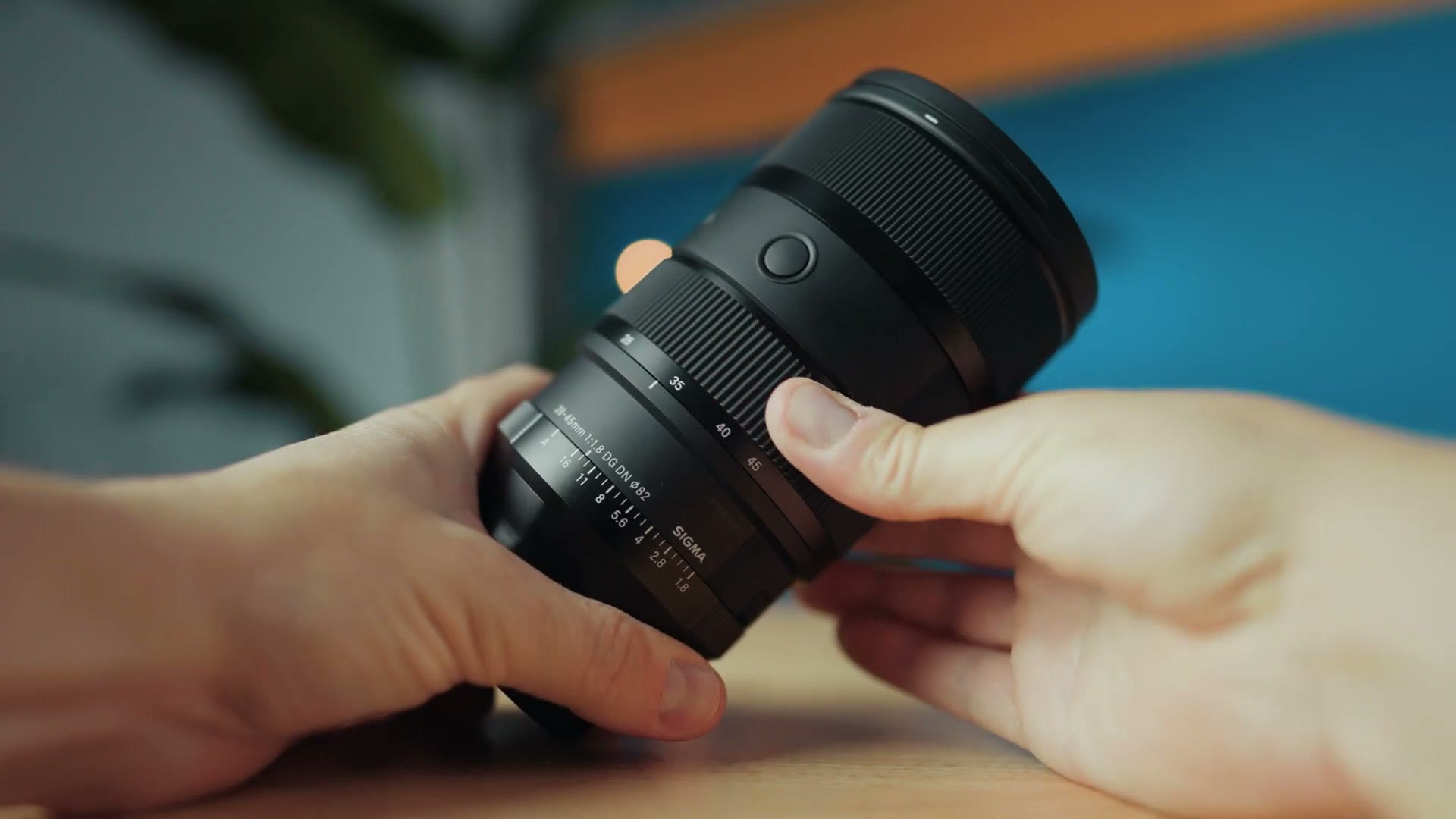
At 950g, this lens is definitely not light, and it is only about 95g less than Sony’s new 70-200 f/2.8 Mark II. So if you want a comparison, hold one of those if you have one lying around to get a rough gauge on the weight of this one. While we are comparing weights, this lens is also a bit heavier than the original Sigma 18-35, but not by much, because that lens came in at 810g. So I do not think adding another 140g to make this lens full frame is necessarily bad.
The main thing you are going to need to keep in mind is that if you are planning on using this to film a wedding all day, it might be time to bust out a new arm workout, because I found myself getting tired after about 20 minutes of using this lens on a gimbal. You are definitely going to want other lenses to supplement this one and give your arms a break. Or maybe a monopod. Buy a monopod, I don’t know.
That said, this lens does feel well balanced for its weight, and that can make a huge difference, because if a lens is too heavy in the front or the back you can really tell. So it is great to see that Sigma’s engineers have worked on this one so it does not feel too heavy at either end.
Internal Zoom
Speaking of weight shift, that leads us easily into one of my favorite features of this lens, the internal zoom. Not only is this lens an f/1.8 throughout the zoom range, it does all of that while being an internal zoom, meaning the barrel does not extend whenever you zoom the lens in and out. It stays the same length, which means Sigma may have sacrificed the ability to make this lens a bit shorter, but in the process they made it significantly more compelling for filmmakers.
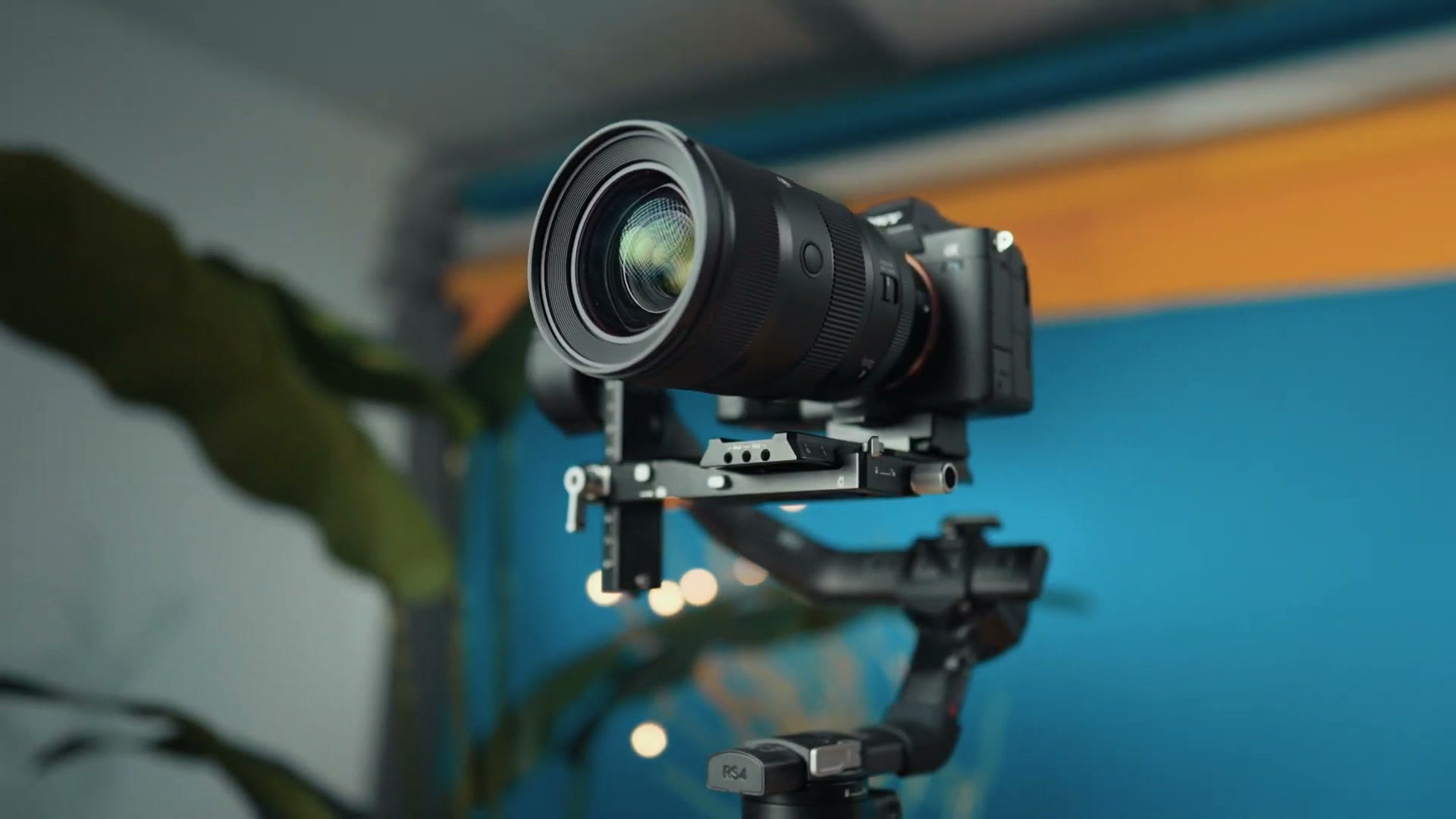
Internal zoom lenses shift their weight significantly less when you zoom them in and out, which makes them far more appealing if you want to put the lens on a gimbal. And of course I tested that, throwing this new 28-45 on my gimbal and balancing it at the widest 28mm. I found that while this lens does shift its weight when zooming in and out like all lenses do, the internal zoom significantly lessens how much that shift is, and I feel confident saying that if you are using a modern gimbal with decently strong motors you could balance this lens at 28mm and still zoom it to 45 without compromising your stability.
But if you want a very accurate balance with minimal weight shift that will work on essentially any gimbal, and I tested on multiple, I would recommend setting your zoom to 36mm, which is the sweet spot right in the middle, and balancing your gimbal there. Then if you have to zoom in or out, the shift in weight is not going to be as extreme. In all my testing with multiple gimbals where I balanced in the middle, they did not act any differently whether the lens was at 28mm or 45mm.
Colors And Image Quality
All of this easy balancing would not matter if the lens image quality sucked, but I am happy to tell you that just like other Sigma lenses, to my eye this one looks great too. Colors are contrasty and vibrant, and footage looks sharp even at f/1.8 throughout the zoom range.
And really, are you surprised by any of this? It has been years since I used a lens that was not at least basically competent. I feel like all lens manufacturers have gotten really good at making sharp lenses at this point. Maybe I just have not tried some stinkers, I don’t know.

Autofocus also worked well with this lens. I did not find it hunting, and it looked fast and accurate. No complaints here. It is very solid.
The Manual Focus Issue
Manual focus was a different story though. Unfortunately this lens has a nonlinear focus motor, where if you rotate the focus ring quickly the focus will change a lot, but if you rotate it slowly the focus will change more gradually. This is kind of a pain if you are trying to replicate the same focus pull every time. If you are not someone who uses manual focus often I do not think that is going to be a dealbreaker for you, but you should definitely be aware of it. In a perfect world I would love for this to be changed in the lens firmware somehow, where you have the option to enable or disable it.
If you want to go deeper, I’ve also got This Lens Is Impractical… I love It! Sigma 200mm F2 Review.
Focus Breathing Test
Sadly, because this is a third party lens, I am sorry to say it does not support Sony’s focus breathing compensation feature that is available on all of their native lenses. Because of that I found myself actually having to test the focus breathing, which has largely become a non-issue whenever I am testing Sony lenses, since you just turn on focus breathing compensation and never worry about it again.
Regardless, whenever I tested the focus breathing with this lens I was pleasantly surprised to see that it was fairly minimal, and if you are filming a wedding I doubt you are even going to notice it. Even if you are filming a talking head for an interview, you should still be fine.
Build Quality
I also realized I never really touched on the build quality of the 28-45. It feels well built. Like many of Sigma’s newer lenses, you get two programmable buttons, which are great to see, an aperture control ring so you can adjust the aperture, a de-click switch so you can make the aperture changes clickless, and an aperture ring lock as well, which you can flip to prevent it from rotating.
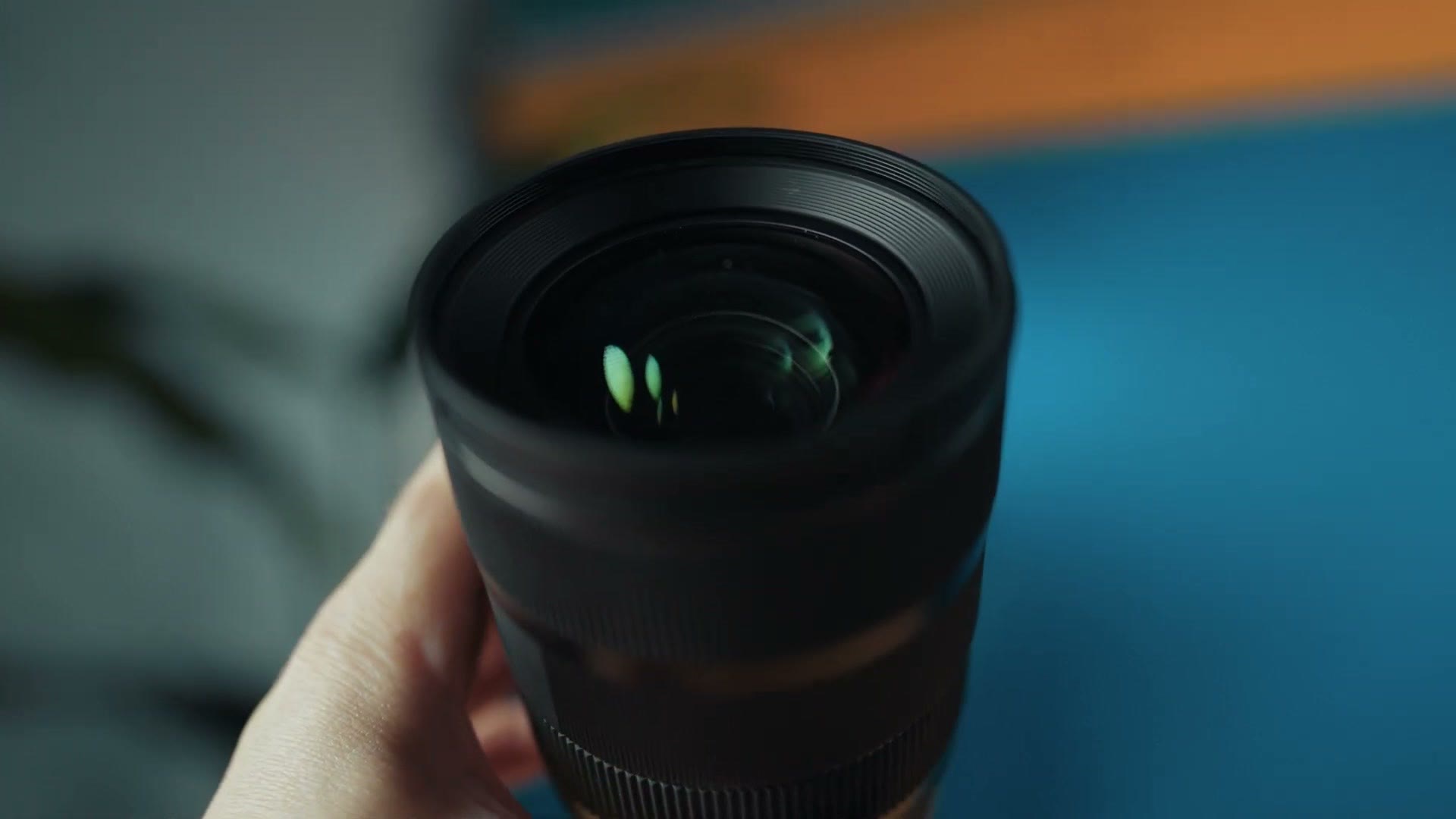
And I have to say, all of these switches are very satisfying. Oh, it is just such a good click. I love it. There is a little itch in my brain that gets scratched every time I flip this thing. It is very nice. Please do not buy this thing just as a fidget spinner though, because it would be an expensive fidget spinner.
The Satisfying Price
Speaking of satisfying, we do need to talk price, because your wallet will be satisfied if you buy this lens. At the time of recording this video it only cost 1350 bucks.
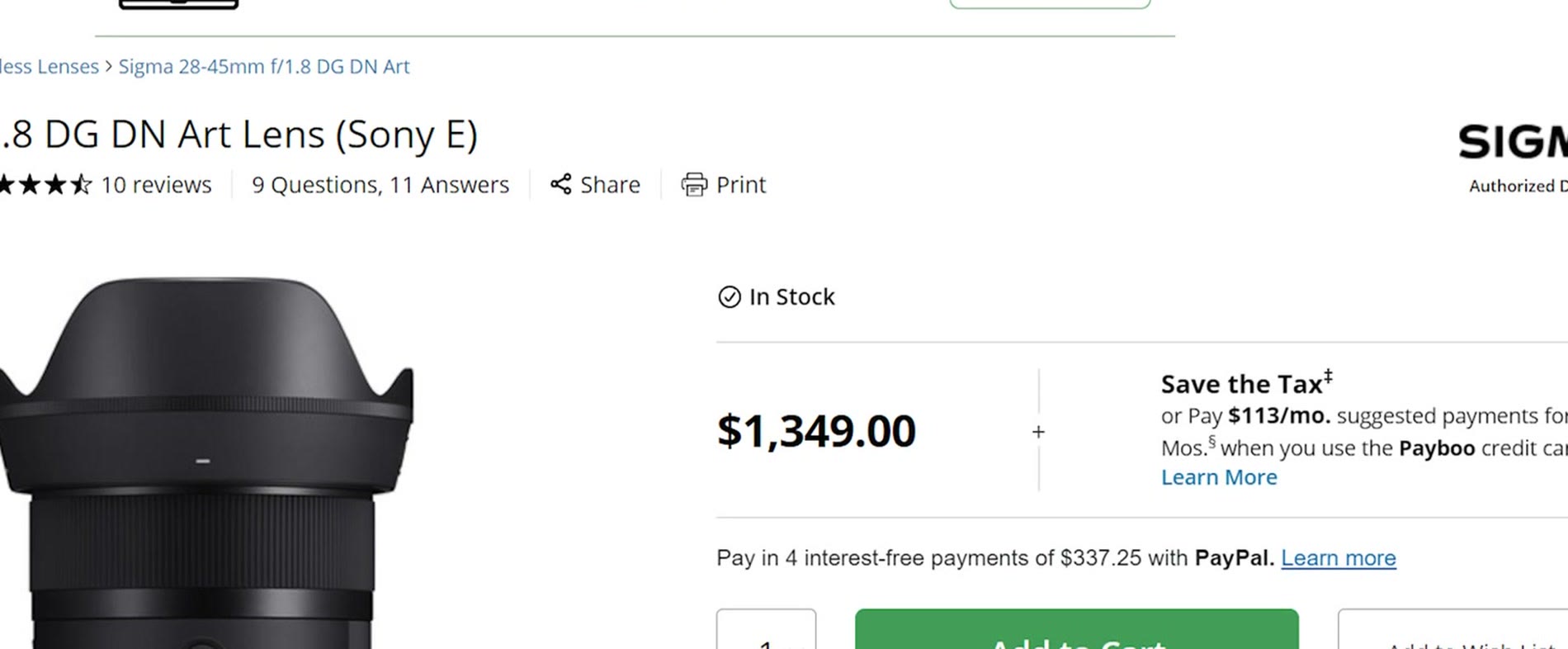
Which I realize is still quite a chunk of change. But if you consider that so many newer first party lenses these days are $2,000 or even $3,000, getting an f/1.8 lens that is well built and also happens to be a zoom that is excellent for a gimbal, I am honestly surprised this lens does not cost more.
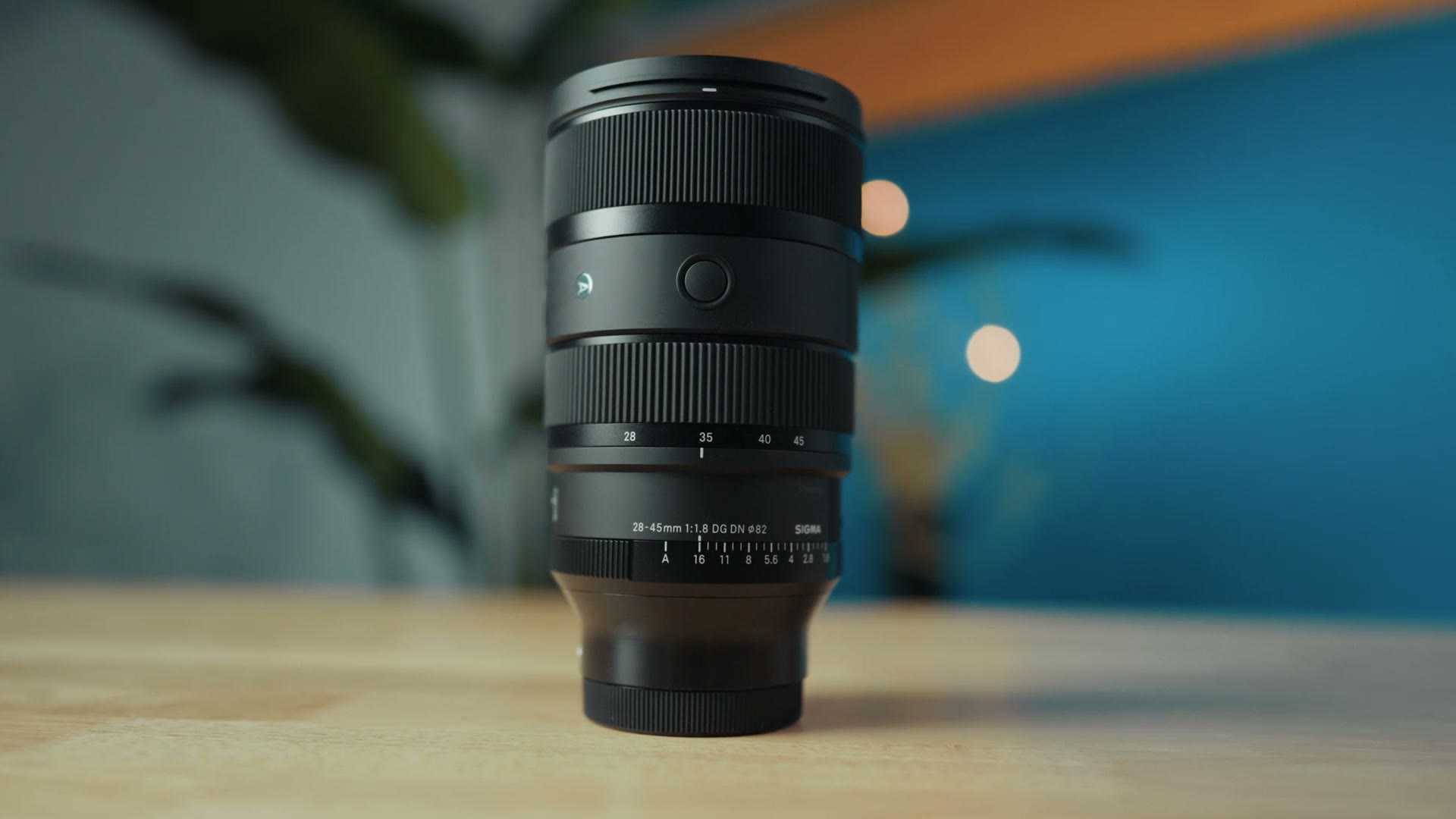
So if you are a wedding filmmaker and you have been looking for a wider lens that is faster than f/2 but also happens to be a zoom, or maybe you are a filmmaker who oftentimes finds themselves using a 35mm lens but you wish you could zoom in and out while still having the low light performance you get from a prime, or especially if you used to own or still own an older 18-35 f/1.8 APS-C lens and you have been longing for a full frame version of it, I am so happy to tell you that it is here now. You can pick up the Sigma 28-45 f/1.8 if you want it.
If you want a bit more zoom range and you can live with f/2.8 instead, Sigma also has a 28-105 f/2.8 that I reviewed as well, and it shares this lens’s nonlinear manual focus quirk.
I will also point you to my wedding videographer gear guide if you want to see more equipment I recommend for wedding filmmaking, along with links to save you time. It is completely free.
And if you are a wedding filmmaker who wants help booking your next wedding, I have put together a free workshop that is going to show you the exact steps to take to book one, regardless of whether you are brand new to filming weddings or have been filming them for a while.
Before you go, I want you to know that I have some openings in my schedule to film weddings. So if you are getting married and you want me to film it, especially if you want a behind the scenes video made of your wedding that will end up here on YouTube, send me an email through the contact form on my website and we can talk.
Thanks so much for reading and have a great day!