
In camera news, Canon just announced the EOS RP, a full-frame mirrorless body. I shoot Sony, but I wanted to go through the video specs on this thing and tell you what I make of them.
This is not going to cover every spec and feature, just the ones that matter to me as a filmmaker. And I am writing this right after the announcement, so some of it is subject to change.
4K Video
The EOS RP shoots 4K in 8 bit at 3840×2160, at up to 24 frames per second. 25 if you happen to live somewhere that uses PAL.
Yes, that means there is no 4K 30, and definitely no 4K 60.
Now, a lot of filmmakers including me prefer 24 anyway because it is more cinematic. The concern is different. The concern is that Canon is pushing this sensor to its absolute limit just to get 4K 24 out of it, and that usually means a lot of rolling shutter when you pan. Early reviews are already saying exactly that.
The 4K is also cropped. Depending on which article you read or review you watch, that crop is somewhere between 1.6x and 1.8x, so either slightly better than or the same as the EOS R from last year.
It does 1080p at up to 60 frames per second. But there is no 120fps option, not even at 720p like the EOS R has. And here is the genuinely bizarre one: there is no 24 frames per second option in 1080p. Only 30 or 60.
30 Minute Video Recording Limit
At this point I feel like I am just stacking up cons, but there is also a 30 minute recording limit.
I wish Canon had gone the way Panasonic has gone with all their cameras, and now Sony with the new a6400, and dropped that limit entirely. Not here.
Dual Pixel Autofocus
I really wish we had hit the bottom already, but now we have to talk about the worst feature of the EOS RP: the autofocus.
And I hear you. Matt! It’s Canon! Canon has dual pixel autofocus, it’s amazing, how dare you slander the name of dual pixel autofocus?
Well. When you are recording in 4K, dual pixel autofocus is not available. You get contrast based autofocus instead.
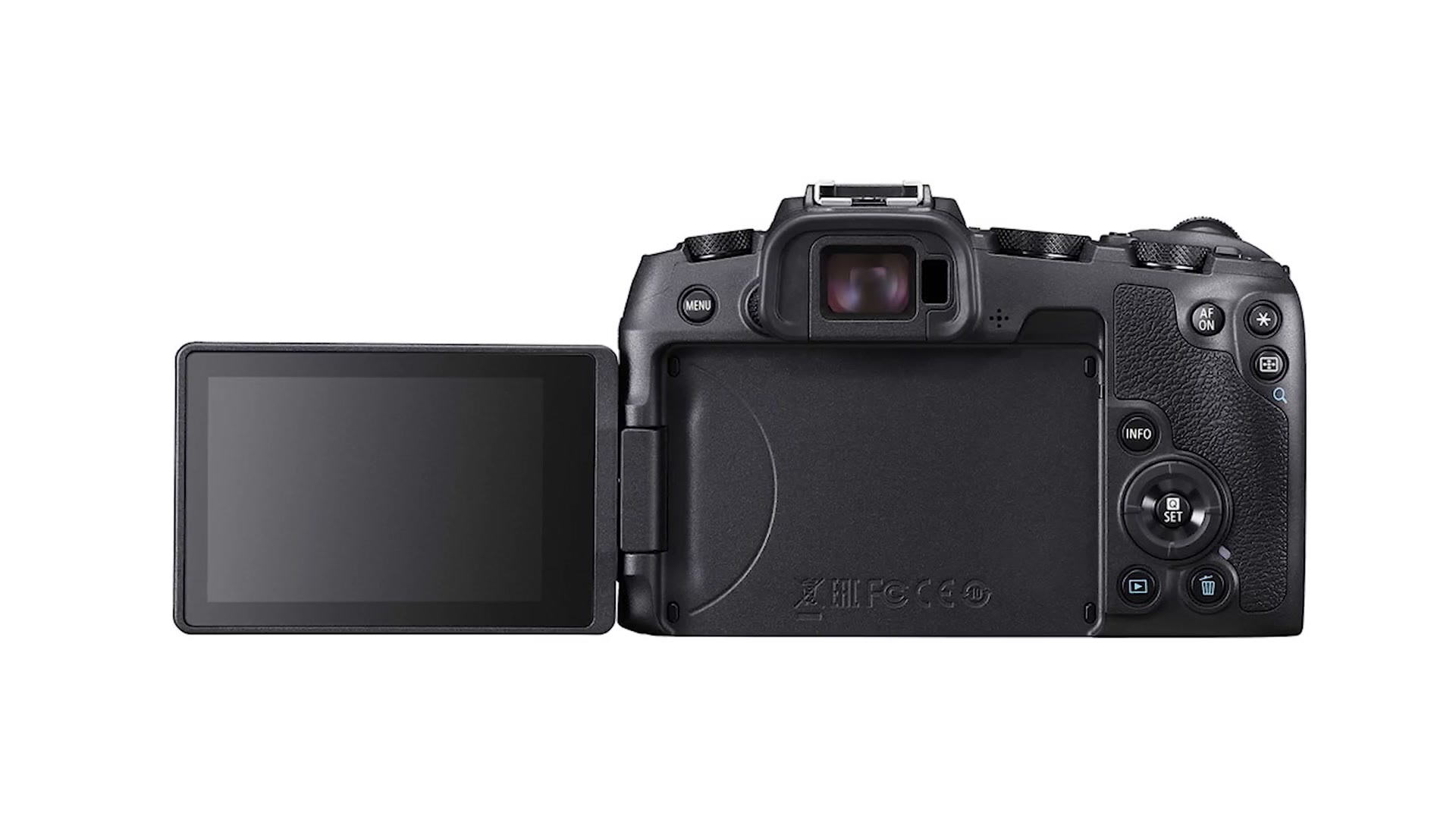
To be clear, much like the Canon M50, you do still have dual pixel when you are shooting 1080p. But in 4K, not possible.
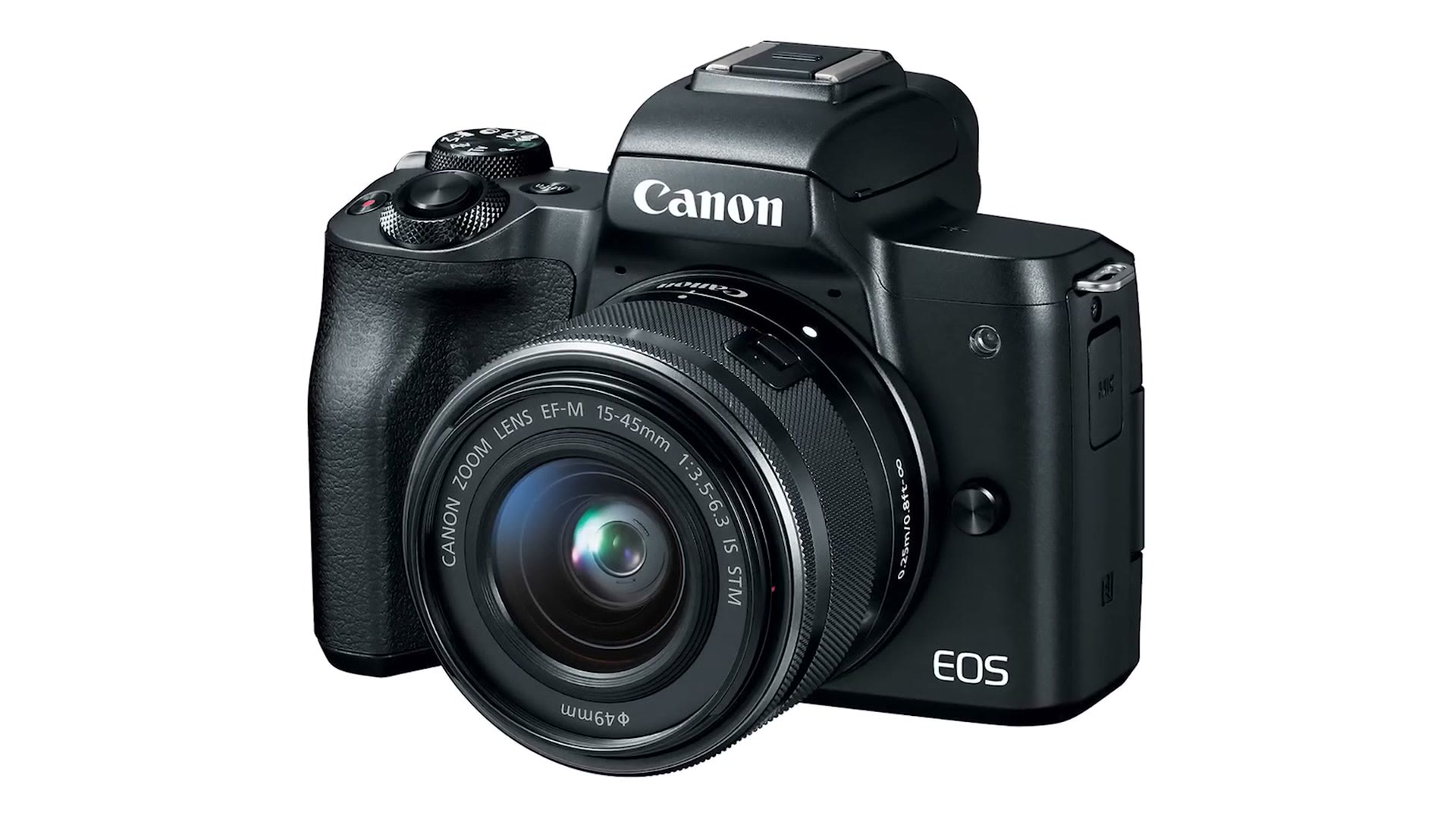
That is a major bummer, because 4K vloggers would absolutely love this camera otherwise. It has a flip around screen. It has a mic jack. It is basically built for vlogging, if only it had the one thing vloggers actually need.
No IBIS, And A Smaller Battery
I literally have a line in my notes for this video that says “now it’s time for some sad news.” There has already been a lot of that, so here is some more.
There is no in-body image stabilization in this camera, or really in any of Canon’s cameras for that matter.
And the RP does not take the LP-E6 battery used in the EOS R and the 5D Mark IV. It uses the much smaller LP-E17 from Canon’s Rebel line of DSLRs. I think that is a size decision, and Canon is clearly pitching this as the upgrade for someone coming off a Rebel, so it does make a kind of sense. But there are a lot of full-frame filmmakers out there sitting on a pile of LP-E6s, and I wish this supported them. The smaller battery also worries me about runtime, especially in 4K.
ISO And Low-Light Performance
Like the EOS R, the RP maxes out at ISO 102,400. Unlike the EOS R, it has a smaller sensor in megapixel terms, 26 instead of 30, so my hope is that low light is slightly improved.
Canon Log: No
What about C Log, the flat picture profile on the EOS R, the 5D Mark IV, the C100, the C300 and so on? What if you want to shoot that on the RP?
This might be the saddest and also the funniest thing about this camera. A few days before the announcement, a PDF leaked with a giant spreadsheet of every spec on it. There was a line that said Canon Log, and next to it, it said no.
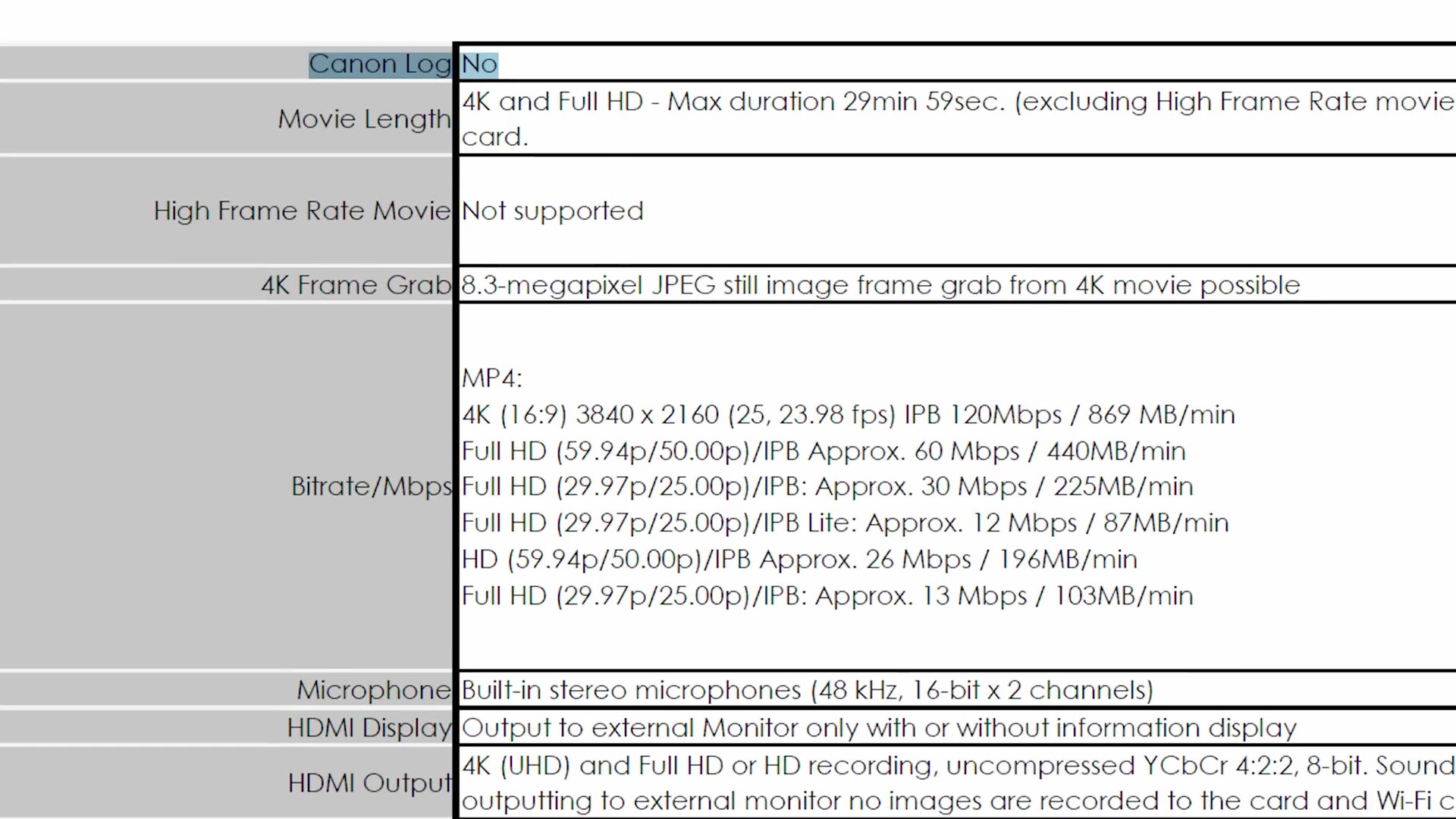
Not some flowery “unfortunately not possible at this time.” Not “coming in a future firmware update” like Panasonic said about the S1 and S1R. Just: No. Sorry. Too bad. Buy an EOS R.
That same leaked sheet is worth reading for a few other things, incidentally. Movie length capped at 29 minutes 59 seconds. High frame rate movie: not supported. 4K comes in at 3840×2160, 25 or 23.98 fps, IPB at 120Mbps, which works out to 869 MB per minute. And you can pull an 8.3 megapixel JPEG frame grab out of a 4K clip, which is a nice touch.
The One Genuinely Good Bit
There is a bright spot in this announcement that made me really happy. Alongside the camera, Canon published their roadmap for new RF mount lenses, and those are impressive.
In 2019 they say they are shipping a 15-35mm f/2.8, a 24-70mm f/2.8, a 70-200mm f/2.8 and an 85mm f/1.2. Everything except the 85 has stabilization built in.
Given how hard people raved about the 28-70mm f/2 and the 50mm f/1.2 that launched with the EOS R, I am genuinely excited to see Canon pushing the envelope here. I am also sure these will be very sharp, very heavy and very expensive. The 50mm f/1.2 is currently on sale at B&H and is still $2,100, so I highly doubt any of these land under two grand. Which is a bit mad, since that is a lot more than the camera costs.
Cost
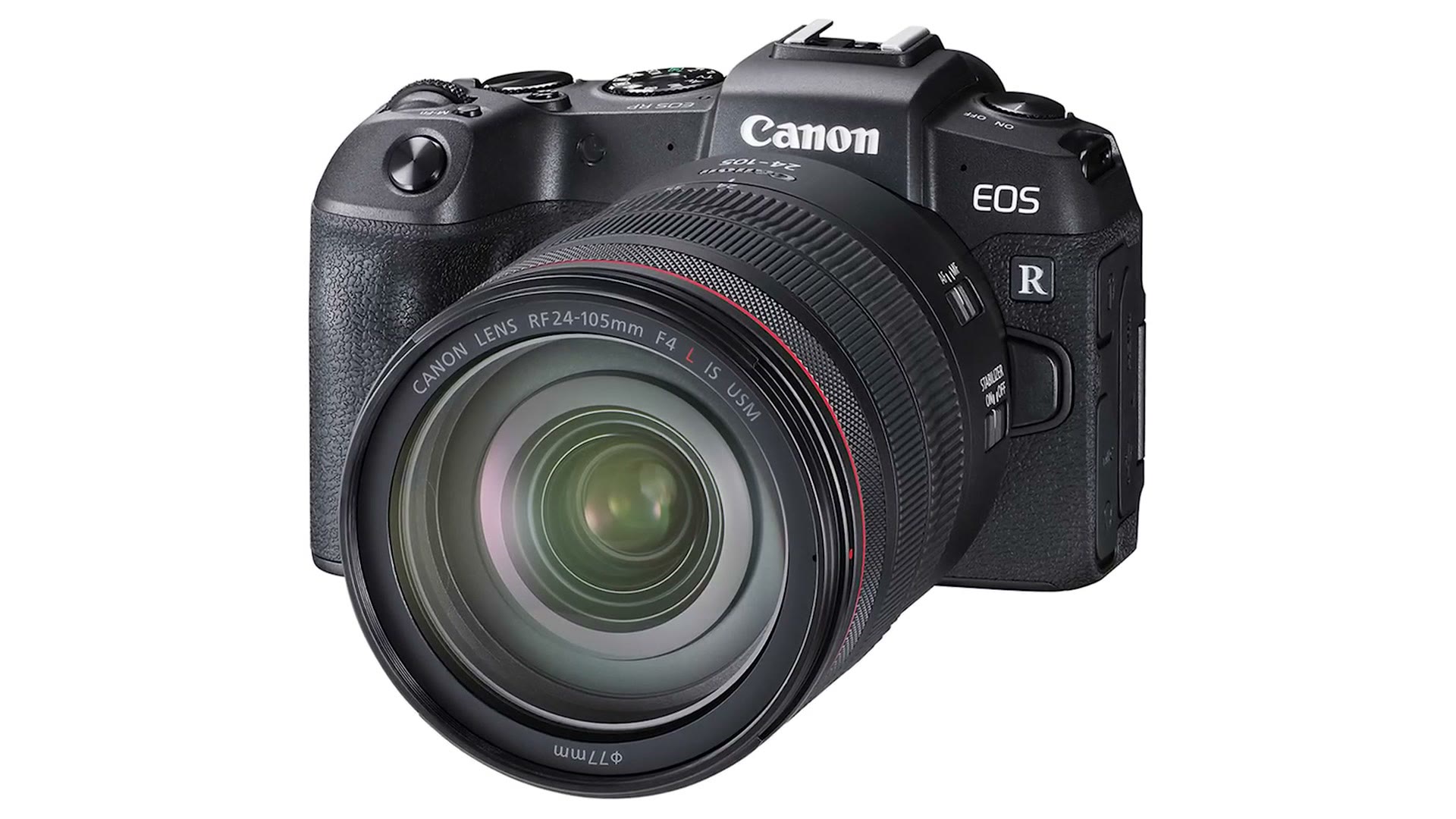
Price is honestly the most positive thing I have to say about the RP. It starts at $1,299, which for a full-frame body seems quite reasonable. It even ships with a free EF to RF mount adapter, which is genuinely great if you already own a pile of EF glass and have been thinking about mirrorless.
It comes out on February 27th and pre-orders are open now. Though I kind of doubt you want to pre-order it after everything I just said.
Conclusion
Here is how I see it. Canon took the 5D Mark IV, added 4K and some autofocus points, and made the EOS R. Now they have taken the 6D Mark II, added 4K and some autofocus points, and made the EOS RP.
It costs a thousand dollars less than the EOS R, and for that saving you give up a lot on video. No 120fps, not even at 720p. No 24fps in 1080p. No C Log. And most importantly, no dual pixel autofocus in 4K.
Filmmakers who shoot Canon love to name two things that make their cameras better than everyone else’s. Gorgeous colors and skin tones straight out of camera, and that legendary near-flawless dual pixel autofocus. With the EOS RP, if you are shooting 4K, you are giving up half of that.
So will I be buying one? I don’t think so. If I wanted a camera that shoots 4K at up to 24fps with roughly an APS-C crop, I would go back to early 2016 and buy a Sony a6300. Or an a6500. Or an a6400. Or honestly a Fuji X-T3, which also has an APS-C crop but shoots 4K at 60 frames per second in 10 bit.
My view on Canon is this. While basically every other manufacturer is cramming as many video specs and features into their cheaper cameras as they physically can, Canon has proven over and over that they have no real interest in competing there. That is frustrating.
So in conclusion, I suppose what I am saying with this whole thing is: go buy a Fuji X-T3.