
This is my Canon 7D. It is the first DSLR I ever bought and the first camera I ever filmed a wedding on. It is also ten years old, because I bought it when it came out in 2009.
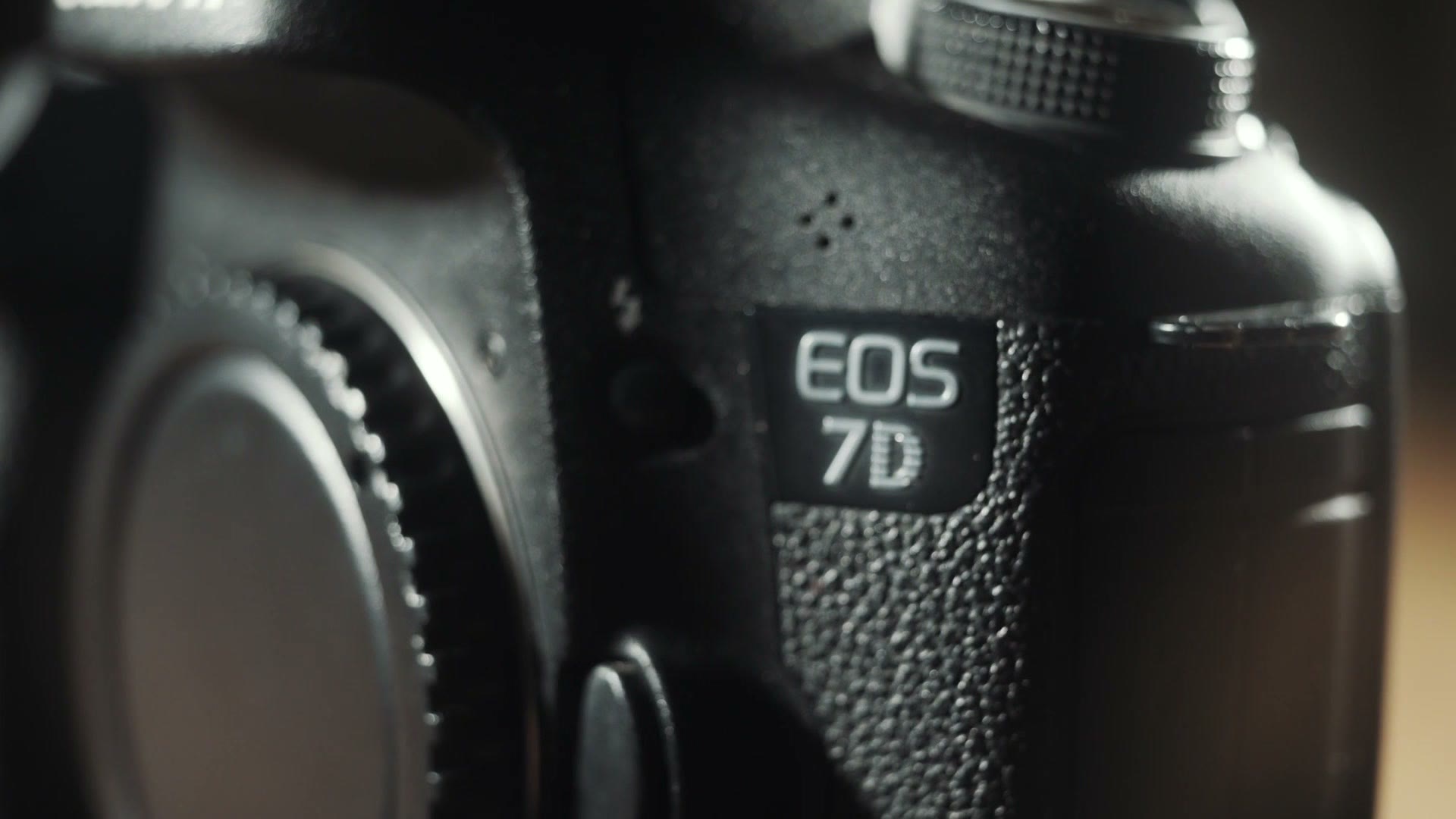
The 7D has a 1.6x cropped sensor and records 1080p at up to 30 frames per second. It has an EF lens mount and takes Canon LP-E6 batteries. Along with the 5D Mark II just before it, it was arguably the best camera you could buy in 2009.
Now here we are, ten years later. What if I told you a camera has just been announced with a similar sized cropped sensor, the same exact EF lens mount and the same exact LP-E6 batteries, but which records up to 60 frames per second in 6K and up to 120 frames per second in 2.8K? And records all of it in RAW.
Is it the 7D Mark III?
Matt from 2009 would never have doubted that Canon would be the company shipping this camera. Matt from 2019 knows better. It is the Blackmagic Pocket Cinema Camera 6K, and while it does share some DNA with my decade-old 7D, it really works as an object lesson in what is possible in 2019, and in how far Canon has drifted from the days when they pioneered video on a DSLR.
This is not entirely a Canon bashing exercise though. Let’s go through the specs.
Nobody Saw This Coming
Wednesday August 7th started like any other day. Then at 9:26am Blackmagic tweeted that they were doing a production update at noon Pacific the next day, so we could hear about new developments in cameras and post-production.
The general consensus online was that this would be low key. Maybe DaVinci Resolve 16 coming out of beta, maybe a firmware update or two. Nobody thought there was a new camera coming, not least because there had been zero leaks from anyone.
About 27 hours later, they unveiled the Pocket 6K and took basically everybody by surprise.
The Resolutions, And What Each One Costs You
The Pocket 6K builds on the Pocket 4K from a little under a year earlier. Similar body size, similar build quality, similar inputs and connections, similar audio. If you already own a Pocket 4K, your accessories and support gear should carry straight over.
Now, 6K, which is 2K more than 4K, which is 4K more than 1080p, which uses Ps not Ks. That is enough letters.
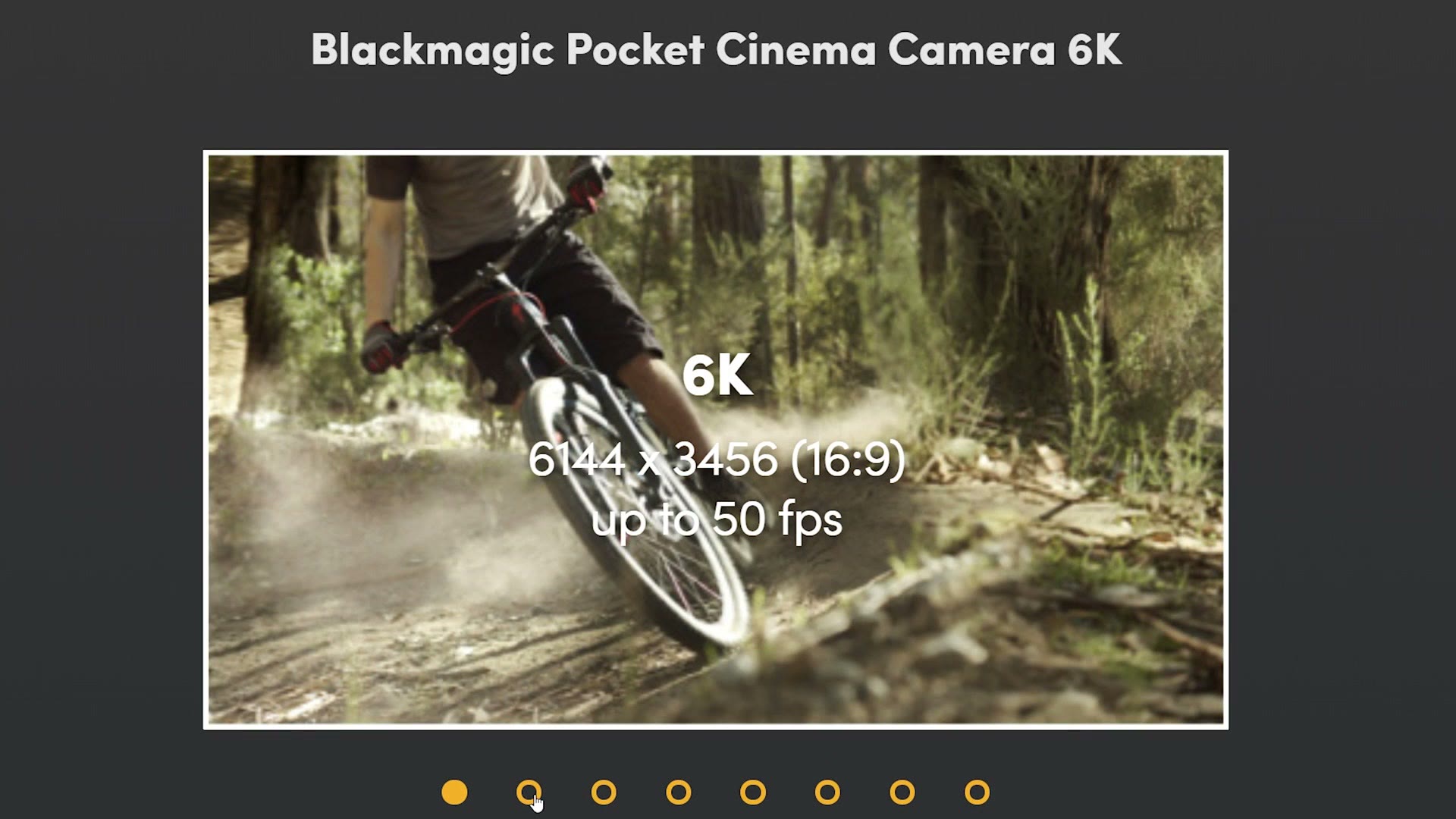
The camera does 6K at up to 60fps, but that is fudging the numbers slightly. The maximum resolution is 6144 x 3456, which is 16:9, and at that resolution it caps at 50fps. Which my Eastern Hemisphere friends shooting PAL are going to love.
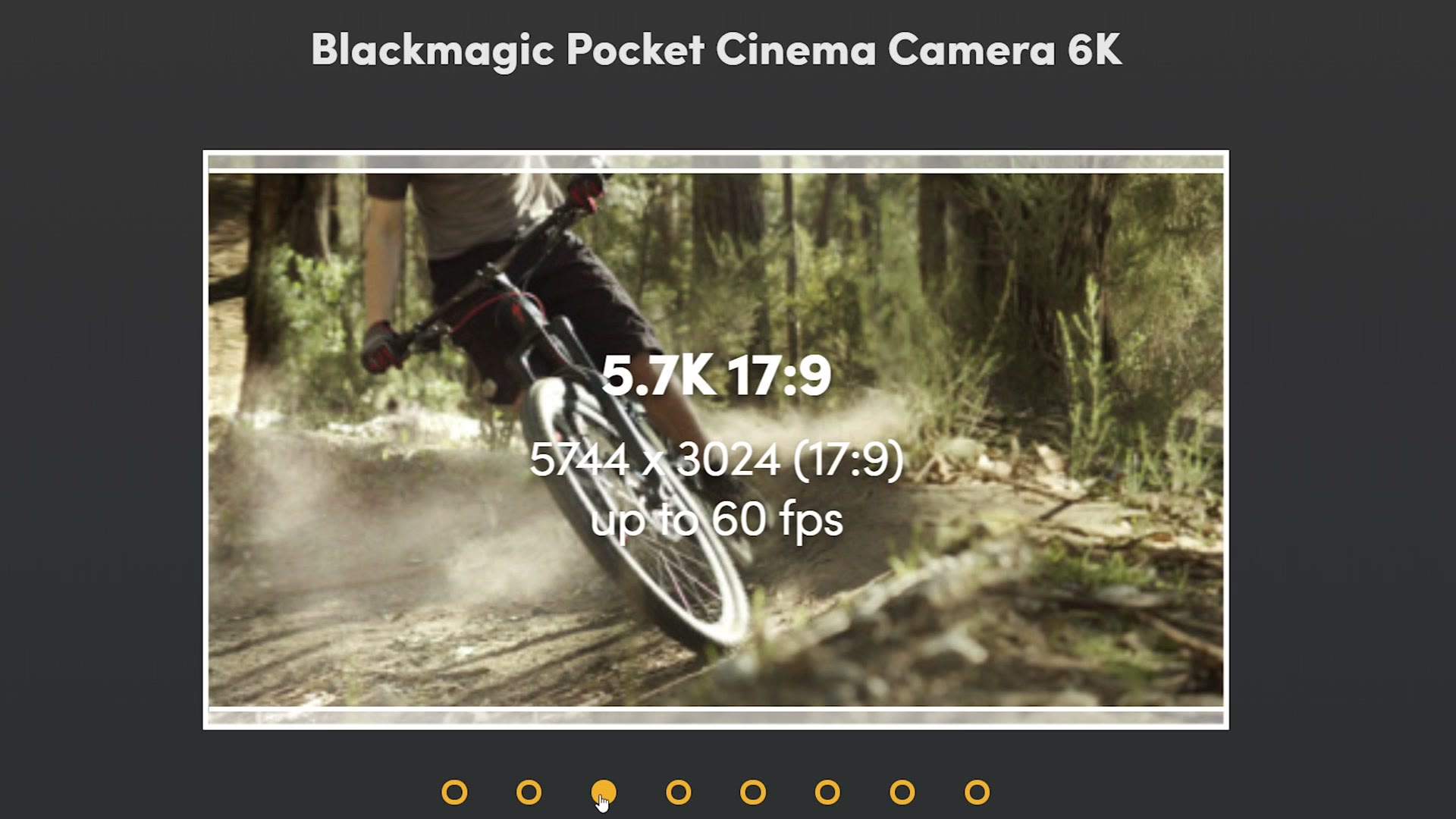
To get 60fps you scale down. 6144 x 2560 gets you there in a 2.4:1 aspect ratio.
And if you want something closer to 16:9 at 60fps, you go to 5744 x 3024, which is technically 17:9 but you can crop the sides a little to fit a 16:9 window.
Here is the catch nobody mentions. Every time you scale down, the camera crops the sensor a little more.
- 6144 x 3456: Super 35, roughly a 1.55x crop from full frame.
- 5.7K for 60fps: crops to roughly 1.7x.
- 2.8K at 120fps: crops all the way to about 3.3x.
Put a normal 50mm lens on this camera at maximum 6K and you are looking at roughly a 78mm field of view. Shoot 2.8K at 120fps with the same lens and it becomes a 165mm. You are going to want something very wide for slow motion on this thing.
RAW, But Only Sometimes
I realize I am throwing a lot of numbers at you, so let’s make it weirder.
Blackmagic is known for RAW and the Pocket 6K is no exception. It shoots Blackmagic RAW and I am sure it is gorgeous. But there is a caveat: it only records RAW in 6K, 5.7K, 3.7K anamorphic and 2.8K. You cannot record ProRes in any of those resolutions.
Anything else, 4K DCI, Ultra HD, regular HD, only records in ProRes 422.
I love ProRes and I love RAW, and this feels like a bit of a mixed bag to me. I would rather be able to pick either codec at any resolution instead of having the choice made for me.
Storage, Which Is Its Own Problem
6K RAW footage ain’t small. The Pocket 6K records to SD or CFast cards, and here is what a 256GB card actually holds:
| Setting | Recording time on a 256GB card |
|---|---|
| 6K RAW, 24fps, 12:1 compression | 65 minutes |
| 6K RAW, 60fps, 12:1 compression | 30 minutes |
| 6K RAW, 24fps, 3:1 compression | 17 minutes |
Moral of the story: buy a lot of SD cards, or CFast cards if you have the budget, or just run the USB-C port straight to an external SSD.
The Lens Mount, And The Speed Booster Problem
Last thing, and it is the one people are arguing about. Like my ten year old 7D, the Pocket 6K uses an active Canon EF mount, so you can put basically any Canon lens on it and it works. Given how many filmmakers already own EF glass, and I have a few knocking around myself, that makes sense.
Two cons though.
You lose the adaptability of Micro Four Thirds. The Pocket 4K’s MFT mount will adapt to nearly anything. I understand the 6K’s sensor is larger so MFT was not really feasible, but I wish they had picked something more adaptable than EF, whose flange distance is one of the longest of any mount. Canon released the RF mount last year, which takes far more lenses while still fully supporting EF. If they were going Canon anyway, I wish they had gone RF.
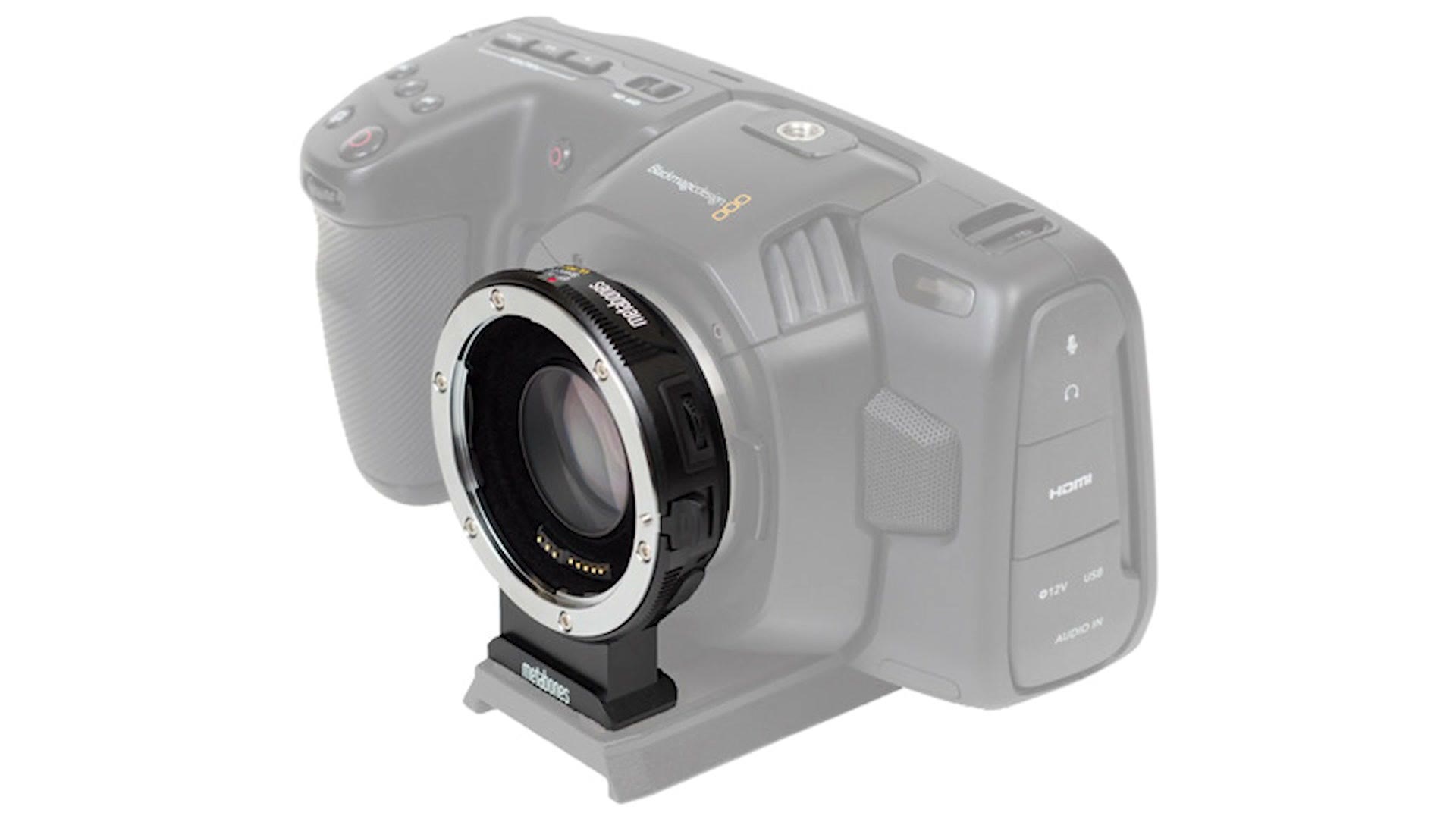
You cannot use a speed booster. A lot of people shoot the Pocket 4K with a speed booster, which turns the 2x Micro Four Thirds crop into something more like 1.3x, close to full frame. Those people are going to have a wider field of view on the same lens than anyone shooting the Pocket 6K. That is a real bummer.
The one pro of EF is that the Pocket 6K does support autofocus with “compatible lenses.” I am not holding my breath for anything close to Canon’s dual pixel, though, because continuous autofocus does not appear to be a thing here. It is tap once to focus, tap again when you want it to refocus.
Batteries, Price And Availability
Speaking of the batteries it shares with my 7D, you will probably want the battery grip, because current runtime is about 45 minutes per battery. Which somehow makes my a7S II’s battery life look decent.
The Pocket 6K retails for $2,495, and here is the real surprise: it was available to buy immediately after the announcement. Friends of mine who pre-ordered the second it was revealed got shipping notifications the next day. That is genuinely impressive.
You can get it at B&H here.
Should You Buy It?
If you were already looking at the Pocket 4K, ask yourself whether you actually need 6K so you can punch in and reframe while still delivering 4K. If you don’t need that, and if you are not delivering in 4K at all, the Pocket 4K with its Micro Four Thirds mount and its ability to take a speed booster is arguably the more versatile camera.
But if you do need 6K, and especially if you already have a pile of EF glass, the 6K is a great choice, and good future-proofing. At least until 2020, when the Pocket 8K gets announced. Right?
The Competition
If you had asked me a week ago which company would be first to a mirrorless camera recording 6K, I would have said the Panasonic S1H. It is already announced, it is coming in fall 2019. Then Blackmagic snuck in and stole Panasonic’s thunder, which is a lovely little jab and I love it.
The S1H is still due in fall 2019 with 6K in full frame and a flip around screen, and I am sure a heftier price tag than $2,500. It uses the L mount, which is much newer and has significantly fewer lenses available than EF or Micro Four Thirds. I am still very optimistic about it though. I think Panasonic is going to deliver an absolute monster, and I do love me some full frame.
Then there is Sony, who in July 2019 announced the a7R IV, a camera that still tops out at 4K 30. The same resolution and frame rate as my nearly four year old a7S II.
I want to believe Sony knocks it out of the park with the a7S III and competes with cameras shooting 6K. I made two videos about that recently: why it is taking so long, and whether it can live up to the hype. The Pocket 6K is now one more camera the a7S III has to answer, in a market where more and more filmmakers are going to expect 6K. Sony, you have until the end of 2019 to blow our collective minds, and every new release makes that harder.
And then Canon. The company that handed me my first filmmaking DSLR ten years ago is now the company too afraid of cannibalizing its higher end cameras to give us 4K without a massive crop or enormous files.
I am hoping that by 2029, ten years from now, we will hear about Canon bringing 6K to their DSLRs and mirrorless bodies too.