Two weeks ago I had the opportunity to sit down (virtually) with Matt Peet of the Finding Creative Success Podcast and talk about *drumroll please* how I found creative success! Okay, it wasn’t quite that literal of a podcast, but we did get to touch on a lot of great topics such as, helpful advice when starting out filming weddings, how to get more clients, and what to do to grow your followers online. I even revealed one of my biggest failures as a wedding filmmaker! Overall, it was a really enjoyable 40 minutes that passed very quickly. You can listen and subscribe to the podcast on iTunes, or in your web browser at the Finding Creative Success website.
If you have any questions about anything we discussed in the podcast, please leave a comment below or feel free to get in touch.
About 9 years ago, before I was even considering pursuing a career in making videos, I entered a video contest put on by Texas A&M University called “Why I’m an Aggie.” My entry featured students speaking about why they chose Texas A&M and what they enjoyed about the university. Throughout the video, I featured pretty shots of campus that I shot with my trusty Sony HDR-UX1 (recording to mini-DVDs, SD cards weren’t fast or large enough yet).
The shot that set my contest entry apart from the others though, was an aerial video of campus that I filmed from a plane. Yes, I actually rode in a plane over campus to get a shot for my video! This blew away the judges considering that aerial video was still relatively rare (unless you happened to have a pilot father – thanks dad).
Nine years later, aerial video is now mainstream. People are buying Millennium Falcon camera drones, stuffing their dead cats and turning them into quadcopters, and anyone with a cell phone can purchase a flying camera for as little as $20. My aerial video in 2008 that took so much effort and timing, could now be accomplished by any kid with a drone Christmas present. It would probably look smoother and be better colored too.
In August of 2016, the Federal Aviation Administration passed their official rules for commercial drone usage in the United States. Up until this point, if you wanted to make money flying your drone you had to apply for a Section 333 waiver and actually possess a pilot’s license to fly a drone.
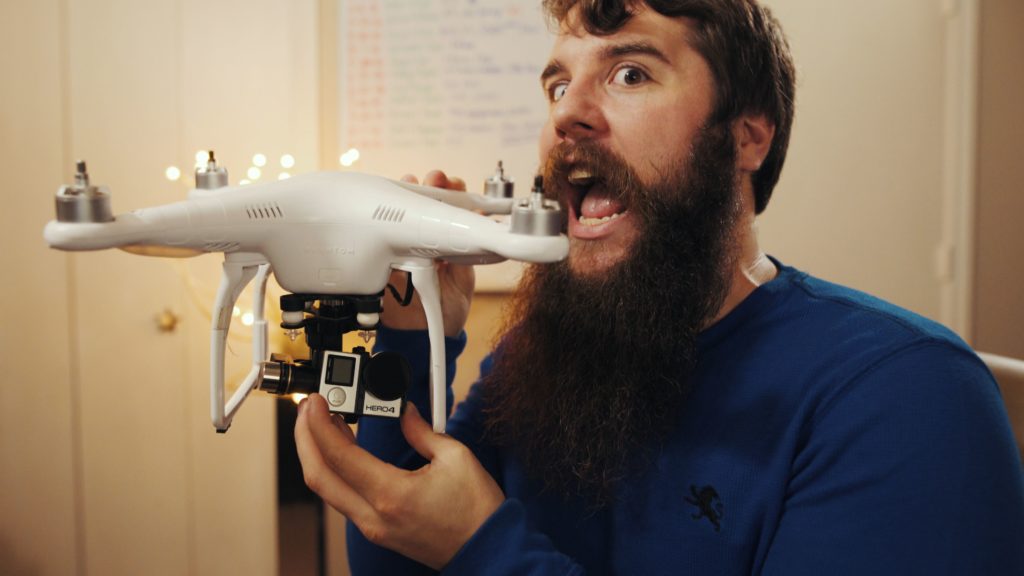
You can eat your drone, but I wouldn’t recommend it.
This all changed with the FAA’s Part 107 ruling, which made getting a license to fly your drone for commercial purposes as easy as taking a knowledge test, no pilot’s license required.
Now when I say easy, I mean easier than getting an actual pilot’s license, not that the test itself is easy. Which brings us to this video that I created today, which is all about why you should take the knowledge test, and how to study for and pass it.
In the video, I detail the exact resources that I used to pass the Part 107 knowledge test. These resources are now listed below in order that I speak about them in the video. If you study these materials, you shouldn’t need to spend any extra money on any courses or classes for the test.
But, if you find that you benefit more from a classroom setting, I would recommend checking out Drone Pilot Ground School and Remote Pilot 101.
Here are the study resources that I listed in the video, in order:
OTHER RESOURCES NOT MENTIONED IN THE VIDEO
– SkyVector
– AIRNAV
That’s it! Read and study these articles, listen to the podcast, take the practice test, and when you’re ready, go and take the real thing. If you take your time and prepare, you’ll pass like I did.
As always, if you have any questions or comments, feel free to leave one below or get in touch.
This past August, I finally had the opportunity to see what all the cruise fuss was about, with a 5 day sailing from Galveston to Cozumel and Progreso on the venerable Carnival Liberty.