
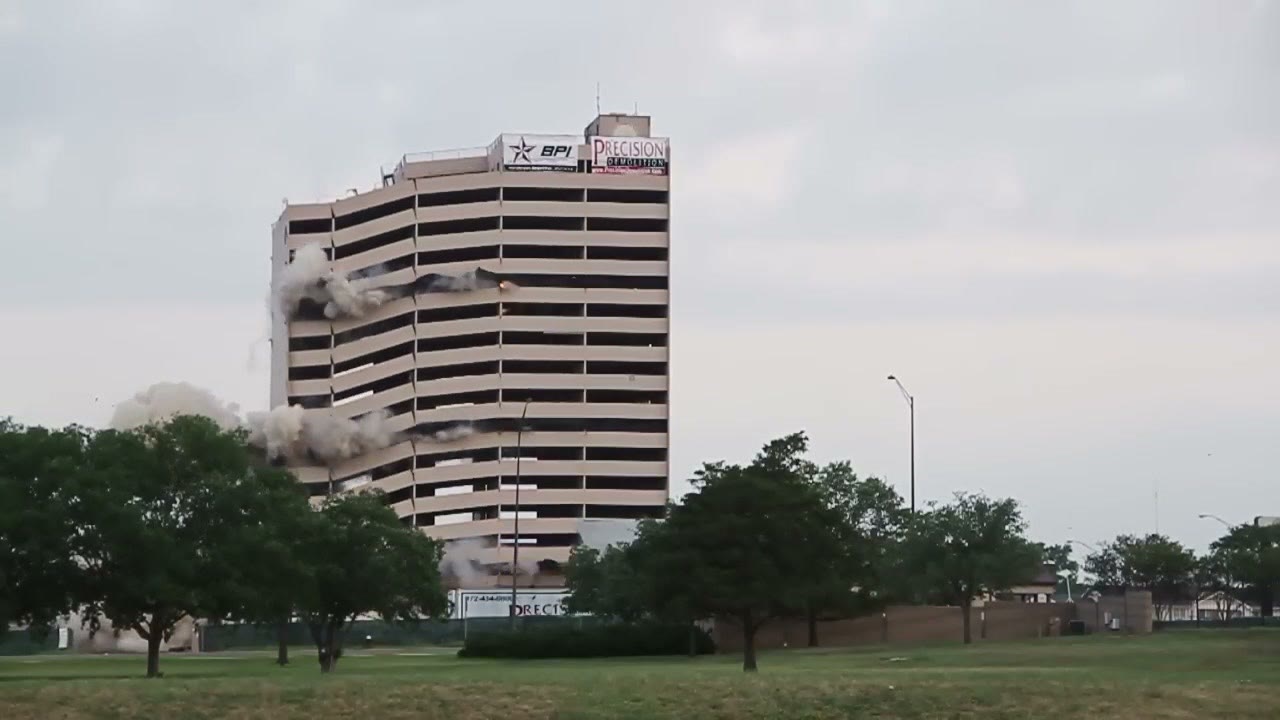
On May 24th, 2012, Precision Demolition brought down the Plaza Hotel in College Station, Texas. It took about nine seconds.
Three of us filmed it from four different positions, and this is all four angles cut together, with the collapse repeated in slow motion.
You Get One Take
I have banged on elsewhere on this site about filming things that only happen once, and this is the purest version of that problem I have ever been handed.
A wedding at least gives you a whole day and a rough schedule. A building comes down at a time somebody else decides, in under ten seconds, and then it is gone forever and there is no version of the afternoon where you get to try again. Everything that matters about this shoot happened before the charges went off.
So here is what you actually do:
- Cover it from more positions than you think you need. Three people, four angles. If one camera is soft, or somebody walks in front of it, or a battery dies, you still have a film.
- Lock everything off in advance. Exposure, focus, white balance, all manual, all set before you are anywhere near the moment. Auto anything will hunt at exactly the wrong second, because a giant grey dust cloud is precisely the kind of thing that makes a light meter panic.
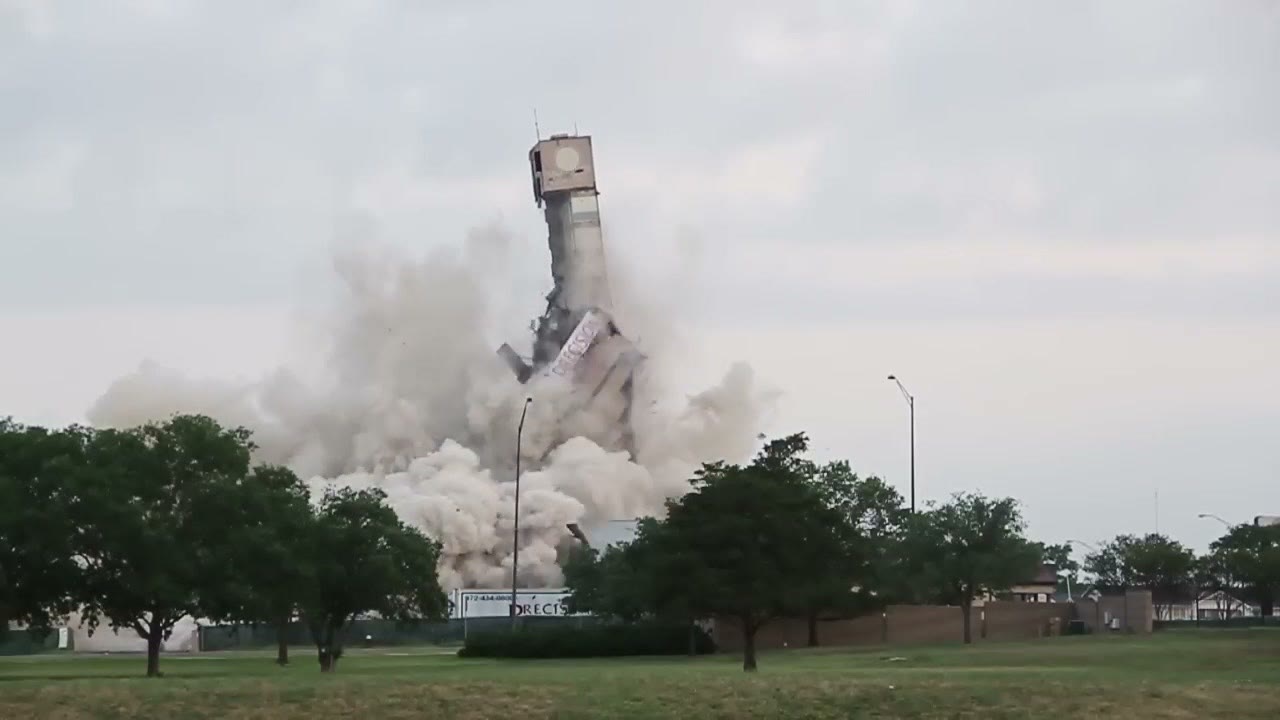
- Frame wider than feels right. You do not know which way the top of that tower is going to fall. Look at the second angle in this film: the top section topples sideways, well outside where I would have cropped it if I had been feeling confident.
- Start rolling stupidly early and do not stop. Cards are cheap. There is no prize for a tidy clip.
Why Slow Motion Earns Its Place Here
Slow motion gets used as decoration most of the time, and I am as guilty of that as anybody. Here it is doing an actual job.
The collapse at normal speed is over before your brain has finished registering that it started. You see a building, then you see a cloud, and you have missed the entire middle of it. Slowed down, you can watch the sequence the demolition crew actually designed: which corner goes first, how the structure folds in on itself rather than out, how the top holds its shape for a surprisingly long time before it stops being a building at all.
That is the difference between a clip of a thing and a record of it. The slow motion is not there to look cool, it is there because at full speed you genuinely cannot see what happened.
Four Angles, Three People
The other thing worth saying is how much better multiple positions make an event like this in the edit, and not for the reason you would guess. It is not really about coverage. It is about scale.
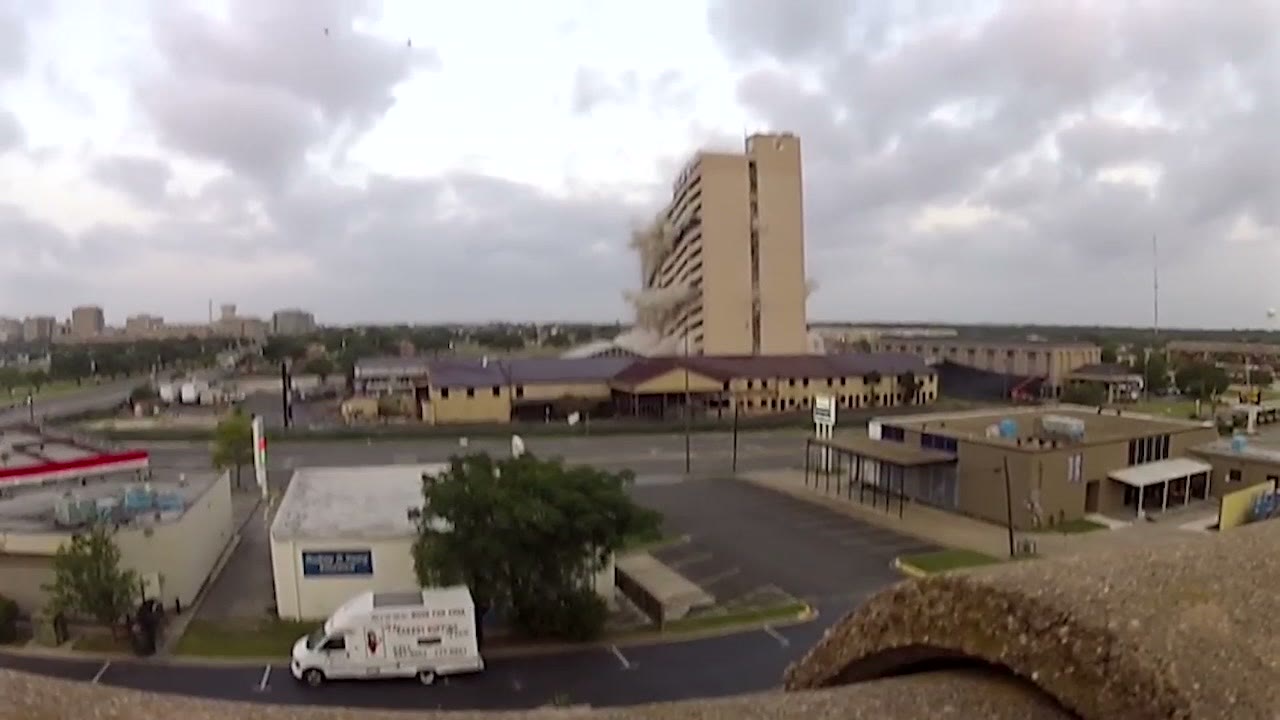
One angle tells you a building fell down. Cutting between a tight angle across the road and a high wide one with a whole parking lot and a petrol station in the bottom of frame tells you how big it was, because you finally have something to measure it against.
Credits
Filmed by Phil Barrington, Matt Johnson, and Taylor Stanley. Phil also put together a behind the scenes director’s cut, over on his Vimeo.