
It’s 2021, and one of the most common questions I get lately is: should I buy a Sony a7S II?
Sony discontinued it and there are no new models coming, but the used market is practically flooded with them, so you can pick one up for a pretty reasonable $1,200 or so.
So here is my answer, and it comes with a twist. I want to give you three reasons I do not think buying the a7S II is a good decision, and why I would look at the a7S III or the a7C instead. Then I will give you the one reason I think it is still a good buy in 2021.
Grab your beard. Let’s talk about this camera.
a7S II Autofocus Performance
The a7S II has autofocus. It is a contrast based system and it is mediocre at best. I do not consider it reliable enough for professional work.
For the five years the a7S II was my primary camera, I basically only used manual focus and pretended the autofocus did not exist.
Sony clearly knew this was a shortcoming, because a few years later they released the a7S III, which carries many of the same video features but adds a phase detect system that is light years better. I actually trust the a7S III’s autofocus. It works. That alone makes it a very compelling choice over the a7S II.
The newer a7C is even cheaper than the a7S III and has a similar autofocus system, so that is a great option here too.
a7S II Mediocre Battery Life
You might be thinking the autofocus is not a dealbreaker, you can just pull focus manually, that is what Hollywood does. Fine. This second one is a huge deal, and I guarantee it will affect you.
The a7S II uses the small, low capacity NP-FW50 battery. If you are shooting 4K, which I would argue is the main reason you are considering this camera at all, expect roughly one hour of battery life. Maybe a smidge more. At best.
That means you are not buying one or two spares. You are buying a lot of spares. Filming a longer event like a wedding, I would routinely go through four to six batteries in a day. Factor in that I only recommend genuine Sony batteries to avoid compatibility problems, and you are spending hundreds of dollars on power alone.
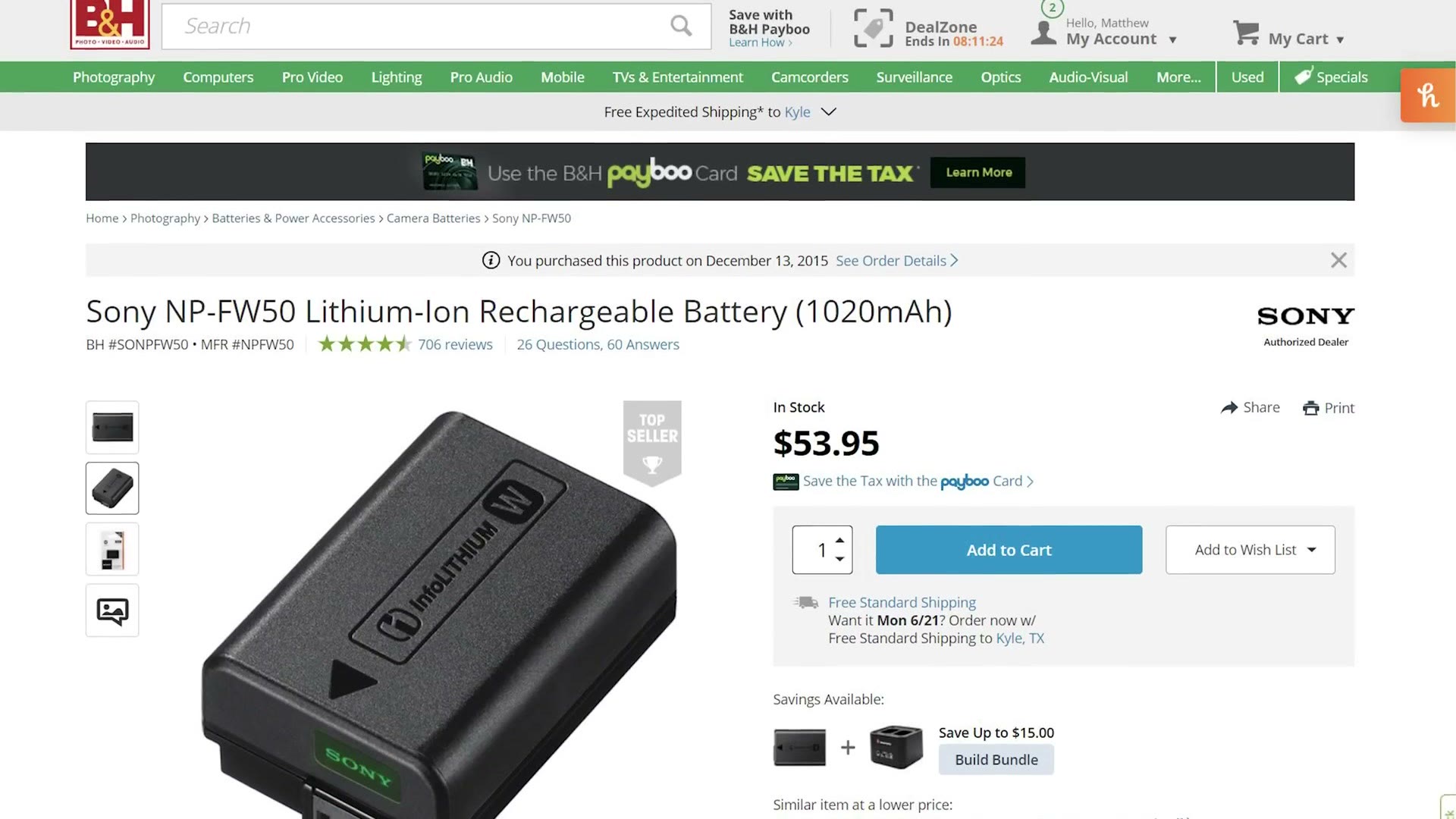
I currently own 12 batteries for my two a7S IIs. At today’s prices that is around $600 in batteries, and I paid more than that for a lot of them several years ago when they were dearer.
Now contrast that with Sony’s newer bodies. The a7 III, the a7C and most of the recent lineup use the NP-FZ100, which is significantly larger and gives you two and a half to three times the life. Two to three hours or more.
The first time I filmed a wedding on the a7S III, I suddenly found myself using two batteries instead of six. Less stress, no watching the meter, no juggling chargers, and a lot less money spent.
Future Upgradeability
The third reason is tied directly to the second.
If you invest in an a7S II and the pile of NP-FW50s it demands, and then you decide to upgrade later to an a7 III, an a7C, an a7S III, or whatever comes next, none of those batteries come with you. There is basically zero chance Sony goes back to that battery.
So yes, there are better deals on an a7S II body right now. But once you add hundreds of dollars of batteries, the gap between it and an a7 III or a7C starts closing fast. Especially if you look at used versions of those too.
Because all of Sony’s newer cameras share the FZ100, I am confident they will keep supporting it. The a7 III and a7C give you an upgrade path where at least some of your accessories come along for the ride.
Single Memory Card Slot
A bonus fourth reason, since I have not convinced you yet: the a7S II has one SD card slot. Every full-frame Sony from the a7 III onward has two.
That means if you ever have a card fail, you have a backup. If you are a working professional shooting one-take events like weddings, where there are no do-overs, that second card recording in parallel is worth a lot of peace of mind.
Why The a7S II Is Still A Good Choice
I promised you one reason, and here it is. This camera is still dang good in low light.
For the price, I do not see you finding a cheaper camera that competes on pure low light performance at extremely high ISO. And when I say extreme, I mean it.
Having used both, I am completely confident shooting the a7 III up to ISO 16,000. Push past that and the image falls apart quickly. The a7S II performs well up to ISO 32,000, and I have filmed with it in moonlight at ISO 64,000.
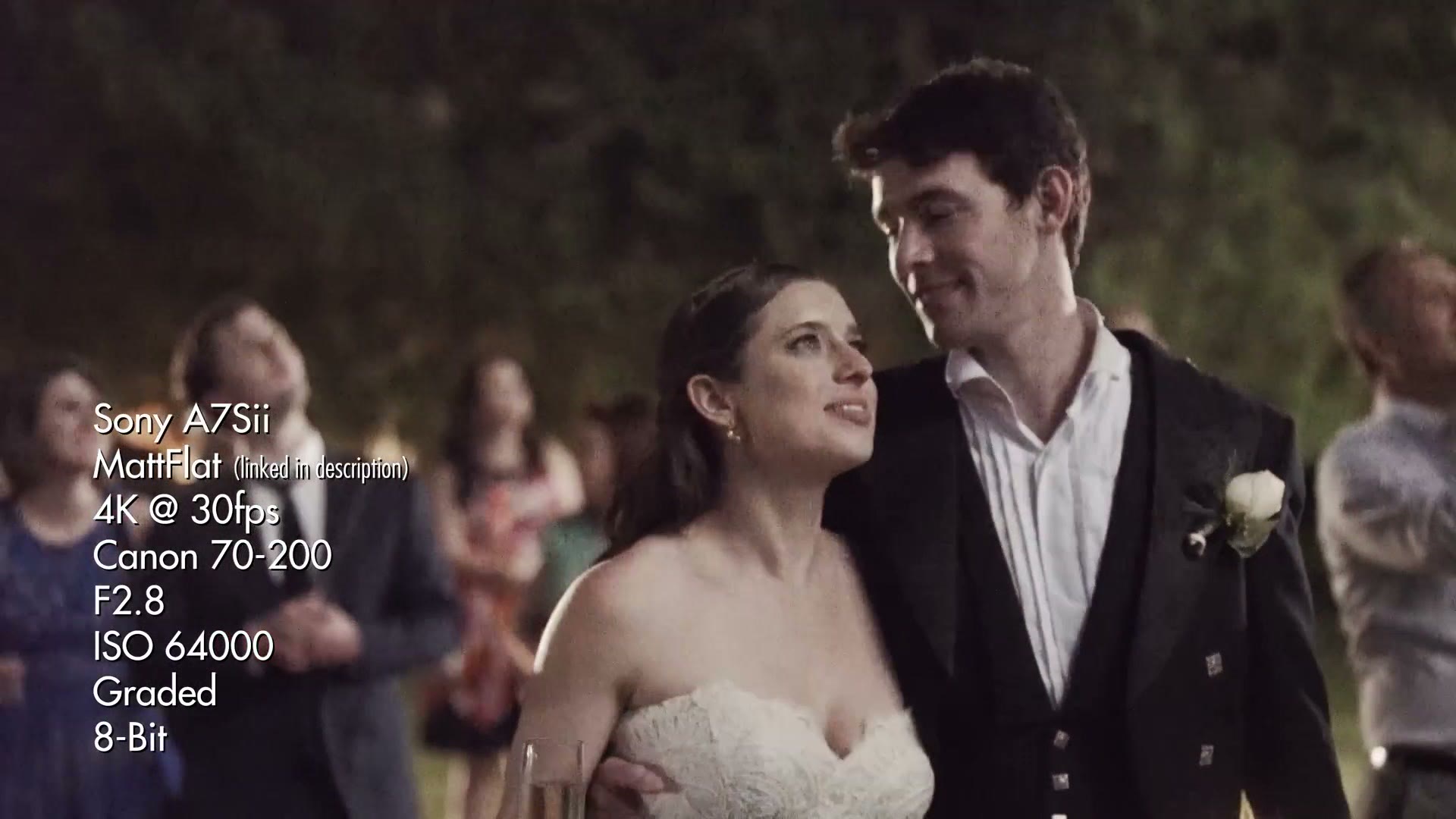
That is a real frame from a wedding reception, 4K at 30fps on a Canon 70-200 at f/2.8, ISO 64,000, in my MattFlat profile, graded, 8 bit. It holds together.
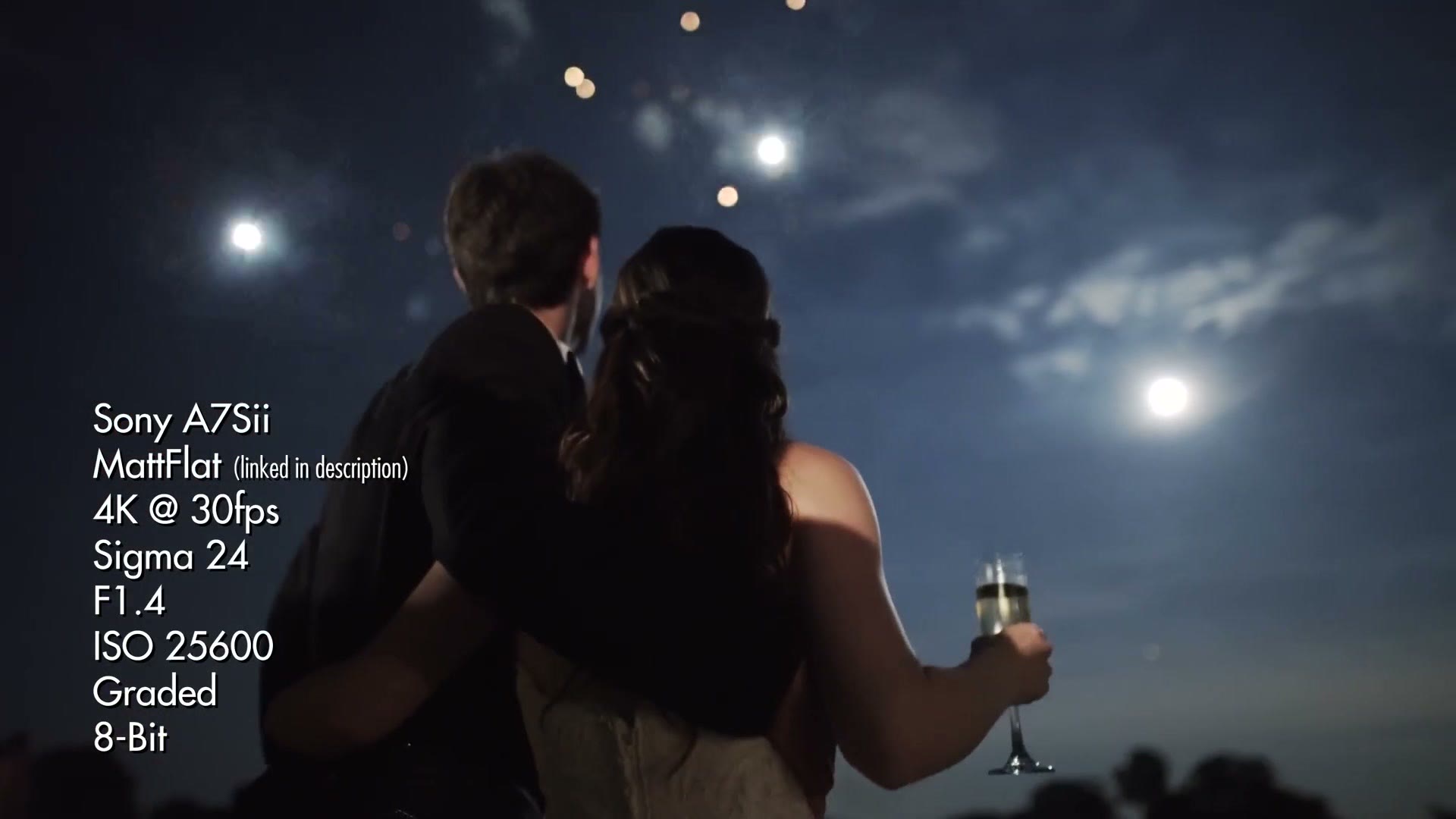
So this is a genuinely weird niche. But if you regularly film in moonlight with no external lighting, or in other extremely dark situations above ISO 16,000 where you need stellar low light, then and only then would I recommend the a7S II.
TL;DR: Just Buy A Sony a7S III
Otherwise, consider this. The a7 III and the a7C have the exact same video features as the a7S II. Same 4K resolution, same codec, same bit rate, same frame rate options. And on top of that they add stellar autofocus, enormous battery life, and an upgrade path that carries those batteries forward. That is why I do not recommend buying the a7S II.
And let me throw one more wrench into your decision. If you have room in the budget and you want a camera that solidly beats every camera in this article, stop agonizing and just buy a Sony a7S III. It is better in basically every single way. It improves on every area, and it is easily my favorite and the best camera I have ever used.
If you cannot afford it, the a7 III or the a7C would be my second choice.
Wedding Filmmakers, This One Is For You
I used a lot of wedding examples in this one, so if you are a wedding filmmaker like me, you probably want to book more couples and film more weddings. I made a free guide with practical steps you can take in your business right now to do that.