
Today I want to talk to you about the future of wedding films and where I think wedding videography is headed.
This is really important to keep in mind, because I want you to be aware of how wedding films are growing and changing. The last thing I want is for you to turn into a meme of an old wedding videographer yelling things like “filming weddings on tape is good enough.”
You laugh, but I have met wedding videographers over the years who still say things like “these tiny DSLRs and mirrorless cameras are a fad, we’re going back to shoulder mounted rigs soon.” And I don’t know that we necessarily are. So I don’t want to see you turn into that.
Before we get started, I’ve put together a free guide to help you book more wedding film clients. You can download it for free and I’d love for you to check it out.
First Way Wedding Filmmaking Is Changing
One of the biggest changes I think we’re going to see is the shift of wedding videographers filming weddings on their cell phones, and this being completely acceptable.
I realize you may be preparing to type comments like “cell phones are not professional enough,” “the image quality isn’t there yet,” “you’re crazy, Matt.” That’s fine, you can say that. But as a rebuttal, I want you to know that this is already happening, regardless of whether you think it’s okay or acceptable. There are filmmakers out there already doing it.
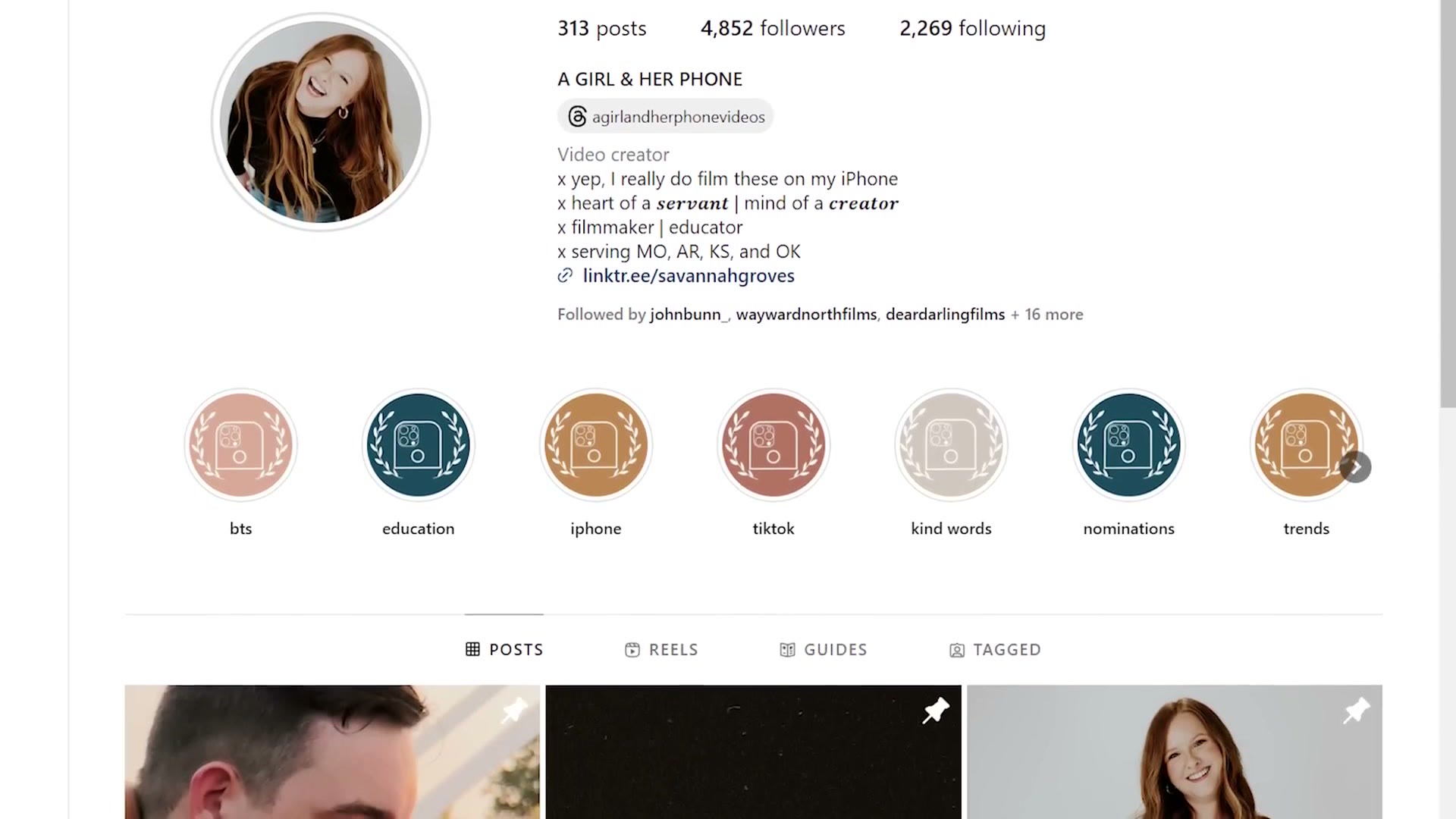
For example, there’s an extremely talented wedding videographer who appropriately goes by the name A Girl And Her Phone, and as the name implies, she films weddings completely with an iPhone. Of course, she has it rigged out with a stabilizer and filters and microphones. But the fact remains that she’s filming weddings with an iPhone, and they look really good.
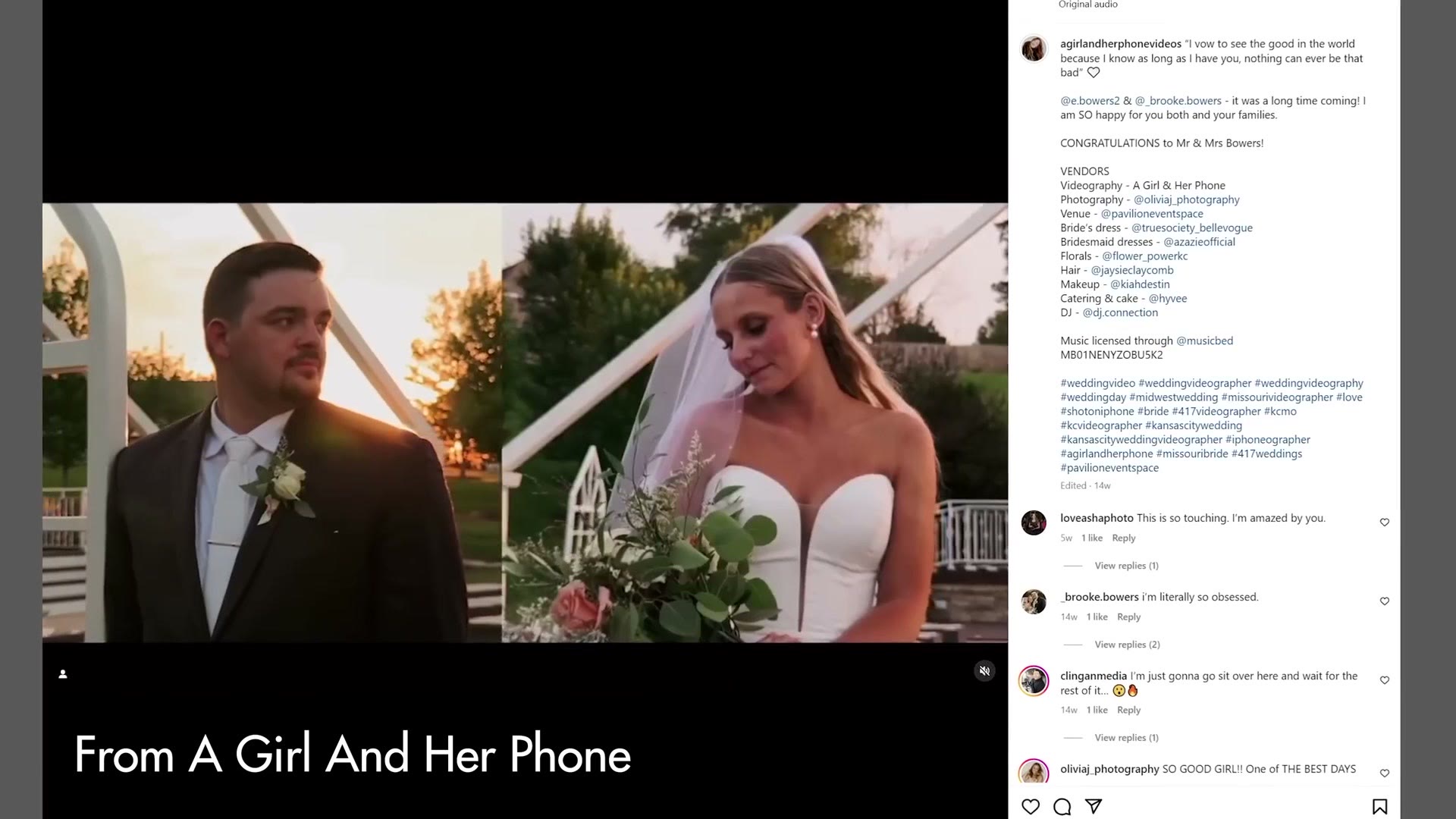
Her compositions are great, the shots are smooth and stable, and it works. And above all, even more important than that, she’s happy filming with her iPhone and her couples are happy with the work she’s making for them. That’s what matters most.
Talking more about the future of filming weddings with phones though, we need to take a second to talk specifically about the iPhone, because when Apple released the 15 Pro and Pro Max, that was, in a word, revolutionary for cell phone video.
Apple didn’t just release new phones. They also released a new picture profile called Apple Log. And what makes Apple Log so special is that for the first time ever, Apple is dialing back a lot of the post processing and sharpening it does to video you film on an iPhone.
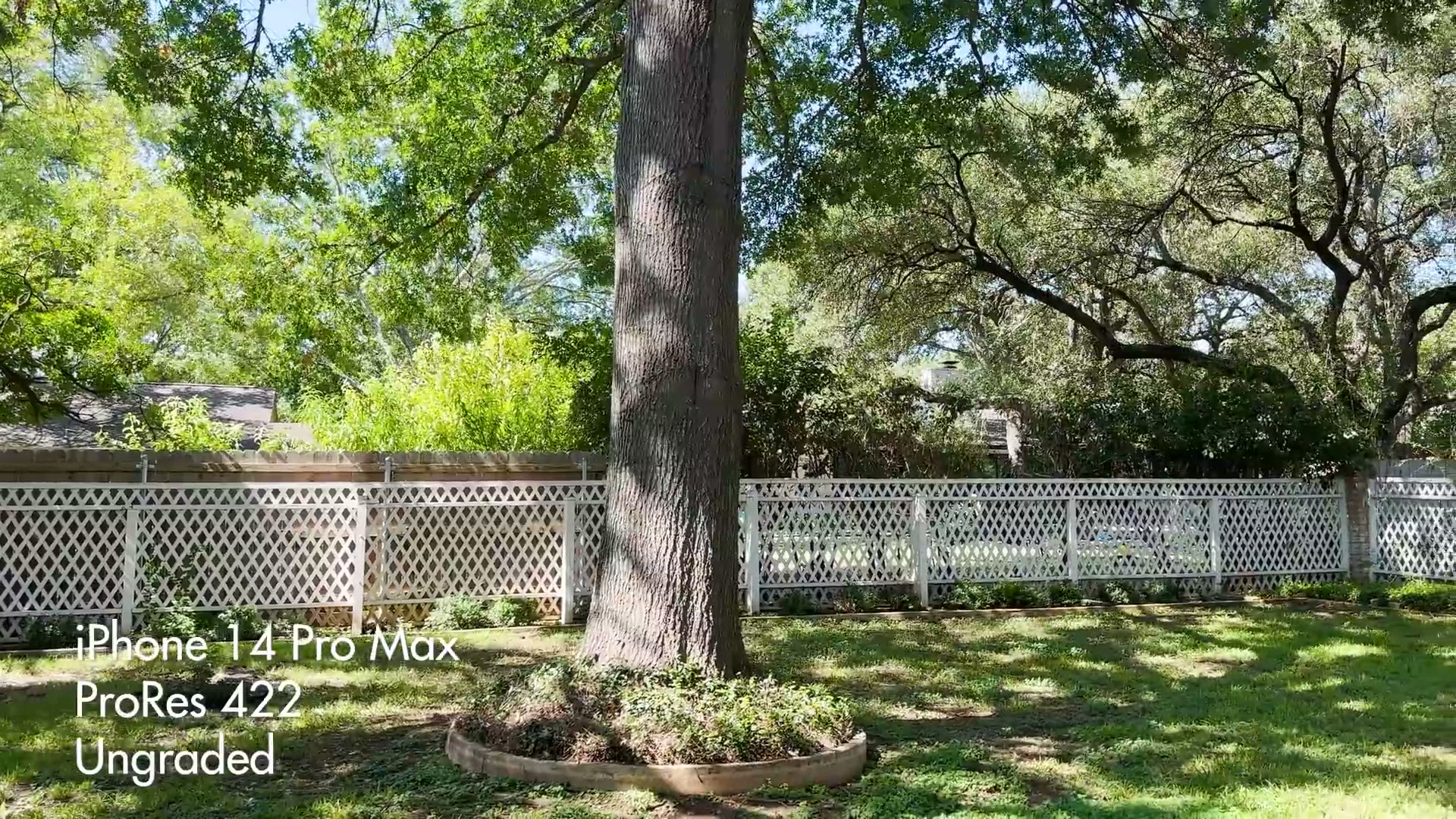
Here’s the deal. With all previous iPhones, Apple heavily oversharpened the image to within about an inch of its life. And while that footage still looks decent, my theory for why they overprocessed things so much is that above all they want the footage to look best on the tiny iPhone screen, and to do that they know oversharpening will help it compete with something like Samsung’s flagship phones. Basically, Apple did not want a potential buyer holding an iPhone next to a Samsung and seeing the iPhone footage look less sharp and crispy on a six inch display.
The problem is that heavily oversharpened footage only looks good on the phone’s screen. Once you copy it to a computer and view it on a larger screen or a TV, it falls apart very quickly, because the sharpening is so extreme.
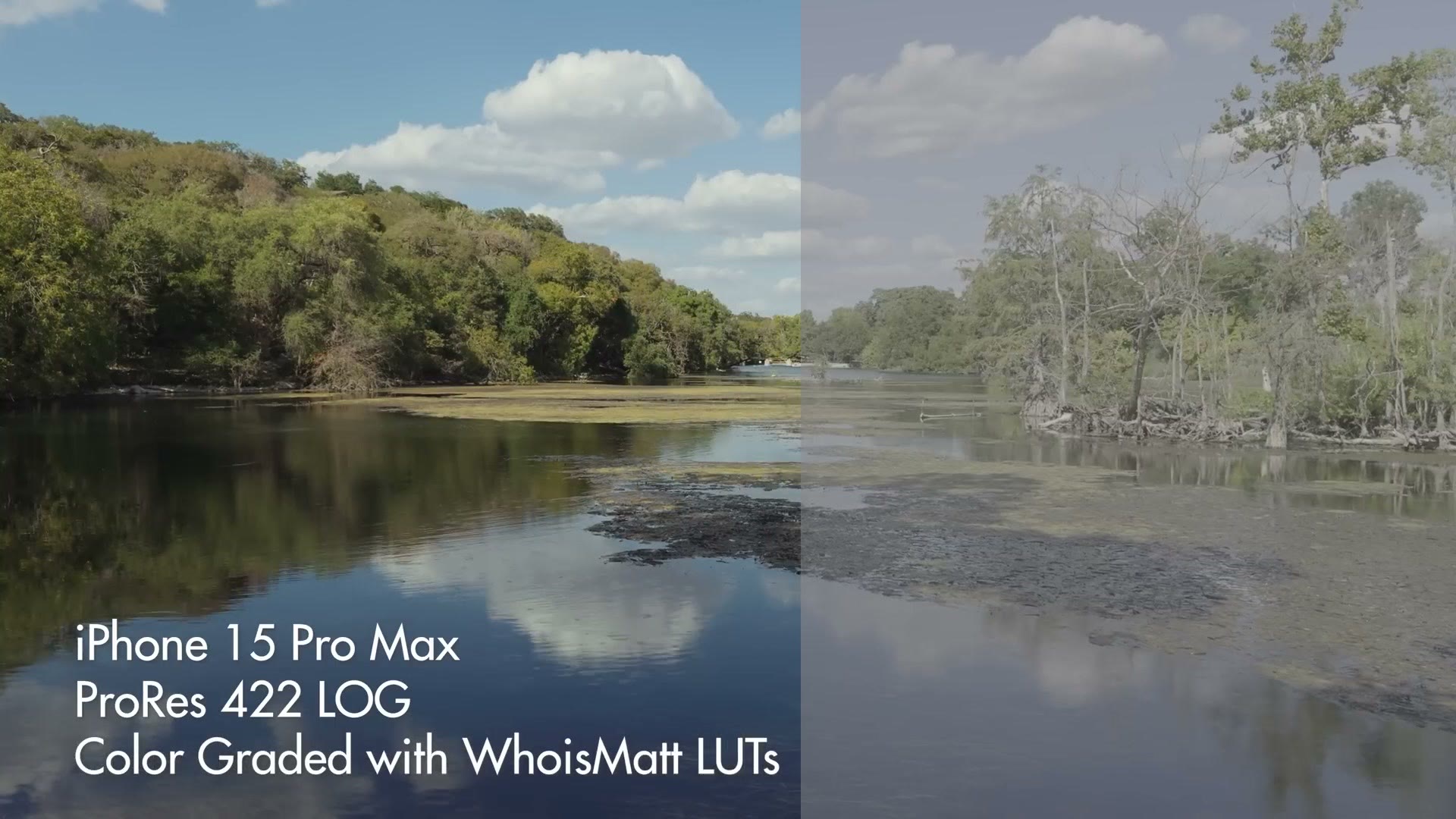
With Apple Log, all of that sharpness has been removed and you’re left with an image that looks significantly more like something you’d record with a larger mirrorless camera, not a cell phone.
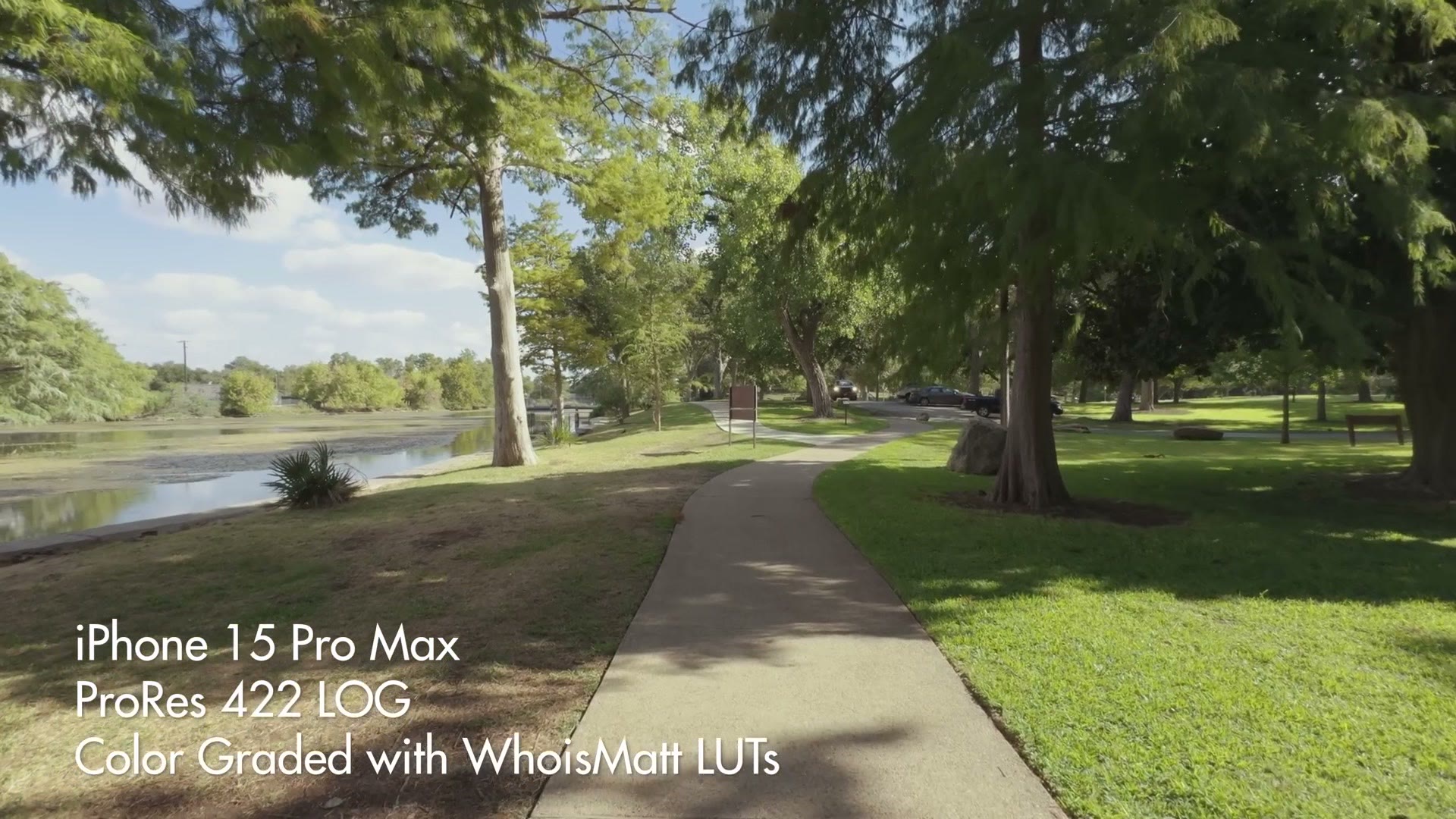
And then if you pair this higher quality, less sharpened footage with a free app like the Blackmagic Camera app, which lets you film in Apple Log and not only in ProRes but in a much more compressed codec like H.265 that still looks great at a small file size, filming a wedding with an iPhone becomes dramatically more feasible for a lot of people.
Honestly, confession time here, in case you haven’t seen it, as the ultimate proof of concept I recently filmed a wedding with an iPhone and it went really well. I used the iPhone 15 Pro Max and I was really impressed by the video quality and how easy it was to use. If you want to watch the wedding film I created, or the full behind the scenes, both are worth your time.
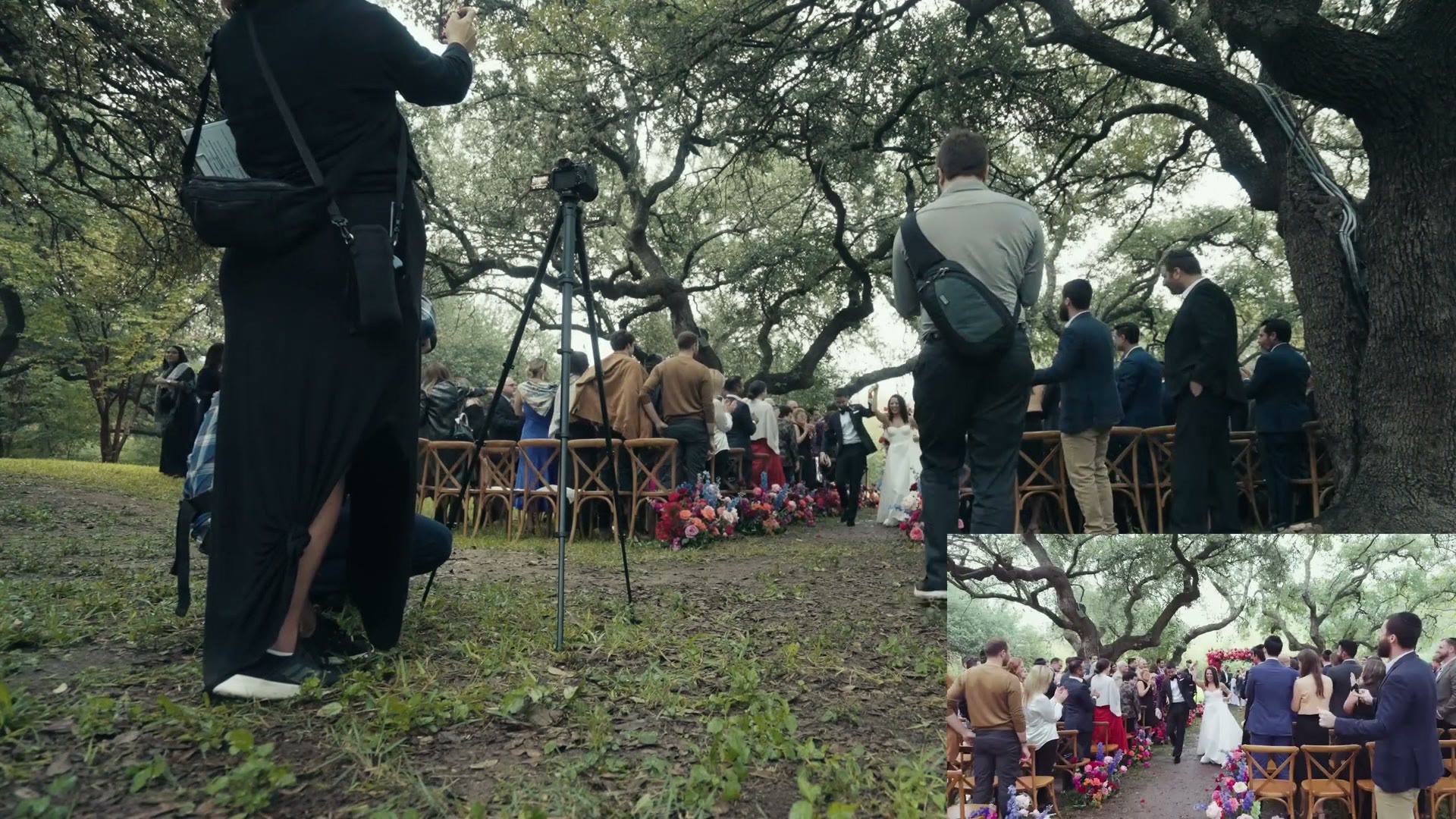
So there you have it. The first way I see wedding films changing is that we’re going to see a lot more filmmakers shooting them on cell phones. And to be clear, it may not be the entire wedding film, it may be parts of it.
There have been many times I’ve been filming something and wished I was doing it in a smaller, more discreet way. For example, I often film the groomsmen hanging out at Topgolf. If you don’t know what Topgolf is, it’s a fun way to go hit golf balls and drink and eat while you do it, and a lot of groomsmen go in the morning of a wedding day, so I show up to film them.
I have been confronted by the management of Topgolf before, whenever I brought in too big of a camera. I had a pretty hefty setup with a Glidecam, and they were like, hey, what are you doing? They were fine with it eventually, once I explained. But imagine you’re filming at a Topgolf, or a museum, or somewhere else that’s never going to let you in with a large camera. Instead you film the couple on your cell phone, you’re super discreet, nobody thinks anything of it, but you’re actually recording ultra high quality footage you can easily mix in with the rest of your wedding footage, and no one will know.
Pretty cool. Do you see where I’m going with this?
2nd Future Change Of How You Film Weddings (You May Not Like This)
This one still has to do with cell phones, sorry, we’re just continuing this trend. But don’t worry, it’s not about Apple Log or anything like that. Instead, I think the future of wedding films is vertical. As in vertical video that you film with a cell phone, or that you can get by turning your camera sideways.
Here’s the truth. Everybody wants footage in vertical now. Videographers want it so they can promote their business on TikTok and Instagram Reels. Couples want it because they want to share clips themselves on TikTok and Instagram Reels.
And this makes it tough, because as professionals our cameras are really designed to film horizontally and be mounted horizontally. That has led to so many wedding filmmakers either starting to film clips vertically, or filming with their phone alongside their camera during a wedding. It’s crazy.
The tough thing is that at a wedding in particular, you only get one shot at a lot of things. So unless you want to rig up some Frankenstein contraption where you’re filming horizontally and vertically at the same time, it can be tough to get the vertical footage you need.
So what do you do? Do you just say forget horizontal and start filming all of your wedding films vertically? No, I wouldn’t do that. TVs are still horizontal, and I don’t really see people mounting their TVs vertically for a while yet.
Instead, my recommendation is to film in at least 4K if you aren’t already, so upgrade your camera if you’re still filming HD, join us in the world of 4K, and then start composing and framing your shots with vertical in mind.
What I mean by that is that I still want you filming horizontally, but I always want you thinking about how a shot is going to look if you crop it vertically. One way to do this is that instead of filming quite so tight on someone, step back a few feet and go a bit wider. You can always crop in tighter later with minimal quality loss, but more importantly, filming a bit wider gives you room to crop vertically.
So if you’re filming a couple standing together and you’re too close, they fill the frame, and cropping vertical is going to cut one of them off. But if you’re a bit wider, you can get both of them into a vertical frame, and that’s going to look a whole lot better.
If you want to make it even easier on yourself and you use an external monitor when recording, many monitors support different grid lines and patterns, and on some of them you can set up a horizontal and a vertical guide on the same shot. So as you compose your horizontal wide shot, you have lines showing you the vertical frame too.
Eventually I think we’re going to have tools like this on all of our cameras, because manufacturers know filmmakers want both. But considering how slow camera manufacturers often are to implement new things, it may take a while. So film horizontal, but keep vertical in mind, because that’s where things are moving and what so many people want.
And remember, as annoying as it may be, it’s going to be good for you and your business and your marketing, and it’s going to be good for your couples, because they’re going to want that vertical footage anyway.
The Biggest Buzzword Of The Future Of Wedding Films
Moving on to the third way wedding films are changing, and I promise we’re not going to talk about cell phones or vertical video for this one.
Thankfully it’s not crypto or NFTs either. Although, could you imagine if it was? Wedding coin. You’d have to pay for your wedding in wedding coin, you’d pay your vendors in wedding coin, and suddenly all the videographers are multimillionaires, but only in some obscure internet currency that isn’t actually worth anything. That could be fun.
No, the buzzword we need to talk about is, of course, AI, because that’s really where so much of the world of filmmaking and video editing is headed, especially whenever it comes to editing. Specifically, we need to talk about two things: generative AI, and editing.

If you don’t know what generative AI is, people often think about it in terms of image generators, where you type in a text prompt and suddenly an image is created out of nothing. Most notably, Adobe now includes generative AI in Photoshop, where you can select an area in a photo, type what you want to change it into, and it will simply create that out of nothing. It’s pretty cool.
It’s also completely disrupting the world of photography, with a lot of people either really excited about it or really mad that it’s going to take everybody’s jobs. There’s no in between. You’re either really mad or really excited. That’s just how things are going right now.
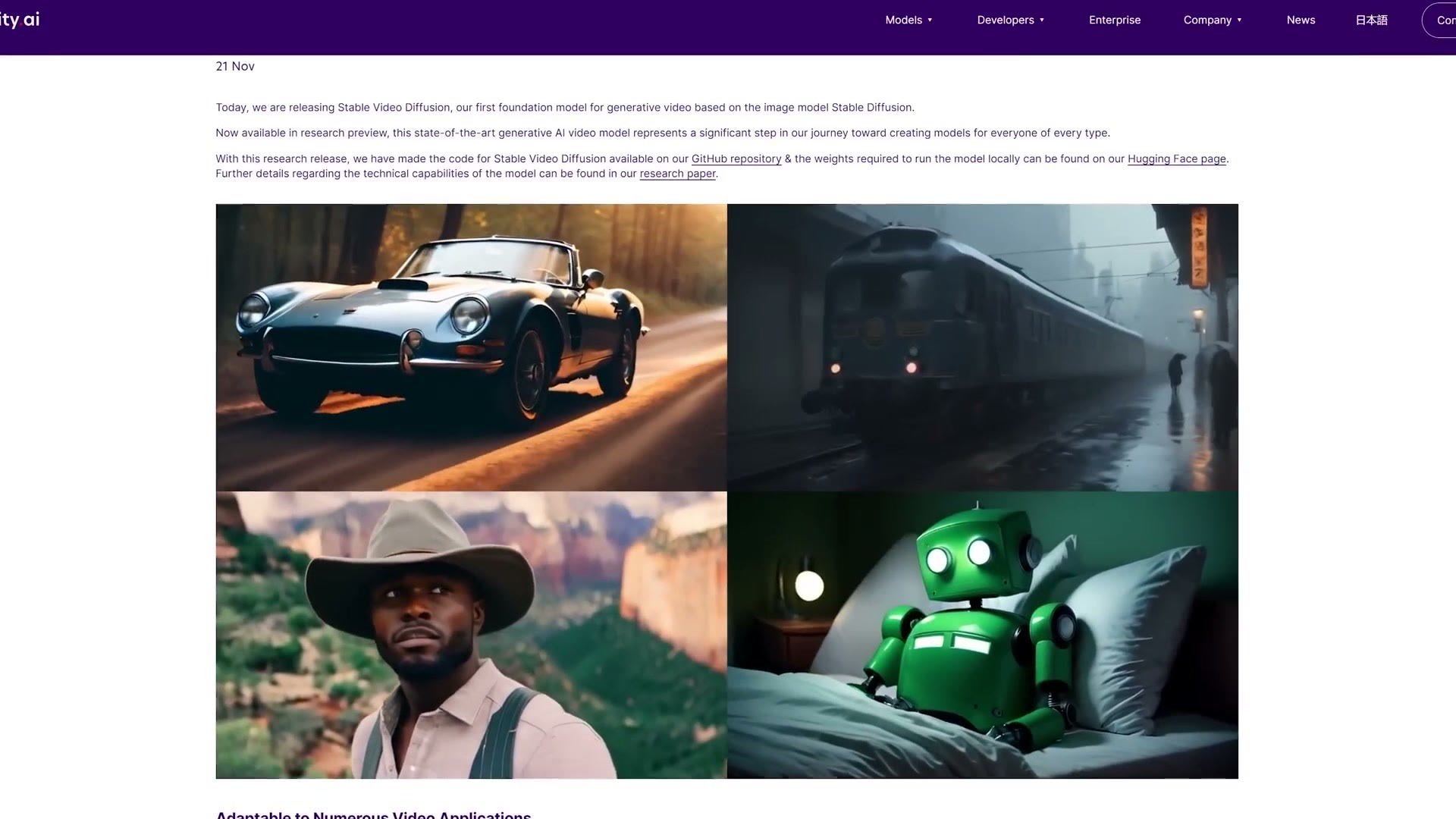
In the world of video, on the other hand, we have not seen generative AI reach quite this level of success yet, because video is significantly more complicated. Suddenly the computer not only needs to generate an image, that image needs to be moving in a natural, fluid way.
So while we’re seeing some developments here, this still needs work before you’re able to type in “wedding film” and have a full wedding video created out of nothing with artificially generated people. That’d be really weird. And honestly, it isn’t super compelling as a wedding videographer anyway, because it’s not like the AI people you generated are going to pay you to make them an AI wedding video. So while that may be possible someday, it’s not like you’re going to be getting paid for it.
The whole reason I’m bringing up generative AI for video is that it’s coming, and you need to be aware of it, and you need to be prepared for its effect on how you’ll be able to modify and manipulate your footage.
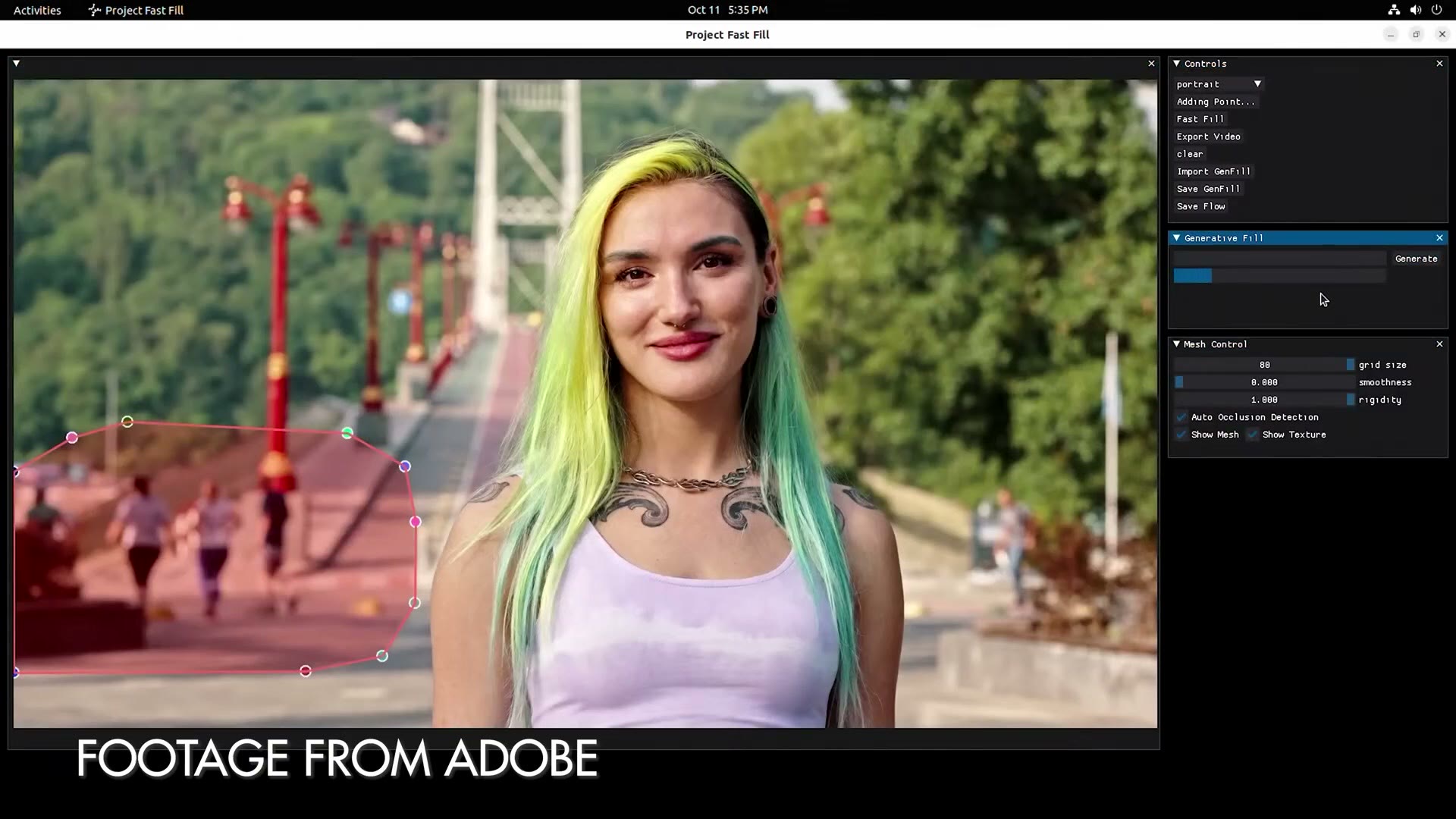
Aside from generating video from a text prompt, we’re already seeing companies like Adobe develop the AI tools you’ve seen in Photoshop and bring them to video. If you have something in your video you want to remove, be it a person or an object, you select it, and your software will track it and remove it and replace it with something else. Or you can replace something with something else entirely.
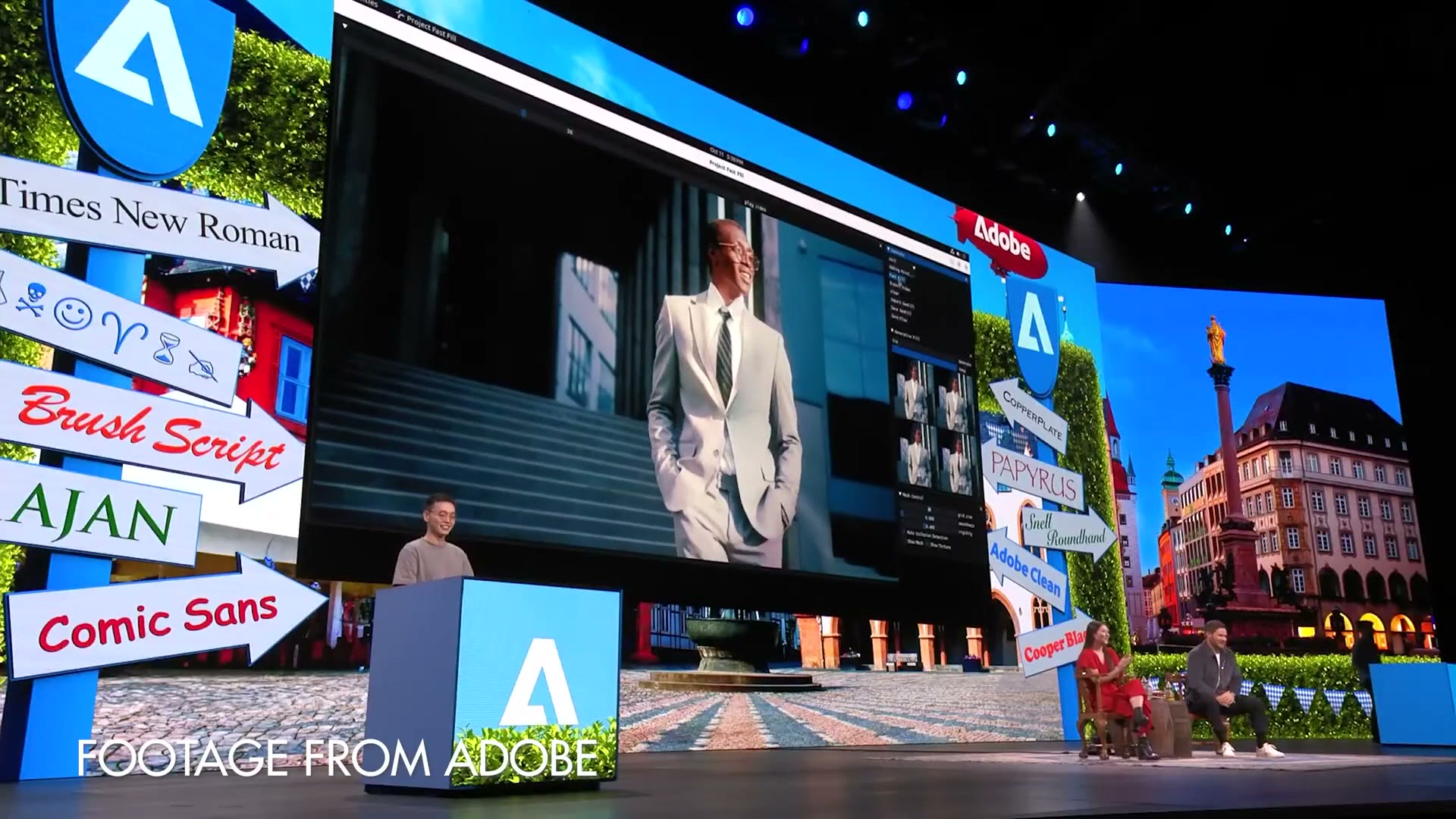
The possibilities are super cool, and it’s going to make shots that might have been unusable suddenly become usable. And for shots that were missing something, you can add it back in. It’s pretty crazy.
Of course, you’re also going to have to deal with clients who expect too much from you. Imagine how often photographers get told “you can just Photoshop that out.” Now you’re a videographer, and suddenly you’re being told “you can just remove that from the video, use AI to do it.” It’s kind of scary, but that future is coming.
In addition to generative AI, we also need to talk about AI in relation to video editing. A plugin called AutoPod took the world by storm earlier this year when it showed it was capable of using AI to make the cuts between two different people speaking in a podcast, automatically saving minutes if not hours of tedious work that video editors honestly hated doing.
Now, as a wedding videographer, imagine having software that will automatically edit a full wedding ceremony video for you, with all of the cuts between all the angles. Something that may have taken you hours can now be done in seconds, and you can still charge your couples for it. This is awesome.
My point is that I doubt AI will ever completely replace the human emotion that comes from editing a wedding film in a powerful, emotional way. But I can completely see AI taking care of a lot of the boring busy work edits we have to do.
Above all, remember that even if AI is janky right now, we’re really still in the first few years of it, and it’s only going to get better as time passes. This is all version 1.0. Imagine how good it’s going to be in five years, or ten.
So there you have it. The future of wedding videography, or at least a little peek into it. We’re going to see more videographers filming weddings with their phones, all of us need to be filming with vertical framing in mind, and AI is coming to disrupt everything. Just be aware of it.
Did I miss anything? Do you think the future of wedding videography is heading in a different direction? Leave me a comment and let me know.
Want Help Editing Your Wedding Films?
This video was sponsored by Bride&Groom Video. If you’re a wedding filmmaker who is feeling overwhelmed by the number of edits you have to finish, I highly recommend checking them out, because they specialize in editing high quality wedding films with a very fast turnaround time. We’re talking 14 days. It’s awesome.
I have personally had them edit a wedding film for me and I was very impressed by how they were able to replicate my style of work right away, creating a film that looked like something I would have made, and telling a great story with beautiful visuals and audio in the edit.
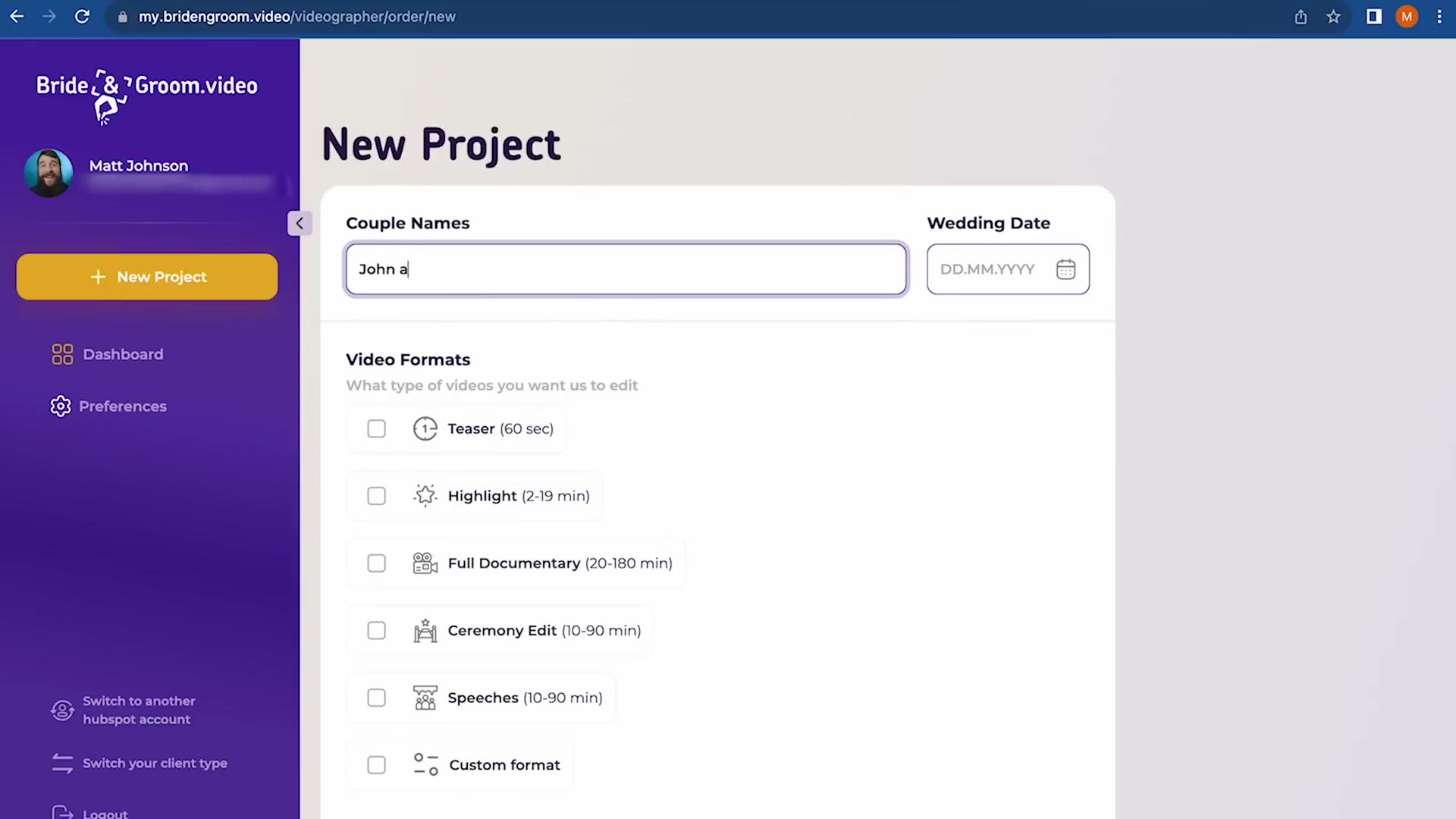
They have an incredibly easy to use order interface that keeps you updated on the status of your edits and when they’ll be done, and as a huge plus, they edit in Adobe Premiere, Final Cut and DaVinci Resolve, so regardless of which editor you use, they can work with you.
We’ve got to talk pricing too, because considering the quality of their work, I’m frankly shocked by how affordable they are. Bride&Groom Video will edit you a 60 second teaser for as cheap as $150, or a three minute wedding highlight for only $375. There’s even a package where you can get a highlight and a full documentary edit for only $800.
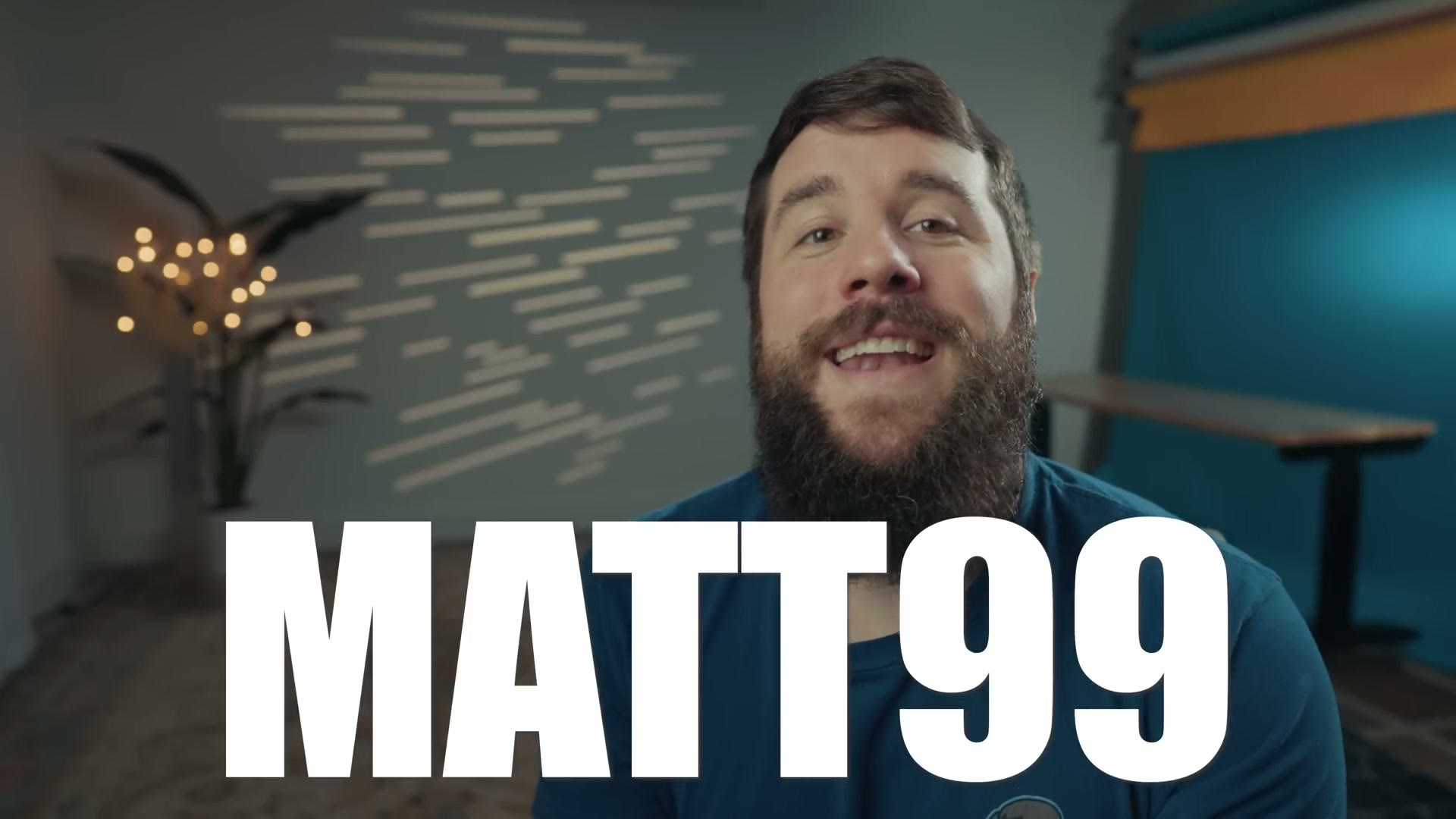
And as a special bonus, I’ve been able to negotiate a deal for you where if you use the coupon code MATT99 at checkout, you get $99 off your first edit from them. This is a fantastic deal.
So if you have too many edits to finish, or maybe you’re just feeling creatively drained as an editor, you have got to reach out to Bride&Groom Video. Outsourcing your edits can revolutionize your business and give you so much time back. I know it has worked so well for me.
And if you’re a wedding filmmaker who has been wanting to book more couples and film more weddings, my free quick tips guide to booking more wedding films is going to be extremely helpful to you. It’s completely free.
Thanks so much for reading, and have a great day!