
Today I’m going to show you how to film a wedding solo by yourself. Yes, I’m filming a wedding solo, all alone. Wait a second. I have a shooter. I have to have a shooter, and look at this headset. Why would I have this headset if not for my shooter?
The one and only, the OG, Mr Justin Porter is joining me today to follow me around and document the whole thing, so you’ll be hearing from him throughout. We’re at one of the most exotic locations, right here in the middle of nowhere, Texas, filming at a ranch that’s really pretty, and there’s an emu right over there. There’s a deer. Animals all over the place. And then we’re going to La Grange, Texas, for the wedding ceremony.
Before we get into how, here’s the film that came out of the day, so you can see what all of this was actually building toward.
What Changes When You’re Filming Solo
I’m filming a little differently today because I am filming solo. Typically I’d film with Rachel, so we’d have me getting wider shots and her getting tighter shots. In this situation we’re mixing things up a little bit, and there are two big changes.
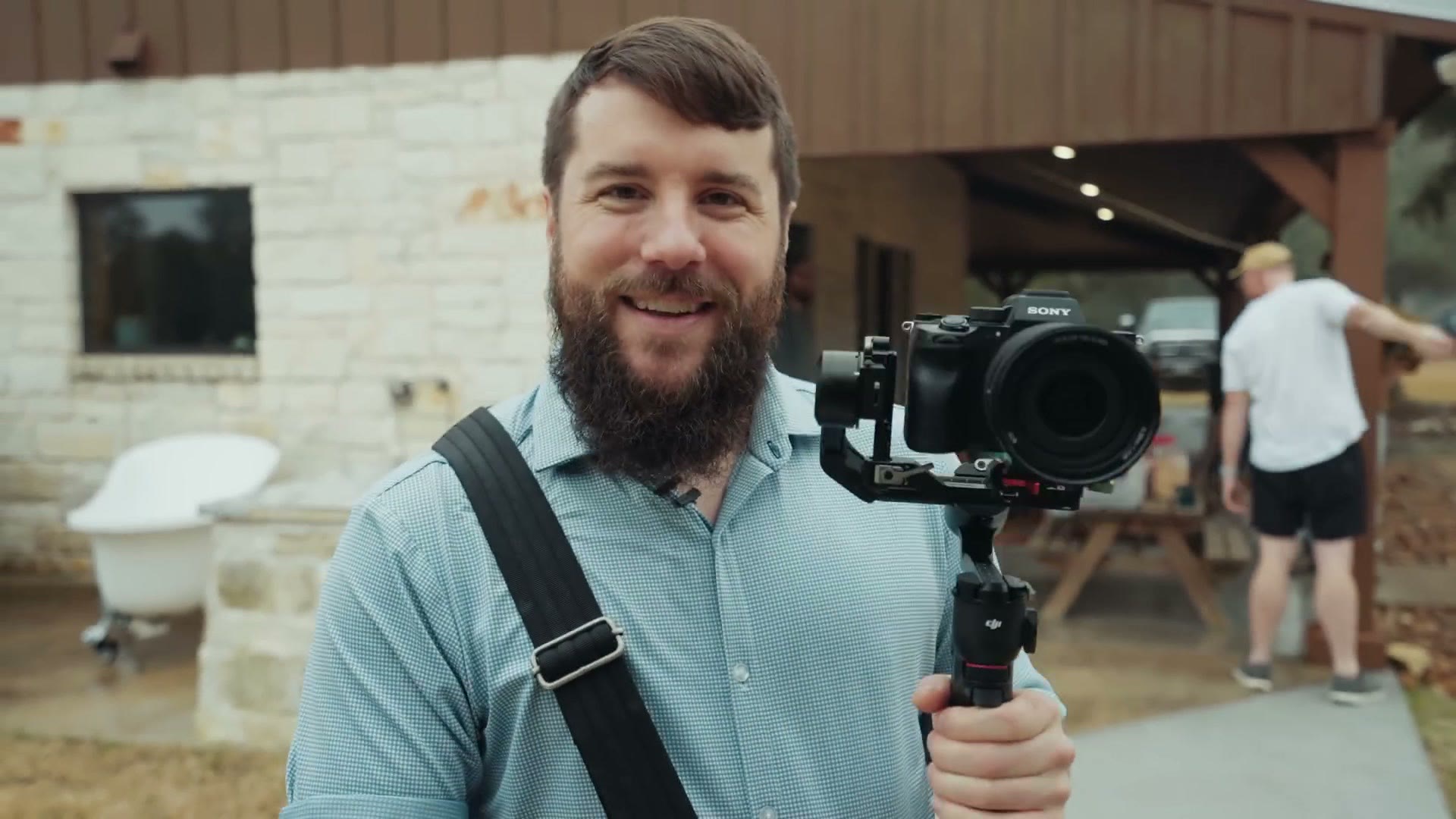
The first change is that whereas I normally shift frame rates a lot throughout the day because I’m prioritizing getting as much coverage as possible, I’m going to be shooting a much more significant part of the day in 4K at 60 frames per second, just to make sure I get enough coverage.
The second change is a little bit bigger. I’m filming with a zoom lens today. Yes, I have the Sony 24-105. It’s an f/4 lens, it’s optically stabilized, it’s a great lens and I really like it. In terms of versatility, being able to get a wide shot on the gimbal and then immediately crank it in and get a tight shot seems like it’s going to be really, really useful. I’m also filming with the DJI RS3 Mini today, which is a little baby gimbal.
How To Film Groom Prep Solo
Here’s the first thing that makes solo possible, and it has nothing to do with gear. Build your own schedule. I came out to the ranch early specifically to film the guys, because we probably won’t have that much time later.
That’s something Justin picked up on immediately: you’re not going to show up at 3:00, you’re going to start at 10am, get these shots, and then people can show up when they need to, because you’ve already got the establishing stuff you need.
Once I’m there, I’m looking around for places I think will look good. This location is a little more secluded from the guys, and I love the backdrop of this pond, the water, maybe an emu nearby. So we’re going to film him getting ready right there with that as a background and it should look really, really epic.
And I’m directing it. I basically need to fake him getting dressed, so I have him bring his stuff outside, we cut the tags off, and we run it.
When The Plan Dies, Pivot
Here’s the part I want you to actually take away. Rachel and I had talked about what we wanted to do with the guys getting ready. Maybe they play ultimate frisbee, maybe some other fun stuff. But the weather was not good for it and it was really muddy. So we pivoted to the groom being in a bathtub.
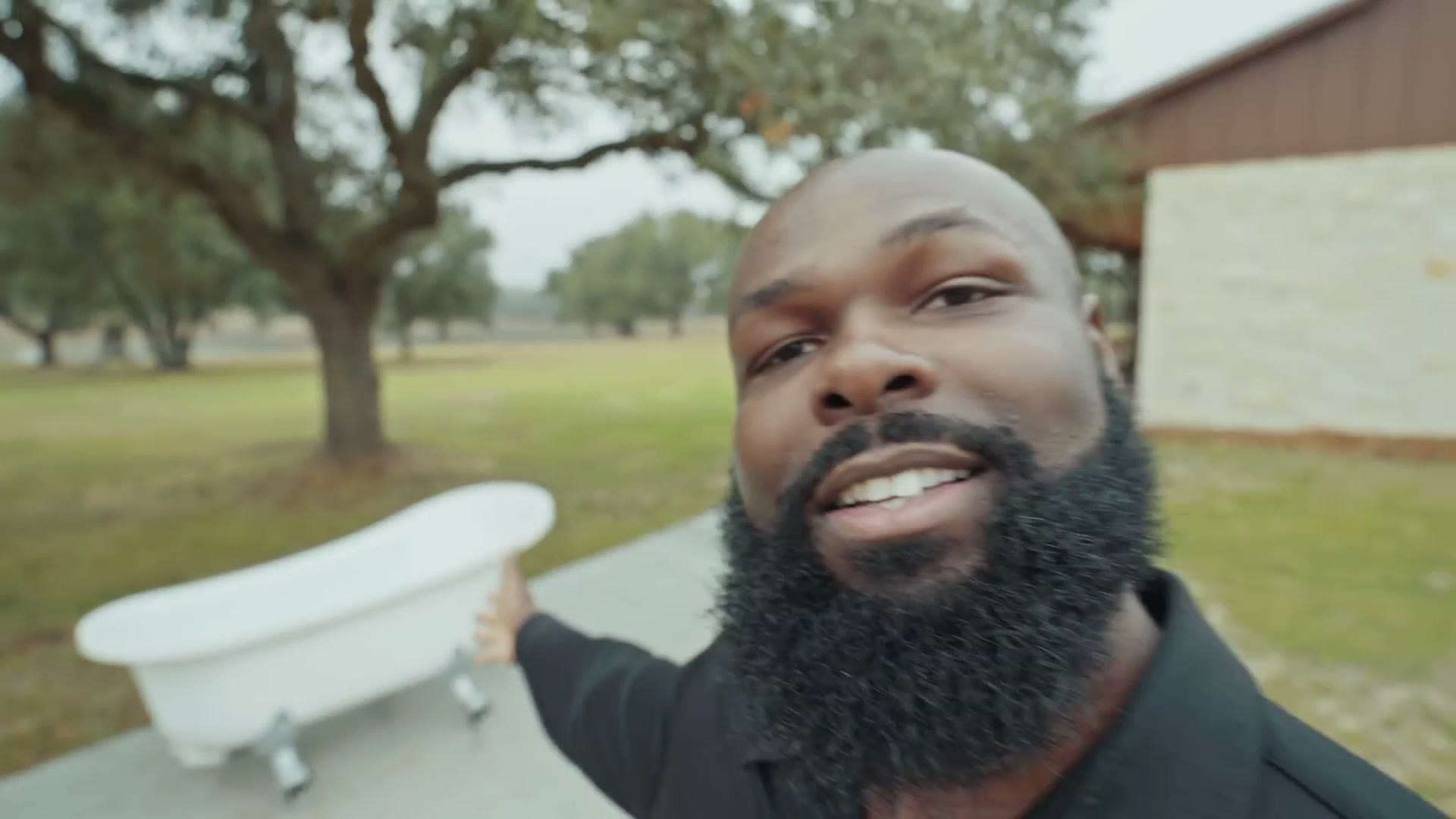
He’s about to literally bathe outside in the middle of good old country Texas, and I don’t think there’s anything more Texan than this. Cigar, no shirt, hat. Imagine the film starting like that. How much would that shock the couple? Think Matthew McConaughey. And then the hat comes off with some steam and he just puffs the cigar.
I sent Rachel a picture of the bathtub and all she replied was “what?” Just, what.
The point isn’t the bathtub. The point is that whenever the plan falls apart, and it will, the fastest way out is to find the most interesting thing available and commit to it completely.
How To Film Establishing Shots Solo
At this point I need to get a few shots of the venue. The guys are all getting ready in this building, and there are a lot of cars in front of it. It’s not ideal. But look at this, we have another fantastic building right there that’s open and available, and they look the same.
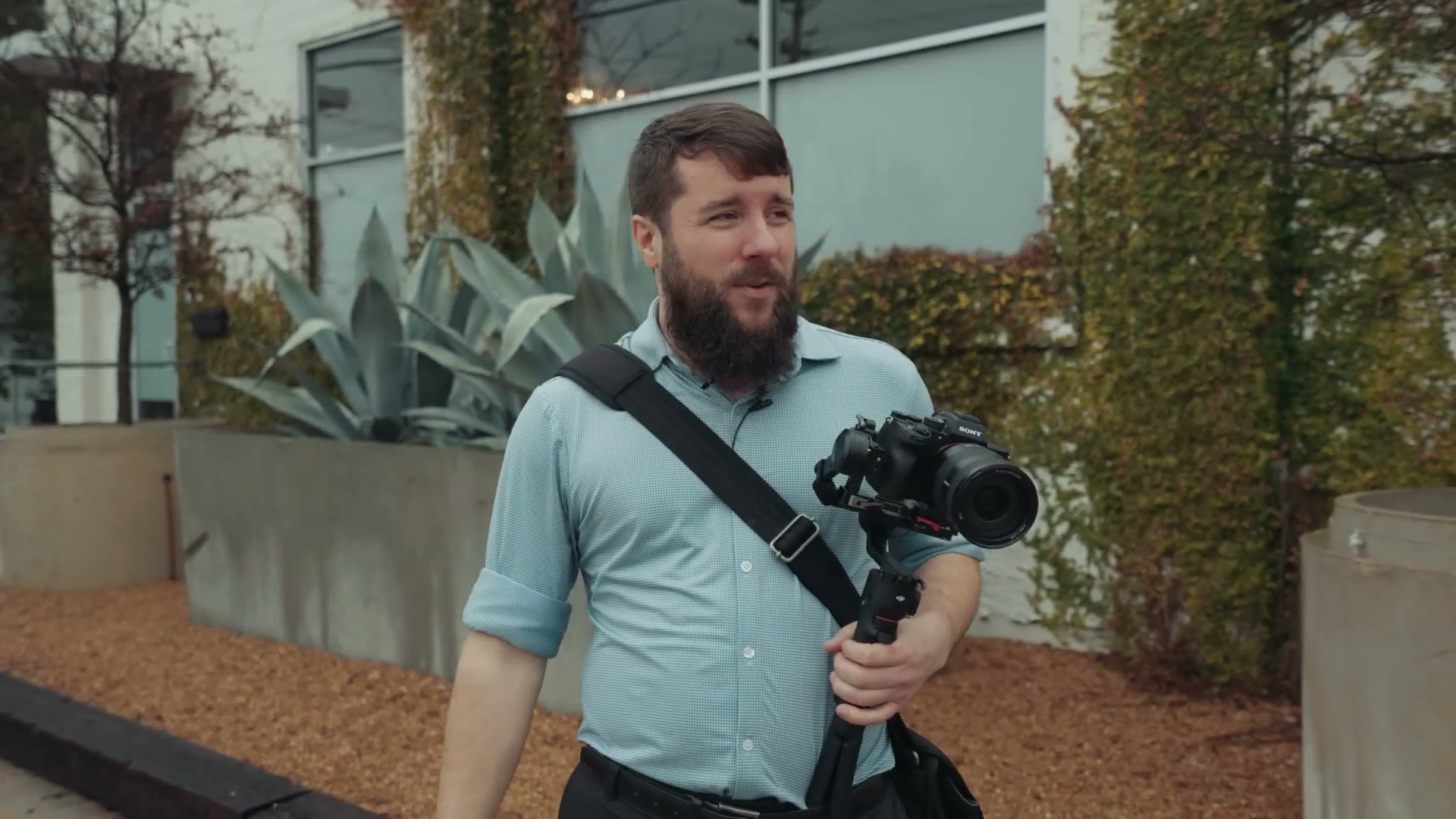
So we’re going to cheat a little bit. Nobody’s going to know. How would they know?
For the shots themselves, keep it simple. A wide, nothing crazy, a little parallax move with the trees revealing. I love the corners of buildings, because they always look better. It makes everything more 3D and everything pops out a little bit. Simple, clean, really really slow.
How To Set Up Lighting Solo
Now I’ve got to set up the light, because I have time right now. It’s two hours before the ceremony and reception, so I’m going to take advantage of that. When you’re solo, anything you can do early is time you don’t have to find later.
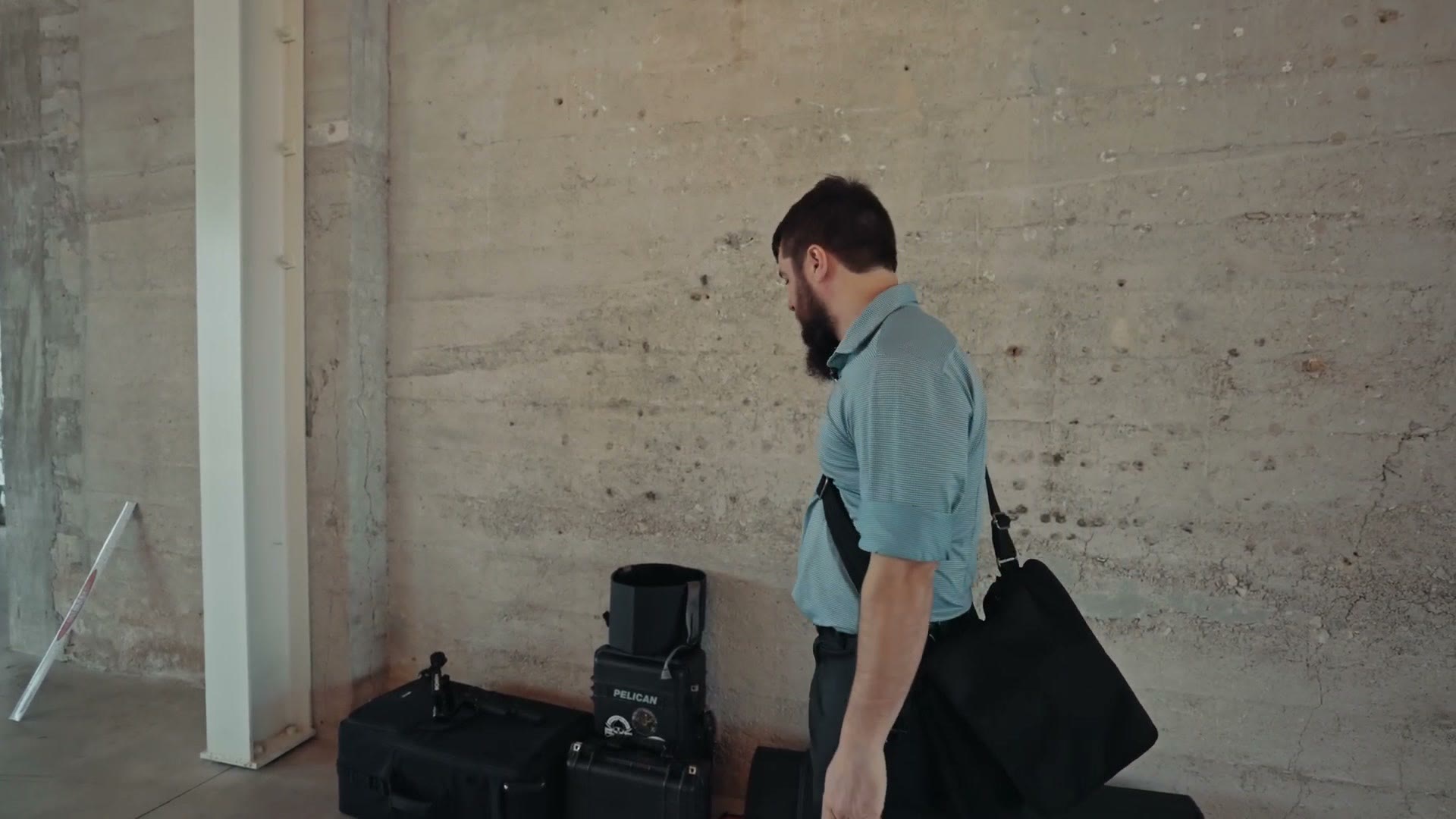
The dance floor is going to be here, so I can run AC power and blast the light this way. Alternatively, if I wanted it closer I could put it up against this pillar and blast it right in. But I want the width, so I’m going further away.
And a little sandbag, filled with gravel from my backyard. Not sand. Sand’s messy. You still get the weight and you get a little added protection so it doesn’t fall over.
The light also has Bluetooth control, so I can adjust it from out on the floor rather than walking back to the stand every time. That matters a lot more when there’s nobody else to send.
How To Film Bride Prep Solo
The order matters here. I film her doing the last bit of makeup, and then we do the letter reading right after that, because it’s easier than trying to do it once she’s in the dress.
For the letter, the enemy is echo. This venue is loud and echoey and none of the rooms are any good for it, so I go find a little side area off the kitchen that’s private and quiet, grab one of the ceremony chairs and bring it over, and we do it in two minutes.
And I tell her up front: if you screw up, just go back a sentence and start over again, and I can edit it together. That one sentence saves you so much.
Once I get good audio I always feel a wave of relief. Okay, good, we’ve got good content for this film. It’s going to be a great wedding even if we have nothing else, because I’ve got these letters and it’s going to be super heartfelt.
Mic The Dress Before She’s In It
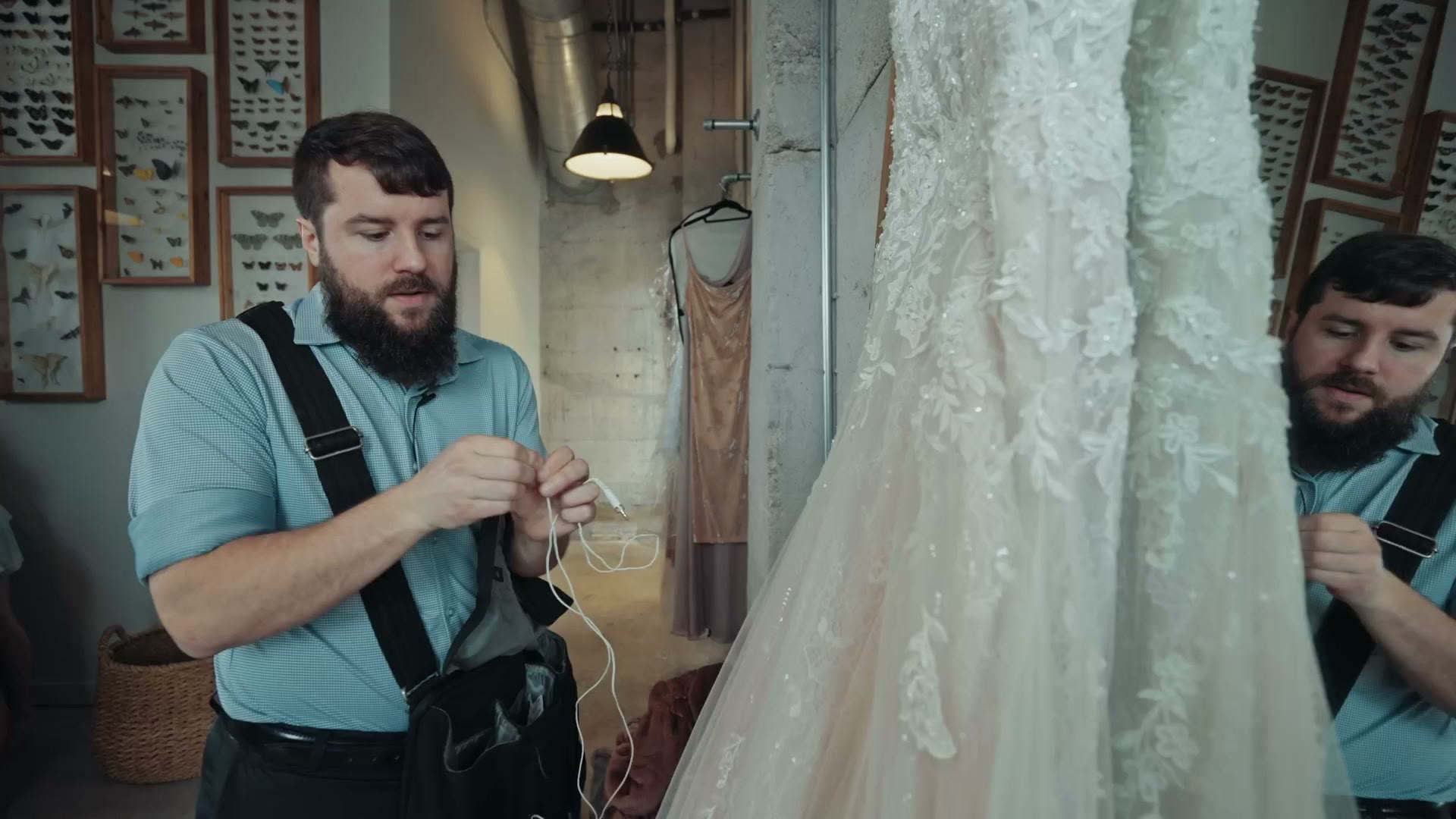
This is a very tall mirror, so we lower the dress down, put the mic on it, and tape it so it stays. The mic goes on the dress dangling down, then I get the thigh strap ready for whenever she’s actually in it, plug it in, and we’re good.
Justin was surprised I do it this way, and honestly a lot of filmmakers are. He’s paranoid about it and would rather have a bridesmaid attach it when she’s halfway into the dress. Doing it first is faster and there’s one less thing to coordinate later, and when you’re solo, fewer moving pieces wins.
White recorder for the bride, by the way. It disappears against the dress.
How To Set Up For The Ceremony Solo
Here’s the audio thing I want you to actually write down. I went to tap the DJ’s board and found it only had one output, which meant I couldn’t piggyback. Usually these have two.
This is exactly why you carry a splitter. It’s so much safer than plugging into board speakers, and you get a clean signal directly to your recorder that’s guaranteed to work. It’s about a $15 cable and it is one of the best fifteen dollars you’ll ever spend.
The catch that day was that my splitter was XLR and the DJ’s mic out was a single quarter inch, so the splitter didn’t help. So I ran into his system and then ran a backup with a mic sleeve on the mic itself. Which brings me to the real rule.
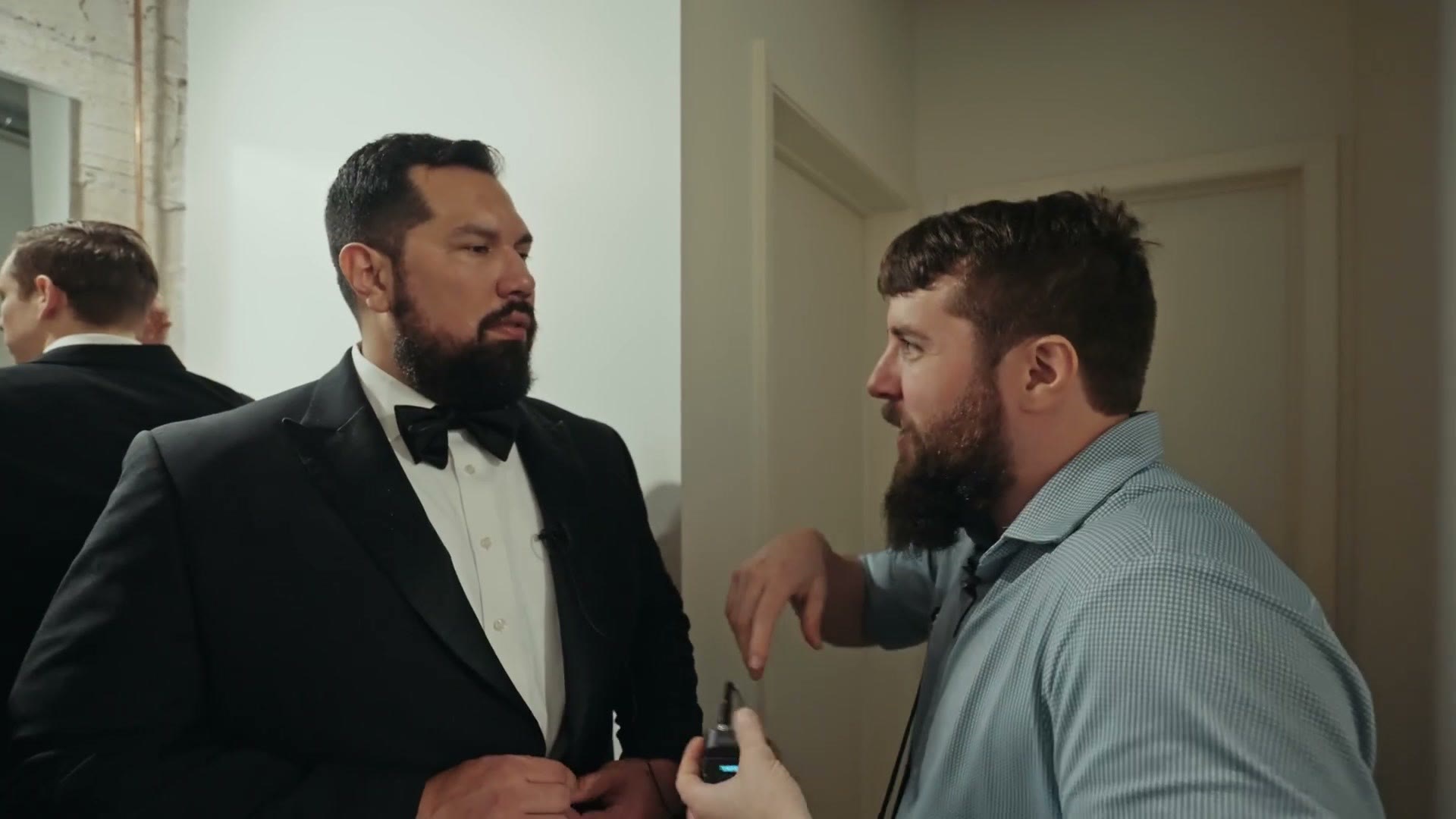
Mic everybody, as much as you can, and hope for the best. Two mics on the officiant. Two mics on the groom. One on the bride. The acoustics in there were terrible, and the nice thing is that regardless of whether I’m shooting solo or with a second shooter, I’m always doing the audio and always stressed about it.
How To Film A First Look Solo
Always mic the dad for a first look. That’s where the juicy moments are, and this was the best dad reaction I’ve ever had.
But there’s a limit, and this is the part I want to be careful about. I literally just asked him if I could put the microphone on him and he broke down crying. He was already a little hesitant, so I wanted to be mindful of that. I don’t want to insert myself into that moment and make it worse, or have him have a breakdown and not be able to see his daughter.
Justin’s take was that as filmmakers we should dig a little and get more sound bites out of a dad who’s clearly feeling it. He’s not wrong in general. But you read the person in front of you, and that day the answer was to back off.
How To Film A Wedding Ceremony Solo
You may be looking at the 60-600mm and thinking, do you really need this lens for a ceremony?
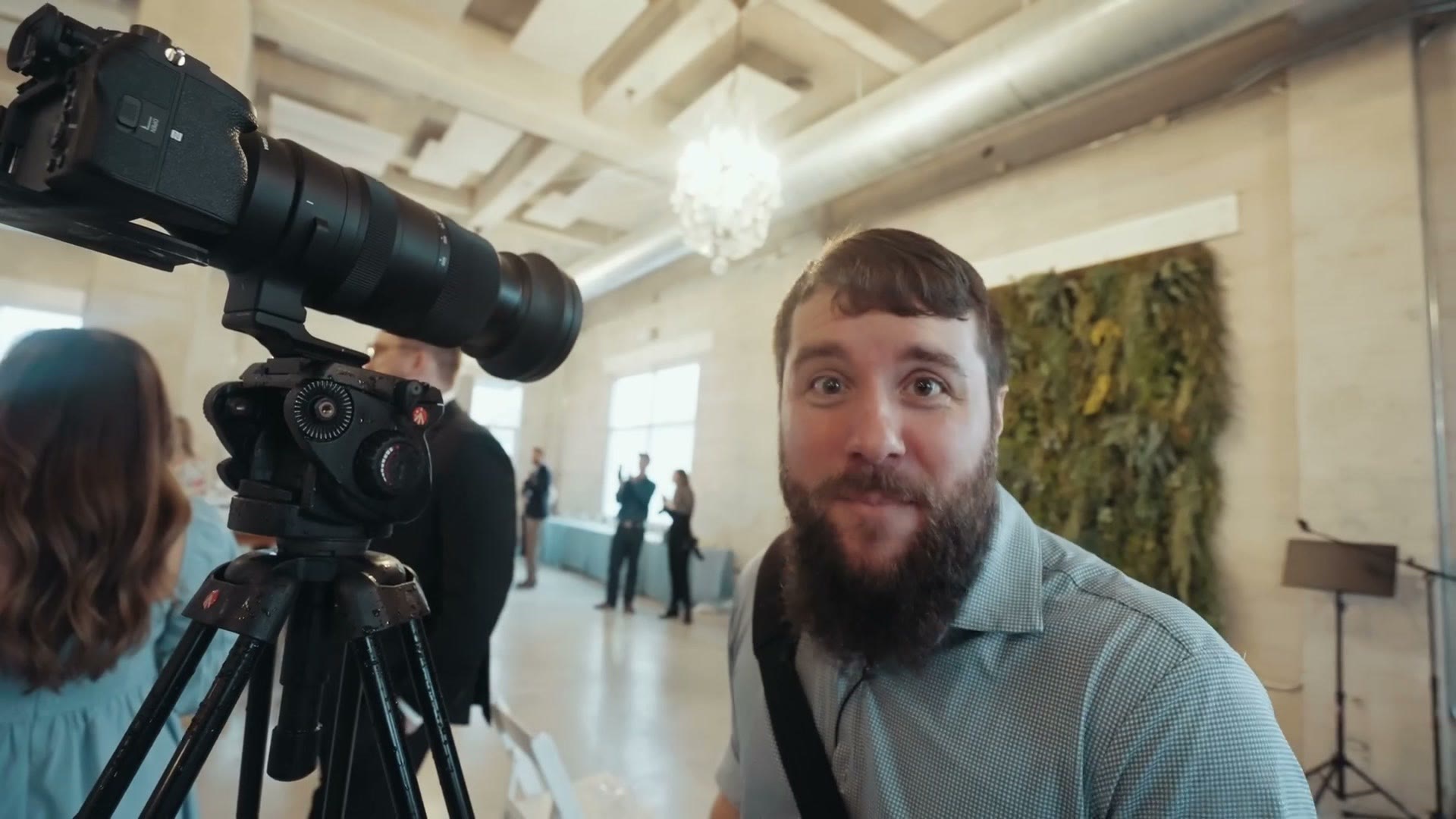
But think about it. At 60mm this is wider than a 70-200, so I can be right here and still get the wide. Then whenever I want to go tighter, I can film up the groom’s nose and get his nose hairs perfect. In 4K. At very high resolution. Guys, I love it.
That range is the whole point when you’re solo, because you are locked to one position and you cannot go get the other angle.
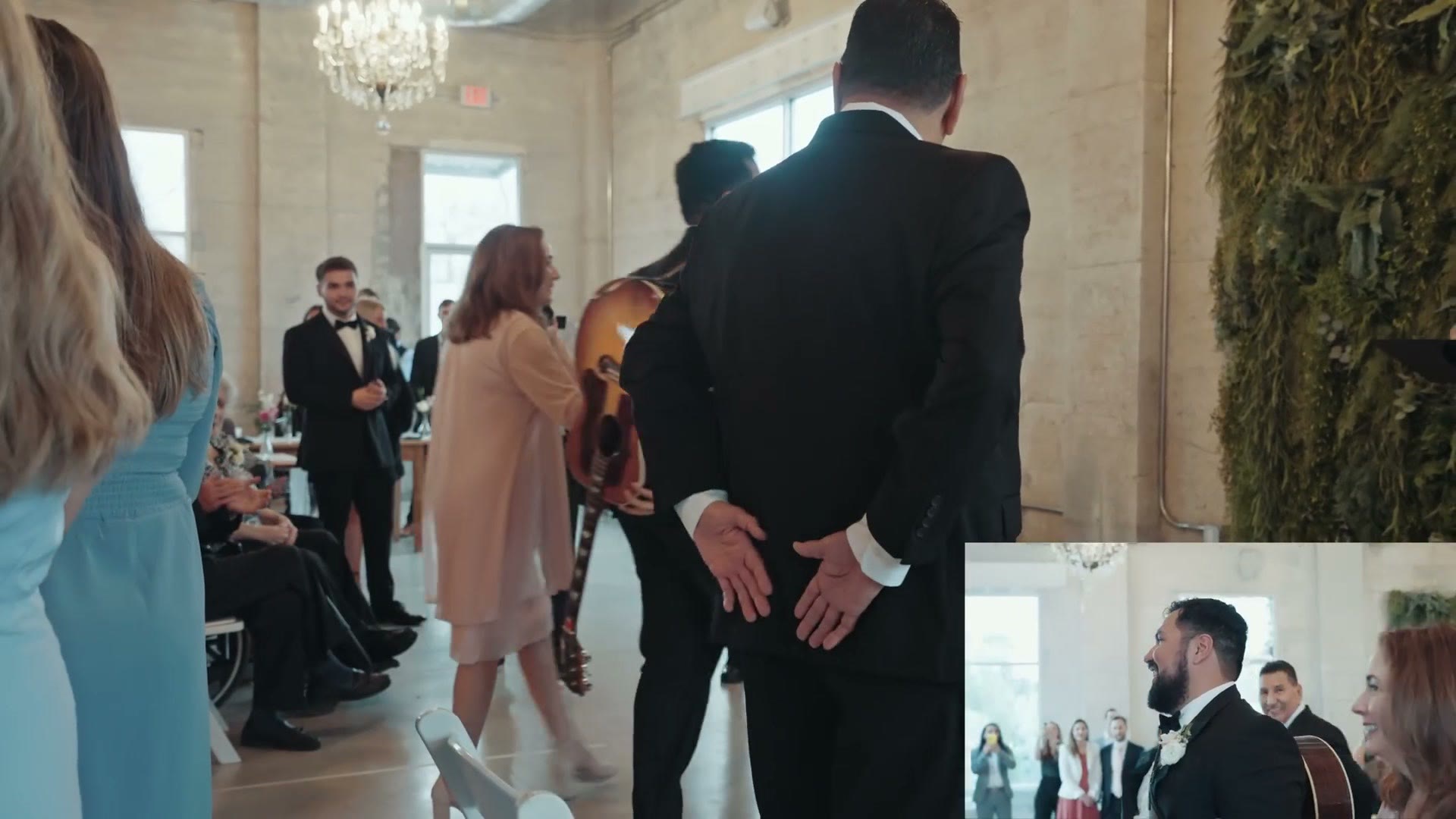
And this is what an indoor ceremony looks like when it was going to be an outdoor ceremony fifteen minutes ago. People say, oh, these perfect weddings, they’re the best weddings. I don’t know what to expect anymore. I just get curveballs.
What a chaotic ceremony. The officiant’s mic didn’t work, and I’m standing there going, okay, well, good thing I put two mics on the officiant, and two on the groom, and one on the bride. Here we go, we’re just making it work. That’s what redundancy is for. It works, and I’m really happy about that.
How To Film The Couple Together Solo
Fifteen or twenty minutes before the ceremony for portraits, and the whole game is speed. Angle, angle, angle, move it quick. Justin called it clutch and efficient, and that’s really all it is: know the shots you want before you get there so you’re not thinking on the couple’s time.
I’m also looking for backlight the whole time. Find the one spot that’s working and use it.
One honest note on the zoom. This lens is f/4, and as it got darker I started getting nervous. It worked out, and I took it for the versatility so it makes sense, but as the light dropped I was thinking we might need to change up the lens options.
How To Film The First Dance Solo
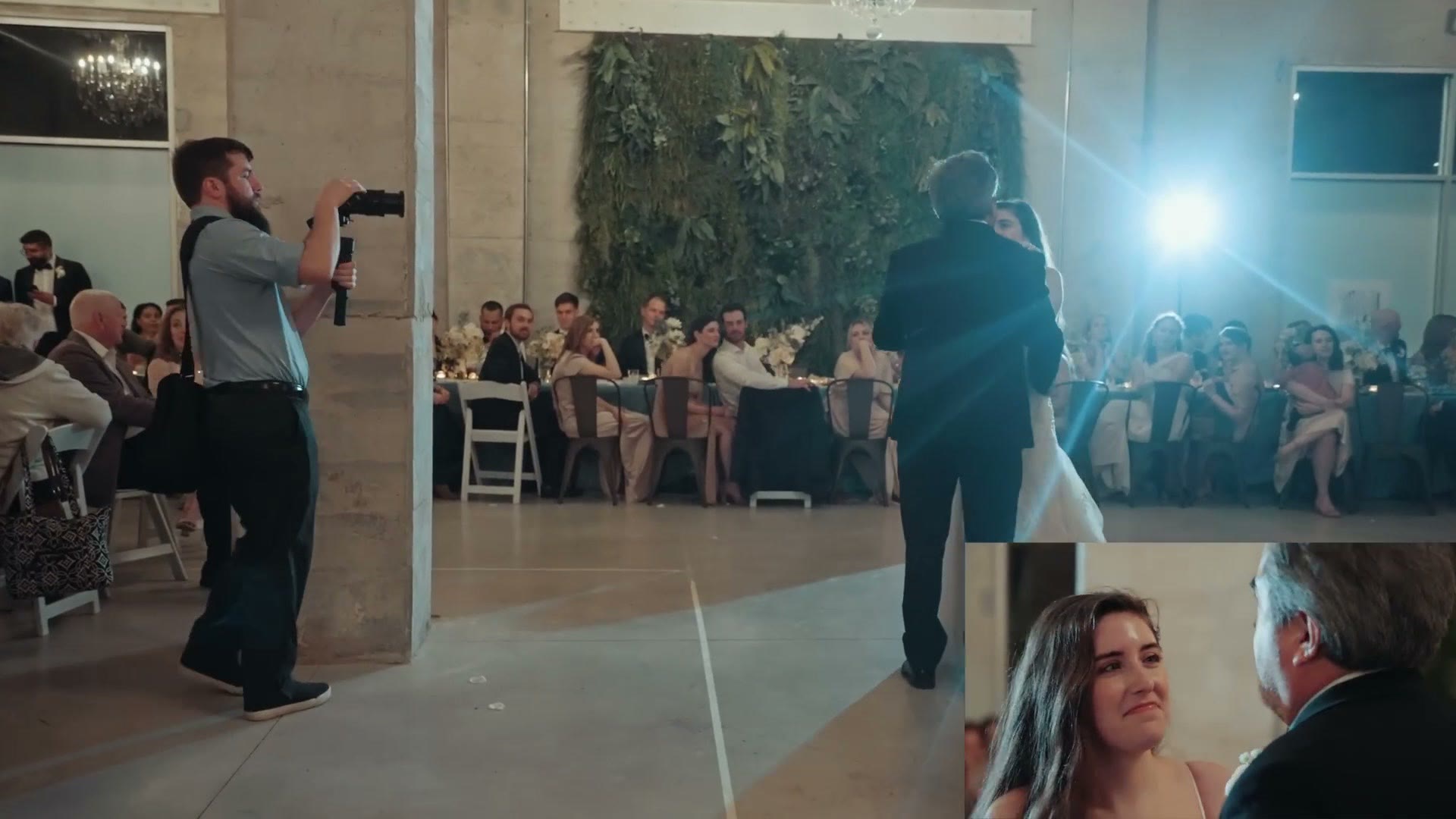
Because I’m filming solo, I had a tripod set up on the side with a 50mm on it, just getting a wider shot of the dance floor. Not too wide, a medium shot. And manual focus, because I knew autofocus was going to hunt between the people and the tables behind them, so I wanted to make sure it stayed locked on the couple dancing. Manual focus for the win.
That’s the whole trick to solo: the locked-off camera is your second shooter. Set it, trust it, and go be the one who moves.
Solo shooting is stressful because you have to hold wide shots and tight shots in your head at the same time and make sure you’ve got good variety. Variety, variety, variety. The zoom lens helps.
How To Film Toasts Solo
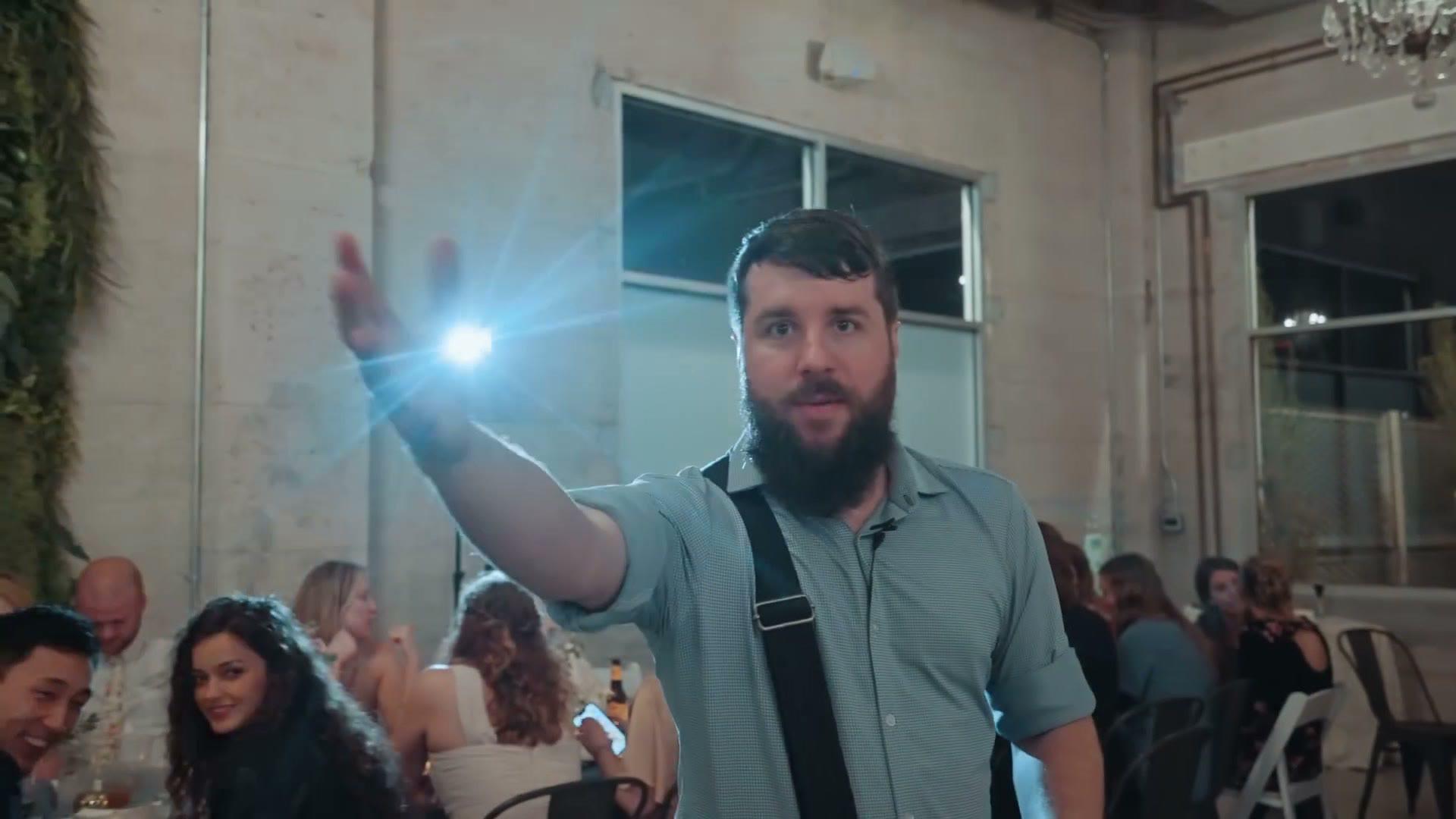
Here’s the setup. The person giving the toast stands here, facing this direction, so everybody out there can see them, and they’re backlit by this light. Then my other light shines in on their face for some front lighting.
The bride and groom stand over there, so they get a little side light on this side of their face, and they can still look at the person giving the toast. You’re solving two problems at once: everyone is lit, and nobody has to turn away from the moment for your benefit.
How To Film Everyone Dancing Solo
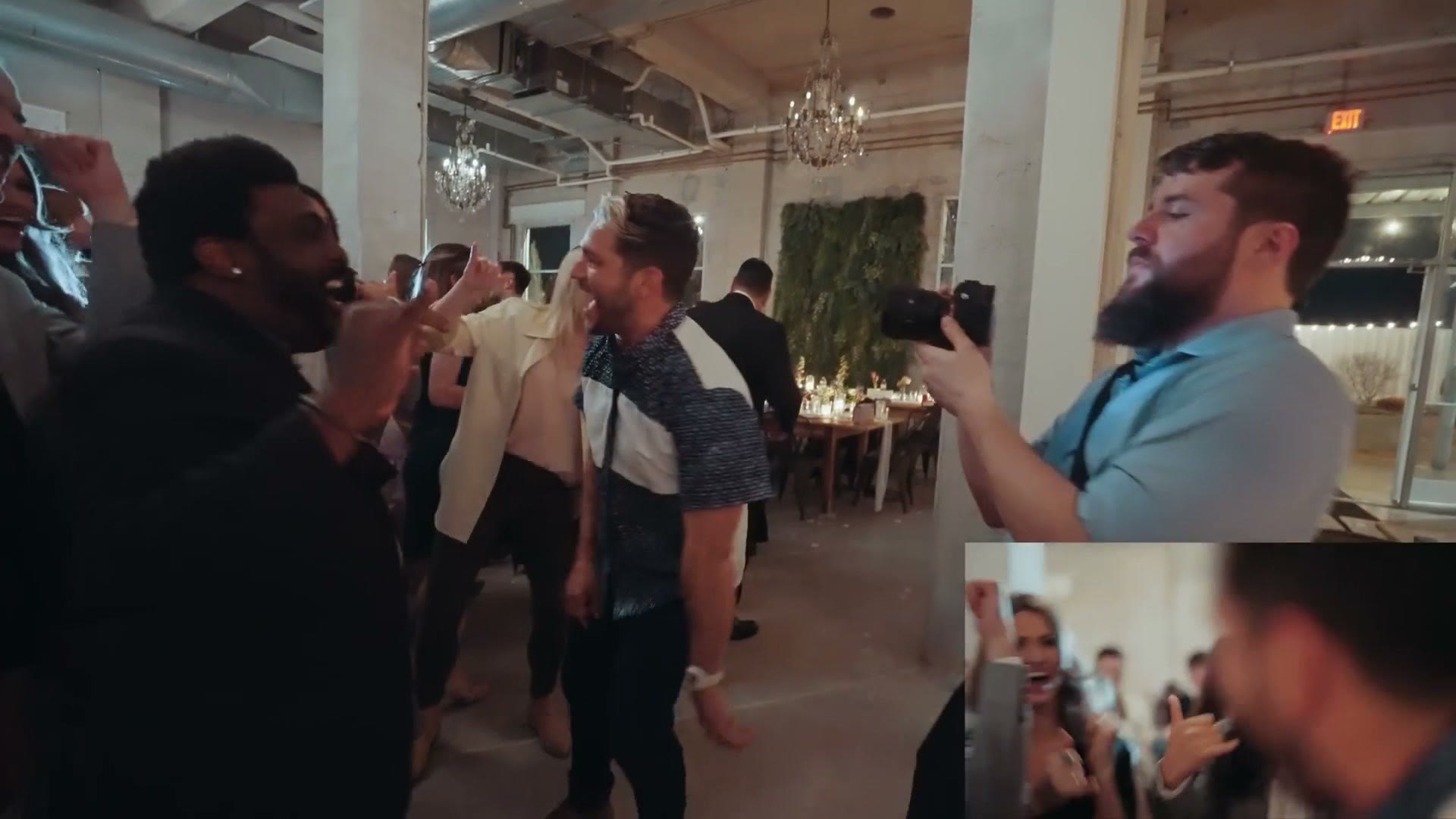
If you’re solo, get the photographer to hold a light. I’ll be on one side, they’ll be on the other, pointed at the dancers, staying small and low. It works really well and it costs you nothing but asking.
Also worth knowing where your camera actually gives up. I was shooting at 51,200 ISO on the a7S III and it was still usable, which is why I film weddings with Sony cameras. Justin was watching over my shoulder doing the math against his Pocket 6K, where anything past about 3,200 to 4,000 is done. Same lighting, completely different night.
How To Film The Exit Solo
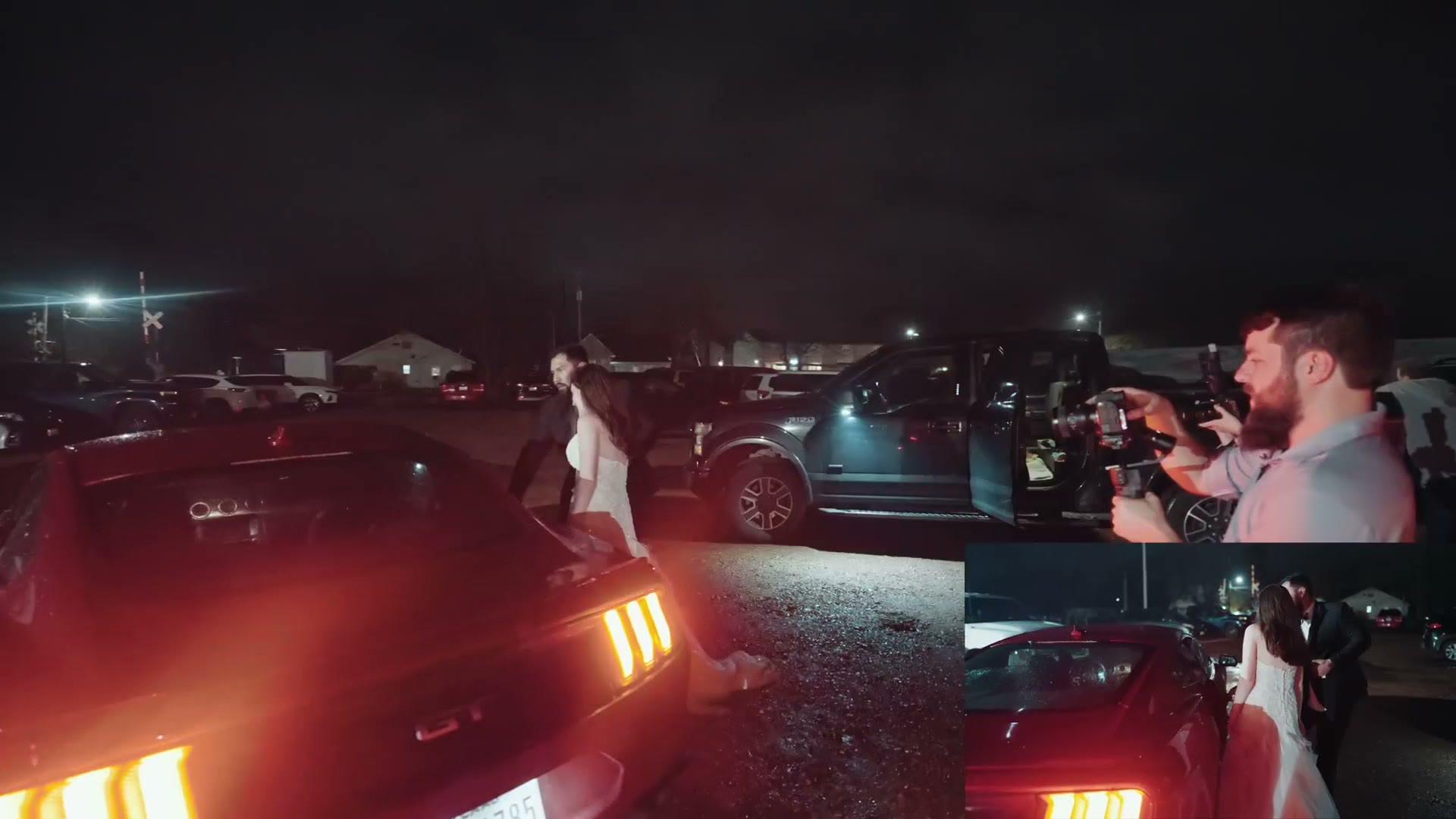
A little offset lighting for the warmth of the sparklers, and then get some sparkler detail B-roll afterward, because you want those inserts and you will never get them again.
And that is how you film a wedding solo.
The Short Version
- Build your own schedule and get to the groom hours before anyone expects you
- Shoot more of the day at one frame rate so you stop thinking about it
- Carry a zoom, because you cannot go get the other angle
- Set the lights up hours early while you still have hands free
- Mic the dress before she’s in it, and mic everybody at the ceremony twice
- A locked-off tripod on manual focus is your second shooter
- Hand the photographer a light
- When the plan dies, pick the most interesting thing available and commit
If you want to see the other side of this, I also filmed a wedding behind the scenes with Justin Porter, and you should go follow Justin because he’s great.
And if you want help booking more of these in the first place, I have a free workshop that shows you how to book your next wedding in 30 days or less. My color presets are what I graded this one with.
Thanks so much for reading, and have a great day!