

This is Allison and Seth’s wedding trailer from a December wedding at a ranch venue in Texas, and instead of just posting the film I put the camera, lens, and settings on screen for every single shot, because whenever I was starting out the thing I wanted most was to look at a wedding film I liked and know exactly what was used to get it.
So here’s the whole rundown, plus the reasoning behind it, which is honestly the more useful half.
What was in the bag
- Sony a7S II and Sony a7 III as the two main bodies
- Sony 135mm, Sigma 24mm, and a Canon 50mm on an adapter
- DJI Mavic 2 Pro for the aerials
- Zhiyun Crane 2 gimbal, a monopod, and a tripod
- Canon 7D with a Rokinon 14mm, purely for the night sky title card
The two-camera system, and why each lens lives where it does
If you watch the overlays through the whole trailer you’ll notice the pairings almost never change, and that’s on purpose. Whenever you’re at a wedding you do not have time to be swapping lenses while something is happening, so each body has a job and stays in it.
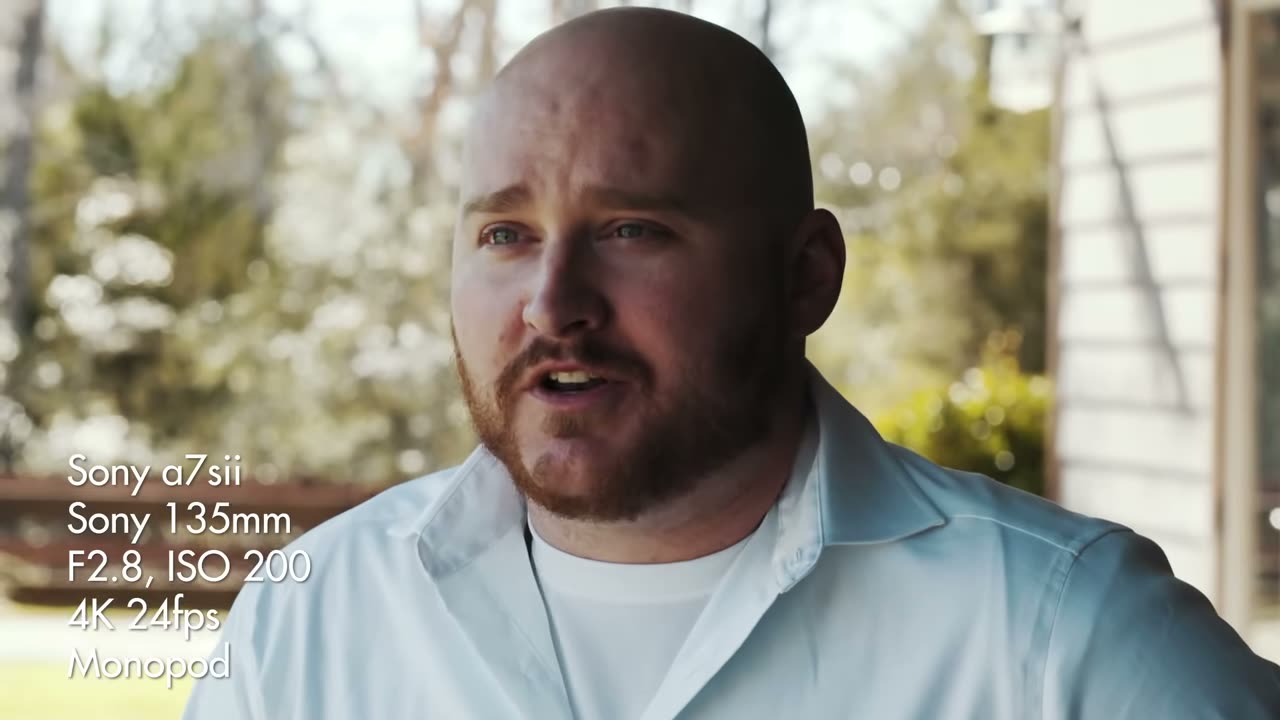
135mm on the a7S II, on a monopod, for anything emotional
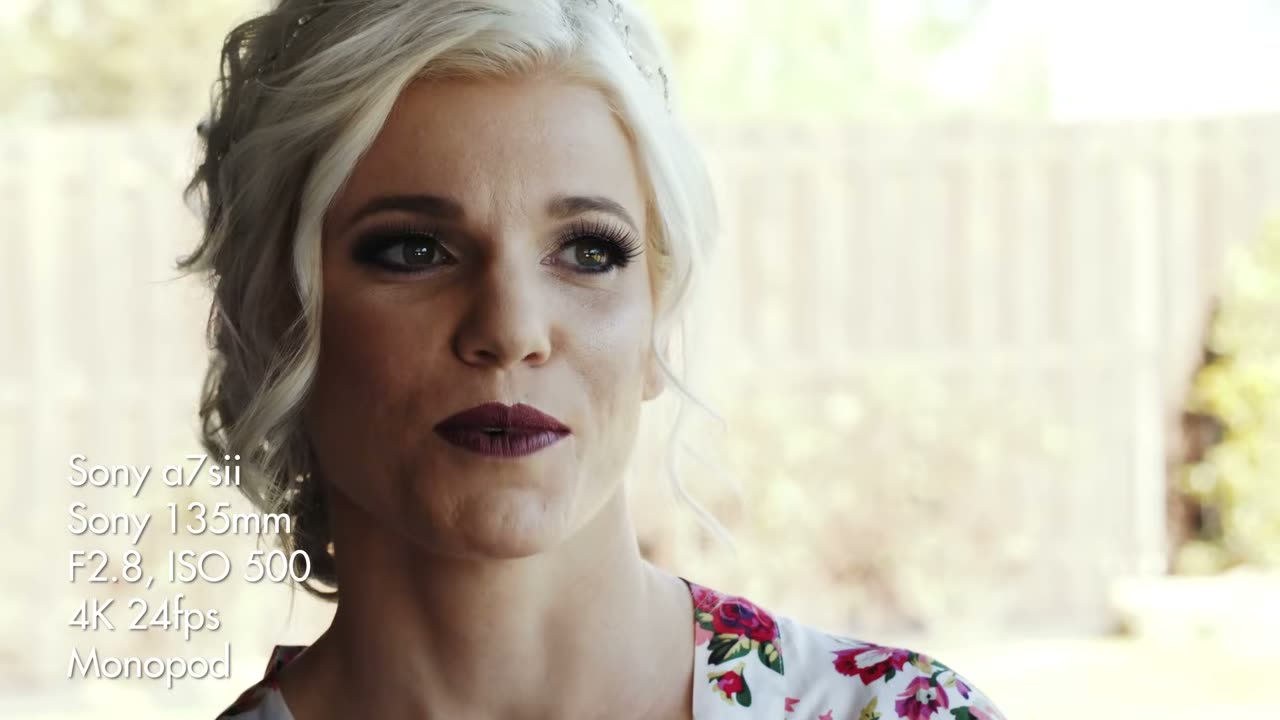
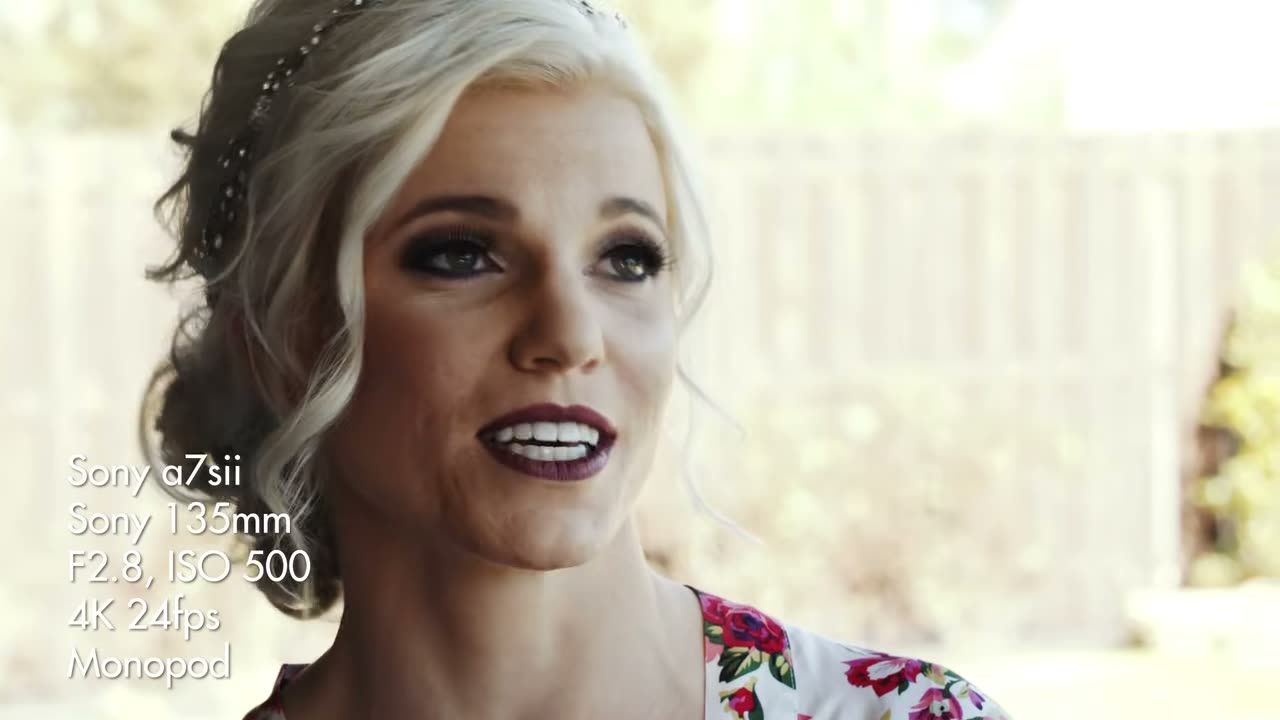
Every tight, flattering, someone-is-about-to-cry shot in this trailer is the 135mm, hanging around F2.8 to F5.6. It compresses the background into mush, it lets you stand well back so nobody feels watched, and on a wedding day that distance is the entire point.
The monopod is doing quiet work here too. A 135mm handheld will show every heartbeat, and a monopod kills that without tying you to a tripod, so you can still move whenever the moment moves.
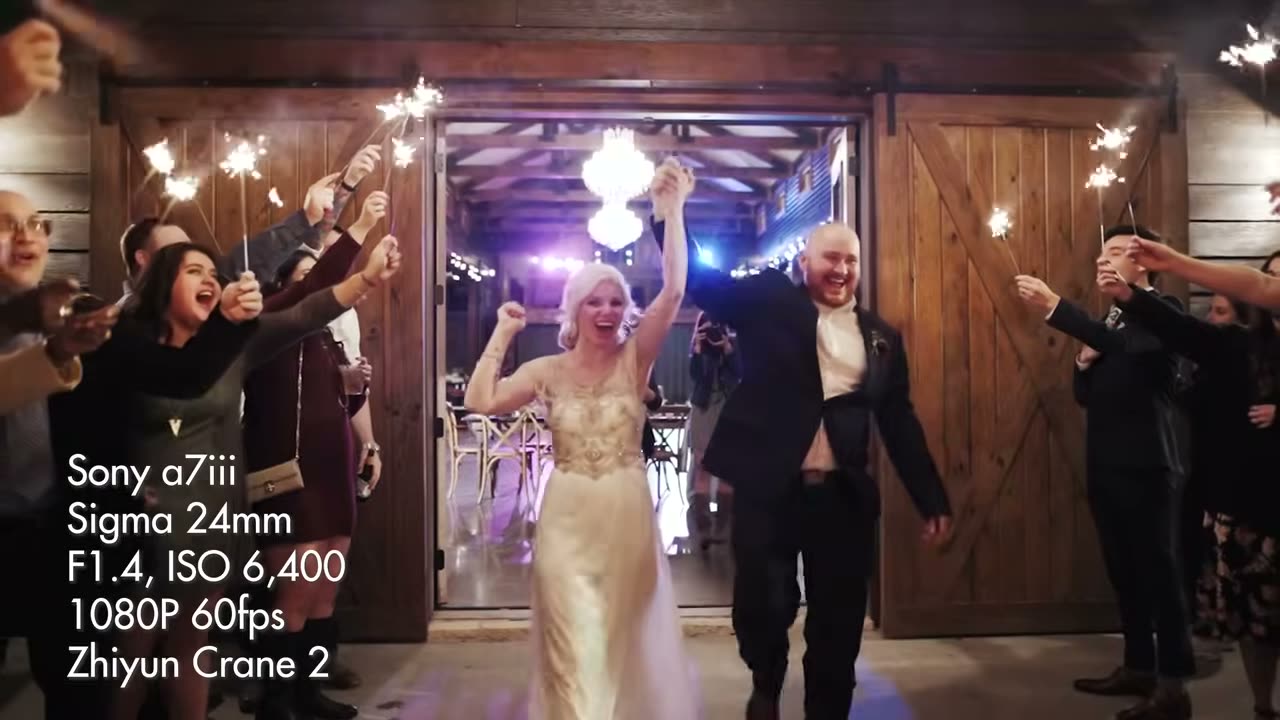
Sigma 24mm on the a7 III, on the Crane 2, for anything that moves
Wide lens, gimbal, and it never leaves that body all day. Look at how far the aperture swings on this one though, because that’s the interesting part. Outside in daylight for the ceremony wides it’s at F8 and even F12 at ISO 200, and then indoors for the first dance it’s wide open at F1.4 at ISO 3,200.
Stopping down that hard outdoors isn’t me being fussy about sharpness, it’s about focus. Whenever you’re walking a gimbal through a crowd at 24mm, a deep depth of field means everything stays acceptably sharp and you’re not fighting autofocus while you’re also trying not to trip over a flower girl.
Canon 50mm for the in-between
The 50mm covers everything the other two don’t, and it’s the lens that goes handheld once the reception starts and the dance floor gets busy. That’s also where the ISO climbs to 5,000, which is exactly what an a7S II is for and why I kept using that camera long after it stopped being the newest thing.
Why some shots are 4K 24fps and others are 1080p 60fps
This one’s worth spelling out because the pattern is completely consistent through the trailer, and it isn’t an accident.
The still, emotional, locked-off close-ups are 4K 24fps. The moving shots, gimbal walks, dancing, anything with motion in it, are 1080p 60fps. Shooting 60 gives you the option to slow it down to about 40% in the edit and have it still look smooth, and moving shots are exactly where a bit of slow motion earns its keep. A static shot of a bride’s face doesn’t need that option, so it gets the resolution instead.
You are trading resolution for the ability to slow things down, and on a wedding trailer that trade is almost always worth it.
The drone and the title card
One aerial, right at the top, doing the job an establishing shot is supposed to do: here is the place, here is the lake, here is the weather. ISO 100 because it’s the middle of the day and there’s no reason to be anywhere else.
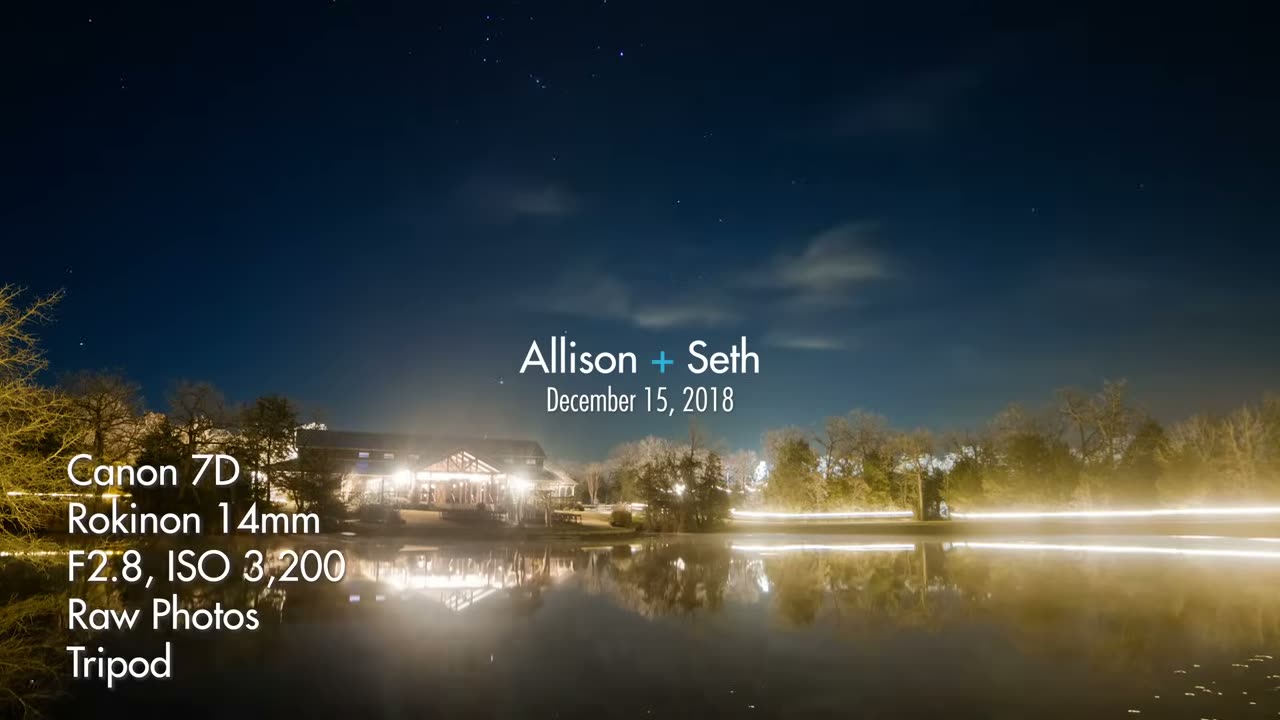
And then the title card, which is the one shot in here that isn’t video at all. That’s an old Canon 7D with a Rokinon 14mm on a tripod shooting raw photos of the night sky, assembled afterwards. A crop sensor DSLR that was ancient even in 2018, doing something none of the newer cameras in the bag were set up to do that night.
Which is the note I’d leave you on, honestly. There is nothing in this trailer that requires current gear. The a7S II was three years old at this point, the 7D was closer to nine, and the shots still hold up. Buy the lens before you buy the body.
If breakdowns like this are useful to you, let me know in the comments on the video, because that’s genuinely why I started putting the settings on screen in the first place.