
I recently made a review of this little fella, the Zoom F2. It’s a fantastic little recorder. But how does it compare to the legendary, much loved, king of the ring Tascam DR-10L?
Today I’m going to do an in-depth comparison of these two recorders for wedding filmmakers. So if you’re torn between buying one of them, this should help you out.
Weight & Build Quality
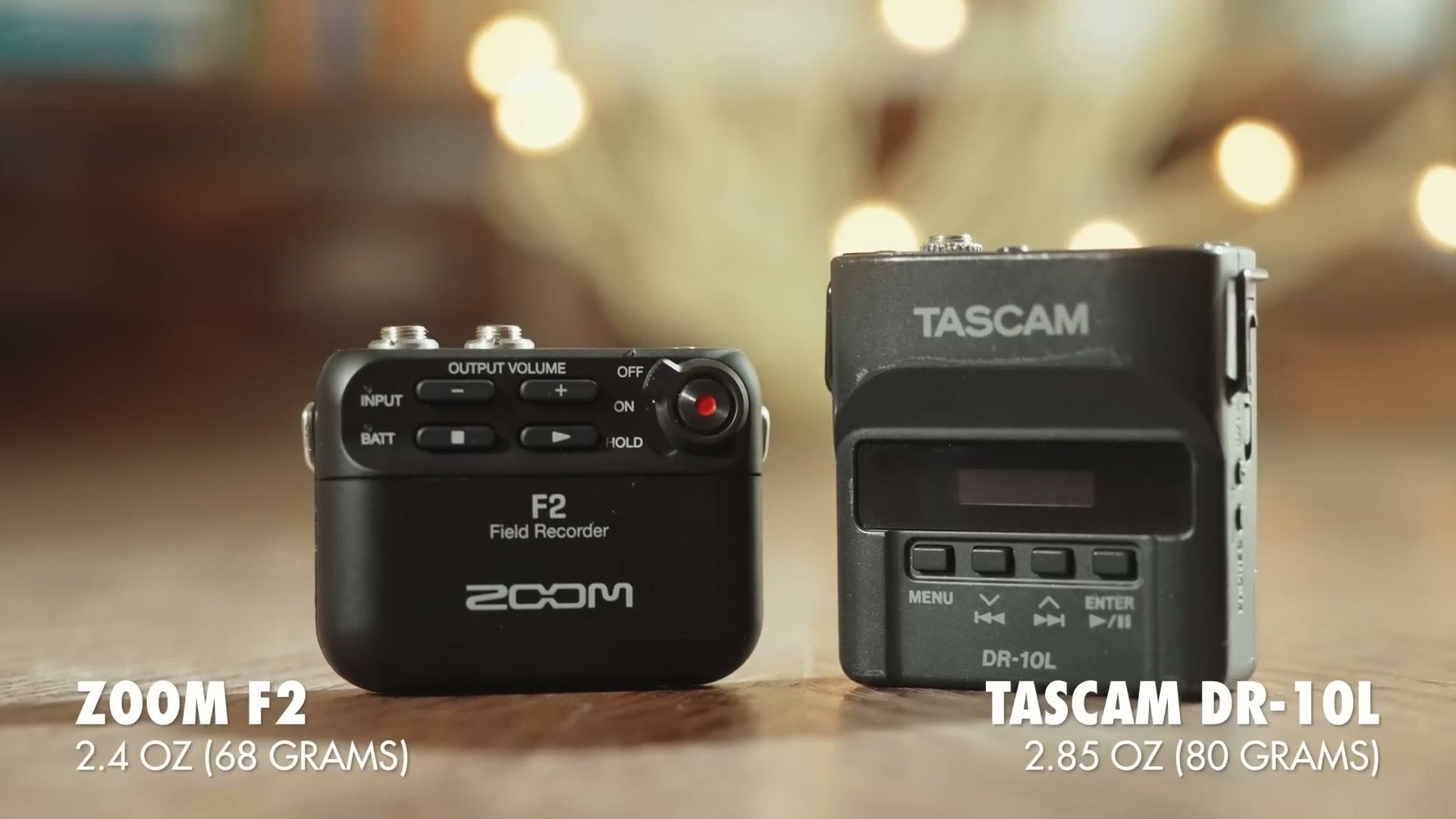
The Zoom F2 is noticeably smaller, which isn’t necessarily surprising considering it doesn’t have a screen. It also weighs less, at 2.4 ounces versus 2.85 ounces for the DR-10L. So I’m going to give the edge to the F2 here because it’s lighter and more compact, but these are both still quite small recorders.
Another thing that factors into the weight is build quality, and I was quite surprised by how light the F2 is. I think that’s partially down to Zoom using cheaper components. The battery door on the F2 feels noticeably flimsy and makes an awful crunching sound when you take it off. Likewise, the SD card door is made of a cheaper feeling plastic. So you’re going to want to be very careful when swapping batteries and memory cards.
In contrast, the DR-10L’s battery door feels much more solid and is significantly easier to access, and its SD card door is a soft rubber material that’s quite easy to work with.
So the F2 wins on size. It loses on build quality to the Tascam.
Battery Life Comparison
Keep in mind that the weights above are with batteries inside, and this is an area where the two greatly differ. The Tascam takes one AAA battery. The F2 takes two, and that makes for a pretty sizeable difference in battery life.
In my testing, the DR-10L lasts nine hours with normal alkaline batteries and eight and a half hours with rechargeable NiMH. As a nice upgrade though, with lithium batteries I saw a much longer battery life of 15 hours.
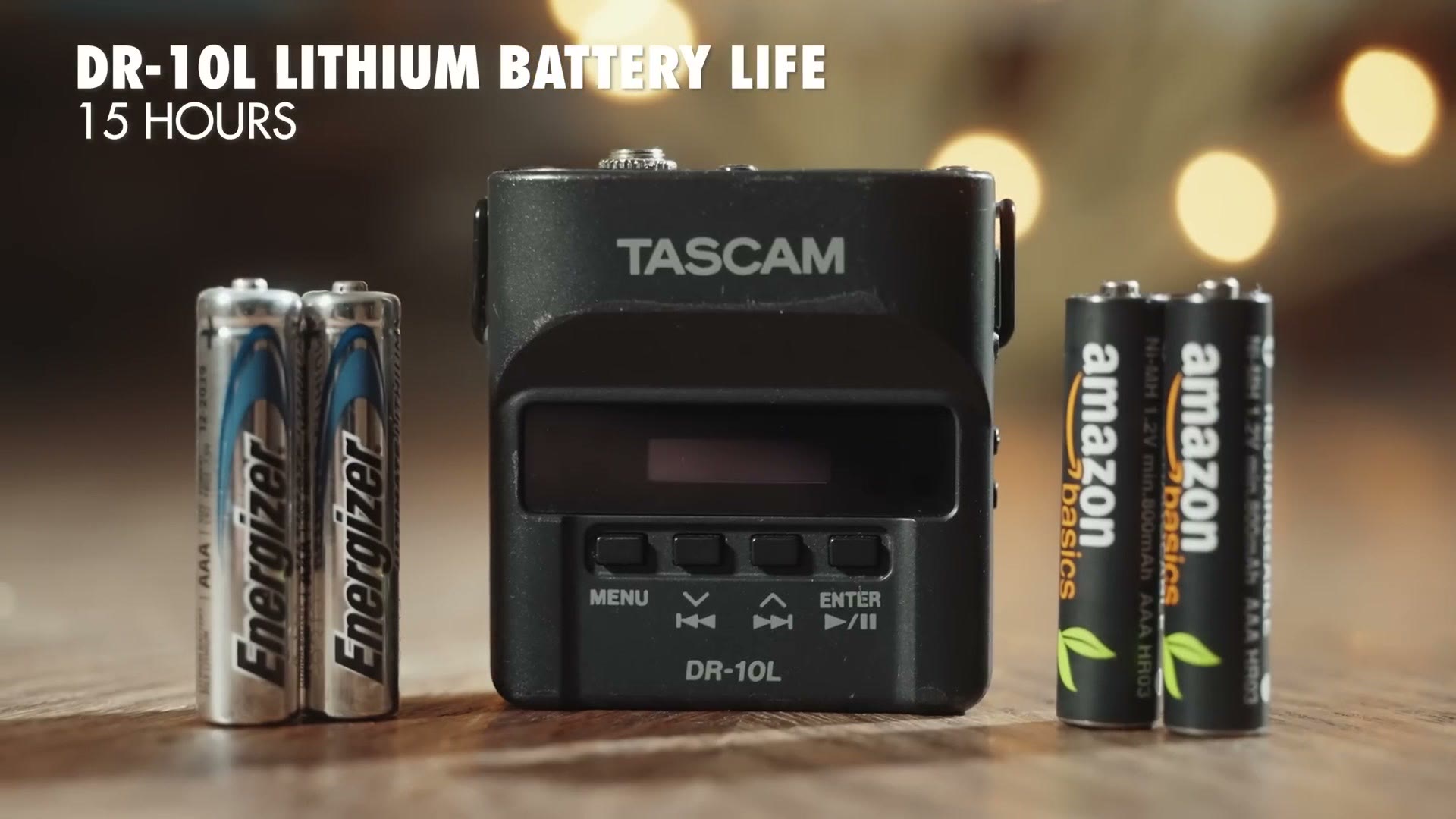
Looking at the F2, you can expect quite a jump because of those two AAAs: 12 and a half hours with alkaline, 13 with NiMH rechargeables, and 21 with lithium.
That said, I was never one to complain about the battery life of the DR-10L. Especially once I started using lithium batteries, the battery life is absolutely stellar and I’d feel comfortable using it at a multi-day event.
Power & Record Switch
I’ve always praised the DR-10L because it’s set up in a way that makes it virtually impossible to accidentally start and stop recording. That’s a very useful feature if you’re filming weddings and are worried the person wearing the mic may turn it off for some reason.
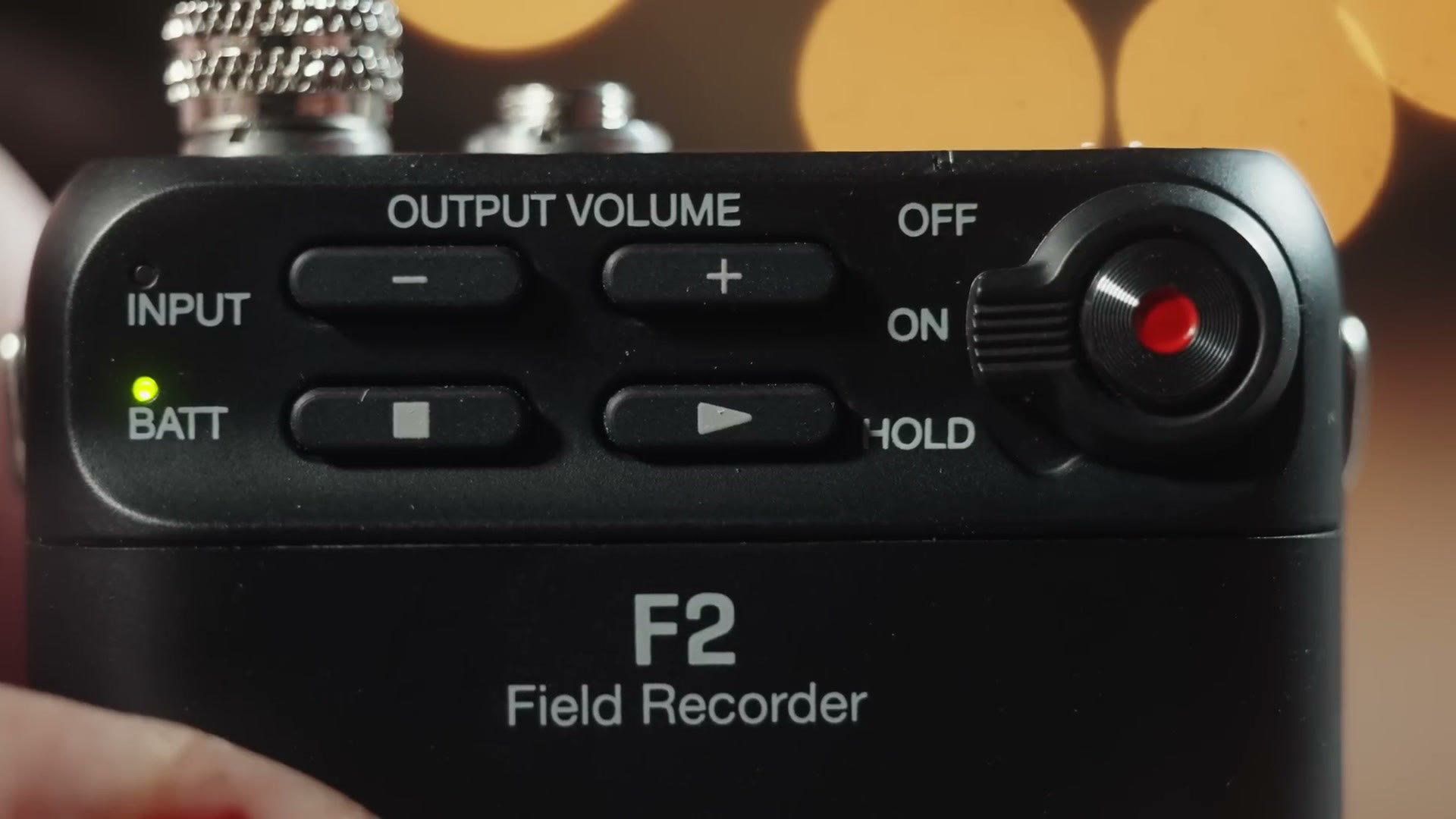
When I first saw the F2 I was a bit worried, because its power switch and record button are a very different design. You flip a switch to turn it on, press a button to start recording, then flip the switch again to the hold position. That’s one more step than the DR-10L, and my main concern was that it might be very easy to flip the switch and stop the recording, or even turn the recorder off.
Thankfully, my fears were unfounded. While the F2 isn’t as difficult to turn off as the DR-10L, the power switch is recessed enough that it’s difficult to flip, and I highly doubt it’ll be turned off by accident.
The DR-10L still wins this category, because it’s just such a perfect power and record switch combo. But the F2 isn’t far behind.
Color Options
The F2 comes in black. And black. There is actually a white model, but for some reason they aren’t selling it in America. No clue why.
In contrast, the DR-10L sells both a black and a white version in the US. So if you want to do something like mic the bride on a wedding day and have an all white recorder and lav setup that matches her dress, Tascam is the way to go.
Audio Quality Tests
Let’s start with the lav mics. The DR-10L has a noticeably higher quality lav mic, with a metal housing and clip, and the audio quality of that microphone sounds better as well. The F2’s is a plastic mic with a plastic clip.
My friend Jay Worsley recently filmed a wedding with both recorders and was kind enough to send me the footage. For the bride and groom’s first look he miked the groom with the F2 and the DR-10L at the same time, so in the video above you can hear the same moment four ways: each recorder with nothing but loudness normalization, and then each one again with EQ and effects applied so it sounds its best.
I’m going to give the edge to the DR-10L, with a big part of that being the better lav mic.
But keep in mind that the lav is only one part of the equation. One reason I’ve loved and recommended the DR-10L for years is that it comes with auto leveling, a limiter, and the ability to record a backup audio track at minus six or minus 12 decibels to prevent peaking.
The Zoom F2 says, “you don’t need all that, here’s something new and fancy: 32 bit float audio,” which means you don’t have to worry about your audio being too loud or too quiet. You can fix it in post.
So which is better? Honestly, the DR-10L’s features already meant I didn’t have to deal with audio that was too loud or too quiet. They end up doing essentially the same thing. But you cannot discount that the F2 is an extremely simple device. Because of 32 bit float, you don’t mess with mic gain or a limiter or a backup track. You just press record and it’s good. So for no fuss, high quality audio, I have to give the edge to the Zoom F2.
File Size Comparison
Audio files are still much smaller than video files, but they add up.
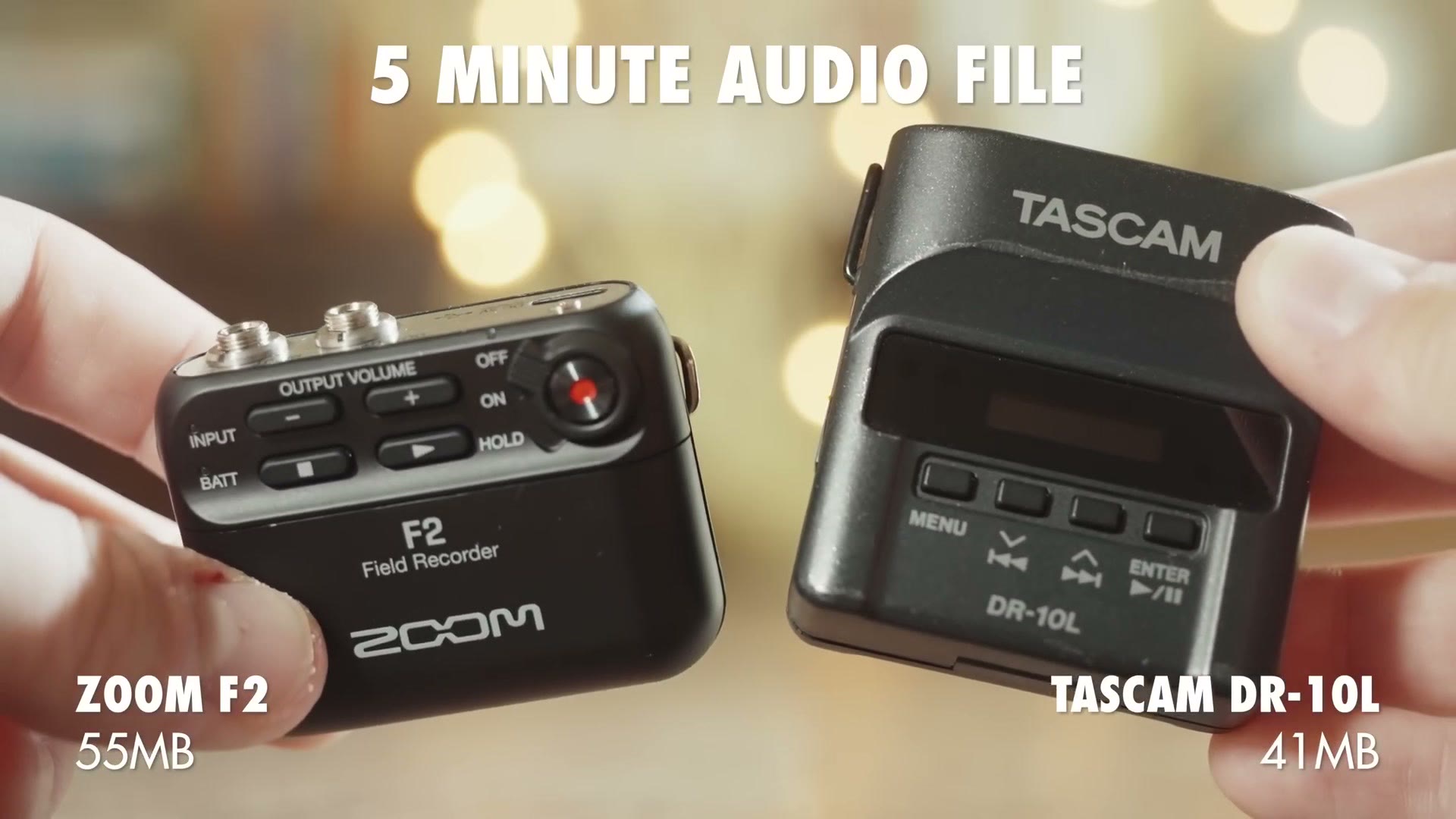
For a five minute recording, the F2 gave me 55 megabytes, compared to 41 megabytes from the DR-10L. But I always recommend using the DR-10L’s backup audio track feature, which means it’s recording two tracks at once, one of them quieter in case the audio peaks. With that on, the DR-10L actually writes two files totalling 82 megabytes. So in real use you’ll end up with larger files from the Tascam.
In addition, the DR-10L only works with micro SD cards up to 32 gigabytes. Use anything bigger and it gives you errors. The F2 works with cards up to 512 gigabytes, which is absurdly massive, but hey, if you need to record half a terabyte of audio, Zoom has you covered.
Formatting SD Card Issue
Speaking of SD cards, the DR-10L lets you format your memory card on the device. Use the screen to navigate to the format menu and press format. Done.
The F2 doesn’t have a screen, which means that to format a card you have to buy a USB-C cable, sold separately, plug the recorder into your computer, open the F2 settings app and format it from there.
While you’re here, take a look at Zoom F3 vs Tascam X8 – Which is best for Wedding Filmmakers?.
This is a huge hassle. And more importantly, if you’re out in the field filming a wedding and you need to format a card, you’re out of luck unless you have a computer and a USB-C cable handy. That’s a definite issue, and here the DR-10L wins handily.
Inputs and Outputs
On top of the F2 there are actually two headphone jacks, one marked input and one marked output. That’s ostensibly for plugging in headphones to monitor your audio while it records, which the DR-10L supports too with its own headphone jack.
But notice that the F2’s output jack is on the top, with a screw in locking mechanism, whereas the DR-10L’s headphone jack is on the side with no locking ability.
That opens up an intriguing possibility: you could use the F2 as a standalone recorder and also securely plug a wireless audio transmitter into the output jack, and use that to send audio to your camera for easy syncing in post. I have not tested this yet, but it’s a genuinely interesting option.
Bluetooth Control
There’s one last big difference, and I saved it for last because you only get it if you buy the Zoom F2-BT.
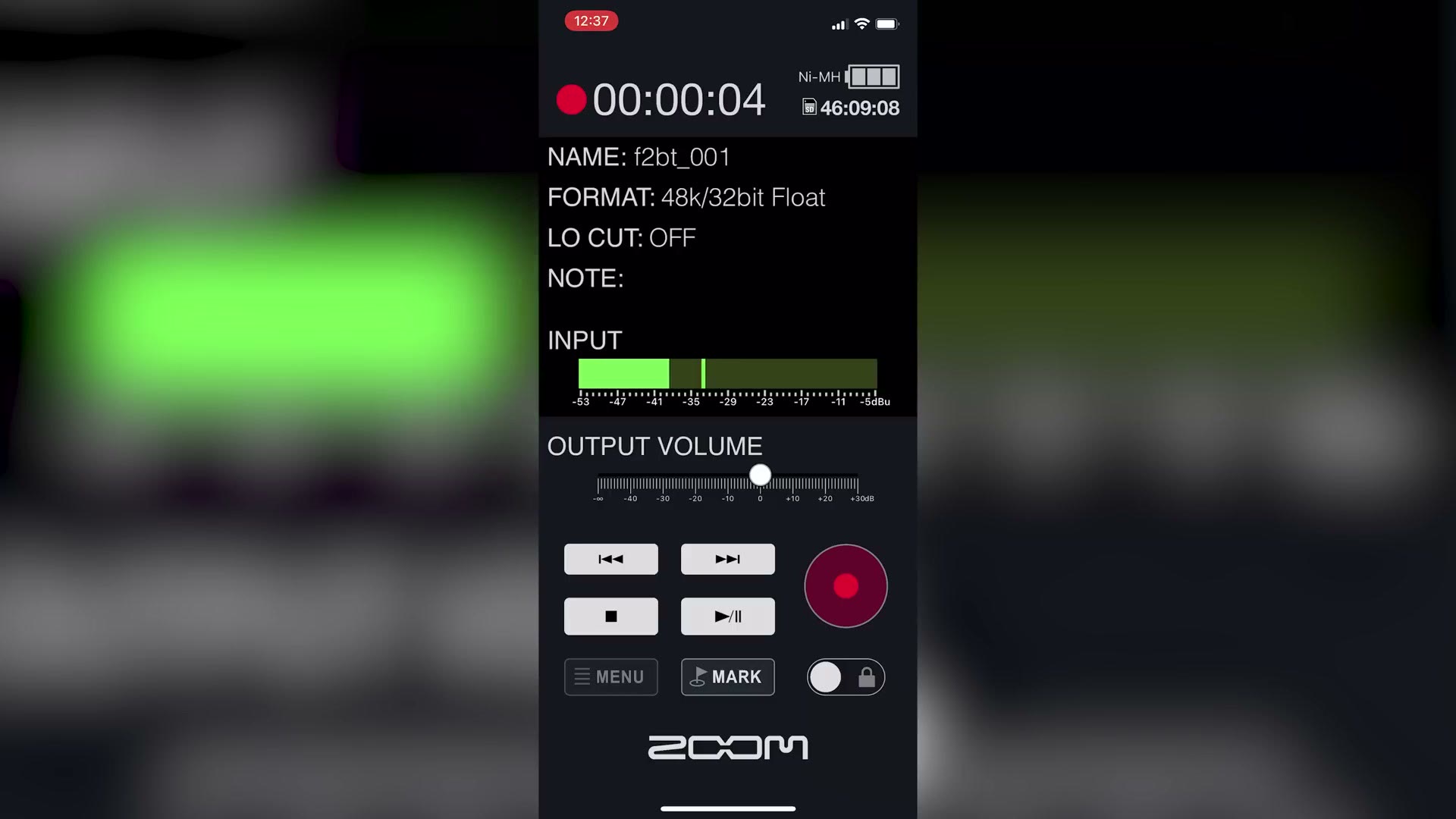
That model lets you use the F2 settings app on iOS or Android to control the recorder remotely. You can tell at a glance how much recording time you have left and how much battery is remaining, and start and stop recording. And while you’re using the app the buttons lock remotely to prevent accidental inputs.
The app is really great, but be aware that while it will show you the F2 is recording and the levels it’s reaching, you cannot hear the audio as it records over Bluetooth. It’s still great to be able to see that your audio is going down, though.
Price: Which Should You Buy?
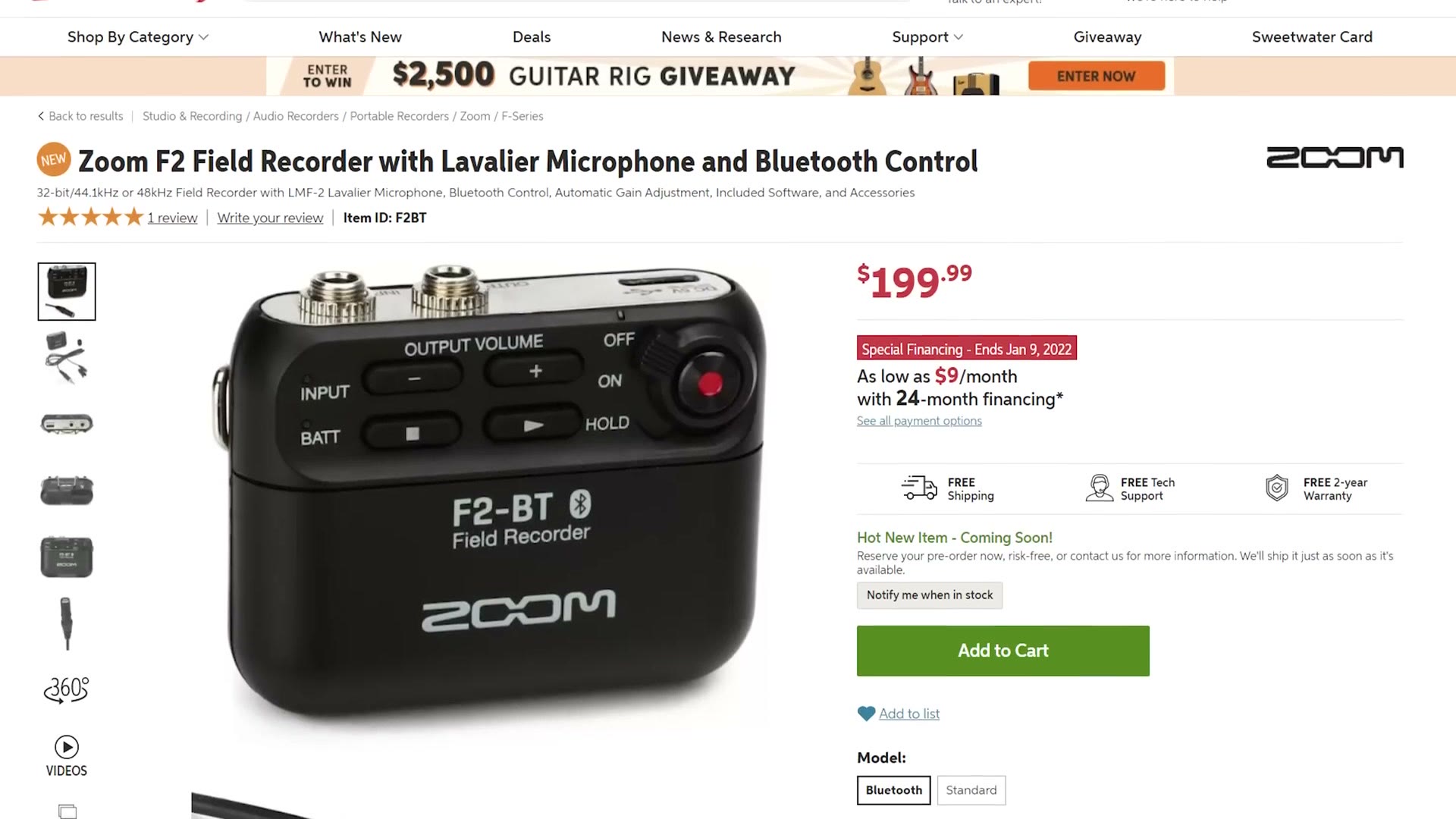
The base Zoom F2 comes in at 150 bucks, and the F2-BT at 200. Both are also at B&H and Amazon, as is the BT version at both.
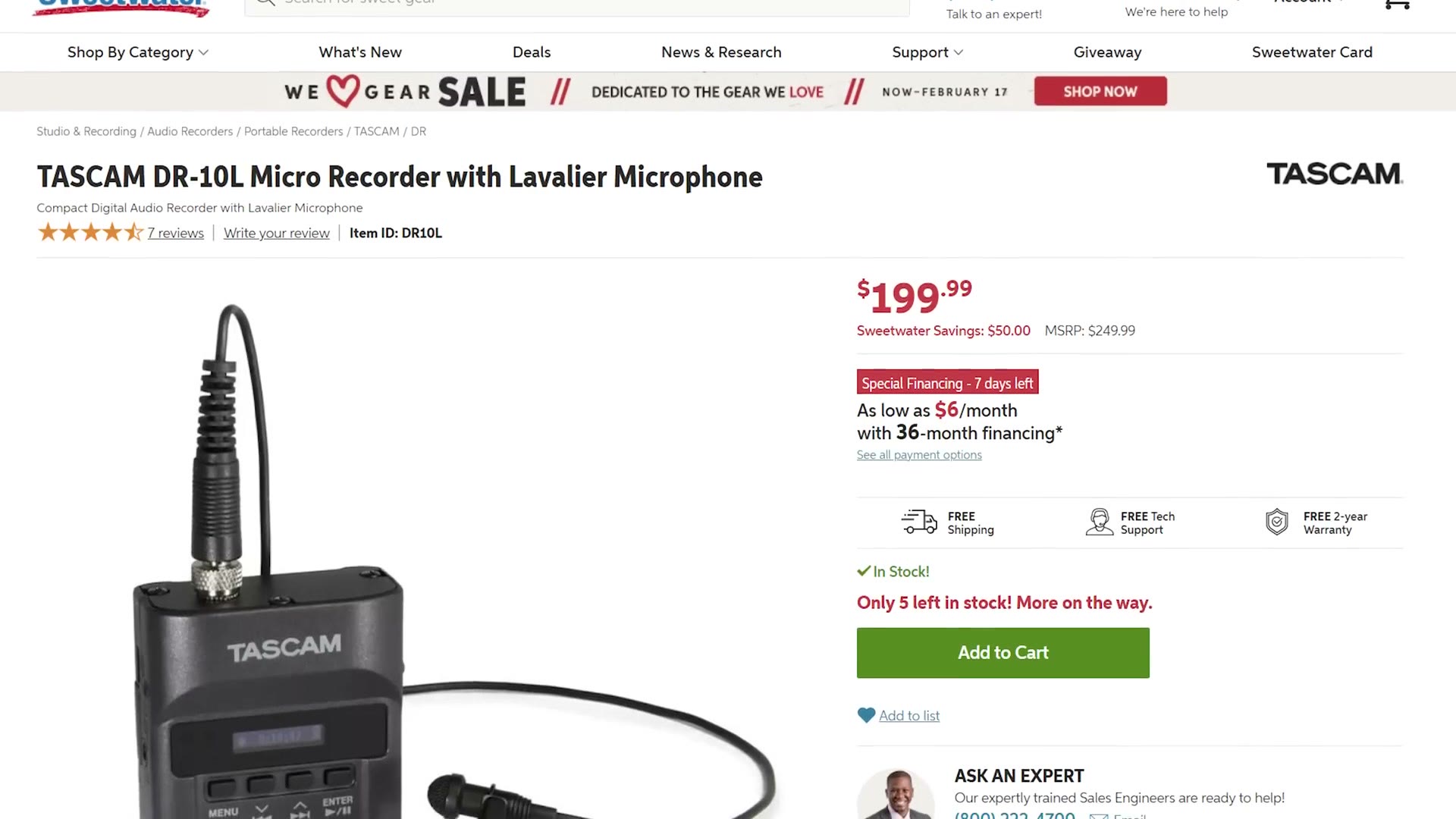
In comparison, the Tascam DR-10L competes nicely at $200, and it’s at Amazon and B&H too.
While the F2 may seem like a no brainer to save 50 bucks, keep in mind that you’re going to need that USB-C cable to change the settings, which brings those prices even closer.
So here’s what I would recommend.
If you are brand new to wedding filmmaking and on a tight budget, buy the base Zoom F2. It’s incredibly easy to use, and you can always upgrade the mic in the future once you have more of a budget, with something like a Countryman B6 or a Sanken COS-11D. If you can find an extra 50 bucks for the F2-BT, I’d recommend it, because the wireless monitoring is very nice.
Alternatively, what if you’re already an experienced wedding filmmaker and you have a DR-10L already, or several of them, as in my case? In that case you’re probably already getting great audio and you don’t need the Zoom F2. Although if you want the option to check on your phone that audio is recording, which is not possible with the DR-10L, the Zoom may be a great choice for you.
Also, if you happen to be a wedding filmmaker like me, you probably want to book more couples and film more weddings. To help you out with that, I’ve created a free guide that walks you through some practical steps you can take right now. It’s a completely free gift to you.