
This is my Kinotehnik Practilite 602. I’ve been using it for the past three years to light my wedding films and YouTube videos, and up until this point it has been pretty unique in what it offers. It may look like just a compact fresnel spotlight, but what sets it apart is that it’s bi-color. You can find tons of small bi-color LED panels these days, but a compact bi-color fresnel spotlight is very rare, which is why I’ve loved this light.
There’s a new light in town though, partner, and that light is the Aputure 60x. That x is actually really important, because it means this light is bi-color as well. And even more interestingly, it costs less than half the price of the Practilite.
Also, for the sake of ethics, I want you to know that while Aputure did send me this light, this video isn’t paid or sponsored by them, and the first time Aputure sees it is the first time you see it, whenever I upload it to YouTube.
Size, Controls, App
The 60x is a pretty compact spotlight, especially when you put it next to its bigger brother, the 120d.
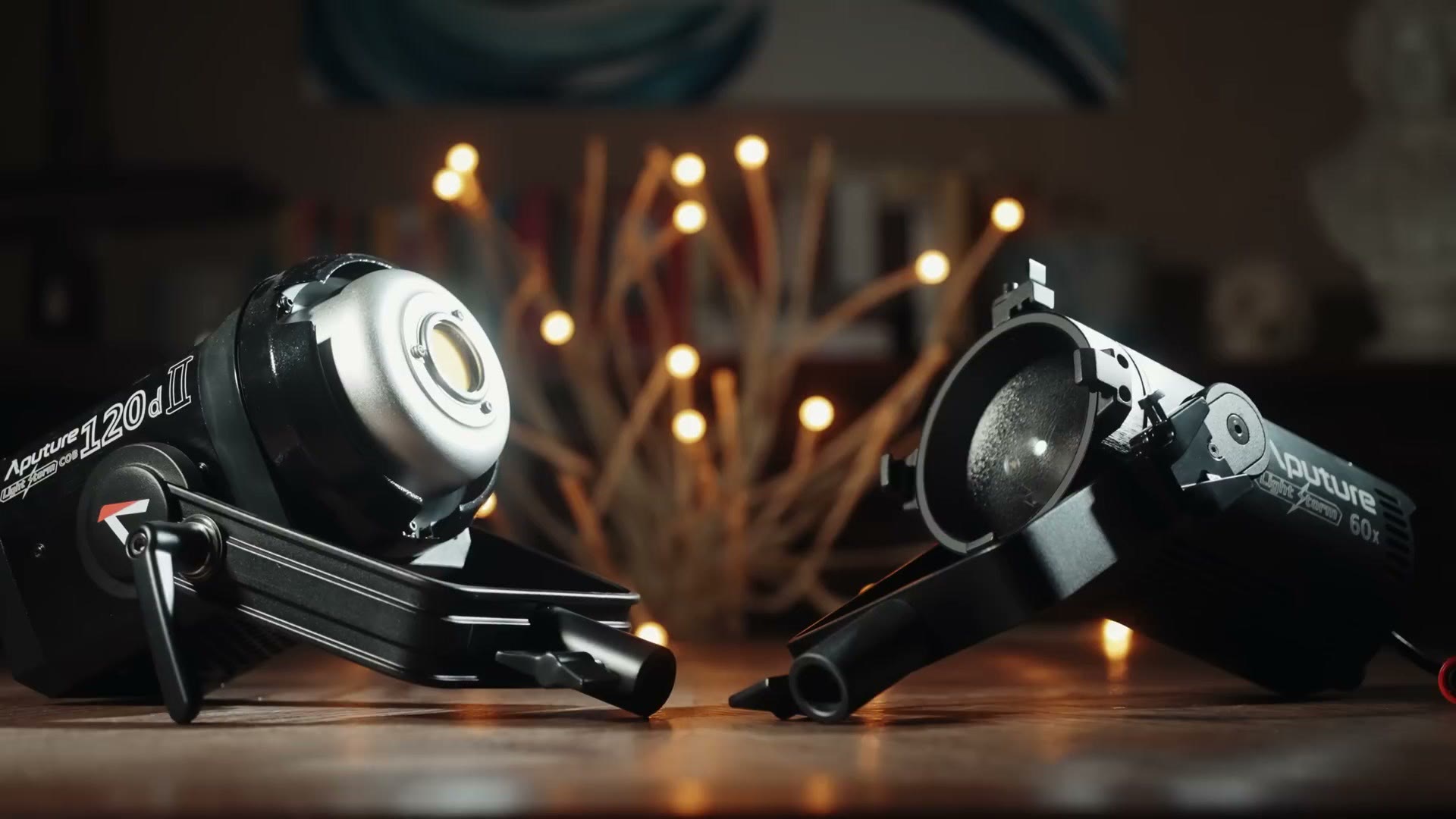
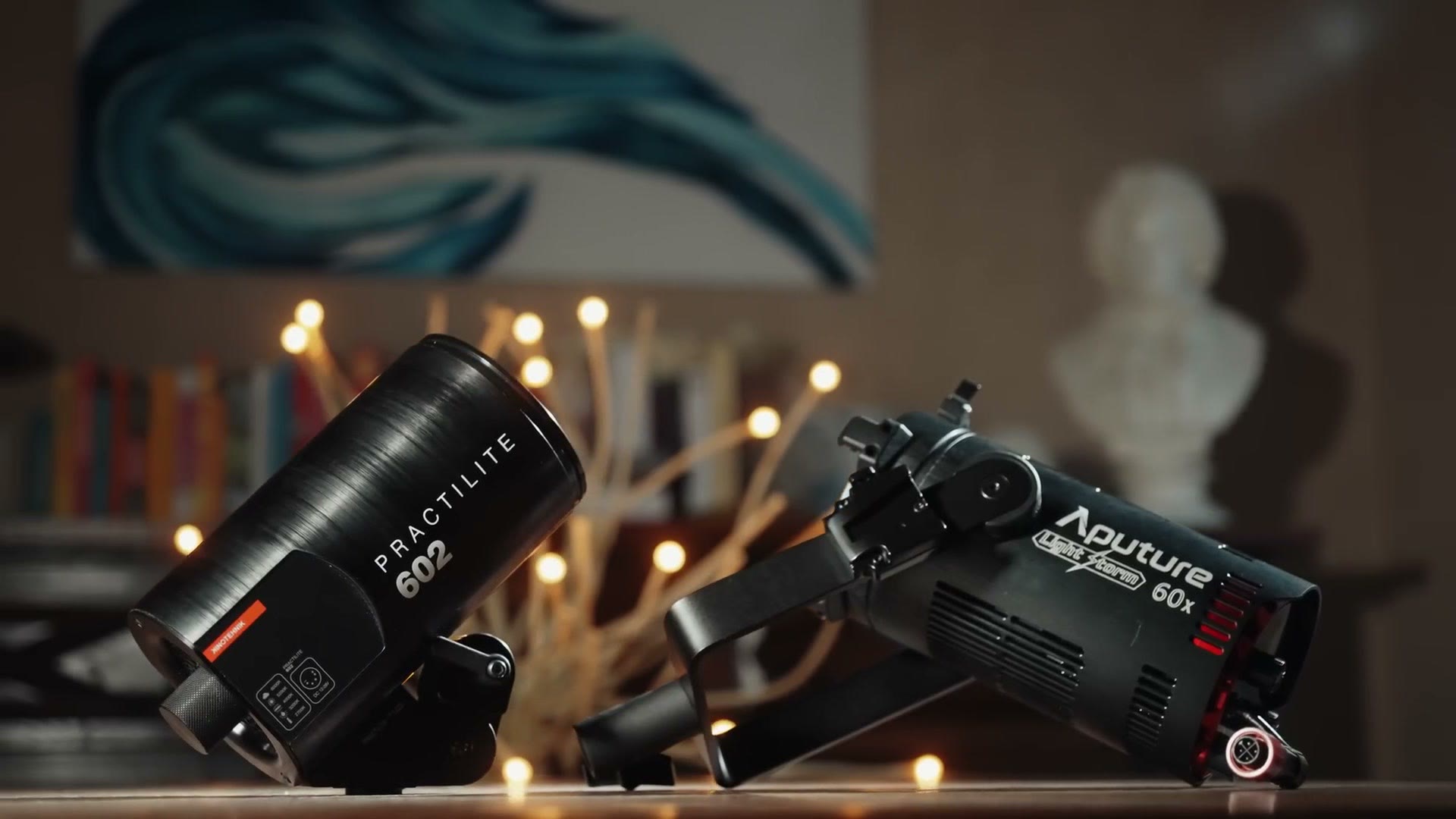
Comparing it to my Practilite, it’s approximately half an inch longer and about the same circumference around.
On the back you have a power button, controls for brightness, color temperature and beam angle, and a screen that shows your settings, even an estimated battery life remaining if you aren’t on AC power.
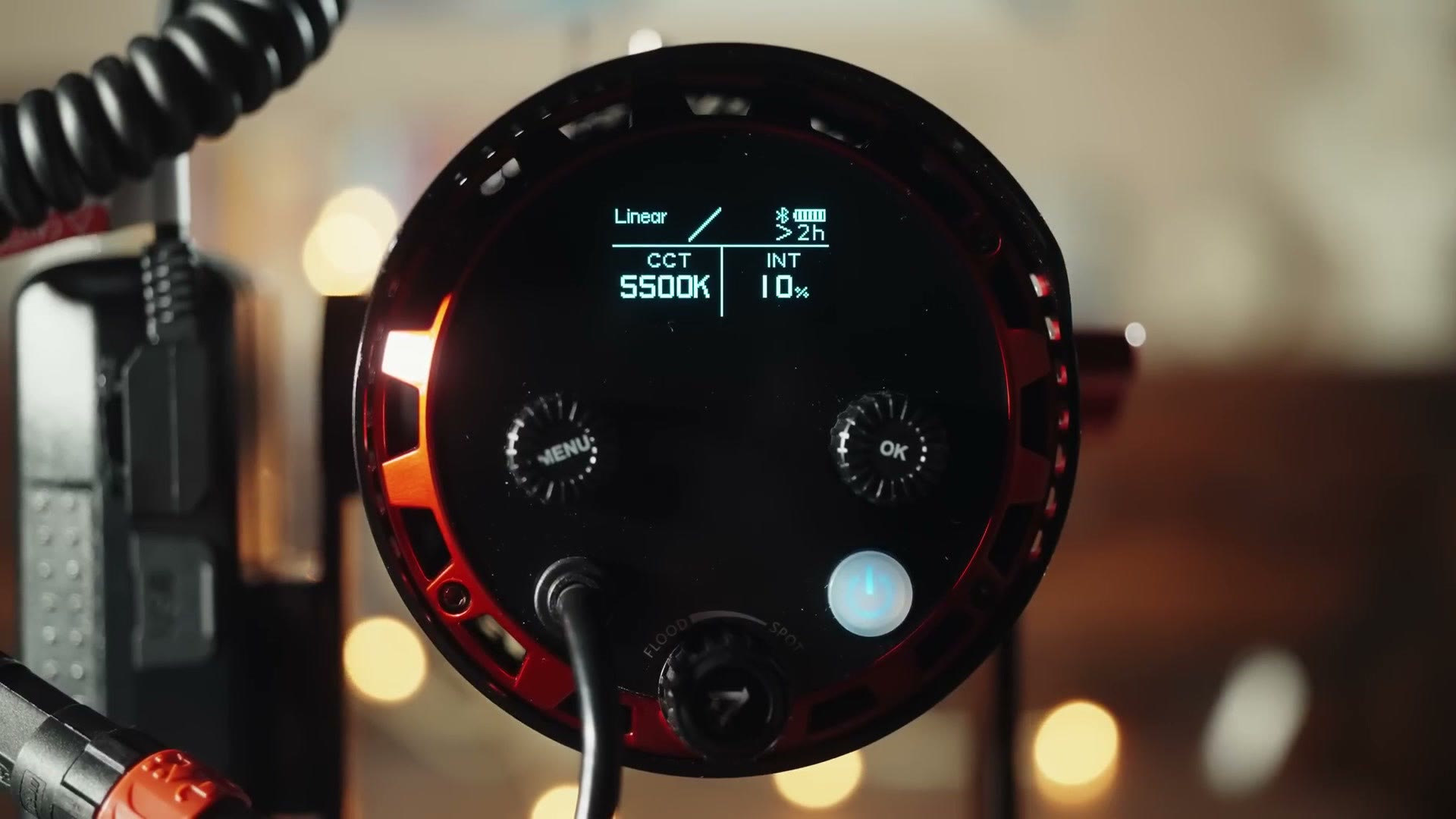
I especially love the amount of color temperature control I get with this light. You can change the 60x’s Kelvin values in increments of 50 for very finely tuned control, which is a nice upgrade over the Practilite, which only moves in increments of 100. The 60x also has a Kelvin range of 2700 to 6500K, substantially wider than the Practilite’s 3000 to 6000K.
Both lights can be controlled wirelessly over Bluetooth from a phone app, and you can run multiple lights from either one. From a usability standpoint I have to give the edge to Kinotehnik, because the Practilite app gives you instant access to your settings the moment you open it, unlike Aputure’s Sidus Link app, which takes an extra tap to get to an individual light.
I really prefer that near-instant access, because whenever I’m filming a wedding, say the couple’s first dance, and they’re about to start and I realize my light’s brightness isn’t perfect, I can whip out my phone, make a quick change and go straight back to filming. That said, the difference is only a few seconds, so it’s not a huge deal, and I will always take a light with wireless control over one without it.
My Favorite Feature
One way the 60x is larger than the Practilite is the big yoke used to mount it to a light stand. But Aputure has added something to that yoke that I plan on using at basically every wedding from here on.
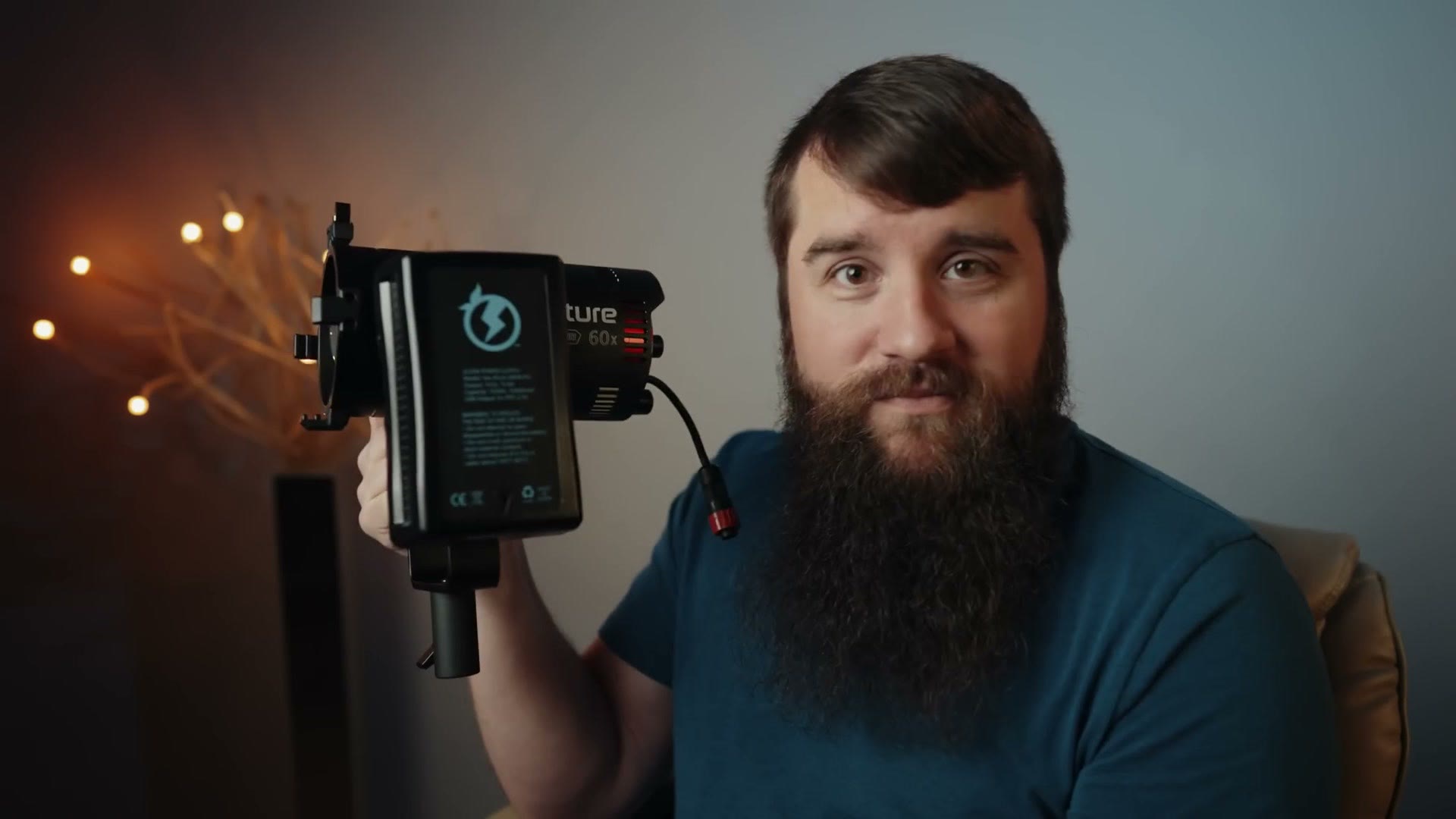
There is a V-mount battery plate integrated into the yoke. So whenever you want to run this light off a battery, you take your V-mount, slide it on, plug it in, and start rolling.
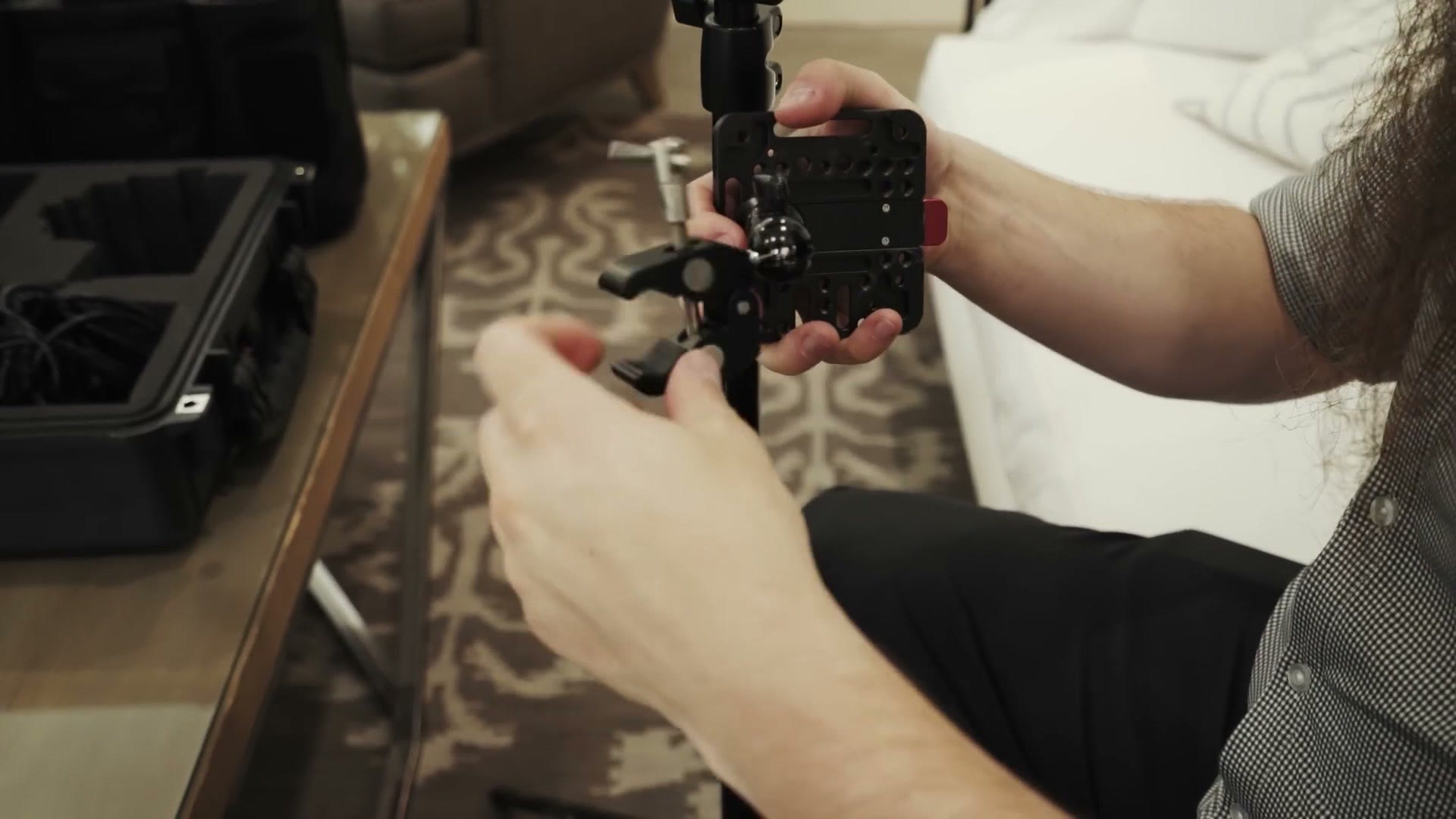
To rig up my Practilite with a V-mount, on the other hand, I had to invest in a SmallRig V-mount plate and a ball head super clamp to DIY mount a battery to the light stand. Cool, Matt, what is that, like 35 bucks? 74, actually.
But the money isn’t the reason I love having the battery on the light. To explain the real reason, we need to talk about water resistance. I promise this is related.
The 60x has a sturdy metal housing with holes for ventilation, but even with those holes Aputure says it’s IP54 weatherproof, meaning it’s protected from splashes of water.
Why am I so excited about water resistance? Does it rain a ton in Texas? Not really. But if you’ve read my Practilite review, you know one of my favorite things to do at a wedding is take the couple out in the dark when it’s raining, backlight them, and get some really gorgeous footage. I’ve done this many times and the Practilite has always worked with zero issues. But it doesn’t have any official IP rating, so there’s always a bit of fear in the back of my mind that the light could get too wet and break. Or worse, electrocute me with all the substantial power of a V-mount battery, thus turning me into some sort of bearded electro supervillain.
That could be cool. Anyways.
The 60x’s weatherproof rating does reassure me, and I’m happy to tell you I had the opportunity to test it at a recent wedding where we took the couple out in the rain, backlit them, and it looked glorious. Especially in 4K at 120 frames per second with my a7S III.
And that’s why the battery mount matters: there ain’t no way I’m running a power cord out in the rain to power a light. That’s just more risk of electrocution. The 60x also works with anything with a D-Tap, or you can use Sony NP-F batteries with the included adapter, so you get a ton of power versatility.
Light Modifier Options
Unlike Aputure’s other lights, like the 120d, which use an exposed COB LED that requires you to buy a focusing fresnel attachment for an extra $120, the 60x includes a focusable lens on the front, built in.
This lens isn’t the same as the Practilite’s traditional fresnel. I haven’t confirmed this with Aputure, but it looks very similar to the dual aspherical lens on the legendary Dedolight DLH4 that Hollywood filmmakers have loved for decades. That lens is brighter than a traditional fresnel, and I’ve heard many stories from filmmakers who love how Dedolights flare. All that to say, I’m definitely not upset if Aputure has adapted that design.
Looking at modifiers is where these two lights really start to diverge. The 60x comes with barn doors in the box, but also, like all of Aputure’s other COB lights, it comes standard with an adapter for the very popular Bowens mount. That’s one of my favorite mounts, because it’s just so versatile. Aputure makes a ton of modifiers for it, spotlights, softboxes, lanterns, and because Bowens is a common standard you can buy modifiers from plenty of other companies too. That elevates the 60x above being just a wedding spotlight.
The Practilite isn’t a bad light in comparison, but it’s going to cost you more here. Out of the box there’s no Bowens mount or any way to attach a modifier other than the included barn doors. Instead you need Kinotehnik’s speed ring adapter for $59, which then lets you use the only modifier Kinotehnik makes, a 20 inch softbox for another $69. Kinotehnik also says the Practilite is compatible with Profoto’s four inch studio head modifiers, which means you could get other adapters including a Bowens mount, though I haven’t had a chance to buy one and test it.
So both lights are modifiable beyond their stock spotlight form, but the 60x with its included Bowens adapter is going to save you money.
Brightness vs Practilite 602
The Practilite is great as a spotlight, but its brightness level really pigeonholes it into that one role. It’s just not bright enough to be as versatile as the 60x.
To measure this, let’s do something a bit more real world than pulling out a light meter. I put barn doors on both lights, put them approximately ten feet from a wall, dialled both to approximately the same 45 degree beam angle, and set both to the same 5500 Kelvin.
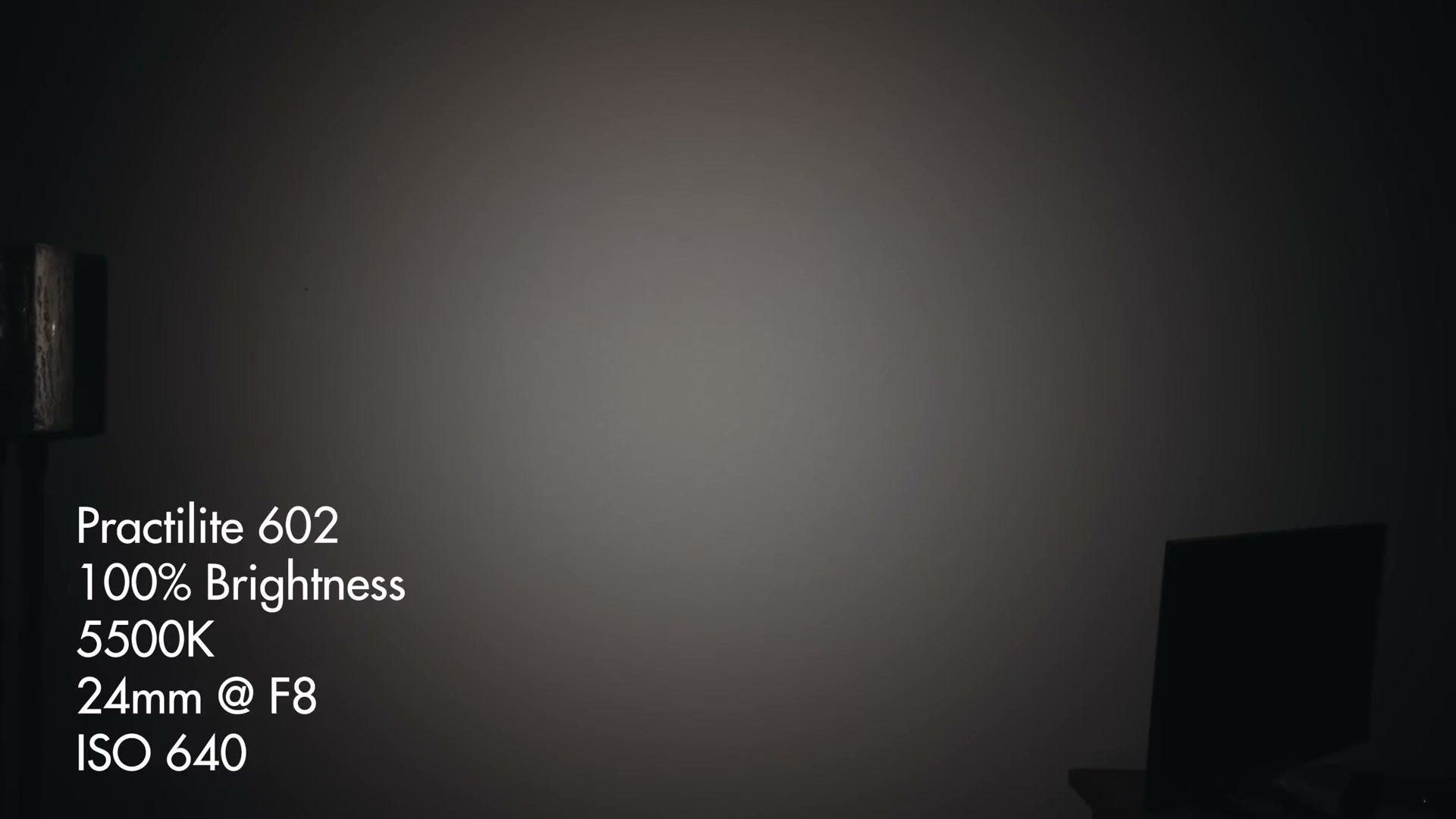
I turned the Practilite to its maximum 100 percent brightness, filmed the wall with my a7S III, and hit an exposure of 0.0 on the camera’s center metering at f/8 and ISO 640. Then I turned the Practilite off, turned on the 60x, and with those same settings I hit that same 0.0 exposure with the 60x only set to 60 percent.
What does that tell us? The 60x is putting out roughly 40 percent more light than the Practilite. That extra output matters most when you want to use a modifier like a softbox, or light someone from further away.
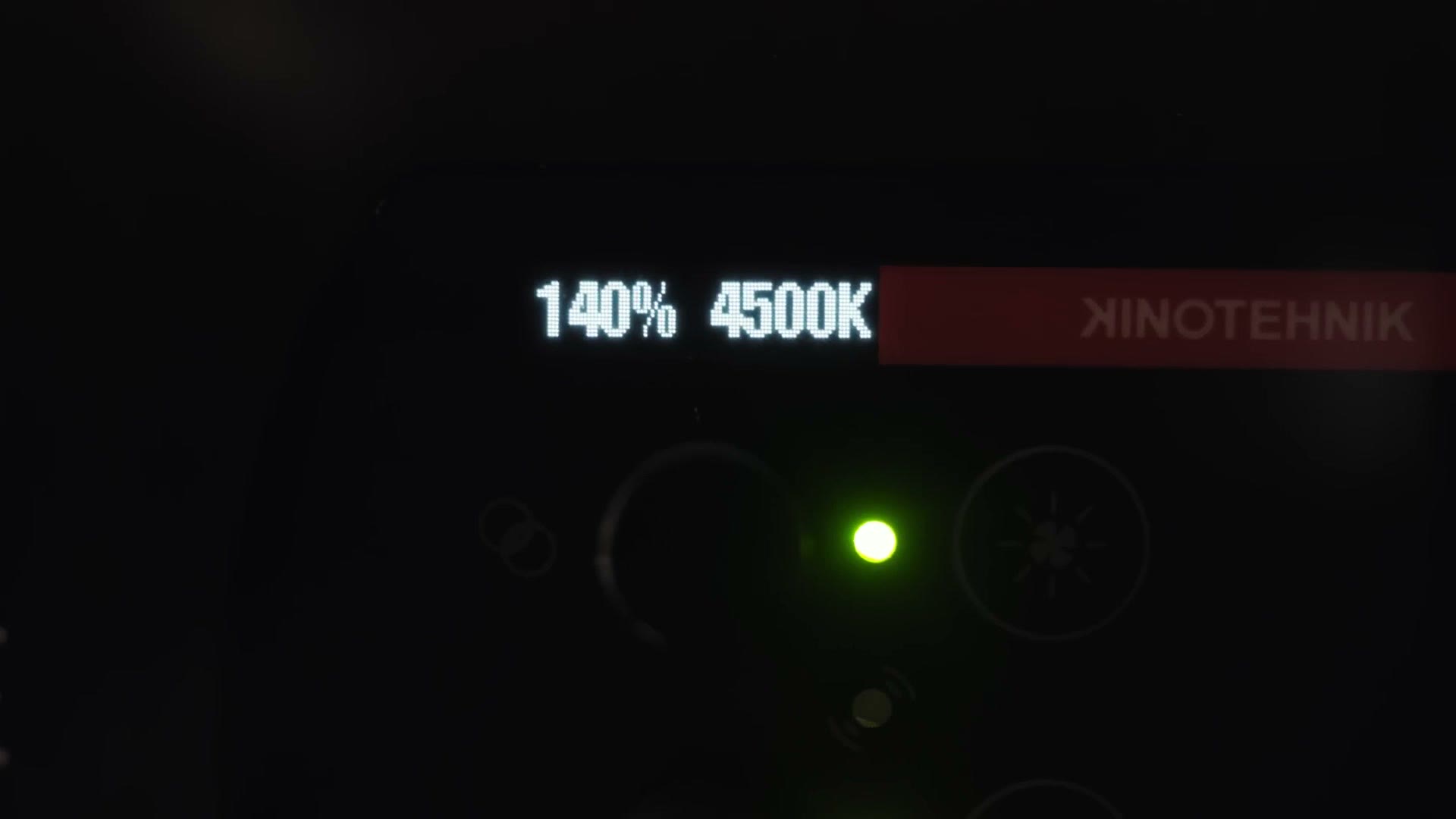
As an aside, you should know the Practilite does have a boost mode that increases its brightness substantially, but it locks the light to 4500 Kelvin and, more importantly, it doesn’t work on battery power. For portability and for keeping people from tripping over a cord at a wedding, I highly recommend not plugging your lights in and using batteries instead.
Beam Angle vs Practilite 602
On the back of the 60x there’s a knob to adjust the beam angle, and this is very important if you’re filming, say, a reception dance floor where you want the floor lit but all the tables around it still dark. That’s what keeps grandma from complaining that your light is blinding her.
Because not every dance floor is the same size, it’s really important to have a light with a wide range of beam angles. Both lights hit the same tight 15 degree angle, which I’d only really recommend for filming someone giving a toast. The wide end is where they differ, and here the Practilite has the upper hand with a very wide 75 degrees, against the 60x’s 45 degrees.
That would be a bigger deal if not for the brightness. Because the 60x can get brighter, you can move it further back from the dance floor to get the width you need and then turn up the brightness to compensate. That should work well, but keep in mind that if you find yourself filming at a lot of smaller venues where you have to put your light right up next to the dance floor because the room isn’t big enough to move back, the Practilite with its wider beam is the better choice.
Battery Life vs Practilite 602
Brightness doesn’t matter much if the battery doesn’t last long enough to use it.
The 60x takes a variety of power options, including Sony NP-F batteries or anything with a D-Tap. The Practilite is just as versatile because it uses 4-pin XLR, which means I can use the same V-mount battery with both. For weddings I prefer a 150 watt hour battery, which is large but nowhere near as large as V-mounts get.
With that battery, at maximum power, the 60x lasted one hour and 47 minutes. The Practilite at max power lasted a much longer five hours and ten minutes.
But remember that the 60x at 60 percent is the same brightness as the Practilite at full power. When I ran the test again with the 60x at 60 percent, it lasted three hours and 23 minutes. Still not as good, but keep in mind that I rarely if ever need either of these lights at maximum brightness at a wedding. People aren’t going to dance if it’s too bright. When I film with the Practilite I prefer to keep it dimmed between 50 and 75 percent so it isn’t overwhelming the floor.
All that said, if you go with the 60x, remember that the narrower beam may mean keeping it further from the dance floor, which means turning the brightness up, which shortens the battery life. Because of that I’d recommend either investing in a larger battery, say 200 watt hours, or buying two smaller ones.
Carrying Case
My Practilite came in a box with no case. Just the light and a set of barn doors.
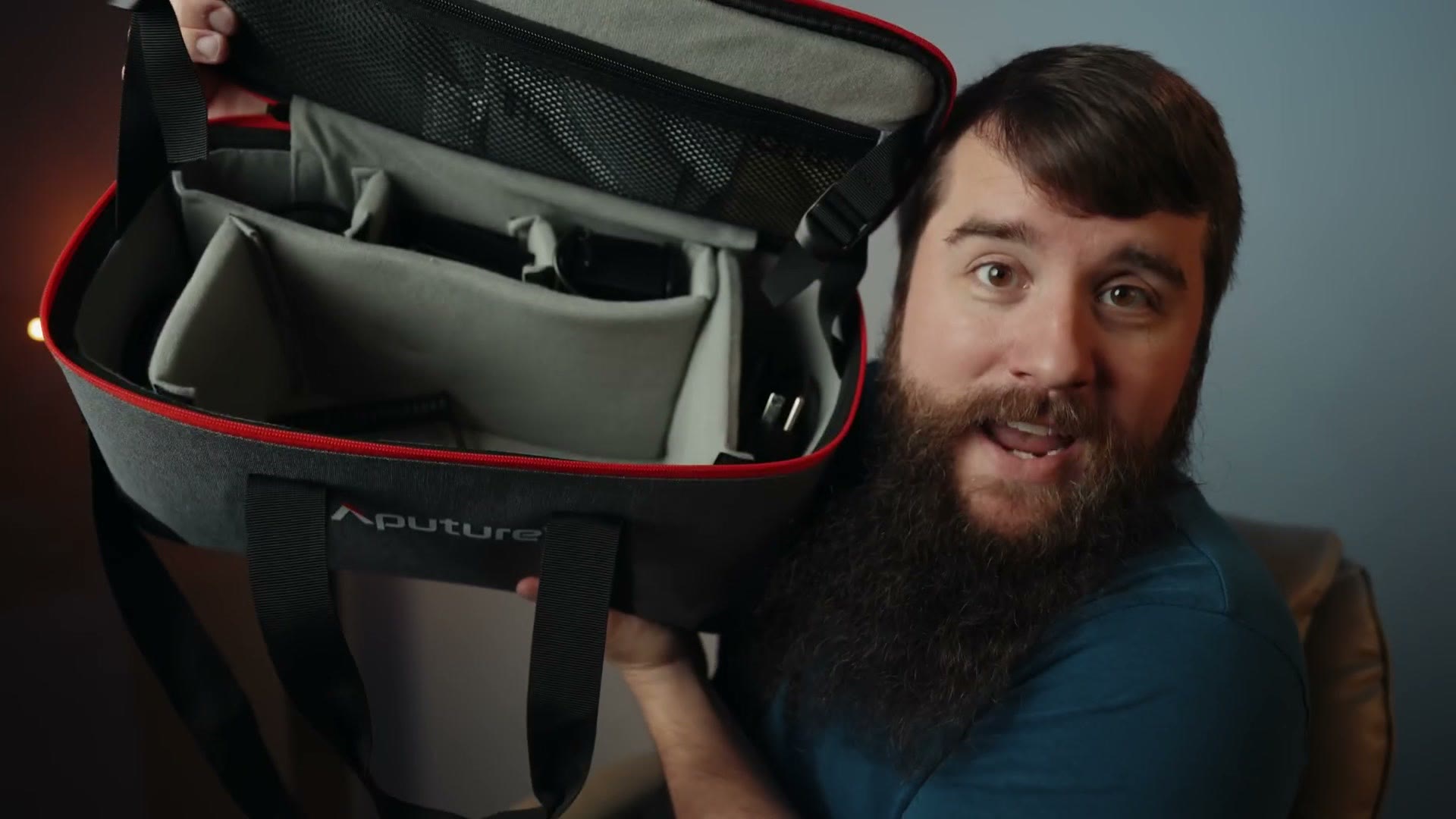
Aputure gives you a nice padded case with lots of room for the light and all its accessories: space for the barn doors, the Sony battery plate, the Bowens adapter, and storage for power cords. There’s even just enough room to fit a V-mount battery or two, depending on your battery size and how much you want to cram in.
I realise this is just a case, but it’s a huge step up over the Practilite, for which I had to spend $129 on a separate Pelican case to hold the light, accessories and batteries. It’s very impressive that Aputure was able to include this case, a light of this quality, and all its accessories, for the price it did.
Price: 60x vs Practilite 602
Which brings us to arguably the most important thing.
When I reviewed the Practilite a couple of years ago I said it was my favorite light, but also that it definitely wasn’t cheap, with a retail price at the time of making this video of $1,095, also on Amazon. That’s quite an investment for most wedding filmmakers, especially ones just getting started. But as I said at the start, it has been exceedingly rare to find a compact light of this quality and feature set, and that rarity made it completely worth it. I’ve greatly enjoyed filming weddings with it.
Then here comes Aputure with the 60x, which matches or exceeds nearly every single feature of the Practilite, and most surprisingly, costs over 50 percent less at $419.
So I guess it’s time to update my lighting recommendation for wedding filmmakers. If the Practilite has been completely worth it at a thousand dollars, it’s a no-brainer to recommend the 60x at $419. And I plan on using this light for the foreseeable future at the weddings I film.
Also, if you happen to be a wedding filmmaker like me, you probably want to book more couples and film more weddings. To help you out with that I’ve created a free guide that walks you through some practical steps you can take right now in your business. It’s a completely free gift to you.